
North Vista Secondary School at 11 Rivervale Link, Singapore 545081, is a co-educational secondary school in Sengkang that Punggol families may shortlist for Posting Group 2 (PG2) admission. Its historical 2026 Secondary 1 intake range for PG2 was PSLE Score 21–24, with 24 the last admitted score in that group. The number describes the completed 2025 PSLE cohort’s posting outcome and should not be presented as a guaranteed 2027 cut-off. Parents should check MOE SchoolFinder, their child’s official Posting Group eligibility and the current admissions process before choosing and ordering schools.
North Vista is distinctive for an Applied Learning Programme called Farm-to-Table, which connects Science and technology to sustainable food production. Its official July 2026 page describes all Secondary 1 students engaging in indoor farming and hydroponics, while a separate BioBloom composting project offers deeper experiences to selected Infocomm Club members. Its Learning for Life Programme uses photography, visual poetry and videography to develop values and empathy. These programmes give parents something concrete to discuss with a child who enjoys environmental questions, hands-on learning or creative communication. They do not guarantee a particular G3 subject offer, diploma, overseas trip or competition place.
- School: North Vista Secondary School, 11 Rivervale Link, Sengkang, Singapore 545081.
- PG2 admission reference: Completed 2026 intake range 21–24; last admitted score 24, not a 2027 promise.
- Full SBB: PG2 is an entry group; individual subjects may be offered at G1, G2 or G3 according to eligibility and school arrangements.
- ALP: Farm-to-Table, within the theme of Cities and Urban Landscapes and Singapore’s food sustainability priorities.
- Year 1 ALP: The published 2026 programme provides high-tech farming, hydroponic growing and hands-on learning for all Secondary 1 students.
- Selected extension: BioBloom composting project for chosen Infocomm Club pupils, not every Year 1 pupil.
- LLP: Nurturing caring students through arts and design, including photography and videography.
- Secondary 1 creative work: Visual poetry and photographs used to communicate school values.
- Secondary 2 creative work: Mobile videography and student films about values in action under the published programme.
- Other opportunities: Student leadership, CCE, creative studies and NV Goes Global; availability is cohort-specific.
- Next step: Verify programme and school data, inspect subject readiness and test the actual Punggol-to-Rivervale commute.
Definition lock: PG2, G2 and North Vista programmes are different things
Posting Group 2 is an admission category under Full Subject-Based Banding. It helps decide which secondary schools pupils can apply to and indicates a general starting subject demand. G2 is the level of one academic subject. Farm-to-Table is an Applied Learning Programme and visual storytelling is part of a Learning for Life Programme. These concepts interact in a student’s education, but no one term can be used as a substitute for another.
A child entering through PG2 may have a strong interest in Science and be eager to understand hydroponics. Another may be an effective storyteller but less confident in Mathematics. Neither profile is a contradiction. The overall PSLE Score compresses four subject results into one number and cannot describe every strength a teenager brings into school.
Under Full SBB, eligible pupils may have different levels for different academic subjects and share common form-class experiences with students whose subject portfolios differ. That flexibility should be applied with care, based on actual eligibility, readiness and school offerings. A school programme that encourages creativity does not automatically make every student eligible for G3 Art or Science.
This article owns the North Vista PG2 school profile for Punggol families. It focuses on the school’s published programmes, ordinary school life and practical school choice rather than repeating the general Punggol posting guide.
The meaning of the 2026 historical score range
North Vista’s completed 2026 PG2 intake had an observed PSLE range of 21–24 in SchoolFinder-derived compilations. A score of 24 was the last admitted result. The historical range can help families understand the previous cohort’s admission pattern, but it is not a fixed condition announced for 2027.
MOE explains that school cut-off points emerge from the posting exercise itself. Pupils’ scores, actual choices, citizenship and available places affect the result. A child matching last year’s last admitted score may not necessarily receive a place this year. The family should avoid assigning an unsupported probability of success or claiming a future number has been announced.
Historical PG3 and PG1 ranges are different from the PG2 range. Parents must choose the correct group, particularly where a pupil’s PSLE result provides a boundary choice. Scores 21 and 22 may allow PG2 or PG3, and 25 may permit PG1 or PG2 under current rules. The selected group affects the application and should be considered carefully.
A realistic shortlist uses the current official guidance, genuine school preference and appropriate alternatives. Parents should not fill all six preferences with schools they would not want the child to attend.

Why Rivervale is relevant to some Punggol families
North Vista is in Sengkang’s Rivervale area. The trip from Punggol may be manageable for some households, depending on proximity to the MRT or LRT network, bus routes and the particular housing neighbourhood. It is not accurate to describe the school as being within Punggol itself, nor to assume every resident can reach it in a fixed number of minutes.
A parent should test the actual journey from home to the school gate. Include walking, waiting and likely morning crowds. Repeat the exercise for dismissal after CCA or an activity. The route that feels easy on a quiet weekend may be different at school-day times.
Independent travel can be an important adjustment for Secondary 1 pupils. Teach the child how to recognise the correct stop, follow a backup route and contact a trusted adult when the service is disrupted. Planning for rain and safe crossings can make the first weeks less stressful.
A strong educational programme may justify a journey, but the family should recognise the trade-off honestly. Time spent travelling is time unavailable for rest, reading, exercise or family life.
North Vista’s Farm-to-Table Applied Learning Programme
North Vista’s official 2026 ALP page describes Farm-to-Table as an applied STEM experience connected with Singapore’s food security and sustainability ambitions. Its theme of Cities and Urban Landscapes helps students see that producing food in a densely built environment involves science, technology, resource management and design.
The programme is divided into tiers. Tier 1 is aimed at all Secondary 1 students, with exposure to high-tech farming and hydroponic growing. Tier 2 is a specialised BioBloom composting project for selected Infocomm Club members, rather than a mandatory activity for every pupil. This distinction is essential for honest parent advice.
An ALP has value when students connect classroom knowledge to a practical problem. A child may know that plants require water, nutrients and light, but maintaining a growing system asks how those conditions are measured and controlled. An unexpected result becomes a question to investigate rather than something to hide.
Parents should ask what the current cohort grows, how pupils record observations and what teaching support is provided. A published photograph of a hydroponic system is useful background but cannot promise every child a particular project outcome.
What hydroponics can teach a beginning secondary student
Hydroponics grows plants with nutrients delivered through water rather than relying on traditional soil as the main growing medium. At school, pupils can explore why plants need resources and how a system’s conditions affect growth. The activity provides a clear context for Science, Mathematics and careful observation.
The student might compare measured conditions over time, check whether a plant is developing as expected or learn to identify errors in recording data. A useful scientific explanation would connect the conditions and observations without claiming more certainty than the evidence supports.
The North Vista page shows pupils assembling hydroponic equipment, thinning seedlings and measuring electrical conductivity values. These are concrete examples of what the published 2026 programme involves. A parent can ask the child what each measurement means and how it might affect decisions. If the pupil only remembers holding the device, a chance for deeper learning remains.
The purpose is not to turn every PG2 pupil into an agricultural engineer. It is to develop curiosity, accurate measurement, problem-solving and an appreciation of how Science relates to daily life.
Electrical conductivity and the importance of measuring correctly
North Vista’s ALP examples include pupils measuring EC values in a growing system. Electrical conductivity is associated with how readily a solution conducts electricity and can serve as an indicator of dissolved ionic substances. In hydroponic growing, it may help inform a discussion of nutrient concentration, but it does not automatically reveal the exact amount of every individual nutrient.
This is a useful reasoning lesson. A teenager may assume that a single number tells the whole story. The teacher can ask what the measurement actually represents, which factors affect it and whether other information is needed to understand plant growth. Science progresses when measurement is linked to a valid interpretation.
A PG2 pupil may practise reading the instrument, recording values with appropriate units and making a clear graph. In Mathematics, those skills support number sense and data interpretation. In English, the student may learn to describe a trend without exaggeration.
If a reading looks unusual, the correct next step is to check the instrument, procedure and conditions, not invent a result that fits expectations. That habit is useful far beyond agriculture.
Aeroponics and the value of comparing systems
The published North Vista ALP page also shows students learning about aeroponics. Parents can use the idea to ask a broader question: why are different growing systems used, and what trade-offs might each involve? A scientific discussion can consider resources, maintenance, reliability and the conditions a plant needs.
The child should not assume that one system is always superior simply because it sounds more technological. An appropriate comparison needs defined goals and evidence. A method that uses less of one resource may involve different equipment or maintenance needs. A school investigation can teach how to recognise such constraints.
The student can explain what is known and what remains uncertain, then identify a measurement that would help. That is the bridge from a descriptive lesson to scientific inquiry.
The school determines which equipment pupils may use and how it is supervised. An article cannot turn a classroom demonstration into permission to build unsafe or unsupervised growing installations at home.
The BioBloom composting extension
North Vista’s Tier 2 BioBloom project is for selected members of its Infocomm Club. The official 2026 description explains that students use food waste to develop composting conditions involving worms, then use harvested compost to support edible school gardens. The page also describes attention to a suitable mix of materials and measurement of moisture using sensors.
This project is distinct from Tier 1 and should not be presented as compulsory for every Secondary 1 student. Selection, club membership, year level and current arrangements all matter. A family should ask what opportunities are genuinely available rather than assume the most sophisticated project represents everyone’s normal timetable.
Composting can teach students to see waste as a resource under appropriate conditions. The technical task includes moisture, material balance and monitoring, while the social task includes considering hygiene, maintenance and how the outcome will be used. A project succeeds only when the process works safely and consistently.
A child who understands why a composting system needs particular conditions has learned more than one who merely repeats the word “sustainability”. The project encourages reasoning about a biological process as part of a wider urban system.
Sensors and data in the BioBloom project
The BioBloom description includes sensor probes and moisture calibration, linking environmental work to digital measurement. A pupil might learn to interpret readings and decide whether the system requires attention. This is a meaningful application of both Science and technology, but the tool does not make the interpretation automatically correct.
Ask what the sensor measures, what range is appropriate under the project’s instruction and how the team knows its reading is reliable. Could the probe be placed incorrectly? Is one measurement representative of the whole system? Does the data support a claim about plant growth? Such questions develop critical judgement.
If students use code or a spreadsheet, they should be able to explain the logical steps instead of copying a generated answer without understanding it. Technology can reduce routine work, but it cannot replace responsibility for valid conclusions.
This extension can be attractive to a pupil who enjoys coding and environmental issues. It still depends on current school selection and programme arrangements, not merely interest or the pupil’s PG2 label.
Singapore food security as a real-world learning context
The school connects Farm-to-Table with Singapore’s Green Plan 2030 and a wider interest in food resilience. That provides a meaningful local context, because land, resources, imports and technology shape how an urban country obtains food. The relevant lesson is not that one school garden can solve national food-security challenges.
Students can learn to distinguish scale. A class hydroponic system may demonstrate how nutrients and water are managed, but it is not automatically a commercial farm. To evaluate wider impact, a researcher would need evidence about costs, production, reliability, resources and consumer demand. Recognising the limits of a small demonstration is part of scientific literacy.
A PG2 pupil may be curious about why cities use vertical farming or new technologies. Encourage the child to investigate both advantages and disadvantages using credible sources. A responsible answer may include uncertainty instead of claiming a perfect solution.
This is why ALP can support education beyond examinations: it invites pupils to apply ideas while still respecting evidence and practical constraints.
A Learning for Life Programme built around visual storytelling
North Vista’s Learning for Life Programme uses arts and design to nurture caring students. Its official July 2026 page describes photography, videography and visual narratives as ways for pupils to communicate values, recognise perspectives and develop empathy. The programme complements Farm-to-Table but has a different purpose from technical sustainability work.
A photograph can prompt a question about what another person might be experiencing. A short film can invite students to consider consequences, relationships and choices. A good project requires more than visually attractive images; the pupil should know what the story means and what assumptions the audience may make.
The school’s public examples include Secondary 1 visual poetry and Secondary 2 mobile videography. Those are dated programme descriptions rather than promises that every child will produce the same work in every future year. The educational principle is that creative media can help students express and examine values.
A pupil who finds long essays difficult may discover a way into storytelling through pictures, while still learning to improve spoken and written explanation. A strong visual project and a strong English paragraph can support each other.
Visual poetry: combining words and images
North Vista’s LLP page includes Secondary 1 visual poetry work connecting Literature and school values. Pupils combine written lines and photographs to express ideas such as responsibility, care and respect. The educational value lies in the relationship between language, imagery and message, not merely the artistic decoration.
A parent can ask the child why a photograph was chosen. Does it support the poem’s meaning or contradict it? What might a reader notice first? Could the same message be communicated using a different image? These questions develop audience awareness and interpretation.
The pupil can also revise the written text. Does each line advance the idea? Are the words precise? Is the message earned through details rather than repeated slogans? Such editing helps students communicate more clearly in formal English work as well.
Photographs involving identifiable people should be created and shared with appropriate school guidance and consent. Visual literacy includes ethical choices about representation.
Secondary 2 mobile videography: values in action
The North Vista LLP page describes a Secondary 2 project in which students create short films using mobile devices or personal learning devices. The work explores values such as care, respect, responsibility and resilience. Pupils may develop storyboards, decide how to frame a scene and edit footage into a coherent narrative.
A successful student film starts with a real question or situation. What choice does a character face? What consequence follows? How can the audience understand the character without a lengthy explanation? These decisions require writing, perspective-taking and technical planning.
Parents should not assume that owning an expensive phone makes the student a better storyteller. Clear reasoning, suitable framing, intelligible sound, respectful collaboration and careful editing can matter more than equipment price.
A PG2 learner can use this experience to improve spoken and written communication. Explaining why one shot was chosen helps the child link technical choices to meaning. The learning should be evaluated through reflection as well as final appearance.
Ethics in student-made photographs and films
Visual storytelling raises issues of consent, privacy and fairness. A pupil may want to portray a schoolmate’s awkward moment as humorous, but that can cause harm if the person has not agreed or the context is misleading. The school can teach students to plan stories without exposing classmates or creating unfair stereotypes.
When discussing an image, ask what viewers can really know from it. A photograph captures a moment and framing choice, not the whole story. Students should be cautious about making confident claims about someone based on one visual. This habit also helps them evaluate misleading online content and deepfakes.
A child using AI tools for media creation should follow school instructions and disclose assistance where required. Generating a convincing false image of a real classmate is not an acceptable substitute for a thoughtful ethical story.
The objective is media skill with responsibility. A technically impressive video that harms others misses the LLP’s character-development purpose.
Visual arts and student wellbeing
Creative work can provide an additional way to communicate feelings and relationships, but it should not be treated as a clinical intervention or a substitute for a school counsellor. A teenager may appreciate using photographs or stories to express an idea that feels difficult to explain directly. Teachers can use those activities to foster understanding and discussion.
Parents should respect the pupil’s privacy. Not every personal poem or project needs to be posted online or shared in a family group chat. A child who fears public exposure may stop writing honestly. The school and family can encourage thoughtful sharing when appropriate.
Some pupils feel anxious about artistic skill. Remind them that a visual story does not need professional photography to communicate effectively. The aim is deliberate choices and meaning, not a beauty contest.
A school that integrates arts with values can help students see communication as a responsibility, but each child’s actual experience still requires care and support.
North Vista’s other creative-study opportunities
Beyond its LLP, North Vista publishes information about Applied and Creative Studies including Art, Design and Technology, and Food and Consumer Education. Its July 2026 page describes museum or gallery learning, design experiences and practical food-science learning. These areas broaden the range of ways pupils may explore interests.
A student who enjoys the Farm-to-Table ALP might also be curious about food preparation, nutrition or consumer choices. Another who enjoys filmmaking might want to learn more about Art or design. These interests can support future education exploration, although formal upper-secondary subject combinations and examinations have separate criteria.
Parents should not interpret the existence of a creative department as proof that every elective is available to every pupil at any G level. Ask about actual Secondary 3 combination structures and eligibility at the appropriate time.
A well-chosen school gives a teenager opportunities to discover strengths, but the family still needs to know which activities are core and which are optional.
Student development and the PERMA approach
North Vista’s student-development page describes its aim to provide positive, meaningful and empowering school experiences, and refers to PERMA as a wellbeing framework. It lists initiatives including social-emotional support, level camps, Values-in-Action and pastoral care coordinated across school staff.
A parent should look for evidence of the ordinary support process. Who can the child approach after a difficult day? How are transitions handled? What does a school do when a pupil struggles to make friends or manage assignments? These questions are relevant irrespective of the child’s Posting Group.
A wellbeing framework is not a guarantee that every teenager will feel happy every day. Students may still face stress, conflict or uncertainty. The quality of the response from trusted adults matters. A family should know the current school communication route and use it early when a concern is persistent.
Meaningful education allows children to ask for help without treating that request as a failure.
North Vista student leadership and community involvement
The Vistarian Experience describes student leadership opportunities, Character and Citizenship Education, and Values-in-Action. A teenager may learn to organise an event, support classmates or take responsibility for a project. These experiences can build confidence and practical judgement beyond examination results.
Leadership should not be equated only with a prestigious badge. A child who listens, notices a problem and helps a group complete a difficult task may be demonstrating useful leadership behaviour. The school determines which formal roles or activities are recognised.
Parents can ask the pupil to describe one decision they made and how it affected others. A specific example is stronger than a vague claim about being “a natural leader”. Reflection helps children understand what they should repeat or improve.
The formal LEAPS 2.0 record has separate attainment requirements and is not automatically determined by an LLP or ALP project. The school can explain qualifying activities and responsibilities.
The NV Goes Global programme
North Vista’s official website lists NV Goes Global among its educational experiences, with overseas opportunities involving ASEAN contexts. The objective includes cultural awareness, learning beyond the classroom and developing 21st-century competencies. These opportunities can be valuable, but actual destinations, selection and participation depend on the current programme.
A student who travels may learn that familiar assumptions do not apply in another community, or that people approach ordinary problems differently. Such learning depends on respectful observation and thoughtful reflection rather than collecting passport stamps.
Punggol families should ask about costs, eligibility, supervision and alternative learning opportunities for children who do not travel. A school trip should never be presented as a guaranteed benefit available to every pupil or as a prerequisite for a meaningful secondary education.
A student can also learn about regional cultures through books, school partnerships and appropriate local experiences. Overseas travel is one possible avenue, not the only one.
G2 Science: connect hydroponics with the actual syllabus
North Vista’s Farm-to-Table programme can motivate a Science pupil, but formal knowledge still needs to be taught accurately. Students should understand how variables, observations, evidence and explanations are distinguished. A plant that grows better under one observed condition may not prove a universal causal rule unless the experiment is designed appropriately.
Ask the child what changed and what was held constant. Did the group measure the relevant factor? Were there enough observations to support the conclusion? What would a fair test require? The answers reveal scientific understanding rather than mere recollection of the workshop.
A pupil may take Science at G2 or another level according to eligibility and school arrangements. The ALP does not automatically determine that subject level. Parents should read actual school feedback and curriculum guidance.
A small number of carefully analysed questions can develop more secure reasoning than many copied model explanations.
G2 Mathematics: graphs, ratios and farm data
Hydroponics can create opportunities to interpret numerical data: measurements over time, ratios in a mixture, changes in plant height or comparisons between conditions. These examples can make graphs and proportional reasoning more meaningful to a pupil who otherwise finds symbols abstract.
The teacher should still explain mathematical principles. A student who misreads an axis scale needs a careful graph-reading routine. Another who cannot simplify an algebraic expression requires conceptual teaching. Simply creating a colourful data chart is not enough.
A good exercise asks the pupil to explain what each number means, identify units and draw a conclusion supported by the displayed evidence. If the data do not support the claim, the student should revise it. Mathematical literacy includes resisting the temptation to exaggerate a trend.
The family can encourage these habits through school projects without inventing external assessment requirements or demanding excessive extra practice.
English and storytelling: evidence, audience and structure
North Vista’s visual LLP provides a natural setting for English development. A short film needs a beginning, meaningful sequence and clear point. A visual poem requires deliberate vocabulary and interpretation. These skills can help a child organise a formal written response.
For comprehension, the student should identify an inference and explain which part of the text supports it. For writing, the pupil should choose an intended reader and purpose before drafting. A teenager may be good at imagining scenes but struggle to connect them coherently. Teacher feedback can reveal the actual weakness.
Ask the child to write a short caption explaining why an image communicates a value. The explanation should use specific details rather than repeat a generic slogan. This practice connects visual literacy with written reasoning.
A student should be able to produce the work independently without a model or chatbot supplying the entire answer.
The first-year timetable and mixed form classes
A pupil posted through PG2 will need to understand the actual subject-level timetable under Full SBB. Form classes can include students who take subjects at different General levels, while specific lessons may be organised by academic subject demand. The child should not assume every friend has the same Mathematics or English paper.
The first weeks may involve moving between rooms, tracking multiple assignments and learning school rules. A simple notebook or approved school platform can help. Parents should support the system while gradually allowing the teenager to take responsibility for it.
Ask about the real academic timetable rather than inferring from a school prospectus. An ALP activity may be within curriculum hours, while an elective CCA may be scheduled separately. A selected BioBloom project is not the same commitment as the ordinary Year 1 Farm-to-Table experience.
The aim is a manageable school week in which the child can learn, participate and rest.
A Punggol family’s transport test
North Vista is at Rivervale Link in Sengkang. A family should check the child’s route from their actual Punggol home, including transport changes, walking, rain and the return after CCA. Do not use an invented travel duration or assume that every neighbourhood has an identical path.
The child should know where to alight, which entrance to use and what to do if transport is disrupted. A simple practice trip can reduce first-week stress. Parents can also discuss the household’s transport budget and any school financial assistance where relevant.
A nearby school with a distinctive programme may be attractive, but the family’s decision should account for ordinary daily life. A child who spends too long travelling may have less time for homework, sleep and activities.
The best choice balances educational fit with a safe and sustainable journey.
What to ask at a North Vista information event
Ask which Farm-to-Table experiences all incoming Secondary 1 pupils complete and which activities involve selection. Ask how pupils record measurements and what happens when the growing system does not produce the expected outcome. A school project teaches more when a student must explain mistakes and revisions.
Ask how the LLP combines photography, poetry and videography with values education. What do ordinary pupils create? How are consent, privacy and factual accuracy taught? What support exists for a shy pupil or one who has little experience with art?
Then ask about subject options, Full SBB timetables, CCAs and school support. Let the child ask a question and describe what felt interesting. A parent who listens to the student learns more than one who merely collects brochures.
The event may improve a shortlist, but it cannot guarantee the eventual admission result.
Three hypothetical PG2 student profiles
The young grower. A pupil enjoys Biology and wants to learn how plants grow in water-based systems. North Vista’s core Year 1 ALP offers a reason to investigate the school. The family encourages accurate Science and Mathematics learning rather than promising a career from one project.
The visual storyteller. Another student enjoys photography and writing short narratives. The LLP may provide a useful setting to learn audience, values and responsible communication. The pupil still needs to strengthen the English skills relevant to formal school assessments.
The coding-and-composting enthusiast. A third pupil is curious about sensors, environmental data and programming. The BioBloom extension is interesting, but the parent checks its selection conditions because it is not a guaranteed universal Year 1 activity. The child can develop similar reasoning through other approved learning experiences if not selected.
These are fictional illustrations, not reports of real North Vista pupils or promises of places.
When focused tuition may be appropriate
A PG2 child does not automatically require tuition. School teaching and suitable independent practice may be sufficient, especially when the student can ask for feedback and correct errors independently. Additional support should have a clear educational purpose.
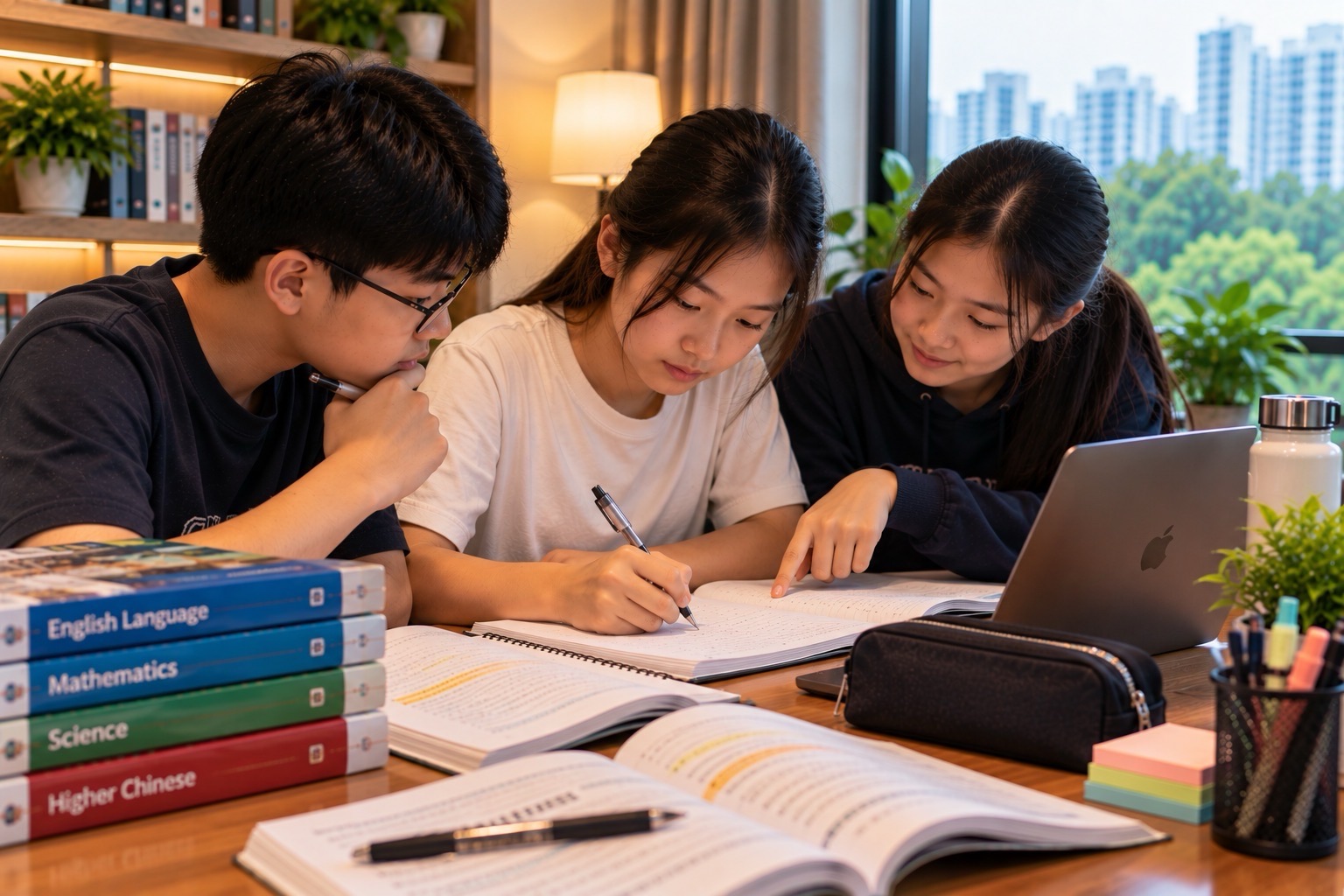
In an appropriate three-student tutorial, a tutor can observe how the pupil reads a question, reasons through a method and explains a conclusion. One student may need help reading graphs, another with algebra, and a third with English inference. Giving everyone the same worksheets simply because they entered through PG2 ignores the actual learning need.
The educator should identify the first incorrect step, explain the principle and test a new example. Progress matters when the child becomes less dependent on the tutor and can apply the skill independently.
A family should also account for CCA, ALP activities, travel and sleep. More tuition is not beneficial if the original difficulty is exhaustion or lack of time.
Frequently asked questions about North Vista PG2
Does North Vista accept PG2 applicants?
Its completed 2026 intake included PG2 pupils with a historical PSLE range of 21–24. Verify current information through MOE SchoolFinder.
Will a score of 24 guarantee a place for 2027?
No. The previous intake’s last admitted score does not fix the next cohort’s cut-off.
Is North Vista in Punggol?
No. It is in neighbouring Sengkang, at 11 Rivervale Link, and may be a relevant option for some Punggol families.
Can a PG2 pupil take G3 subjects?
Under Full SBB, eligible pupils can offer individual subjects at appropriate levels where the school provides them. Check the formal offer and progression criteria.
What is the school’s Applied Learning Programme?
Farm-to-Table, focused on food sustainability through practical STEM and growing-system experiences.
Do all Secondary 1 pupils take part in hydroponics?
The school’s published 2026 Tier 1 description includes all Secondary 1 students in hands-on high-tech growing. Confirm the current cohort’s schedule.
Does every pupil join BioBloom composting?
No. The published Tier 2 programme is for selected Infocomm Club members, not everyone.
What is the LLP?
North Vista uses photography, videography and visual storytelling to develop empathy, values and communication.
Are students assessed as professional photographers?
No. The LLP is a school character and creative-learning programme, not a guarantee of professional media qualification.
Will every pupil join an overseas trip?
No. Overseas learning depends on the school’s current arrangements and individual eligibility or selection.
Does the ALP replace the Science subject syllabus?
No. Applied learning complements the formal examinable subjects; the child’s actual G levels and syllabuses remain relevant.
Should families choose North Vista solely for its historical COP?
No. Consider authentic interest, school support, culture, subject learning, CCA and the daily journey.
Your Next Step
Read North Vista’s official 2026 ALP and LLP pages, examine the full Vistarian Experience, check MOE SchoolFinder and practise the journey from Punggol. Ask the pupil which parts of hydroponics, sustainability or visual storytelling genuinely interest them and what support they need in formal subjects. Rank the school based on real fit, not a historical score presented as a guarantee.
This page is the North Vista PG2 profile for families considering a Sengkang alternative. Other PG2 articles separately cover Punggol’s own secondary schools, the national posting rules and academic subject-level readiness.
Official references and further reading
- North Vista: The Vistarian Experience
- North Vista: Farm-to-Table ALP, updated July 2026
- North Vista: Visual storytelling LLP, updated July 2026
- North Vista: Applied and Creative Studies
- North Vista: Student Development and pastoral care
- North Vista: Science curriculum
- MOE SchoolFinder
- MOE: Understanding historical PSLE Score ranges
- MOE Full Subject-Based Banding
- eduKatePunggol: What is PG2—how to choose secondary schools


