
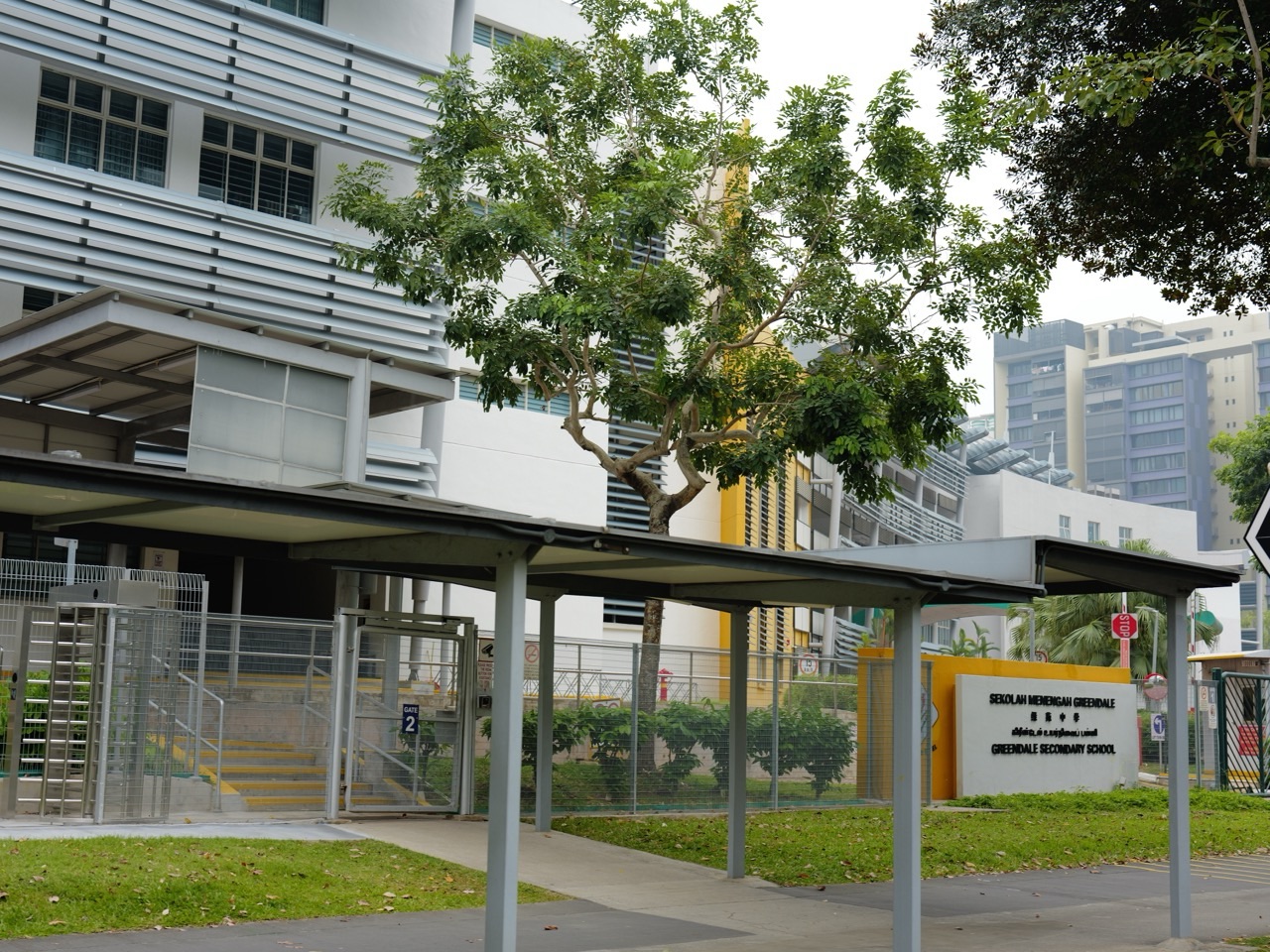
Posting Group 2 (PG2) does not automatically prevent a Punggol secondary-school pupil from studying Higher Mother Tongue Language (HMTL). From the 2026 Secondary 1 intake, the Ministry of Education expanded HMTL eligibility: students who obtained AL1 or AL2 in their PSLE Mother Tongue Language, or Distinction or Merit in PSLE Higher Mother Tongue, can offer secondary HMTL regardless of their overall PSLE Score. A child entering through PG2 can therefore have a language strength that deserves recognition, even when the overall posting result places the child in the middle admission group.
Parents should still check the actual subject offer and arrangements at Edgefield Secondary, Greendale Secondary, Punggol Secondary, Yusof Ishak Secondary or the school to which their child was posted. Mother Tongue, Higher Mother Tongue, Mother Tongue B and exemptions are not interchangeable terms, and the language timetable, entry criteria and future examinations may be different. For the SEC examinations beginning in 2027, G2 Chinese, Malay and Tamil have their own SEAB syllabuses; HMTL is a different language course. Choosing a suitable option requires the pupil’s language results, enjoyment, writing and reading readiness, total workload and official school guidance.
- PG2: Posting Group 2 is a Secondary 1 admission group, not a language-ability category.
- 2026 HMTL expansion: AL1 or AL2 in PSLE MTL, or Distinction or Merit in PSLE HMTL, may qualify a Secondary 1 student to offer HMTL regardless of overall PSLE Score.
- Languages: Check the options relevant to Chinese, Malay or Tamil rather than assuming all language courses are identical.
- School offer: Eligibility and arrangements must be confirmed with the admitting school; subject levels and timetables matter.
- G2 SEC: The published 2027 syllabuses list G2 Chinese K220, Malay K221 and Tamil K222.
- MTL B and exemption: These are separate arrangements with specific requirements; neither is a general alternative that families can select by preference alone.
- Language proficiency: Reading, writing, oral communication, listening and everyday meaningful use deserve attention.
- Study plan: Begin with a language profile, address the earliest barrier and practise retrieval and authentic communication.
- Future choices: Do not presume a JC bonus, exemption or admissions advantage without checking the exact current rules.
- Next action: Read the child’s subject-level offer and ask the school which language option is appropriate and how it will be timetabled.
Definition lock: Mother Tongue choices are not Posting Groups
Full Subject-Based Banding separated the old idea of a single secondary-school academic stream from individual subject levels. PG2 is the route through which a pupil may enter a secondary school, whereas G2 is the level of an individual subject. Mother Tongue and Higher Mother Tongue describe language courses and their learning demands. A pupil can therefore enter school through PG2 while displaying considerable strength in a language. The original PSLE total does not erase that individual strength.
The distinction matters at home. A parent might say, “Our child is PG2 so Higher Chinese is impossible.” Under MOE’s expanded HMTL policy from 2026, that statement can be wrong. The correct first question is what the pupil actually obtained in the relevant PSLE language subject. The next question is what the school has formally offered and how the proposed course fits the child’s broader studies.
At the opposite extreme, an eligible child should not automatically be enrolled in the most demanding course without discussing interest, capacity and school expectations. Language study involves regular reading, listening, oral practice, vocabulary and writing; a higher course can deepen appreciation but also add workload. The right choice requires the student to use language meaningfully, not merely collect a label.
This is the PG2 language-options article in eduKatePunggol. Its job is to distinguish course eligibility, practical school decisions and ways to strengthen proficiency. General PG2 admission, school ranking and SEC aggregate mapping are treated in separate guides.
What changed for Higher Mother Tongue in 2026?
Before the expansion, the published HMTL eligibility system considered a pupil’s overall PSLE Score as well as language results. From 2026, MOE expressly broadened access so that Secondary 1 pupils with strong language performance can offer HMTL irrespective of their overall PSLE Score. The key published qualifying performances are AL1 or AL2 in PSLE Mother Tongue, or Distinction or Merit in PSLE Higher Mother Tongue. That change recognises that a pupil’s overall PSLE score may hide a particular linguistic talent.
Take a hypothetical learner who received a PSLE total that places the student in PG2, but achieved AL2 in Malay. The total describes admission eligibility; the language result provides separate evidence of Malay readiness. The family should investigate HMTL as a real option rather than rejecting it based on an outdated chart. This does not mean the child is guaranteed a particular school’s timetable or a course that the school has not confirmed.
The policy does not declare that every pupil should take HMTL. Parents need to distinguish being eligible from being willing and ready. The student may enjoy the language and welcome deeper study, or may prefer to consolidate another subject. Discuss the actual additional learning, assessment and school arrangements before making the decision.
When reading online pages, check the date. A document describing pre-2026 PSLE total restrictions may be historically accurate but incomplete for a Secondary 1 student admitted in 2027. The current MOE announcement and receiving-school guidance should control.

Why the total PSLE Score can hide a language strength
The PSLE Score is the sum of Achievement Levels across four subjects. It is useful for secondary-school allocation but compresses a varied academic profile into one number. Two students with the same score may differ significantly in English, Mathematics, Science and Mother Tongue. A family that relies entirely on the total may overlook what the child does very well.
Imagine one pupil who understands Chinese news reports comfortably but finds mathematical word problems difficult. A second may be a strong mathematician who needs more practice with written Chinese. A single score cannot describe the different support and challenge each needs. Full SBB attempts to recognise such variation through individual subject arrangements, and the HMTL expansion is a related recognition of language ability.
Parents should keep a copy of the individual PSLE subject results, not just the total. Add observations from the child’s actual work: Can the pupil read sustained passages, explain an argument, write original sentences and hold a meaningful conversation? Those examples help the family decide whether a higher course is likely to be productive.
The educational objective is not to prove that the child deserves an alternative social label. It is to give appropriate opportunities for the strengths that already exist while repairing weaker foundations in other subjects.
Chinese Language and Higher Chinese: what the family should examine
For a child studying Chinese, the name Higher Chinese may signal a stronger demand in reading, language use and writing. But the family should inspect actual tasks rather than assume it is simply a version of ordinary Chinese with a few extra difficult vocabulary words. More advanced language work involves sustained comprehension, cultural awareness, precise expression and confidence handling unfamiliar material.
Ask the teenager to read a paragraph from an appropriately challenging text and explain the main idea in Chinese. Then ask what evidence supports a particular interpretation. Can the student explain the relationship between two ideas without relying on an English translation of every sentence? A child who has memorised complex phrases may still struggle to communicate naturally. Those weaknesses should be identified honestly.
For writing, begin with purpose and audience. The pupil should know who is being addressed, what information matters and which tone fits. Practise constructing a coherent response before adding decorative expressions. A fluent but irrelevant paragraph does not become strong simply because it contains idioms. A higher course rewards genuine language control rather than a collection of impressive-sounding phrases.
Check any school-specific HCL or HMTL offer and the applicable conditions before committing. Do not infer that attending a particular Punggol secondary school guarantees a course merely because the school has an attractive Chinese cultural programme.
Malay Language: fluency at home and accuracy at school
A child who hears or speaks Malay at home may be comfortable in conversation but less certain when writing formal explanations. Another may read school passages well but hesitate to speak spontaneously. Both learners have strengths and gaps that need different responses. A PG2 pupil who obtained a strong PSLE Malay result may be eligible to consider Higher Malay under the updated framework, but the choice should reflect more than a grade.
Begin by asking the child to recount an ordinary event in Malay, then ask follow-up questions that require a reason or comparison. Can the pupil maintain the sequence and choose suitable vocabulary? For writing, provide a meaningful audience such as a teacher, friend or community reader. An answer should include relevant detail in clear order rather than simply memorised phrases that do not suit the situation.
Reading should be broader than examination passages alone. Appropriate news, stories and cultural material can develop vocabulary through context. After reading, ask what the text actually says, what the writer appears to mean and which expression was unfamiliar. Help the student use one new phrase in a different conversation. That is stronger evidence of learning than repeating a list once.
If a child has a Higher Malay offer, discuss weekly workload and available school support. Respect the student’s interest and the specific language teacher’s advice. The course choice is about deepening genuine proficiency, not winning a competition between families.
Tamil Language: meaningful use and written precision
Tamil proficiency can also differ across listening, speaking, reading and writing. A pupil may understand relatives but need time to read unfamiliar written material; another may be comfortable with school texts but avoid extended conversation. The correct response begins with identifying the actual skill rather than labelling the child generally strong or weak in Tamil.
Use short, age-appropriate texts and ask the student to explain what happened, what the writer intended and how the evidence supports that interpretation. Follow with a brief spoken summary and then a written one. If the pupil can explain the idea orally but struggles to write it, the problem may involve spelling, sentence organisation or vocabulary retrieval rather than overall comprehension.
For students who qualify to consider Higher Tamil under the published expansion, ask the school what the course entails and which arrangements are available for the particular cohort. Parents should not assume that every campus offers every form of HMTL through the same timetable. Where additional arrangements are needed, the school is the proper source of current instructions.
Support language as part of life, not only as an examination subject. Conversation, stories, theatre, music or cultural events may provide authentic contexts for using Tamil. A student who finds personal meaning in the language often has a clearer reason to sustain the work.
What G2 Chinese, Malay and Tamil mean for SEC 2027
SEAB’s published 2027 Singapore-Cambridge Secondary Education Certificate syllabuses list Chinese Language K220, Malay Language K221 and Tamil Language K222 at G2. These are specific G2 subject codes. The syllabus pages explain examinable content and the relevant assessment structure. They do not make PG2 a separate examination category.
A child admitted through PG2 who later sits a G2 Chinese paper is being examined at the stated subject level. Another PG2 child may have a different formal language subject. The actual SEC record reflects the examined subjects and levels rather than printing a general “PG2 examination” result. This is why parents should preserve the distinction between admission, instruction and national qualification.
Do not rely on the old N(A) subject codes when preparing for a 2027 SEC syllabus. SEAB provides reference codes for older examinations, but the new SEC code matters for actual preparation. Nor should a parent search for a past paper and assume it matches every component of the current syllabus. Read the subject-specific official document and check for any revisions.
The written examination calendar, including the September timing for English and Mother Tongue, should be confirmed through the actual graduating cohort’s SEAB timetable. A pupil entering Secondary 1 in 2027 will not necessarily graduate in the same year, so the 2027 syllabus is useful background rather than a final list of requirements for every future cohort.
Do not confuse G2 Mother Tongue with Higher Mother Tongue
G2 is a General subject level within Full SBB. Higher Mother Tongue is a more demanding language course with its own requirements. One should never interpret the word “Higher” as proof that the pupil has moved from PG2 to PG3 across all subjects. Such language confuses the child and can cause parents to make incorrect comparisons.
In practice, the teenager’s timetable may include English and Mathematics at their offered levels, together with a distinct Mother Tongue arrangement. The parent should read the formal subject names and codes issued by the school. A casual term like “higher language class” may not identify the exact examined syllabus or the course’s requirements.
The student also needs to know whether an HMTL option creates additional study hours or different tasks. A learner can be capable and interested, yet find the combined weekly load difficult after a late CCA or long journey. Discuss the whole schedule rather than viewing each subject in isolation.
A good school-home conversation asks, “What language work is the child expected to do, and what evidence will show readiness?” That is more helpful than making the course a status symbol.
Mother Tongue Language B: a separate pathway
Mother Tongue Language B (MTL B) is a distinct curriculum arrangement, not a convenient substitute a family can select merely because the ordinary Mother Tongue examination appears challenging. The school and MOE determine eligibility using the applicable rules and assessment of learning needs. Families should not assume that a PG2 pupil automatically qualifies, or that taking MTL B would mean the pupil is exempt from all Mother Tongue requirements.
There is a difference between a language learning difficulty, lower proficiency due to limited everyday exposure, and a medically or educationally documented need for a different arrangement. A parent should describe the real problem and ask the school what options exist. The child may need structured support within the present course rather than a different course category.
MTL B may have implications for examination reporting and later academic pathways. Those should be checked in the specific current official guidance instead of inferred from the word “B”. A course’s grading scheme and how a later institution treats it can matter more than its apparent name.
If a student is struggling, begin with work samples. Can the child understand oral instructions? Read a short text? Organise a response? The school will be better able to guide an appropriate option when the issue is described precisely.
Mother Tongue exemptions: why informal assumptions are risky
An exemption from Mother Tongue is not the same as changing between G levels or choosing to stop a difficult subject. MOE has formal exemption policies and application procedures for eligible circumstances. The family should follow the school and MOE routes, provide legitimate supporting information where required and avoid relying on social-media anecdotes.
A parent may hear that another child received an exemption and conclude that their own pupil will qualify for the same reason. That is not reliable because the relevant circumstances may differ. A child who uses several languages at home, a pupil returning from overseas and a pupil with documented special educational needs may raise distinct questions. An ordinary preference to concentrate on Mathematics is not automatically an exemption criterion.
School staff can explain which forms, evidence and timelines are applicable. Families should preserve confidentiality and avoid sharing detailed medical or educational reports in a public parent group. A valid request can be discussed respectfully without making the student feel that the language has become an embarrassment.
Where an exemption or alternative arrangement is formally approved, ask how the school will document it and how it affects examinations or later options. Never guess the implications from the name alone.
Language choice should consider what the student actually enjoys
A good language programme can become a source of intellectual pleasure, cultural connection and communication confidence. A teenager may love reading stories, interviewing relatives, watching suitable dramas or writing about local experiences. These are meaningful starting points for deeper work. A student who has strong examination marks but no interest may need a different kind of encouragement from one who is eager yet struggling with accuracy.
Ask the pupil what they would like to do with the language outside school. Can they explain a recipe, talk with relatives, read local news or discuss a favourite film? Then link a small weekly exercise to that purpose. A real conversation offers feedback that cannot be obtained from isolated vocabulary memorisation alone.
Do not confuse interest with a guarantee of strong examination performance. Formal writing, comprehension and oral assessments still require preparation. The advantage of authentic interest is that it can sustain practice long enough for those skills to develop. Motivation is a useful input, not a substitute for method.
A family should also remember that culture and language are not identical to ethnicity or the student’s worth. Language choices are educational decisions with rules and practical consequences. The child deserves respect whatever their current level of proficiency.
A diagnostic for pupils who understand but cannot answer
Some children follow a conversation comfortably but perform weakly on comprehension questions. They may understand the story yet fail to recognise what the question demands, choose suitable evidence or phrase a precise response. A parent might respond with more vocabulary lists, but the actual weakness is question interpretation or answer organisation.
Use one short passage. Ask the pupil for a spoken summary, then a direct literal question, then an inference requiring evidence. If the oral summary is accurate but the written answer is weak, inspect the transition from thought to sentence. Is there missing vocabulary? Weak grammar? Poor focus? The correction should address the actual break.
Next teach the pupil to identify the required action in each question. Does it ask them to state, explain, compare or infer? Write a short answer that performs that action. Require the child to show which part of the passage supports the response. In time, the student can use the same routine without adult prompting.
The goal is not length. A precise answer that addresses the question may be stronger than a long paragraph full of loosely related phrases.
A diagnostic for pupils who memorise but cannot speak
Another common pattern is a student who performs well on rehearsed sentences but becomes silent when the topic changes. The child may have learned an oral script without developing flexible language. A parent can identify this by asking an ordinary follow-up question that requires adaptation rather than repetition.
Begin with a familiar topic and give the student time to respond. If the pupil stops, offer a choice of two possible directions rather than supplying the complete sentence. Then ask for a reason, example or comparison. Over several sessions, reduce prompts so the teenager can sustain the discussion independently. This is gradual learning, not an instant performance test.
Avoid correcting every small grammatical error mid-sentence. Select one important issue after the thought has been completed and practise it briefly. Constant interruption can make a nervous speaker less willing to try. The child needs both accurate feedback and opportunities to communicate meaningfully.
Higher Mother Tongue study may demand stronger control, but the same principle applies at every language level: flexible use shows deeper understanding than mechanical recital.
The role of reading and vocabulary in higher language study
Vocabulary becomes useful when a learner can recognise a word in context, retrieve it when needed and use it appropriately in a new sentence. Memorising a dictionary definition is only one step. A student may recognise the written form without understanding its tone, register or typical combinations. Reading widely helps connect these features.
Choose material at a level the pupil can largely follow, with some unfamiliar expressions worth investigating. Ask for the main idea first, then select only a few words that genuinely affect comprehension. Later, ask the child to use those words in a different context. Review them after several days. This spacing helps the words remain available beyond the original lesson.
For students who qualify to consider HMTL, a higher volume of reading can be productive if it is manageable and enjoyable. However, difficult material should not be chosen solely to signal ambition. A book that the teenager cannot follow may generate little understanding and unnecessary discouragement.
Writing and oral practice should connect to the reading. A learner can summarise an argument, describe the author’s position or disagree respectfully using new vocabulary. That is how words become tools for thinking.
Comparing school options without making unsupported promises
Parents may want to know which of the four Punggol schools is “best for HMTL”. That cannot be answered responsibly from the admission group alone. Schools may differ in language course offerings, class arrangements, programmes and partnerships. A child may also have options involving another approved location or arrangement, depending on current policy. These facts must be verified with the receiving school.
Start by asking whether the school currently offers the specific language course to the student’s cohort and how it is timetabled. Then ask about workload, teaching support and official examination arrangements. If the student has HMTL eligibility under the published 2026 expansion, bring the individual PSLE language result to the discussion.
A cultural event or competition is a useful extra opportunity but not a substitute for confirming the formal course. A school that holds a Chinese writing activity, Malay performance or Tamil cultural programme is not thereby proven to offer every higher language level through the standard timetable.
A genuinely helpful school comparison stays close to verifiable facts: course, eligibility, logistics, support and the child’s interest. Admission decisions and academic fit should not be reduced to a marketing ranking.
What a supportive parent-tutor partnership looks like
A student who struggles with language may benefit from teacher consultation, home reading and structured practice. Additional tuition is not automatically necessary. The first step is to identify whether the difficulty lies in comprehension, written expression, vocabulary retrieval, oral confidence or examination timing. A generic promise to “improve Mother Tongue quickly” says little about how that change will occur.
In a small tutorial, an educator can listen to how a pupil interprets a question and correct a precise misunderstanding. For example, the child might choose an appropriate quotation but fail to explain it; the teacher can model one concise reasoning step and test a new passage. Another pupil might write fluent sentences that do not suit the assigned audience. The tutor should address purpose before ornamentation.
For oral practice, a three-student setting may allow short conversations, peer feedback and guided correction. But it should not become an exercise where the strongest speaker dominates. Each pupil needs a clear opportunity to try, receive feedback and practise independently.
The real measure of success is whether the child can read, write and communicate with less support in new contexts. The goal is not permanent dependency on a tutor or a script.
Three hypothetical Punggol language profiles
The strong PSLE language student. A child enters through PG2 after a varied overall PSLE performance but has AL1 in Chinese. The family checks the official HMTL policy and asks the new school about the actual Higher Chinese option. They then discuss reading stamina and the total learning load with the pupil. The language strength is recognised without pretending it decides every other subject.
The confident speaker with weak writing. A PG2 pupil can discuss family topics in Malay but struggles to organise written answers. The family uses short purposeful writing, teacher feedback and revision rather than merely demanding more spoken practice. The child learns that oral and written proficiency can grow at different rates.
The careful reader with oral hesitation. Another student understands Tamil passages but pauses during unfamiliar conversation. The family gives opportunities to recount and explain short everyday experiences and practises flexible follow-up responses. Progress is measured by increasingly independent communication, not by whether the child memorises a perfect speech.
These examples are invented. They demonstrate how a subject-specific educational plan differs from categorising the whole pupil by Posting Group.
Frequently asked questions about PG2 Mother Tongue
Can a PG2 student take Higher Mother Tongue from Secondary 1?
Yes, it can be possible. From 2026, MOE expanded eligibility for students with PSLE MTL AL1 or AL2, or PSLE HMTL Distinction or Merit, regardless of overall PSLE Score. The school must confirm the actual course arrangements.
Does PG2 mean Mother Tongue must be at G2?
No. PG2 is an admission group. Actual subject levels and language course choices follow applicable eligibility, school arrangements and the formal offer.
Is Higher Chinese automatically the same thing as G3 Chinese?
Do not use the labels interchangeably. Check the exact formal course and syllabus. Higher Mother Tongue has its own educational and examination arrangements.
What does AL2 in PSLE Mother Tongue mean for eligibility?
It meets the language-performance condition specified in MOE’s expanded HMTL policy from 2026. The family should still check the receiving school’s current offer and practical arrangements.
What if the pupil does not meet the stated HMTL threshold?
Ask the school about its current policies and whether any school-based consideration may apply. Do not assume a course is automatically available or unavailable without official guidance.
Is MTL B a course that any family may choose?
No. It is a separate arrangement with formal requirements. Consult the school to understand whether it is applicable and what the implications are.
Can parents apply for a Mother Tongue exemption because the child dislikes the subject?
Disliking the subject is not automatically an exemption criterion. MOE’s exemption policy has formal conditions and procedures. Seek official advice.
What are the 2027 SEC codes for G2 MTL?
SEAB lists G2 Chinese K220, G2 Malay K221 and G2 Tamil K222 for school candidates in 2027. Check the syllabus for the child’s actual examination year.
Does HMTL guarantee JC or polytechnic admission?
No. A language course or grade may have particular implications under relevant current rules, but admission always depends on the full eligibility and selection framework.
Do all Punggol schools run HMTL in the same way?
Do not assume so. Confirm the actual language offering, timetable and school arrangements for the specific cohort.
Should parents prioritise a higher language course over wellbeing?
No. Consider readiness, motivation, workload, school advice and the child’s wider life. Suitable challenge should be sustainable.
What if a student is strong orally but weaker in writing?
Use a targeted language plan that separates the skills. Ask for teacher feedback on purpose, organisation and sentence control rather than relying on generic extra vocabulary drills.
Your Next Step
Take the child’s individual PSLE language result and the receiving school’s formal subject offer. Verify HMTL eligibility under the 2026 change, then ask about course workload, timetable and support. If an alternative language arrangement is being considered, use the correct school and MOE process rather than advice from an unrelated family. Practise meaningful reading, writing and conversation while preserving time for the teenager’s other responsibilities.
For the PG2 entry score bands, use eduKatePunggol’s existing PG2 admission guide. For the overall G1/G2/G3 subject portfolio, use the separate subject-level guide. For 2027 SEC scores, use the examination guide. This article remains focused on the Mother Tongue decision and the everyday learning skills behind it.
Official sources and related guides
- MOE: 2025 announcements, expanded HMTL eligibility from 2026
- MOE: Full Subject-Based Banding
- SEAB: 2027 G2 SEC syllabuses for school candidates
- SEAB: SEC examinations and subject levels
- Committee to Promote Chinese Language Learning: Secondary resources
- Malay Language Learning and Promotion Committee: Secondary programmes
- eduKatePunggol: Mother Tongue, HMTL, MTL B and exemptions
- eduKatePunggol: What is PG2, entry and PSLE scores


