
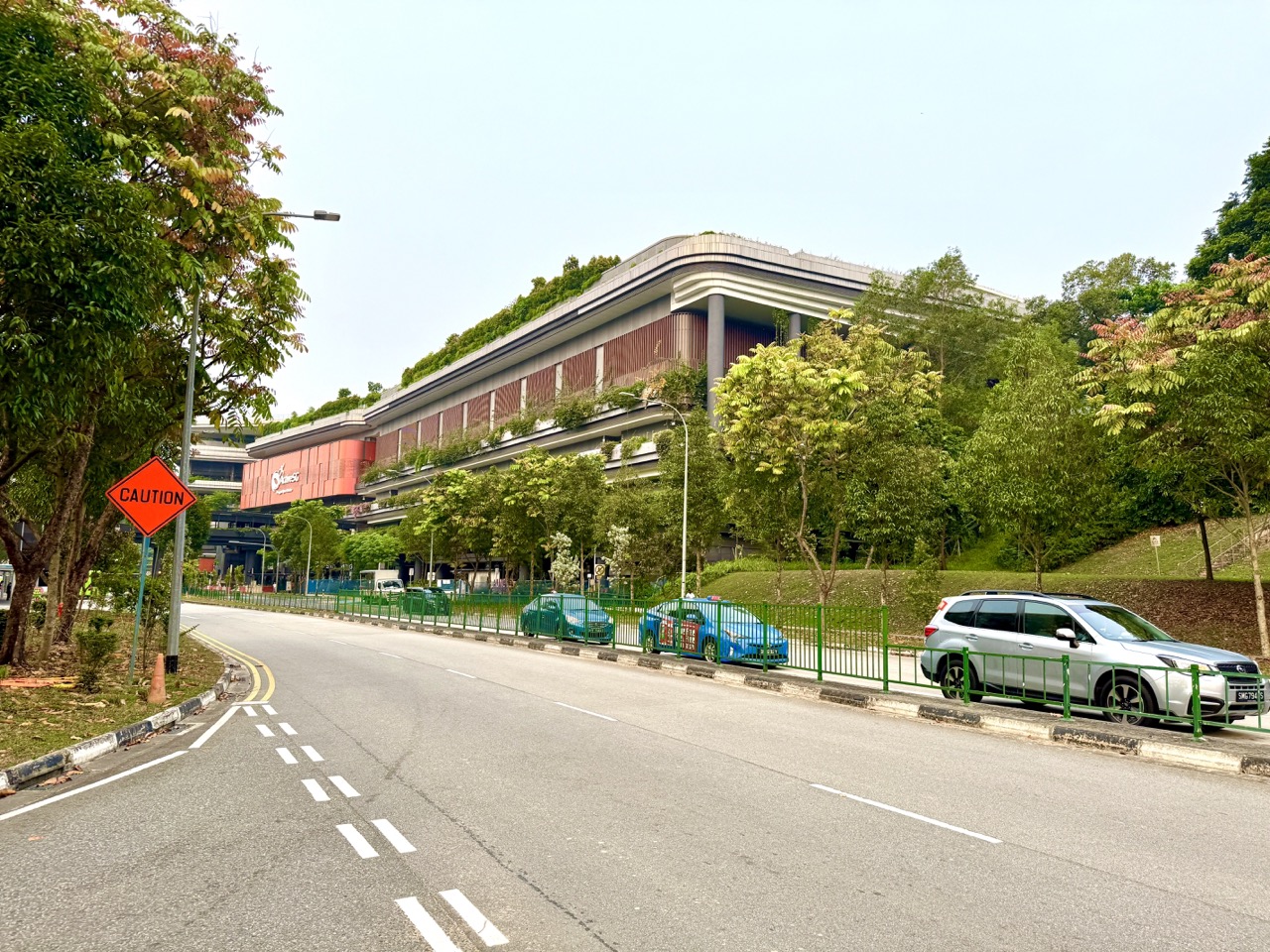
At ActiveSG Punggol Sheltered Courts, tennis players can use a confirmed tennis booking to practise two of the most useful parts of a beginner’s serve: a controlled ball toss and a reliable second delivery. The courts are at 11 Sentul Crescent, Singapore 828656, near Sam Kee LRT and SAFRA Punggol. ActiveSG’s official venue page lists normal hours of 7am to 10pm daily, with weather and closure exceptions. A 30 October 2026 first-hand walkthrough described three tennis courts in the sheltered area. Neither the listed hours nor a picture guarantees a free court; check the exact tennis slot on MyActiveSG+ before travelling.
A tennis serve starts the point, and a first-serve fault gives the server another attempt from the correct side. Two consecutive service faults lose the point. For a new player, learning a predictable toss, reasonable contact height, a safe body position and a less aggressive second serve can create longer, more enjoyable rallies than trying to imitate a professional’s fastest delivery. This guide is not a general beginner’s tennis tour or a doubles-tactics article. It focuses on purposeful service practice within a valid court booking, honest rules, useful drills, common mistakes and what to do when a serving motion causes discomfort.
- Venue: Punggol Sheltered Courts (Pickleball & Tennis), 11 Sentul Crescent, Singapore 828656.
- Facility: tennis-specific court booking; three tennis courts were reported at the October 2026 walkthrough.
- Hours: official normal hours 7am–10pm daily, subject to real-time closures and weather restrictions.
- Core skill: consistent ball release and a controlled first and second serve into the diagonal service box.
- Rule: each point allows a first serve and, after a fault, a second serve; two faults lose the point.
- Starting side: behind the right half of the baseline for the first point of a standard game, alternating thereafter.
- Equipment: suitable tennis racquet, ordinary tennis balls, appropriate shoes, water, towel and booking proof.
- First drill: gentle toss-and-catch, then comfortable serves without maximum effort.
- Safety: use the correct service space, ensure nobody is retrieving balls in the receiving court, and follow local facility rules.
- Sources: https://www.activesgcircle.gov.sg/facilities/punggol-sheltered-courts-pickleball-tennis and https://www.itftennis.com/en/about-us/governance/rules-and-regulations/

Definition lock: a tennis toss is the ball release before a serve
A tennis serve begins when the server releases a ball by hand, or by the racquet in the special case permitted under the rules, and strikes it before the ball touches the ground. The toss describes that release and the ball’s resulting trajectory. A good learning toss is sufficiently predictable that the server can make a controlled contact without lunging, twisting or chasing the ball. The toss is part of the serving motion, not an independent point-scoring skill.
The second serve is the legal second attempt after a first service fault. It is not automatically a different stroke with special court dimensions. It must still land in the correct diagonally opposite service box, follow the position requirements and clear the net under the rules. Players often make it more conservative to improve reliability. Beginners should understand the rule first, then practise a manageable delivery rather than copying an advanced spin serve immediately.
Why learn the toss before trying to hit hard?
A powerful racquet motion cannot compensate consistently for a ball release that lands behind the player or drifts sideways. When the toss varies greatly, the player starts adjusting the whole body at the last moment, which can create inaccurate contact and unnecessary strain. A repeatable comfortable toss gives the hitting arm a clearer task. It is a foundation for reliable service, not a guarantee that every ball will land in.
Spend some of the first court booking simply releasing and catching the ball in a controlled manner. The drill may feel modest, but it lets the player observe where the ball travels without worrying about racquet timing. Better decisions follow from separating the different parts of a difficult movement. Speed can be introduced later if the athlete is ready and appropriately coached.
What is confirmed about tennis at Punggol Sport Centre
The official ActiveSG facility page names Punggol Sheltered Courts (Pickleball & Tennis) and gives 11 Sentul Crescent as its address. It lists normal daily operating hours from seven in the morning to ten at night, while expressly warning that outdoor facilities may close as a weather precaution. A local first-look published 30 October 2026 described three tennis courts and six neighbouring pickleball courts.
That combination establishes the place but not any individual booking. A player must select the tennis product, not assume a pickleball court can be converted for practice. The site began a phased soft launch in late October, and actual inventory, prices and terms may change. MyActiveSG+ is the place to verify a confirmed available slot. Do not tell friends a court is reserved until the official confirmation exists.
How to organise a one-hour service practice
A useful practice requires fewer people than a doubles match. Two players can alternate between serving and receiving or retrieving balls, subject to the operator’s capacity rules. Agree on the purpose before booking: consistency, diagonal placement and safe movement rather than a full competitive set. One person can coordinate payment, while both prepare appropriate balls and shoes.
A practice that is too large can create long queues and scattered balls. If four people attend, rotate short roles and keep everyone inside the authorised court. Do not turn a legitimate recreational booking into an unauthorised paid coaching activity. The group should choose an achievable schedule that leaves time for collecting balls and handing over the court on time.
Getting to the sheltered courts
Punggol Sport Centre is near Sam Kee LRT along Sentul Crescent beside SAFRA Punggol. From Punggol MRT, travellers may need to use the LRT or another safe current route. Construction or operational diversions can alter the last part of a walk, so follow signs rather than relying on an old promotional map. The tennis courts are not the same facility as the separate indoor badminton hall.
Share the venue name, assigned court number and start time. Arrive with enough margin to use a permitted entrance and locate the correct court without entering restricted areas. A calm arrival matters for serving practice because the shoulder, trunk and legs need time to warm up. Racing from the LRT straight into maximal overhead shots is a poor use of the first few minutes.
What the tennis service box actually is
The tennis court contains service boxes on each side of the net. A standard legal serve travels diagonally from the server’s side into the service box opposite. The first point of a standard game begins with the server behind the right half of the baseline; subsequent points alternate sides. The singles and doubles sidelines can differ in rally use, but the diagonal service box remains the intended target.
Before serving, walk around your own booked court and identify the baseline, centre mark, service lines and service boxes. Explain the correct target to any newcomer. This small orientation prevents a common mistake: aiming a serve into the full opposite half of the court and calling it good even though it missed the designated service box. Clear rules make the drill more meaningful.
The first and second service attempts
The server normally receives two opportunities to make a valid serve for a point. A first service fault is followed by a second delivery from the same correct side, without unnecessary delay. If the second attempt is also a fault, the point goes to the receiver. A ball touching the net and then landing in the correct service box is generally a service let, requiring a replay under the rules.
Explain this before a beginner’s first practice game. A new player may think every serve that clips the tape is a fault or that the second serve can be taken from anywhere behind the baseline. Those misunderstandings create confusion. Use the 2026 ITF rules rather than invented shortcuts, and label any modified cooperative drill clearly as a drill.
Why catching an unwanted toss is permitted
The ITF rules explain that a player who releases the ball but chooses not to hit it may catch it or let it bounce without committing a service fault for that reason alone. This is useful for beginners who are still learning a reliable toss. It means a bad release need not become an awkward overhead swing merely to keep the action moving.
Practise noticing the difference between a toss that can be struck comfortably and one that has drifted too far. If the ball is unsuitable, stop and reset according to the rules. The goal is not to interrupt every attempt indefinitely but to develop judgement. A controlled reset is more valuable than a rushed swing into an unsafe position.
Foot faults start before the ball reaches the net
During the service motion, the server must respect the baseline and the relevant imaginary extensions of the centre mark and sideline. Touching or crossing specified boundaries with the feet at the wrong time can be a foot fault even if the ball lands perfectly in the service box. The 2026 tennis rules define the relevant restrictions. A beginner should learn to start in an appropriate stationary position rather than creeping forwards unnoticed.
A simple practice can identify the legal standing area and make a deliberate serve without stepping on the line. Ask a partner to observe casually if they understand the rule, and consult authoritative guidance when uncertain. Do not create an adversarial argument over every centimetre in a friendly session. The lesson is establishing a repeatable legal setup.
Choose a balanced starting stance
A serve involves transferring movement through the body, but a beginner does not need an elaborate professional stance on day one. Start from a stable position behind the correct baseline area, hold the racquet comfortably and face the intended service target in a manner consistent with instruction. The exact foot alignment and movement pattern may vary with the player and the technique being learned.
A qualified coach may help someone choose between common stance variations, but neither should require pain or loss of balance. Avoid twisting sharply or taking large steps simply to imitate an athlete on television. A stable beginning supports a stable toss. If you cannot return to the same starting position between attempts, simplify the movement.
Use a consistent release rather than a forceful throw
The purpose of the toss is to position the ball for contact, not to launch it with maximum speed. An erratic forceful release makes timing harder. A learner can practise lifting the ball with a controlled hand motion and noticing where it rises and falls. The actual ideal height depends on the person’s serve mechanics and comfort rather than one universal measurement.
Do not chase a very high toss because professional players sometimes use one. A high ball may drift more, particularly in a breezy sheltered court. Begin with a toss that lets you reach a comfortable contact position and gradually develop consistency under suitable instruction. Good technique should feel repeatable rather than desperate.
A toss-and-catch drill
Stand in an appropriate starting position behind the service line and practise releasing the ball in a controlled way without swinging the racquet. Watch where the ball rises and whether it returns to a place you can catch comfortably. Repeat at a manageable pace. If the ball keeps drifting, change one aspect of the release rather than everything at once.
This drill isolates ball control from the overhead action. It can help beginners learn why a serve fails even before the racquet moves. Do not leave loose balls scattered around the baseline, where someone may step on them. Keep the practice area tidy and avoid interfering with neighbouring players.
What if the ball moves too far behind you?
A toss that travels well behind the intended contact point may encourage the player to lean or arch backwards unexpectedly. That can reduce balance and make the shoulder movement uncomfortable. If the release is unsuitable, reset rather than forcing a desperate overhead hit. A controlled serve begins from a position the person can manage.
Ask where the ball went instead of assuming the racquet swing is the only problem. The toss itself may require adjustment. One simple observation is often more useful than increasing effort. If an individual experiences back, shoulder or neck pain, stop and seek appropriate guidance instead of repeating an uncomfortable motion.
What if the toss drifts sideways?
An inconsistent sideways release can make the server reach across the body, alter their stance or contact the ball away from the planned position. Outdoors or under a partially open shelter, airflow may contribute to drift, but the player’s release mechanics also matter. Observe several tosses before diagnosing the cause. Do not assume every missed serve is caused by wind.
Try a calmer release and a consistent starting routine. A partner can observe whether the ball moves in the same direction repeatedly. Keep feedback specific, such as ‘that toss moved behind your hitting shoulder,’ rather than saying ‘your serve is bad’. A useful correction deals with the observable problem without overwhelming the learner.
The toss and the contact point belong together
The release is only useful if it allows the racquet to contact the ball in a controlled overhead position. A beginner may practise a good toss in isolation but still swing too late or too early. Introduce the racquet gradually, beginning with comfortable movements and avoiding excessive force. The exact contact height and trajectory should follow suitable technique instruction.
Ask whether the player feels balanced at impact. A clean, comfortable contact is a more meaningful learning goal than a dramatic follow-through. If the player repeatedly makes contact while falling sideways or arching into pain, stop and simplify. The serving motion should support future consistency, not reward a single lucky powerful ball.
Use the shoulder and body without forcing an extreme motion
A tennis serve is a coordinated movement of the legs, trunk, shoulder and arm, but the technique is demanding. Beginners should not attempt an extreme back arch, maximal overhead acceleration or complicated jump before developing basic control. Warm up appropriately and learn the movement from a qualified coach if possible. Personal mobility and previous injuries may affect what is suitable.
An online article cannot observe your shoulder mechanics. Its useful role is to encourage safe progression and clear questions. If the action produces sharp pain, unusual joint symptoms or loss of control, stop. A slower controlled practice serve is more valuable than trying to replicate professional speed at the expense of wellbeing.
First focus on the diagonal box, not the fastest serve
Choose the correct service box and aim to land several gentle controlled serves within its boundaries. There is no need to target a line immediately. A large, comfortable target can help establish the relationship between toss, contact and direction. If nearly every ball misses, slow the action and return to the most basic setup.
Count consistent legal serves rather than raw speed. A serve that reliably starts a friendly rally may be more useful for a new Punggol doubles group than a very fast delivery that regularly becomes a fault. A clear training goal also helps the group share court time without wasting the whole booking on one person’s attempts.
A reliable second serve is a tactical choice
Players often use the second serve more conservatively because another fault would cost the point. For beginners, a controlled delivery with sufficient margin over the net and inside the service box can be sensible. But the details of spin and direction depend on technique and coaching. The second serve should not become an exaggerated weak underarm motion by accident or a rushed attempt with no intention.
Work towards a second serve that the player can repeat. It need not be identical to the first serve, but it must remain legal. The purpose is creating a point that can continue. The best second-serve habit is confidence rooted in control, not fear of making a mistake.
Why margin matters
Aiming directly at a service-box line can produce an impressive ace when everything works, but also a high rate of faults when the player lacks control. Beginners may gain more from aiming safely inside the box and leaving sufficient height over the net. The exact margin is not a fixed number because technique, wind and the player’s ability vary.
Ask the player to identify a broad target and repeat the same gentle serve. If contact becomes reliable, the target can narrow later. Margin is not a sign of weakness. It is a practical way to make the sport playable while developing skill. Rallying more often can make a recreational session more enjoyable for both sides.
What a double fault teaches
Two service faults in a row lose the point. For a beginner, that can be frustrating, especially when friends are waiting to play. Treat the result as feedback. Did the toss drift? Was the player trying to hit too hard? Did the serve target change without a clear reason? These questions identify a specific skill to practise rather than assigning blame.
After a few double faults, pause for a short technique drill or use a suitable coaching exercise if the group agrees. Do not permanently change the official rule and then claim the game was played under standard scoring. A practice session may use modifications, but clarity and respect keep the group together.
Do not confuse a service let with a service fault
A served ball that touches the net and then lands within the correct service box is ordinarily a let, so the serve is replayed. If the ball hits the net and lands outside the correct box, it is a fault. Beginners sometimes confuse the two because they notice the sound of contact with the tape rather than where the ball lands.
Review the rule before a friendly game. Do not argue endlessly about a ball no one could see clearly. A sensible group can replay an uncertain point by agreement when appropriate. The aim is learning the sport’s structure and enjoying tennis, not turning each new player’s serve into a disciplinary hearing.
Understand the deuce and ad sides
In an ordinary game, service begins from behind the right half of the baseline, the deuce side, and alternates with the left half, the ad side, as points proceed. The receiving service box switches correspondingly. Some players use the words right and left rather than deuce and ad, which is fine during an informal lesson as long as the orientation is clear.
A practice can alternate several serves from each legal starting side without playing a full game. This helps the learner recognise that the target changes. Avoid practising only the favourite side for an entire month, because an actual match requires both. The goal is a stable routine that survives the change in service position.
How doubles affects service practice
A player in doubles still serves to the diagonally opposite service box, but the receiving team has a fixed receiving order for a set under standard rules. Partners alternate service games in the prescribed order. This article is about individual serving control rather than a complete doubles-rotation guide, yet the practice should respect those basic distinctions.
Before a doubles practice game, agree who receives on each side. Then let the serving player develop an ordinary first and second serve without being distracted by complex tactics. The more reliable the delivery, the easier it becomes for both teams to enjoy actual rallies. For detailed partner rotation, use the separate doubles guide.
A five-minute pre-serve routine
A helpful routine might involve checking that the correct service box is clear, taking a stable stance, choosing a broad target and making a controlled toss. The player repeats those steps before each practice serve. It need not involve elaborate rituals or delays. The purpose is to reduce variation and help the person focus on one action at a time.
Keep the routine compatible with the pace of the game and the operator’s court schedule. A player should not hold up other groups for several minutes between each serve. When learning, allow normal short pauses and use a structured drill. Predictability, not performance theatre, is the goal.
A ten-minute toss practice
Two people can share an opening block in which one observes and the other releases the ball repeatedly from an appropriate service stance. After a manageable number of attempts, they change roles. The observer can note whether the ball rises consistently and whether the learner can catch an unsuitable toss safely. No hard serves are needed in the opening minutes.
The exercise can progress to a few gentle contacts once the release feels familiar. Avoid collecting many balls all over the court. A short practice with one consistent observation is more useful than hundreds of rushed tosses that leave the player confused. The group can then move to actual service targets.
A twenty-minute first-and-second serve drill
Begin with a warm-up and a small number of controlled first serves. For each fault, practise a deliberate second serve rather than a hurried repeat of the same excessive effort. Note when the ball misses long, wide or into the net. Take ordinary breaks before fatigue changes the movement. The length of this drill is an example, not an official ActiveSG class schedule.
Rotate serving and receiving roles if both people want to learn. A receiver should wait until the court is clear and the server is ready. Do not take photographs or retrieve loose balls during active service. The session works when each participant has a meaningful role and an opportunity to develop consistency.
A one-hour booked practice with a partner
Use the first part to warm up, then spend a focused period on toss-and-catch and gentle serves. Continue with legal serve-and-return exchanges and finish with a few short games in which the player consciously uses the second-serve routine. Leave sufficient time to gather balls and vacate the court before the next booking. An hour is not a promise that every participant will master serving.
Choose one or two learning goals. You might aim for a repeatable toss and fewer double faults, without adding advanced spin technique. A simple post-session question—what was the most controllable part?—helps identify the next drill. Practice becomes effective when it produces understanding, not merely sweat.
An especially useful drill: broad targets
Rather than placing equipment in the service box, identify a broad safe area visually and attempt several controlled deliveries. If the operator permits markers, use only appropriate items that cannot create slip or trip hazards. A beginner may start by trying to land inside the correct box, then gradually aim towards a particular portion when consistency improves.
Count successful legal serves and note how the toss felt. Do not make the target narrower after one lucky attempt. Skill development depends on repeating a movement under manageable conditions. A broad target gives the player more opportunities to recognise a useful action and less reason to jerk the racquet in frustration.
A second useful drill: alternate sides
Serve a few controlled balls from the deuce side, then repeat from the ad side while keeping the same basic preparation routine. Observe whether one side consistently feels awkward. The player may need to adjust their orientation to the intended diagonal target without changing the whole toss unnecessarily. A coach can help with persistent technique differences.
Do not run into neighbouring courts to retrieve balls or stand on the baseline in another group’s area. Keep the drill within a legitimate booking and stop when someone is in the line of play. The value is learning both court orientations without increasing speed beyond comfort.
Why a partner’s feedback should be specific
Comments such as ‘serve better’ offer little guidance. A useful partner might report that the toss moved behind the hitting shoulder, the ball landed beyond the service line or the player started on the wrong side. These are observable facts that help distinguish problems. The partner should avoid diagnosing complex shoulder mechanics without qualification.
Give feedback after short blocks rather than interrupting every attempt. A learner needs some time to explore a small correction. Encourage safe resets when the toss becomes unsuitable. Good practice partnerships rely on patience and a shared purpose rather than a running commentary of faults.
Serving during wind or rain-related changes
The Punggol tennis courts are sheltered, not guaranteed weatherproof. Wind may affect a tossed ball and water can affect court surfaces; lightning and venue rules can suspend play. ActiveSG’s official facility page specifically warns of precautionary outdoor closures in bad weather. Stop when directed and do not treat the roof as an exemption from safety notices.
Even on an open court, avoid forcing a serve when the ball drifts unpredictably or footing becomes slippery. A practical group can postpone, reduce intensity or select another available date. Use the actual booking terms to determine amendments or refunds, not an assumption based on a previous visit.
Should beginners jump to serve?
Professional tennis players may use a dynamic leg drive and leave the ground during the serving action, but a beginner does not need to imitate that movement. The 2026 rules allow certain foot movements and airborne positions within the service rules, yet technical and physical suitability still matter. A rushed jump can disrupt the toss and place unnecessary strain on an unprepared player.
Start with a stable action and progress under appropriate instruction. If the player cannot keep balance at comfortable speed, increasing complexity is unlikely to help. A reliable serve is built from repeatable components, not from dramatic movement. Choose what is safe and appropriate for your actual ability.
Should you learn slice or kick first?
Slice and kick serves use particular spin and contact mechanics and can be useful tactical options for experienced players. They require more than changing the racquet angle at random. A beginner whose toss and ordinary second serve are unreliable may benefit more from developing basic legal placement before introducing advanced spin.
If spin is a genuine goal, qualified coaching can help the player understand the movement safely. Do not force the wrist or shoulder to create a dramatic ball curve after watching a short clip. A short, controlled practice is a better starting point than a complex serve attempted with pain or uncertainty.
What if serving causes shoulder pain?
Overhead serving places demands on the shoulder and surrounding structures. Sharp pain, persistent discomfort, loss of movement or other concerning symptoms should prompt stopping and suitable professional advice. A general online article cannot diagnose an injury or decide the appropriate rehabilitation programme. Do not try to solve pain by repeatedly serving harder.
An individual who is returning after injury or surgery should follow healthcare and qualified coaching guidance. The court booking may still be used for another permitted suitable activity, or the group may need to reschedule. A safe decision is more valuable than completing a particular number of serves.
What if a young child cannot serve overhand?
Children may need age-appropriate balls, racquets and learning activities rather than the full physical demands of an adult serve. A qualified coach can help select an appropriate progression. Parents should not force a small child to hit overhead balls repeatedly because the official court has a net. Learning to coordinate a toss and gentle contact may already be a useful goal.
Explain modifications as learning drills rather than pretending every underhand toss or shortened game follows standard tournament rules. Check venue and supervision conditions, and keep the child out of other players’ swing paths. Positive practice builds confidence more effectively than public criticism about missed service boxes.
A returning adult should not imitate a former fast serve
Someone who played competitive tennis in school may remember their former timing and pace, but current conditioning can be different. Start gently and notice whether the shoulder, back and legs are comfortable. Do not launch immediately into maximal serves. A realistic first goal is a consistent legal delivery that begins a rally.
Build practice around current ability rather than a memory of an earlier athletic peak. A slower session can still be enjoyable, especially when a partner is patient and the venue is nearby. Good local sports habits depend on returning safely, not proving a past record on the first day.
The court must remain safe for other players
Keep spare balls contained so no one steps on them during a service motion. Do not serve while a partner is retrieving a ball in the target service box. A stray tennis ball can be a dangerous obstacle on a neighbouring court, so pause and communicate before retrieval. Never cross someone else’s active rally to collect your equipment.
These habits matter more during repetitive serve drills because many balls may be hit in one direction. Use controlled quantities and collect at sensible intervals. An organised practice protects teammates and adjacent users while reducing time wasted searching for scattered balls. Public court etiquette is part of the skill.
When the court is fully booked
The official facility listing shows that tennis exists at Punggol, but actual slots may be unavailable for a particular hour. Do not show up and assume an empty-looking court can be used without reservation. Search MyActiveSG+ for a suitable time or a separately confirmed alternate venue. A person with balls and a racquet does not have permission to occupy another group’s space.
If a booking is cancelled by the operator, follow official terms and communicate with the practice partner. You may choose to work on permitted off-court visualisation or rest at home rather than improvising overhead serves in a narrow public corridor. Practising safely requires an appropriate environment, not simply enthusiasm.
A four-week serve-learning progression
Week one can focus on a comfortable stance and repeatable ball release. Week two may add gentle racquet contact and a broad diagonal target. Week three can introduce a clear first-then-second-serve sequence, with correct service sides. Week four may use simple games to test whether the routine survives ordinary point pressure. This is a suggested recreational framework, not an official ActiveSG lesson.
Do not force a new skill every week if the basics remain unstable. Repeat the toss drill when needed and seek coaching for difficult technical questions. A player who finishes with fewer rushed attempts and more controlled resets may be improving even when the service speed does not change. Reliable practice values judgement over a calendar.
Five common errors with different causes
A ball that drifts sideways suggests looking at the toss. A contact made while falling backwards suggests reviewing balance and release position. Frequent first-serve faults from excessive force suggest a more controlled target. Repeated foot faults suggest checking starting position. A rushed second serve suggests establishing a calm routine. These are different problems, not one general inability to play tennis.
Correct only one manageable factor at a time. When the cause is uncertain or the serving motion hurts, seek suitable instruction rather than guessing aggressively. A helpful partner can report what was seen without humiliating the learner. The most useful session creates a practical next step.
Frequently asked questions
Where can I practise at Punggol ActiveSG? On a legitimate tennis booking at Punggol Sheltered Courts, 11 Sentul Crescent. Are the courts open daily? The official general hours are 7am to 10pm, subject to closure announcements. What happens after one serve fault? A second service attempt is allowed from the same correct side. What if the second serve also misses? It is a double fault, and the receiver wins the point. May I catch a bad toss? The rules permit the server to catch an abandoned toss or let it bounce rather than strike it.
Must a serve go diagonally? Yes, into the correct service box. Should I copy a professional jump serve? Not as a beginner requirement; use safe appropriate technique. Does court booking include a coach or balls? Verify the actual product; no such inclusion is assumed. What if weather stops play? Follow venue restrictions and booking terms. Is a second serve always slower? Players often choose a more conservative delivery, but there is no special rule requiring a particular speed.
Sources and Your Next Step
The official https://thesmartlocal.com/read/activesg-punggol-sport-centre/‘>TheSmartLocal’s 30 October 2026 walkthrough reported three tennis courts. The https://www.itftennis.com/en/about-us/organisation/tennis-glossary/‘>ITF glossary explain service, toss, foot faults and second serves. Book only through https://edukatepunggol.com/2026/11/01/things-to-do-at-activesg-punggol-friendly-tennis-doubles-match/‘>our separate friendly doubles guide. This article reflects the 1 November 2026 operating context and should be checked against current notices.


