
Schools and education at Punggol include assemblies that can teach shared values, active listening, citizenship and respectful participation beyond ordinary textbook lessons. Morning flag raising, school-wide talks, performances and Character and Citizenship Education activities may have different purposes. The learning value is not measured by how long pupils remain silent: students should be able to identify the main idea, consider supporting examples and connect the message with an appropriate everyday decision. Each school’s reporting rules and assembly programme are different.
This guide explains the difference between flag raising and extended assembly, what respectful audience behaviour involves, how National Education commemorations connect with CCE, and how parents can ask short, useful follow-up questions. Edgefield Primary and Punggol Cove Primary provide official local examples of reporting expectations and values reinforcement, but their details are not rules for every Punggol school. The suggested family activities are fictional and should not be mistaken for a named school’s actual lesson.
- Assemblies can support school values, citizenship and shared communication.
- Daily flag raising and longer assembly programmes are different kinds of gatherings.
- Follow the actual school’s reporting, safety and participation instructions.
- Active listening means identifying the main claim, example and remaining question.
- Respectful audience conduct changes with the purpose of the presentation.
- CCE values should be applied to everyday decisions, not only memorised.
- Four National Education days include Total Defence, International Friendship, Racial Harmony and National Day.
- Student speakers should present accurate, appropriate information and respect privacy.
- Punggol Cove links recess values learning with assembly and Form Teacher Guidance Period.
- Best home follow-up: one short question about what the child learned and how to use it.
Definition lock: school assembly, National Education and active listening
A school assembly is a planned group gathering that may include ceremony, communication, performances, student recognition or learning. Morning flag-raising ceremonies follow their own protocols and are not synonymous with every extended assembly. Character and Citizenship Education develops values, social-emotional capabilities and responsible citizenship; National Education is an important component concerned with identity, understanding Singapore and constructive participation. Active listening means attending to meaning, evidence and the appropriate next response rather than simply being silent.
Five questions that make assembly learning useful
- What was the purpose of the gathering?
- Which school or national rule was involved, if any?
- What main idea or value did the speaker communicate?
- Which example supported the point, and what remains uncertain?
- What action can the pupil responsibly apply afterward?

1. An assembly can teach a shared idea rather than merely fill a timetable
Many children remember assembly as the part of the school day when a large group gathers and listens. That description is accurate for some experiences but misses the educational purpose. A well-designed assembly can introduce a school value, frame a community issue, share a performance or give pupils a common reference point for later discussion. The audience is not simply being kept occupied while lessons wait to begin. The educational question is what the child should understand and how the idea connects with everyday choices.
Character and Citizenship Education in Singapore emphasises values, relationships, responsible choices and active citizenship. Schools may use assembly experiences alongside classroom CCE and Form Teacher Guidance Period to create consistent messages. However, the exact format, frequency and content belong to each school. A Punggol parent should not assume that another institution’s presentation schedule describes the child’s assembly. The school’s published information and current notices are more reliable sources.
What a pupil should notice
An assembly about caring for shared spaces might include an example of a pupil returning materials appropriately. The discussion afterward could ask why the action helped the next user, which responsibility was involved and how to apply the principle elsewhere. Without that connection, the experience may become a slogan heard once and forgotten. Meaning grows when the student recognises a practical decision within their own authority.
Some pupils are attentive during a presentation but struggle to explain its purpose afterward. That does not necessarily mean they were disrespectful. The talk may have included unfamiliar terms, moved quickly or combined several ideas. A short teacher-led reflection can identify the main point and ask for a concrete example. Parents can support the same skill with one simple question rather than demand a long detailed report of every assembly.
A common confusion and a changed-context question
An assembly should also respect the diverse readiness and communication needs of an audience. Students may need suitable seating, clear audio, accessible information or the ability to clarify a point later. These considerations are part of meaningful participation, not evidence that some learners are less interested. A large gathering is a teaching environment with real practical limitations that schools need to manage.
For transfer, imagine a completely different school-wide presentation about responsible use of a shared library. Ask the child to name its main claim, one example and one action they could choose afterward. The ability to reconstruct meaning from a new presentation shows deeper learning than merely remembering where they sat.
2. Morning flag raising and an extended assembly are not the same event
Parents sometimes use assembly to describe both the daily flag-raising ceremony and a longer talk or school-wide programme. Those experiences have different immediate purposes and may follow different school instructions. Morning flag raising includes national and school identity practices, while extended assemblies may feature speakers, performances or CCE topics. A child should be taught which arrangements apply on the actual day rather than assume that all gatherings follow one schedule.
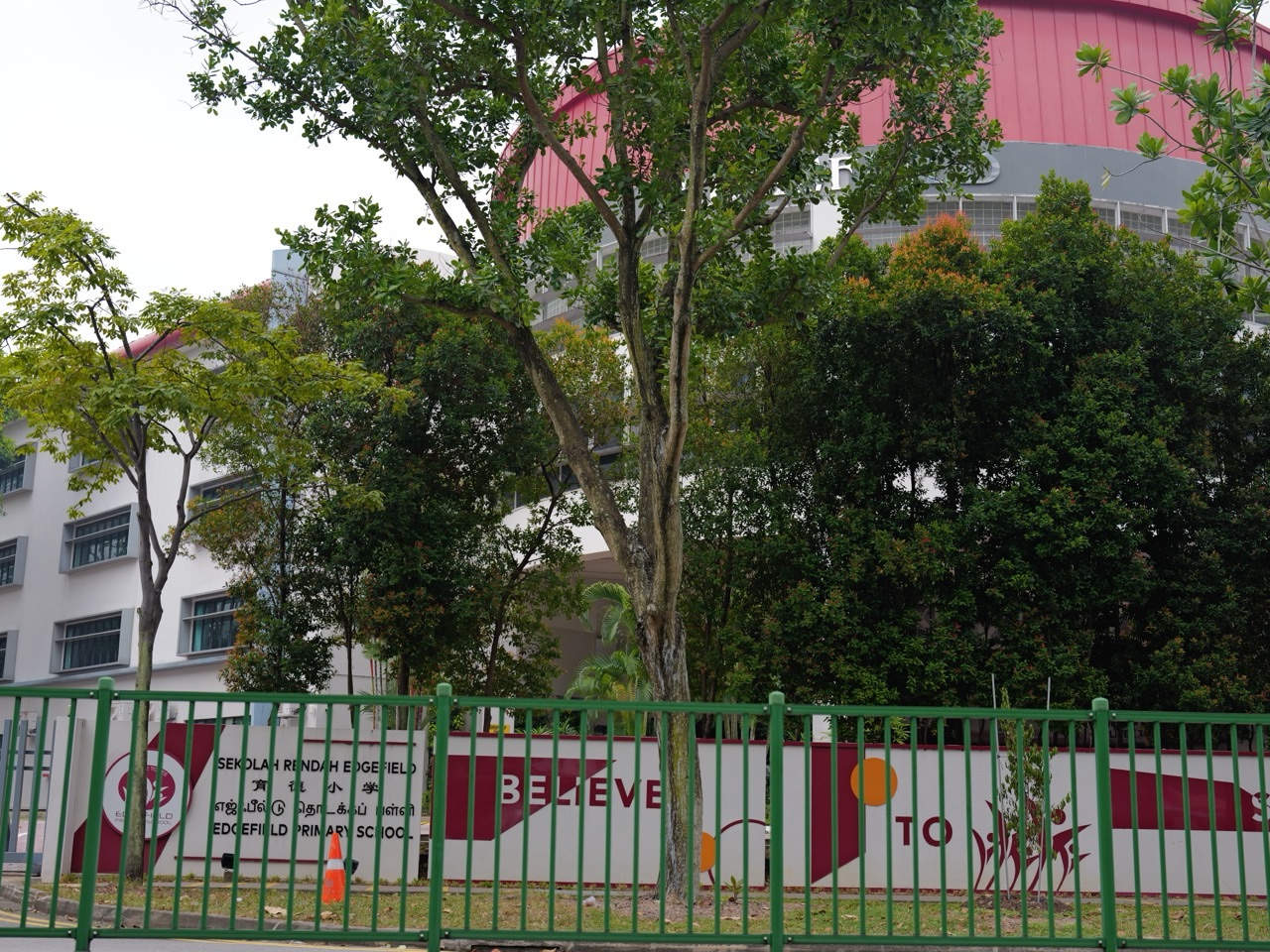
Edgefield Primary School’s school rules, last updated in June 2026, state that pupils should be in class or hall for morning assembly by 7.25 a.m., with late arrival defined after 7.30 a.m. That is a specific school rule, not a Punggol-wide reporting time. Another primary school may use different locations, timing or handover procedures. Parents should follow their own school’s current notices rather than copy Edgefield’s timing into a different family’s morning plan.
What a pupil should notice
Punggol Cove Primary’s published rules explain expectations for the flag-raising ceremony, including the National Anthem and Pledge for Singaporean pupils and respectful standing for non-Singapore citizens. Such protocols have a defined school and national context. Families should check current official guidance and the school’s actual requirements rather than assume a generic public statement settles every individual circumstance.
The practical home-learning skill is understanding why clear routines are useful. A school needs pupils to know where to report, how to move safely and how to participate respectfully so a large gathering can begin without confusion. Children can also learn that punctuality should be supported through a safe home departure plan, not achieved by taking risky shortcuts across roads or station platforms.
A common confusion and a changed-context question
One common error is treating a photograph of a school courtyard as evidence of every pupil’s morning routine. The image cannot show the current timetable, alternative wet-weather arrangements or individual access provisions. Use the school’s written instructions for those details. Similarly, a parent’s recollection from several years ago may be sincere but no longer accurate after updated policies.
For a changed-context exercise, present two fictional school notices with different reporting locations, one for a normal day and another for a weather disruption. Ask the child to identify which instruction applies, what source to check and when a teacher’s clarification is needed. The learner is practising accurate communication rather than merely memorising a location.
3. Active listening is a decision-making skill, not a demand for perfect silence
An audience member has an active cognitive task: identify the main point, connect it to earlier knowledge, recognise supporting examples and decide what is still uncertain. Sitting silently can be part of respectful participation, but silence alone does not prove comprehension. A child may look attentive while missing the key idea, while another may benefit from a short note or question after the presentation. Teachers can help pupils learn what attentive listening actually involves.
Before an age-appropriate talk, ask the pupil to listen for one specific question: ‘What is the speaker asking us to understand or do?’ This gives attention a direction. The child can later describe the main idea in one or two sentences and identify a relevant example. That is more useful than demanding a perfect recollection of every slide or every person’s name.
What a pupil should notice
Listening also involves distinguishing evidence from persuasion. A speaker may describe a personal experience to illustrate kindness; that experience can be meaningful without proving that all pupils will respond identically. If a talk includes an official rule, the audience should know which school or authority issued it and whether it currently applies. Clear thinking is compatible with respectful attention.
A common misconception is that asking a relevant question afterward is an act of disrespect. When the assembly format permits, a specific clarification may show that the pupil has thought about the content. Where questions cannot be asked during the programme, the child can bring the question to the form teacher later. The important skill is choosing an appropriate time and channel, not interrupting a performance to demonstrate curiosity.
A common confusion and a changed-context question
Parents can model active listening in family conversations by paraphrasing a child’s point before disagreeing. If the adult repeatedly checks the phone while telling the pupil to pay attention, the instruction loses credibility. The same habits of focus, understanding and considerate response apply across assemblies, classroom discussion and home life.
For transfer, play or read a short permitted informational explanation at home and ask the child to identify the claim, an example and one unanswered question. A useful response may be brief. The learner has succeeded when they can distinguish the speaker’s point from their own opinion and explain why the example matters.
4. A respectful audience makes room for performers and other listeners
An assembly may involve a speaker, a student performance, an award presentation or a demonstration. Each requires the audience to recognise that other people’s attention and effort matter. Respectful conduct can include following the stated rules, remaining appropriately attentive and avoiding actions that distract or endanger others. The educational goal is not passive obedience for its own sake, but understanding how shared behaviour affects everyone’s ability to participate.
Imagine a fictional pupil who whispers commentary during a classmate’s short speech. The learner might believe the conversation is harmless, but the nearby audience may miss important words and the speaker may lose confidence. A parent can ask which responsibility is involved and how the child could communicate their reaction at a more suitable time. That discussion connects a conduct rule with its human consequences.
What a pupil should notice
Audience conduct can vary with the event. Applause may be appropriate after a performance but not during a moment requiring quiet reflection. Participation in a question-and-answer session may be encouraged, while movement may need to be limited for safety. The child should read and follow the actual school’s instructions rather than learn one rigid rule that claims every assembly must look identical.
Some learners have legitimate needs for additional movement, different seating, communication support or other access arrangements. A respectful audience culture should not turn those differences into public attention or gossip. Parents and teachers can discuss relevant accommodations privately and focus on what helps the child participate meaningfully. Dignity applies both to the performer and to the audience member who needs support.
A common confusion and a changed-context question
A mistake is evaluating assembly success by how loudly students applaud or how polished the photographs look. A performance may provide excellent learning through careful interpretation and feedback even if the applause is restrained. Similarly, a quiet talk can prompt an important change in understanding that is not obvious from the audience’s faces. The better measure is what the programme intended and what pupils can subsequently explain or apply.
For transfer, let the child compare two fictional events: a music performance and an interactive Science demonstration. Which audience responses are suitable for each, and why? The answer should follow the purpose and safety conditions rather than a blanket demand to be as silent as possible.
5. School values should become observable actions after the talk
Schools may talk about responsibility, resilience, empathy or integrity during assemblies. These words can become empty if children are not shown what they look like in an ordinary situation. A good follow-up asks which decision demonstrates the value and what makes the decision difficult. Pupils learn through choosing, explaining and revising actions rather than collecting impressive words for a noticeboard.
Suppose an assembly introduces integrity through the example of a child who finds an item that belongs to someone else. A useful class discussion could ask what the pupil knows, who is responsible for lost property and which school procedure applies. The answer is not simply ‘be honest’ repeated many times. It is identifying a reasonable next action within the child’s actual authority while respecting other people’s possessions.
What a pupil should notice
Resilience offers another example. A child may not solve a difficult task on the first attempt. Persistence can involve trying a different approach, seeking a small clue or pausing appropriately before returning. It does not mean a pupil must continue through unsafe conditions or hide distress. Teachers and parents should describe the specific behaviour they want to support instead of using resilience as an excuse to ignore a learning or wellbeing need.
Empathy also needs precision. A pupil can consider how someone might feel without asserting knowledge of another person’s private thoughts. Ask what was actually observed and what remains uncertain. A respectful question may be more helpful than a confident guess. This connects values education to the evidence and reasoning skills students practise in English and Social Studies.
A common confusion and a changed-context question
The school environment becomes more coherent when the message from assembly matches ordinary adult behaviour. A talk about kindness loses force if students routinely see adults ridicule mistakes. Parents can contribute by describing their own efforts to act respectfully when plans change. Children notice examples, especially when upholding a value is inconvenient.
For independent transfer, give a new invented dilemma about sharing a limited school resource. Ask the pupil to identify the relevant value, a possible action and the people affected. If they can justify a response without repeating the original assembly story, the value has become a decision-making tool.
6. National Education commemorations need context and thoughtful questions
Singapore schools mark Total Defence Day, International Friendship Day, Racial Harmony Day and National Day as important National Education experiences. These are opportunities to explore national identity, the country’s circumstances, relationships across communities and a sense of responsibility for the future. The current Primary CCE syllabus includes school efforts around these commemorative days. Individual schools decide how to organise the associated learning, which may include discussions, activities and assemblies.
Children can remember a colourful performance without understanding the issue it illustrates. A useful follow-up asks what question the event was intended to raise. For Total Defence Day, a child might discuss how people contribute to community resilience in age-appropriate ways. For International Friendship Day, the focus may include Singapore’s connections with others. For Racial Harmony Day, the emphasis can include respect for differences and living together responsibly. National Day provides a setting for considering shared history and future choices.
What a pupil should notice
Historical and civic explanations should use reliable sources and acknowledge complexity. A pupil should not be told that one festival, costume or food item represents every member of a community. Racial harmony does not require pretending differences never exist or forbidding sincere questions. It involves learning to discuss diversity respectfully and checking claims before repeating them. Good citizenship education can invite thoughtful questions alongside appreciation.
Parents should resist comparing one school’s event photographs with another as though decoration budgets measure civic understanding. A quiet discussion with evidence may develop more serious thinking than a highly staged spectacle. The teacher’s goal, pupil reflections and appropriate follow-through matter. Families may also extend a theme through reading or conversation without expecting every child to deliver an emotional declaration on demand.
A common confusion and a changed-context question
Students should learn the difference between a national commemoration and a school’s particular activity. The former provides a shared educational theme; the latter varies by school, year and cohort. Public programme pages can help describe what a named institution has announced, but they cannot prove how each child interpreted the experience. Avoid inventing a universal timetable for all Punggol schools.
For transfer, give a new national issue relevant to everyday community responsibility and ask what a pupil could learn from a balanced school discussion. Can the child separate a historical fact, a value judgement and a practical action? That is civic reasoning beyond memorisation of four day names.
7. Punggol Cove shows how assembly can connect with everyday recess life
Punggol Cove Primary School’s 2026 Character and Citizenship Education page provides a locally specific example. It describes a Learn through Play approach during recess, with teachers using teachable moments and restorative reflection to develop values and social skills. The page says observations from recess play are reinforced during assembly and Form Teacher Guidance Period. This links a daily social experience with a broader educational message rather than treating assembly as an isolated speech.
The documented approach matters because pupils often understand a value more clearly after encountering a real decision. A child who has argued over taking turns may hear a school message about respect and then revisit the situation with a teacher. The aim is not for a parent to judge that school’s outcomes based on one public webpage. The page explains an intended programme; the actual development of individual pupils would require different evidence.
What a pupil should notice
Parents at another Punggol school should not assume the same programme name, recess observation method or assembly content applies there. Their school may use different approaches to similar national CCE aims. Compare the educational principle—connecting values with daily choices—without copying another institution’s operational description. This distinction helps keep local school guides honest and useful.
A simple family extension could discuss a fictional recess disagreement. The parent asks what happened, what each person needed and which repair would be appropriate. Afterward, the child identifies a value that could guide the response. This is a hypothetical activity informed by general principles, not an attempt to recreate a school’s confidential pastoral programme.
A common confusion and a changed-context question
An error is treating restorative reflection as a command that children must forgive immediately. A meaningful repair involves understanding what occurred, taking responsibility for specific actions and respecting boundaries. Serious bullying, threats or safety concerns belong with the school and appropriate safeguarding processes. A general talk about kindness cannot substitute for adult intervention when harm is repeated or severe.
For a changed-context check, let the pupil analyse a new fictional disagreement during group work rather than recess. Can they apply the same value while recognising what needs teacher support? That shows learning moving from one setting to another.
8. Student voice is useful when it is accurate and appropriately supported
Some assemblies give students opportunities to present an idea, perform, ask a question or recognise a class initiative. Speaking in front of peers can develop confidence, planning and communication, but the most useful learning occurs when the pupil has something accurate and meaningful to share. A prepared speech that uses impressive language without evidence may look polished while leaving the audience misinformed. Student voice is strongest when the speaker understands the content.
A short student presentation about conserving paper could state a specific problem, explain one practical choice and acknowledge what the school has actually authorised. The pupil should not invent a statistic claiming that a single reminder saved hundreds of kilograms of waste. A careful speaker may be less dramatic but more responsible. Teachers can model how to link claims to appropriate sources.
What a pupil should notice
Not every child needs to speak publicly at the same age or with the same level of independence. Some may contribute through a storyboard, collaborative script or short rehearsed line. Others may enjoy extended presentation opportunities. The activity’s purpose should determine the expectations and support. A pupil who hesitates once should not be labelled as lacking leadership potential.
Where pupils speak on behalf of others, accuracy and consent matter. A student should not say ‘the whole school wants’ based on a conversation with two friends. The speaker can describe their own perspective or a properly authorised group proposal. School assemblies should not become vehicles for revealing classmates’ private experiences or circulating unsupported claims about other people.
A common confusion and a changed-context question
Feedback should describe an observable decision: the speech answered the question, cited a source, used an example or adjusted to an audience. Praise for ‘being a star’ may be welcome but is not enough to help the child improve a future presentation. A precise correction can be encouraging when it identifies one manageable next step.
For transfer, ask the child to explain the same fictional school initiative to a younger sibling. Can they preserve the accurate facts while changing vocabulary and examples? That shows genuine audience awareness rather than memorisation of one speech.
9. Assembly reflection should be short, specific and honest
Children may spend an extended period listening to a programme, then be asked to summarise everything afterward. A better reflection for many primary pupils can be brief: one main idea, one supporting example and one question or action. This format respects limited attention and avoids turning every school experience into an essay. A reflection can be spoken, written or drawn depending on the task and learner.
Consider a fictional assembly about keeping common spaces welcoming. The child might say, ‘The main idea was to think about the next person who uses our classroom. One example was returning materials after group work. I want to know what to do if something is broken.’ That response shows a grasp of the message and a useful unresolved question. It does not need a long paragraph full of generic statements about being kind.
What a pupil should notice
Parents can distinguish memory from interpretation. A child who remembers the name of a performer may still be uncertain about the topic, while another may recall the core message but not every detail. Ask which part mattered for the learning objective. If the pupil has misunderstood a factual claim, check the responsible source or school communication instead of inventing what the speaker probably meant.
An assembly may also raise questions that are complex or uncomfortable. The learner should have an appropriate channel to seek clarification from a teacher or trusted adult. Avoid requiring the child to publicly disclose personal feelings or private experiences to demonstrate that the programme worked. A meaningful reflection should be respectful and proportionate to the subject.
A common confusion and a changed-context question
A common error is praising only the answer that repeats the school’s preferred slogan word for word. Ask how the value might operate in a new situation and whether different practical choices could reasonably follow. Independent explanation matters more than recitation. A child who can name a limit or ask a careful question may show deeper learning than one who performs enthusiasm.
For a changed-context check, read a short permitted public-information passage rather than an assembly talk and ask for one point, one example and one limitation. If the structure works in the new setting, the learner has gained a general listening-and-reading reflection skill.
10. How parents can support assemblies without overstepping the school
Families should know where to find the school’s actual reporting and assembly instructions, especially when a child is starting at a new campus. The current official school website, term letters and approved communication channels are more useful than a neighbour’s recollection of an older timetable. If the school changes the assembly location or access arrangements, those updates take priority over generic advice. Parents should not use a public photograph to determine entry or collection procedures.
At home, ask one question about a recent school message and help the child connect it to a practical decision. A five-minute discussion can be enough. The family does not need to recreate an entire national commemoration or buy special materials to demonstrate engagement. The purpose is to reinforce understanding through ordinary behaviour and thoughtful conversation.
What a pupil should notice
Parents can also model audience habits. During a community event, let the child observe when the audience listens, applauds or asks questions. Explain how those choices support the speaker and other listeners. The child should not be pressured into public participation with strangers or recorded for social media merely to produce evidence of confidence. Respectful attention is learned through repeated ordinary examples.
Where a child struggles with the noise, crowding or length of assemblies, discuss the specific difficulty with the school privately. The issue may concern access, processing time, physical comfort or another factor. Avoid diagnosing the pupil or blaming staff from one account. Appropriate accommodation is a school and family matter, not something a generic blog post can specify for every learner.
A common confusion and a changed-context question
Parents should distinguish a school values question from a serious welfare concern. A classroom talk about respectful friendship does not by itself resolve repeated bullying or a child reporting feeling unsafe. Use the school’s safeguarding and pastoral processes promptly when necessary. General assembly education can reinforce values, but specific harm requires an appropriate adult response.
For the final transfer test, ask your child to describe one shared value, one real-world example they can verify and one suitable action within their authority. If they can explain the connection and also identify when adult help is needed, the assembly’s message has moved beyond a slogan.
A four-week family listening-and-values practice
Week one: ask for the main point of one school message and let the child explain it in one sentence. Week two: practise distinguishing a factual instruction from a value or opinion using a short fictional announcement. Week three: discuss an invented dilemma involving school materials and ask which value supports a responsible action. Week four: use an unfamiliar school or public presentation and ask for a point, example and question. This is optional home reinforcement, not a school assembly assessment rubric.
Frequently asked questions
Is morning assembly the same as a CCE assembly?
Not necessarily. Schools may conduct daily flag raising and separate or combined longer assembly programmes. Follow the particular school’s current timetable and instructions.
What does MOE Primary CCE teach?
The current syllabus focuses on identity, relationships, choices, values, social-emotional competencies and active citizenship, including National Education learning experiences.
Are all Punggol schools’ morning reporting times the same?
No. Edgefield Primary’s published reporting time is its own school rule. Families should consult their child’s school for current arrangements.
Which National Education commemorative days are used in school?
Total Defence Day, International Friendship Day, Racial Harmony Day and National Day are part of the national learning framework. School activities vary.
What does Punggol Cove Primary say about assemblies?
Its 2026 CCE page describes reinforcing teachable recess-play observations during assembly and Form Teacher Guidance Period, supporting values and social skills.
How should parents ask about an assembly?
Try one specific question about the main idea, an example or an unresolved question instead of requiring a long report.
Can a child question something heard during an assembly?
Yes, respectfully and through an appropriate opportunity or teacher follow-up. Important factual claims should be verified through reliable sources.
Does public-speaking confidence equal character development?
No. A polished speaker still needs accuracy, listening and responsible decisions. Children may contribute meaningfully through different appropriate formats.
Your Next Step
Check your child’s actual school notice for morning reporting and assembly arrangements, then ask them about one recent shared message. Invite an explanation of the main idea, an example and a practical choice that follows from it. If a factual detail seems uncertain, help the child verify it through the appropriate school source rather than assuming that every assembly statement is a rule for all schools.
Official sources and connected Punggol articles
- MOE Primary Character and Citizenship Education Syllabus, implementation from 2022
- Punggol Cove Primary: CCE, assemblies and Form Teacher Guidance Period
- Edgefield Primary: morning assembly and flag-raising school rules, 2026
- Punggol Cove Primary: flag-raising ceremony expectations
- Edgefield Primary: student speaking opportunities in 2026
- MOE SchoolFinder
- Schools and Education at Punggol | Speaking, Listening and Oral Communication for Primary Students
- Schools and Education at Punggol | Social Studies, Neighbourhood Inquiry and Civic Thinking
Editorial reference date: 1 November 2026. National CCE information and specific school rules are attributed to their institutions. The hypothetical assembly and home scenarios are not actual reports of pupil performance, school discipline or private events.


