
In 2027, a Secondary 4 pupil taking G2 Tamil Language K222 must complete two different writing tasks within a two-hour Paper 1: a functional response of at least 90 Tamil words and a longer composition of at least 170 words. The paper carries 30% of the national result. It is not interchangeable with the shorter G1 Tamil K122 online-response examination, and it is not an ordinary G3 Tamil writing paper with a different cover.
The other major requirement is the 2027 SEC G2 Tamil 30/30/30/10 balance. Paper 2 language use and comprehension is a 90-minute e-examination worth 30%; oral reading and video conversation combine for 30%; listening contributes 10%. A student who reads Tamil fluently but cannot explain an inference, write for a particular audience or answer an unprepared oral follow-up needs targeted instruction in the relevant skills, rather than a generic collection of memorised essays.
- Subject: Singapore-Cambridge SEC G2 Tamil Language K222, replacing reference code 1198.
- Paper 1: 2 hours, 60 marks, 30%; functional writing 20 marks (at least 90 Tamil words) and composition 40 marks (at least 170 Tamil words).
- Paper 2: 1 hour 30 minutes, 60 marks, 30%, school-authorised e-examination covering language use and reading comprehension.
- Paper 3 oral: approximately 10–15 minutes, 60 marks and 30%; reading aloud 20 marks and video conversation 40 marks.
- Listening: approximately 30 minutes, 20 marks and 10%; selected-response questions based on spoken texts.
- Recommended focus: correct language in context, evidence-based reading, audience-aware writing, structured original compositions and spontaneous spoken explanations.
The 2027 SEC Tamil syllabus must match the student’s G-level
The SEAB 2027 G2 school-candidate directory lists Tamil Language K222, with previous syllabus code 1198. The full G2 Tamil K222 syllabus for SEC 2027 identifies its precise written, oral and listening requirements.
The code is important because G1 Tamil K122 uses a 50-word online functional response and gives 65% to oral plus listening, whereas G2 K222 includes an additional longer composition and more substantial computer-based language and reading tasks. G3 Tamil K322 has a different syllabus again.
A pupil taking English at G3 does not necessarily take Tamil at the same level. Parents should consult the school examination entry instead of relying on broad labels such as “Secondary 4 Tamil tuition”.
K222 is aligned with Singapore’s secondary Mother Tongue education goals, including understanding and communicating in Tamil according to purpose, audience and context.
What is actually required in the three papers?
Paper 1 combines functional writing and composition. One task asks students to respond appropriately in a stated situation. Another asks for a developed original piece of writing. The pupil must identify what is being requested, choose the required option within the paper and produce relevant, coherent Tamil.
Paper 2 assesses language use and comprehension electronically. It includes contextual choices and cloze or dialogue-related tasks, as well as reading comprehension requiring understanding of practical information and a narrative.
Paper 3 contains oral and listening components. The pupil reads aloud from the prescribed display, discusses a short video stimulus with an examiner, and answers listening questions based on different spoken material.
These four skill areas—functional writing, extended writing, comprehension and spoken interaction—connect with one another. A child who can interpret sentence relationships accurately will often be better placed to express them clearly in writing and speech.
Paper 1 functional writing: why ninety words should be purposeful
A functionally effective response identifies the audience, the reason for writing and the action needed from the reader.
Imagine a fictional school activity where the pupil needs to request information about participation in a Tamil reading festival. The writing should ask for relevant details and present the context concisely.
Adding sophisticated vocabulary without explaining the purpose will not improve the message. Neither will inventing a fee or deadline not given in the stimulus.
A useful tutor can ask the pupil to state the intended outcome in one sentence before writing, then check that the completed response genuinely achieves that outcome.
The syllabus specifies a 90-word minimum for the functional section, but the task may demand particular details, so reaching the number alone is insufficient.
Worked example 1: the purpose of a functional message
Original fictional context: A class is organising a Tamil story-sharing session. A pupil needs to ask a teacher whether advance registration is required and what participants should bring.
A useful Tamil opening could be:
“ஆசிரியரே, பள்ளியில் நடைபெறவுள்ள தமிழ்க் கதைப் பகிர்வு நிகழ்ச்சியைப் பற்றி மேலும் அறிந்துகொள்ள விரும்புகிறேன். இதில் கலந்துகொள்ள முன்பதிவு செய்ய வேண்டுமா? மாணவர்கள் ஏதேனும் புத்தகங்களை எடுத்துவர வேண்டுமா?”
The response identifies the event and asks two practical questions.
This is an illustrative excerpt, not a complete 90-word official answer. A complete response would need to satisfy the entire real task, follow appropriate conventions and meet its length.
A changed practice situation—such as writing to a school club organiser rather than a teacher—can test whether the pupil adapts language and content to a different intended reader.
Worked example 2: audience affects tone
Imagine that the same information must be shared with friends through an informal class message rather than asked of a teacher.
The pupil would not necessarily use identical greetings, sentence forms or closing conventions.
A short message to friends might explain what the event involves and what action they should take, while the formal request to a teacher might ask for details requiring authority or confirmation.
The facts should remain accurate across both versions. The tone changes because the relationship and purpose change.
A teacher who marks only spelling without checking whether the message fits its intended reader may miss a major communication problem.
Students should practise several different fictional audiences, not simply copy one formula for every message.
Paper 1 composition: seventeen dozen copied phrases will not help
The 2027 G2 Tamil Paper 1 composition task expects at least 170 Tamil words, with options including narrative, explanation or an original story as prescribed.
A pupil can reach the word count and still produce a weak answer if the middle of the story does not show how the problem was resolved, or if an expository response repeats the same point with different adjectives.
For narrative writing, a useful plan is setting → change or problem → decision → action → outcome.
For expository writing, the pupil should identify one distinct idea per paragraph, explain how it works and support it with a relevant situation.
The actual question determines which approach suits the task. There is no single model plot that can answer every title or given condition.
Worked example 3: a fictional Tamil story sequence
Original teaching prompt, not an SEC question:
Students prepare materials for a reading exhibition. A strong gust of wind scatters some cards. Two pupils volunteer to collect them while another checks the sequence of the display. The group finishes the preparation before visitors arrive.
A possible Tamil opening:
“எங்கள் பள்ளியில் நடைபெறவிருந்த வாசிப்பு நிகழ்ச்சிக்காக நாங்கள் தயாராகிக் கொண்டிருந்தோம். திடீரெனக் காற்று பலமாக வீசியதால் சில அட்டைகள் கீழே விழுந்தன.”
This introduces the setting and the cause of the disruption.
The next paragraph should describe the specific response rather than jump immediately to a cheerful ending. Who gathered the cards? How did the group decide where each one belonged? What did the main character learn about solving an unexpected problem?
The pupil should continue the story in their own original Tamil. A tutor must not turn the sample into a standard passage for memorisation.
Worked example 4: write the causal middle
Consider an English translation of a vague draft:
“Everyone was worried. We helped one another. Then everything became good.”
The statements provide almost no account of what solved the problem.
A more precise development might say the pupils divided the work, gathered the scattered cards, sorted them by number and checked that the display was complete.
The reader now understands how the group’s actions produced the final result.
The tutor can ask which sentence supplies the cause, which describes the main decision, and which proves the problem was actually resolved.
The same principle applies to many subjects: an explanation should contain the connection between conditions and outcomes, not merely name both endpoints.
Worked example 5: an expository answer needs distinct points
Original fictional topic: “How can students encourage reading in their school community?”
One point could discuss providing an accessible variety of suitable books. A second could explain how pupils might share book recommendations. A third could suggest creating short, inclusive opportunities for reading together.
These are related but distinct approaches. Each can be developed with a concrete explanation of what pupils would do and why it might help.
A weak essay might repeat “reading is important” in three paragraphs without describing any actual measure.
A good tutor helps the child group ideas, test relevance and add only useful supporting detail rather than expanding the essay with disconnected statements.
The resulting writing should reflect the pupil’s own thoughts and appropriate Tamil-language expression.
Paper 2: the e-examination still requires comprehension
The official K222 Paper 2 is a 90-minute, 60-mark e-examination worth 30%.
Its language-use tasks include selecting an appropriate option to complete texts or dialogue, while comprehension includes identifying information in practical material and answering questions about connected texts.
A pupil who is comfortable using a computer may still misunderstand a sentence. Another may understand the Tamil but type slowly or organise responses poorly.
Practise both language reasoning and authorised e-exam familiarisation, but never assume that the student’s personal browser, translation extension or AI assistant will be permitted in the national examination.
The school and SEAB’s rules determine the approved system.
Worked example 6: grammar must match sentence meaning
Consider the original sentence:
“அவள் புத்தகத்தைப் படித்தாள்.”
It states that she read the book.
A different sentence about a reading activity may require an expression referring to the activity rather than the completed act of reading.
The candidate should identify which form suits the subject, verb, time and situation rather than choose whichever option looks most familiar.
Correcting such an error requires understanding the complete sentence.
The tutor can begin with one explanation, then supply changed subjects and contexts so the pupil cannot simply memorise a single word form.
Worked example 7: the importance of word reference
Original fictional Tamil passage:
“மாலா நூலகத்திற்குச் சென்றாள். அங்கே ஒரு புதிய புத்தகத்தைப் பார்த்தாள். பின்னர் அதை எடுத்துப் படித்தாள்.”
Mala went to the library, saw a new book there and subsequently took it to read.
அங்கே refers to the library.
அதை refers to the book.
A child may know that these words mean there and it yet fail to identify which earlier idea each points to.
This is a key connection in reading comprehension. The tutor should ask for the precise referent, then change the place or object in a fresh passage.
Worked example 8: what a passage proves and what it does not
Original fictional Tamil narrative:
“மழை பெய்தது. காவியா தனது தோழிக்குக் குடையைக் கொடுத்தாள். இருவரும் பள்ளிக்குள் சென்றனர்.”
It rained, Kaviya gave an umbrella to her friend, and both went inside the school.
A supported inference is that Kaviya was trying to help her friend in the rainy conditions.
The text does not state that her friend was ill, received a punishment or lost a schoolbag.
The best answer connects the observed action to the suggested reason without adding invented facts.
A pupil who often invents plausible extra events may benefit from short inference questions in which they must first identify the exact phrase supporting the conclusion.
Worked example 9: cause and contrast differ
Cause: “மழை பெய்ததால், குமார் குடையை எடுத்துச் சென்றான்.” Because it rained, Kumar took an umbrella.
Contrast: “மழை பெய்தாலும், குமார் நேரத்திற்குப் பள்ளிக்குச் சென்றான்.” Although it rained, Kumar reached school on time.
The topic is similar, but the logical relationship changes.
A pupil choosing an expression solely because “rain” appears in both sentences will make meaning errors.
Ask whether the second idea happens because of the first, or despite it.
Then give a changed scenario about school activities and have the student form a new sentence independently.
This improves both contextual language use and extended writing.
Comprehension: main idea and detail are not interchangeable
Original fictional passage: “பள்ளியில் மாணவர்களின் வாசிப்புப் பழக்கத்தை ஊக்குவிக்கப் புதிய வாசிப்பு இடம் அமைக்கப்பட்டது. மாணவர்கள் அங்கே புத்தகங்களைப் பகிர்ந்துகொண்டு அவற்றைப் பற்றி பேசலாம்.”
The main idea concerns creating a reading area to encourage reading habits.
Book sharing and discussions are details about how pupils may use it.
A student who says the whole passage is only about one specific book has confused a supporting example with the broader purpose.
A tutor can teach the pupil to ask what remains true across all the passage’s sentences, then identify which details support that statement.
This is particularly useful for open-ended answers and summary skills.
Oral reading: pronunciation is not the whole assessment
The K222 oral component is 60 marks and 30%, including 20 marks for reading aloud and 40 marks for video conversation.
A pupil who can pronounce each Tamil word correctly might still read with pauses that obscure the meaning of the sentence.
A different pupil may group ideas naturally but confuse a specific written form or vowel length.
These need different feedback.
A useful tutor checks accuracy, clarity, pace, phrasing and comprehension of what is read. New unfamiliar passages should be used as the learner becomes more confident.
The actual reading and video delivery must follow the school’s approved electronic oral arrangements.
Worked example 10: short and long vowels still matter
Consider Tamil contrasts such as:
- பல் (tooth) and பால் (milk).
- கல் (stone) and கால் (leg or foot in an appropriate context).
These word pairs demonstrate that vowel length and written form carry meaning.
At Secondary 4, the teacher need not require every pupil to repeat the entire beginner script programme. Instead, diagnose whether a recurring misreading truly comes from an unstable letter or sound distinction.
If it does, targeted pronunciation and sentence-level practice are appropriate.
The learner should then recognise the changed form inside a new text, rather than merely repeat the four familiar words.
Video oral: the answer must change with the question
The official K222 video conversation uses a short visual stimulus. It assesses how the candidate recognises and discusses relevant themes.
Original fictional scene: Pupils are organising books for a reading event. A younger pupil asks for help finding a suitable story.
A first question asks what the students are doing. A relevant answer describes their organisation and help.
A follow-up asks what the candidate would do if the book were unavailable. The learner could suggest checking another appropriate book or asking the teacher or librarian for assistance.
A prepared speech about kindness would be weaker if it did not address the new practical condition.
Teach pupils to understand, respond, explain and adapt—not memorise one polished monologue.
Listening: what was the final instruction?
K222 listening is 20 marks and 10%, using selected-response questions based on spoken material.
Original fictional practice announcement: A school activity was originally set for two o’clock in the hall. Due to another event, it has been moved to the library at two-thirty.
A pupil must identify the final venue and time, not simply the first numbers heard.
The actual Tamil recording may use phrases signalling correction, sequence or condition. The learner should recognise what changes and what remains valid.
A good tutor varies the times, places and voices and checks whether the student has learned the relationship, not merely one recording.
This is a practical communication ability beyond the examination.
Common G2 Tamil errors and the right repair
- Wrong syllabus: using the G1 K122 50-word task for a G2 K222 pupil.
- Functional writing: ignoring the intended audience, or inventing details absent from the stimulus.
- Composition: meeting 170 words without a logical middle or distinct expository points.
- Language use: choosing a grammatical phrase that is wrong for the context.
- Reference: misunderstanding which earlier person or object a short word represents.
- Inference: adding a dramatic event unsupported by the passage.
- Comprehension: confusing the main idea with one supporting detail.
- Oral delivery: reading accurately but unnaturally, or struggling with a particular sound.
- Video conversation: giving an unrelated memorised speech instead of answering the new question.
- Listening: remembering an initial instruction rather than the final one.
The tutor should record the first point of misunderstanding and design a changed task to test whether the repair transferred.
A practical 2027 four-stage study plan
Term 1: confirm the correct paper and establish a baseline
Ask the school to verify G2 Tamil K222. Review actual marked work in functional writing, composition, comprehension and oral. Identify strengths as well as gaps.
Term 2: develop writing that does its job
Teach the 90-word functional response and the 170-word composition as different tasks. Practise audience, relevance, coherent event development and precise Tamil expressions.
Term 3: make comprehension and oral practice independent
Use unfamiliar reading passages, contextual language items and original video prompts. Require the pupil to identify evidence and explain answers in their own words.
Final SEC period: practise the correct duration and format
Rehearse two-hour Paper 1, 90-minute e-Paper 2, video oral and listening according to the official K222 syllabus. Follow the school and SEAB SEC portal for actual examination dates and technical instructions.
Practice should be sufficient to identify real weaknesses, but not so excessive that corrections are never absorbed.
How a three-pupil tutorial can build better Tamil communication
In a small group, one pupil may explain the main idea of a text, another locate evidence and a third challenge an unsupported inference. Each then works on a different independent passage.
For functional writing, pupils can compare intended audiences while drafting their own distinct responses. For oral work, each receives a different follow-up question after viewing a short practice scene.
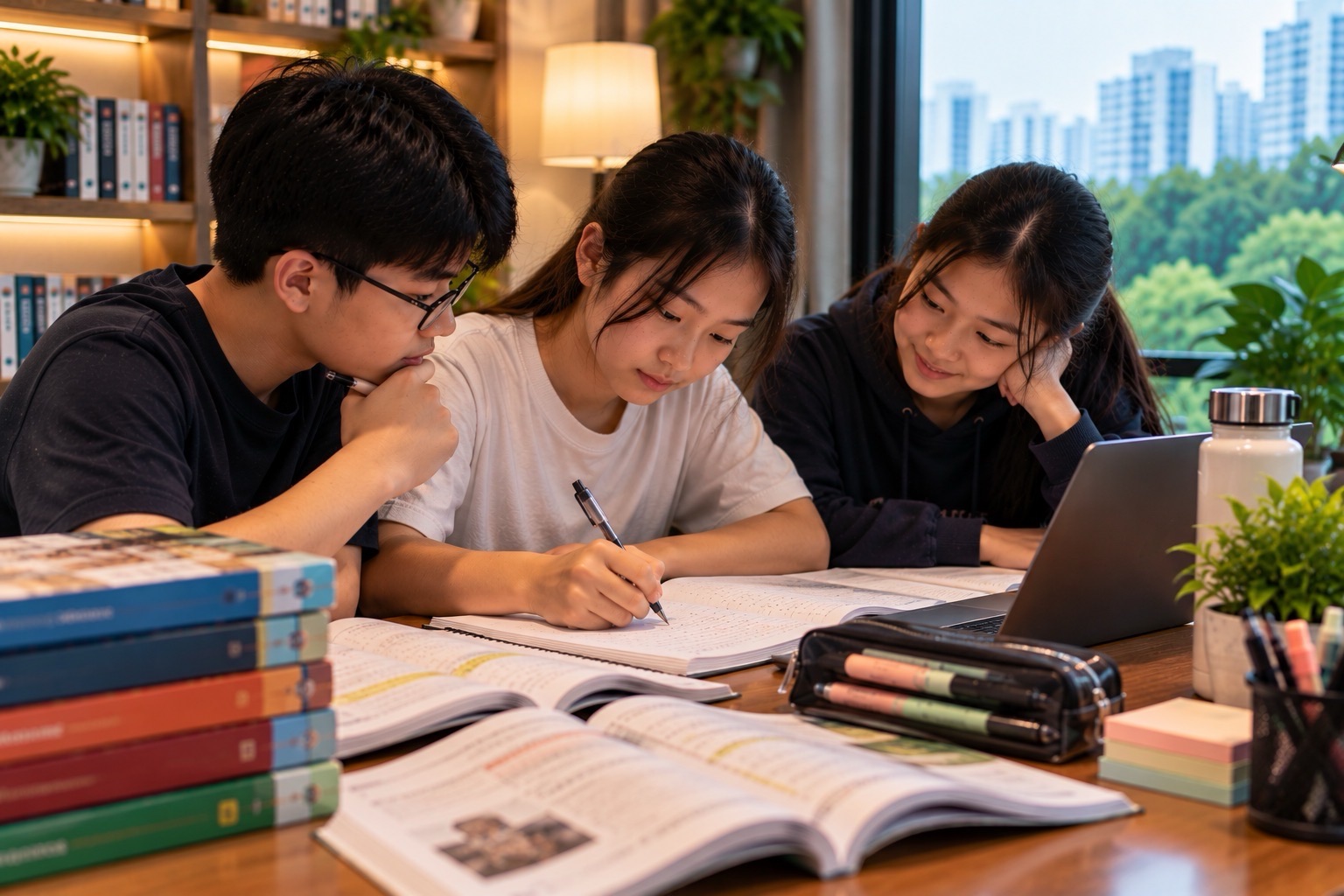
This is the purpose of the eduKate maximum-three-student, 1.5-hour tutorial philosophy: close feedback, active retrieval and individual transfer, not letting one strong child answer everything for the group.
Families should verify that a qualified Tamil tutor who understands K222 SEC 2027 and an appropriate class are actually available. No published article guarantees a particular tuition slot.
Related Punggol guidance: G2 Tamil functional email writing, G2 Tamil cloze through grammar and context, spontaneous Tamil oral conversation, the G1 Tamil K122 comparison and eduKate’s three-student model.
Questions to ask a G2 Tamil specialist
- Is the pupil registered for K222 and does the tutor have the actual 2027 syllabus?
- Can the teacher explain the 30/30/30/10 examination weighting?
- Does Paper 1 practice include both a meaningful functional message and a coherent composition?
- Can the child adapt between different intended audiences and writing purposes?
- Are Tamil language corrections supported by grammar and sentence meaning rather than guesses?
- Can the learner locate evidence for an inference in an unfamiliar passage?
- Does the student practise spontaneous oral follow-ups rather than only memorised responses?
- Is every corrected error retested on a different task?
Frequently asked questions
Does G2 Tamil K222 have two writing tasks in Paper 1?
Yes. Its two-hour Paper 1 requires one functional-writing response and one chosen composition, for 60 marks overall.
Are the minimum lengths the same as G2 Malay?
No. The 2027 G2 Tamil syllabus specifies at least 90 Tamil words for functional writing and 170 for composition. G2 Malay K221 specifies 100 and 200 Malay words respectively.
Is the second paper an e-examination?
Yes. The official K222 scheme identifies Paper 2 as a computer-based language-and-reading examination worth 30%.
What is the oral and listening split?
Oral is 30% (20 reading-aloud marks, 40 video-conversation marks). Listening contributes a further 10%, or 20 raw marks.
Can a pupil rely on a model story for every composition?
No. The response must fit the actual title, situation and required genre. A copied model can be fluent yet irrelevant.
The Punggol 2027 takeaway
G2 Tamil K222 is a balanced written-and-spoken SEC language subject. Effective preparation develops the ability to write for a real audience, create meaningful Tamil narratives, answer contextual comprehension, and participate in a conversation where the question can change. The right tutorial makes that independence visible.
Official references: SEAB G2 Tamil K222 SEC 2027 syllabus · SEAB G2 2027 syllabus directory. Reviewed November 2026; later SEAB and school instructions override this guide.


