
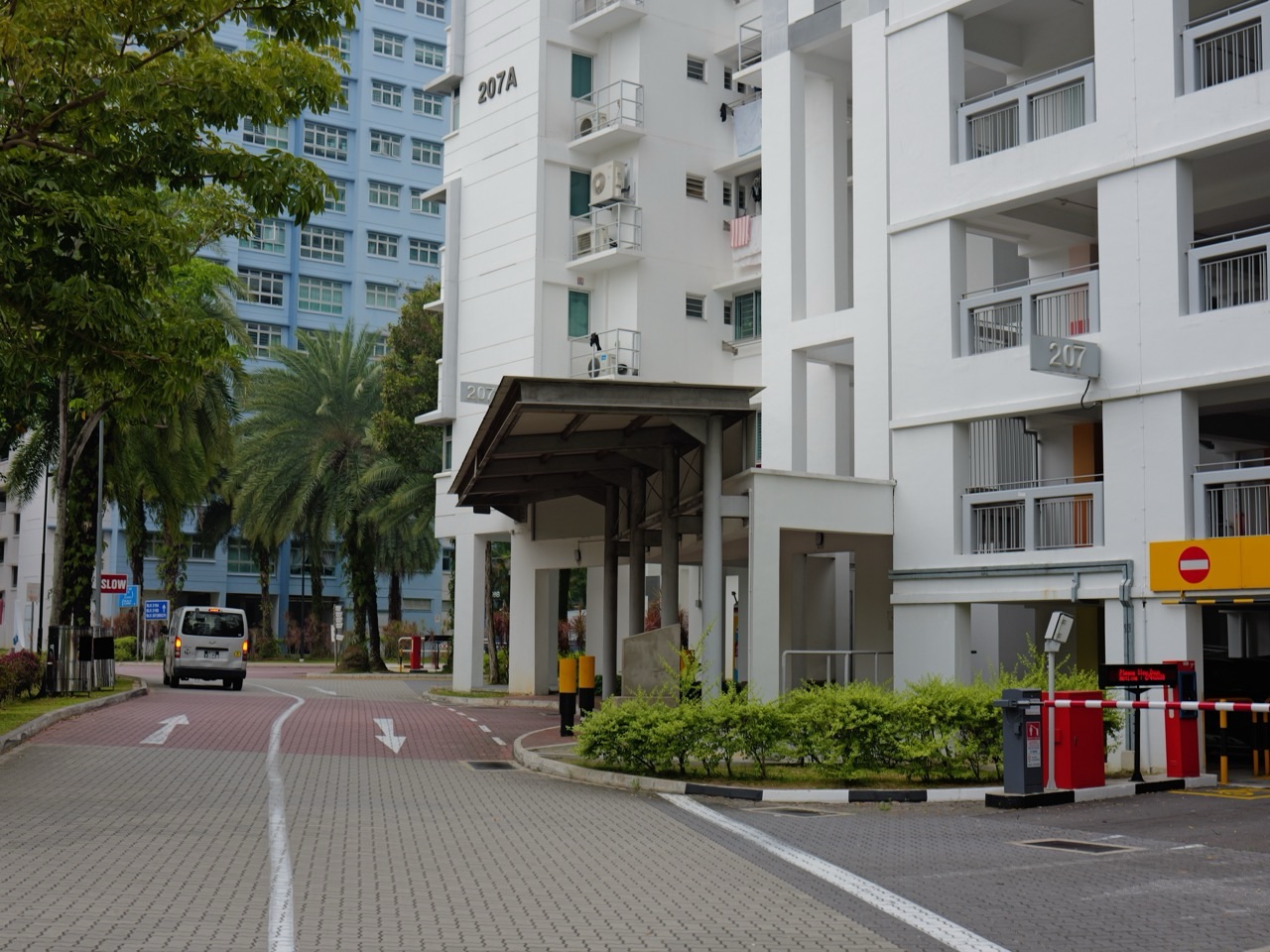
When a lift in a Punggol HDB block becomes unavailable, residents need accurate information about which lift and floor are affected, whether another lift or lawful accessible route exists, and whom to contact about essential movement—not a guess about when repairs will end. Check the current notice, contact the responsible town council or managing party and identify any immediate safety issue. For a resident who uses a wheelchair, cannot manage stairs, is returning from hospital or must move essential care equipment, do not simply recommend walking down several flights. Arrange appropriate assistance and, where necessary, a safe alternative location through the correct people.
The Building and Construction Authority advises reporting lift malfunctions to the lift owner, such as the town council, or the managing agent. If somebody is trapped inside a lift, BCA says to press the alarm, use the posted emergency contact and wait for trained help, never pry open the doors. A lift shutdown may reflect maintenance, a safety fault or planned works, and the duration cannot be inferred from an old estate screenshot. This guide explains how a Punggol household can manage school runs, work, meals, groceries, older relatives and essential appointments during an outage without obstructing the building’s repair process.
- Read the current on-site notice: the exact lift, affected lobby, time and responsible contact matter.
- Do not use or force an out-of-service lift or enter a cordoned area; if trapped, press the alarm and wait for trained assistance.
- Identify who cannot safely use stairs, including wheelchair users and residents with specific mobility restrictions.
- Ask the responsible party about current lawful accessible alternatives and urgent support arrangements.
- Adjust school collection, work arrival, shopping, deliveries and care appointments to suit actual access.
- Keep common corridors and staircases unobstructed; do not store bulky goods at lift landings.
- Document specific defects and report through appropriate town-council channels or OneService for suitable municipal issues.
- Treat restoration dates as provisional until the responsible organisation confirms a lift is back in service.
A stopped lift changes different households in different ways
One resident may take the stairs with little difficulty, while another may be unable to leave the flat safely without lift access. A child in a stroller, an older adult with limited mobility and a person recovering from a hospital stay have different needs. A household plan should begin by identifying who is affected and what assistance is appropriate.
Do not turn the outage into a challenge to prove toughness. A mobility aid or medical restriction is not a personal preference that can simply be ignored. Residents should not attempt risky carries down multiple floors because somebody online says the stairs are manageable. If a safe route is unavailable, seek qualified advice and appropriate support.
At the same time, avoid assuming every notice means the entire block has no lift service. Some developments have multiple lifts, separate lobbies or alternative permitted routes. Verify the actual building arrangement and current signs before changing everyone’s plans.
The useful first step is specific: name the lift, identify the affected floor or entrance and decide which household journeys cannot continue as usual. This prevents both unnecessary panic and dangerous improvisation.
Verify the current notice, not an old community message
A photograph of a maintenance sign can be accurate when taken and misleading when forwarded later. Read the issue date, affected lift, stated work period and contact. If the notice gives an expected end time, treat it as an estimate that may change if safety checks reveal another issue.
Check whether the lift is completely closed, one of several units is unavailable or only a particular entrance is affected. The distinction can change the route for a stroller or wheelchair user. Do not rely on a resident’s broad statement that ‘all lifts are down’ without verifying the actual situation.
Ask the responsible estate organisation for clarification when signs conflict. Use the lift’s management or emergency contact as appropriate. A family should not attempt to inspect machinery, reset equipment or cross a cordon to resolve uncertainty.
Keep one dated note with the relevant information, and replace it when a newer notice appears. The goal is a current household plan, not an archive of every rumour about the lift.
Understand why a lift may be shut down
Lifts can be temporarily unavailable for scheduled maintenance, technical defects, safety inspections, upgrading or protective shutdowns. A closure does not automatically prove poor management, but it can still cause genuine hardship. Accurate diagnosis belongs to the authorised lift contractor and owner, not a resident looking at the landing doors.
BCA regulates lifts and escalators and explains that lift owners have maintenance and safety duties. Technical work must be carried out by appropriately authorised people. A resident can report symptoms or observe that a lift repeatedly fails to arrive, but cannot safely establish the cause by opening covers or attempting a repair.
Planned upgrading works and an unexpected mechanical fault are different situations with different schedules. HDB’s Lift Upgrading Programme concerns particular older blocks and cannot be assumed to apply to every Punggol flat. Avoid using a published programme duration as the repair estimate for a specific neighbourhood lift.
Use BCA’s lift and escalator safety guidance for the governing safety principles. Ask the actual owner or managing party about the particular unit and its current status.

If somebody is trapped, the response must remain professional
A trapped lift passenger should press the alarm button, use the posted emergency contact where possible and wait for trained rescue personnel. BCA explicitly warns against prying open the doors. It is dangerous for neighbours or relatives to attempt their own rescue because the lift may move or be positioned between floors.
People outside can contact the appropriate emergency or lift service channel and communicate the situation calmly. They should not tamper with controls, force the doors or crowd the landing. If there is a genuine medical emergency, use the appropriate emergency service and follow responders’ instructions.
A resident inside the lift may be frightened. Clear reassurance that help has been contacted can be useful when communication is possible. Avoid sending speculative advice about jumping, climbing through a hatch or breaking equipment. Such actions can create additional risk.
The immediate priority is safe professional assistance, not recording dramatic footage for a neighbourhood chat. After the event, the relevant owner and authorities can handle the technical reporting and inspection.
The mobility audit begins at the apartment door
A lift shutdown is not solved merely by locating a staircase. For each affected resident, inspect the full lawful route from home to the destination, without entering restricted areas. Consider whether the person can use stairs safely, whether accessible transport is available and whether necessary assistance is properly arranged.
A person using a wheelchair may have no safe stair alternative. Do not lift the person in their chair or improvise carrying techniques. Seek advice from appropriate care professionals, estate management and relevant support services about safe movement or temporary arrangements.
If essential outpatient care or another appointment is affected, contact the provider early to discuss suitable options. Never simply skip urgent healthcare because the lift is unavailable; equally, do not attempt unsafe transport without proper assistance.
The affected person should participate in decisions wherever possible. Accessibility is about independence and dignity, not only how quickly a helper can move someone down a staircase.
Plan around the person least able to use the alternative
A household with two independent adults and an older parent should not base its plan solely on the adults’ ability to take stairs. The person with the greatest mobility need determines which essential journeys require special attention. Ask about actual needs rather than making assumptions based on age alone.
A person with a temporary injury may need a different arrangement from someone with a long-term mobility disability. Follow professional advice and avoid turning an individual limitation into a general claim that no one in the building can move safely.
If access is seriously compromised for several days, discuss appropriate temporary accommodation or professional assistance where available and suitable. The local town council may help clarify the outage, but a family should not promise that it will automatically provide personal transport, equipment or accommodation without verification.
Prepare a private contact note for affected people. Do not post their diagnoses or personal mobility limitations publicly to attract sympathy. A factual report describing an inaccessible route is usually enough to raise the appropriate access question.
School mornings need a new departure calculation
A lift that is slower or temporarily unavailable can add unpredictable waiting. Parents should calculate the journey from the actual flat door to the authorised school entrance, rather than adding a guessed number of minutes to an old schedule. A child may need adult supervision while the route changes.
If the usual adult needs to accompany a younger pupil downstairs, plan adequate time without rushing on steps or escalators. A parent carrying a baby or stroller should not attempt risky manoeuvres to make up for a delay. The right response may be a different responsible adult or an appropriate travel arrangement.
Where school collection changes, communicate with the institution through its accepted channels. The lift problem does not automatically authorise a neighbour or relative to collect the child without the relevant arrangement.
If an outage affects punctuality seriously, contact the school and explain the factual situation. Avoid inventing an estimated restoration date or telling a child to ignore safety barriers in order to arrive on time.
Work shifts and night returns deserve separate attention
A worker beginning an early shift may encounter the outage before estate offices open. Know the appropriate 24-hour emergency or maintenance contact where available, and test the lawful route in advance when possible. Avoid assuming that a lift will be restored before the shift simply because work began the previous afternoon.
Late-shift workers may return tired and carrying bags. A route that feels manageable in daylight can be harder late at night. Consider lighting, permitted access and fatigue. Do not rush a person carrying a heavy load down a staircase because another family member is waiting.
If the outage creates an exceptional caregiving or work difficulty, discuss a temporary adjustment with the employer where appropriate. Formal flexible-work requests follow the relevant MOM process, but a request does not guarantee any preferred arrangement.
The family should distinguish the temporary transport issue from the worker’s professional obligations. A factual, early conversation about access is more useful than promising a route that has not been checked.
Groceries should become lighter and more deliberate
During a prolonged lift outage, carrying large quantities of groceries may be difficult or unsafe. Instead of making a heavy weekly purchase, consider smaller trips where appropriate, another authorised helper or a suitable delivery arrangement that complies with the actual access conditions. A courier cannot be expected to perform unsafe carrying tasks.
Prioritise necessary food and household essentials. A person who normally buys heavy bulk items may temporarily switch to smaller quantities. That can cost more or require different planning, so consider the family’s budget realistically.
Check where delivery staff may lawfully leave items and who will receive them. Do not allow packages to obstruct stairways or landings. The household may need to coordinate collection during a period when an appropriate adult is available.
Once the lift is restored, the family can return to its preferred pattern. A temporary inconvenience should not become a permanent collection of heavy goods stored in unsafe spaces.
Medical appointments may require more than extra travel time
A resident attending dialysis, rehabilitation or another time-sensitive appointment may face a serious problem if lift access is unavailable. The family should contact the healthcare provider and appropriate service supports promptly to discuss the actual mobility and transport issue. A general article cannot decide whether a visit may safely be delayed.
Do not substitute an untrained carry down stairs for clinical transport or mobility assistance. The risks depend on the person’s condition and the environment. Ask qualified professionals for advice and follow the directions of legitimate service providers.
For routine appointments, the household may be able to adjust timing or use an appropriate accessible route. For urgent matters, follow the appropriate emergency pathway rather than spending critical time debating how long repairs might take.
Keep the person’s private health information limited to those authorised to assist. A lift incident is a local infrastructure problem; it does not make the resident’s entire medical history public information.
Keep the stairwell usable for everyone
If more residents use stairs during the outage, loose parcels, shoes or furniture can become more dangerous. Common stairways, landings and emergency routes should remain clear. Do not use them for temporary storage even if the lift lobby is crowded or a delivery arrives at an inconvenient time.
Residents should not remove protective barriers, wedge fire doors or change equipment without authorisation. The correct route is the one indicated by current legitimate safety signs. If access is unclear, contact the responsible estate party.
Children should be taught to walk normally and use handrails appropriately where suitable rather than running or playing on busy stairs. Adults should also avoid carrying heavy loads that obstruct their view or balance.
A clear stairwell supports the entire block, including emergency responders. Neighbourliness during a lift outage often begins with leaving shared paths safe and unobstructed.
Communicate with couriers without assigning them an unsafe job
Delivery drivers may have jobs scheduled across many stops and may not know that a particular lift is unavailable. Give accurate public access information and state the relevant limitation before delivery where practical. If the package is heavy or bulky, consider suitable alternatives or reschedule rather than demanding a risky trip up many floors.
A household can arrange an authorised adult to receive items at an accessible point where the building rules permit. Do not leave valuable or essential goods unattended on the ground floor without appropriate arrangements.
Avoid sharing personal access codes or a detailed family schedule in order to solve the problem. A simple description of the correct entrance and a contact method may be sufficient.
If deliveries repeatedly fail because of the outage, review the ordering pattern temporarily. The household should not turn a technical building problem into unfair treatment of delivery workers or neighbours.
Report faults with precise evidence, not dramatic conclusions
A useful report describes the affected block, lift number or lobby, date, time and observed problem. A resident may note that a lift remains out of service or that no accessible alternative is indicated. Do not speculate publicly about the technical cause or blame a named worker without evidence.
Contact the responsible town council, management or lift owner through the actual posted channel. BCA advises reporting malfunctions to those responsible. OneService may be suitable for municipal feedback and can route cases to relevant agencies or town councils, but it is not a substitute for urgent emergency assistance.
Include a photograph of the notice or safe external view when genuinely useful. Do not enter restricted machinery areas or position yourself in danger to capture an image. Keep any personal or medical details to the minimum needed for a relevant access request.
For context, consult OneService’s description of how feedback is handled and BCA’s lift safety page. A complaint reference shows that a case was submitted; it is not proof that repairs have been completed.
Different problems may belong to different organisations
A lift outage inside an HDB block is not the same as a defective lift in a private condominium or a station lift at the MRT. Different owners or operating agencies can be responsible. Check the facility’s posted contact and legitimate operator information.
A recurring HDB lift fault may involve the relevant town council and its maintenance contractor, while broader regulatory safety obligations sit within the appropriate framework. Do not assume that emailing an unrelated transport operator will resolve the issue simply because the lift is near an LRT station.
If the problem concerns a temporary pedestrian diversion rather than the lift mechanism, the correct report may be different. Separate the issues: ‘lift out of service’, ‘unsafe stairwell obstruction’ and ‘missing accessible route sign’ are not automatically one technical fault.
Good problem descriptions help the right party respond. Residents can raise several issues when needed, but should avoid mixing every neighbourhood inconvenience into an accusation that makes the immediate access problem difficult to identify.
Planned maintenance is not the same as the Lift Upgrading Programme
HDB’s Lift Upgrading Programme was designed to improve lift access in eligible older blocks, with construction and approval stages. Punggol’s buildings vary in age, and an ordinary lift shutdown cannot be assumed to be part of that programme. Similarly, a multi-day repair should not be described as a major upgrading project without the proper notice.
Read the exact work description. Routine servicing, replacement of a component and comprehensive upgrading can have very different timelines. A resident should not borrow the typical duration of an LUP project to predict how long a particular Punggol lift will remain unavailable.
Ask whether the notice identifies a temporary alternative, testing stage or a confirmed return-to-service announcement. Never enter a lift merely because its doors open if it remains officially cordoned or marked out of service.
For historical programme context, HDB explains the Lift Upgrading Programme. Use it to understand a category of public housing works, not as live service information for your block.
A household may need short-term alternative accommodation
Some residents can continue using their flat during an outage. Others, particularly those who cannot safely use stairs and have essential travel or care needs, may require another arrangement. This is a serious individual decision involving safety, accessibility, resources and professional advice where appropriate.
A family should check whether an appropriate and accessible location is available and suitable, rather than assuming a relative’s home will work. A temporary home may have a different bathroom, lift or transport challenge. Verify the actual space before making a move.
Discuss who will manage necessary medicine, personal items, care equipment and appointments during any change. Do not expose private records to people who do not need them. The person affected should have a voice in the arrangement wherever possible.
The responsible estate organisation may be able to advise about the outage, but do not promise that it must provide hotel accommodation or personal transport in every case. Ask the proper authority and seek suitable assistance based on real circumstances.

Pets, strollers and bicycles create different carrying problems
A stroller may be awkward to move on stairs, while a bicycle or heavy shopping trolley can obstruct others. Do not carry bulky items in a way that compromises balance or blocks a narrow passage. Where necessary, reschedule a journey, seek appropriate assistance or choose another legitimate route.
Pets may also need daily care, but the outage does not justify unsafe lifting, disregarding building rules or leaving an animal unsecured in common areas. Owners should plan humane care according to the animal’s needs and their own capacity.
Children should not be asked to carry oversized equipment down multiple flights simply to keep the family schedule unchanged. Age-appropriate independence and physical risk are different questions.
The correct plan may involve fewer large trips during the outage. Essential needs still matter, but they can often be addressed more safely through smaller loads, suitable help and realistic timing.
Older residents living alone need information they can use
A resident living alone may not hear about a shutdown until the normal lift is unavailable. Notices should be clear and accessible; neighbours can help by directing the person to official information without assuming incapacity. Do not pressure somebody to accept physical assistance they have not agreed to.
If the person has essential appointments or mobility needs, ask which help would actually be useful. A neighbour may be able to relay a contact number, but should not promise clinical care or attempt unsafe transfers down stairs. Professional support may be necessary.
Protect privacy. A community chat should not publish an older person’s name, unit number, medical history or photographs merely to draw attention to a lift problem. A factual access report can communicate the issue without exposing the person.
Neighbourly support works best when voluntary, specific and bounded. The aim is to help a resident obtain accurate information and appropriate assistance, not to take control of their decisions.
A daily update routine can prevent unnecessary checking
A family may feel compelled to call every few hours for news. Instead, identify the legitimate reporting channel and decide how updates will be checked. Where an official notice or management response is available, use its date and wording rather than repeatedly forwarding uncertain predictions.
Keep the household’s working plan in one place. It may state the affected lift, responsible contact, lawful alternative route and any appointment arrangements. Replace outdated information when conditions change.
If the responsible organisation has not confirmed a restoration time, say so honestly. A child or older relative can understand that the family has a safe plan for tomorrow without pretending the technical repair will be finished by breakfast.
The goal is to reduce uncertainty without creating constant attention demands. One accurate update can be more valuable than dozens of speculative messages.
After restoration, verify normal access without interfering
When a lift returns to service, check that the official closure notice has been updated or removed and that the responsible operator has cleared the unit for normal use. Do not treat an opening door as authorisation if a safety cordon remains. Residents should never perform their own technical tests on the lift.
Resume household routines gradually. A resident who temporarily moved to another location may need appropriate travel and care arrangements to return. School, work or delivery instructions that changed during the outage should be corrected so they do not continue circulating after they become obsolete.
If a problem appears to recur, report the specific symptom to the responsible owner or managing agent. Avoid diagnosing a technical cause or repeatedly forcing a lift to operate. Accurate records can support maintenance without making residents responsible for engineering decisions.
A restored lift is an opportunity to improve the household’s contingency planning. Keep the helpful contacts and discard outdated assumptions. The normal goal is to return to ordinary life, not to keep treating the building as if an outage is still underway.
A fictional Punggol family adjusts during a three-day outage
Imagine a fictional family living above ground level in a Punggol HDB block. The usual lift is closed for an unexpected fault, while another permitted route is available to some residents. One parent is comfortable with stairs, but a grandparent uses a mobility aid and cannot safely take the alternative.
The family checks the current notice, contacts the proper estate management channel and discusses the access problem with the grandparent. They do not attempt to carry the person down the stairs. An essential appointment is handled through appropriate professional or care-provider advice, and the household arranges what is necessary for the short period.
Groceries are purchased in smaller loads, deliveries are rescheduled where possible and the school-run adult allows more time. The family replaces old chat screenshots with the current official information.
This is an invented illustration, not a report of a particular Punggol lift or repair duration. Its lesson is that safe choices must reflect the person least able to use the alternative, not only the convenience of the most mobile resident.
A fictional shift worker responds to a planned shutdown
Consider another fictional resident who works early shifts and lives in a block where a lift is scheduled for maintenance. The notice gives a specific work window. Instead of assuming that the work will finish exactly on schedule, the resident checks the permitted alternative route and the responsible contact before the next workday.
The worker moves a heavy grocery trip to another time and keeps the school handover arrangement separate. When a colleague sends an outdated photograph claiming that all lifts will be closed for a week, the resident checks the current notice rather than forwarding the claim.
When normal service resumes, the household updates its route note and stops using a temporary plan that has become unnecessary. No one needs to create a permanent drama around a short technical closure.
This example is fictional and not a claim about a specific estate. It shows the practical value of correct information, timely preparation and modest adjustments to routine.
Frequently asked questions about HDB lift outages in Punggol
What should I do if I am trapped inside a lift? Follow BCA’s guidance: press the alarm, use the posted emergency contact and wait for trained assistance. Do not pry the doors or attempt to escape through an unsafe opening. Urgent medical concerns require appropriate emergency help.
Who should receive a report about a faulty HDB lift? Report it to the responsible lift owner, town council or managing agent using the actual contact for the building. OneService can route suitable municipal feedback but does not replace urgent response.
Can a wheelchair user simply use the stairs during an outage? Not as a generic recommendation. Stair use may be unsafe or impossible for some individuals. Seek an appropriate accessible alternative, professional advice or temporary care arrangement according to the actual circumstances.
Does a posted date guarantee the lift will reopen then? No. Safety checks or further faults can alter the schedule. Use the responsible organisation’s current confirmation rather than speculation or another resident’s screenshot.
Your Next Step: protect the essential journey first
Read the current lift notice, name the affected location and identify the journeys that cannot safely continue as normal. Ask each affected resident what access they need. Contact the responsible management party, and obtain appropriate professional assistance where mobility or healthcare requirements make an alternative difficult.
Use BCA’s lift-safety guidance, OneService’s municipal feedback explanation and the actual town council’s current contact details. Do not rely on a generic hotline copied from an unrelated estate.
Keep stairs clear, protect deliveries and school collection, and review the plan when the official notice changes. If there is no safe way for a resident to use the flat during the outage, consider appropriate support or temporary arrangements rather than improvising a hazardous journey.
Life in Punggol depends on reliable shared infrastructure, but residents are not responsible for repairing lifts themselves. The family task is to protect people, report accurately and adapt until authorised technicians restore safe service.


