
PG3 means Posting Group 3 for Secondary 1 entry; G3 Science is the level of a particular school subject under Full Subject-Based Banding. Science practical learning is not simply carrying out an exciting activity and recording whether it worked. A Punggol student needs to understand the question, the purpose of the method, the measurements and observations, the reliability of evidence, the interpretation of results and the safety responsibilities that make the work legitimate. In lower-secondary G3 Science, these habits are developed within MOE’s themes of Scientific Endeavour, Diversity, Models, Interactions and Systems, and through the school’s supervised practical curriculum.
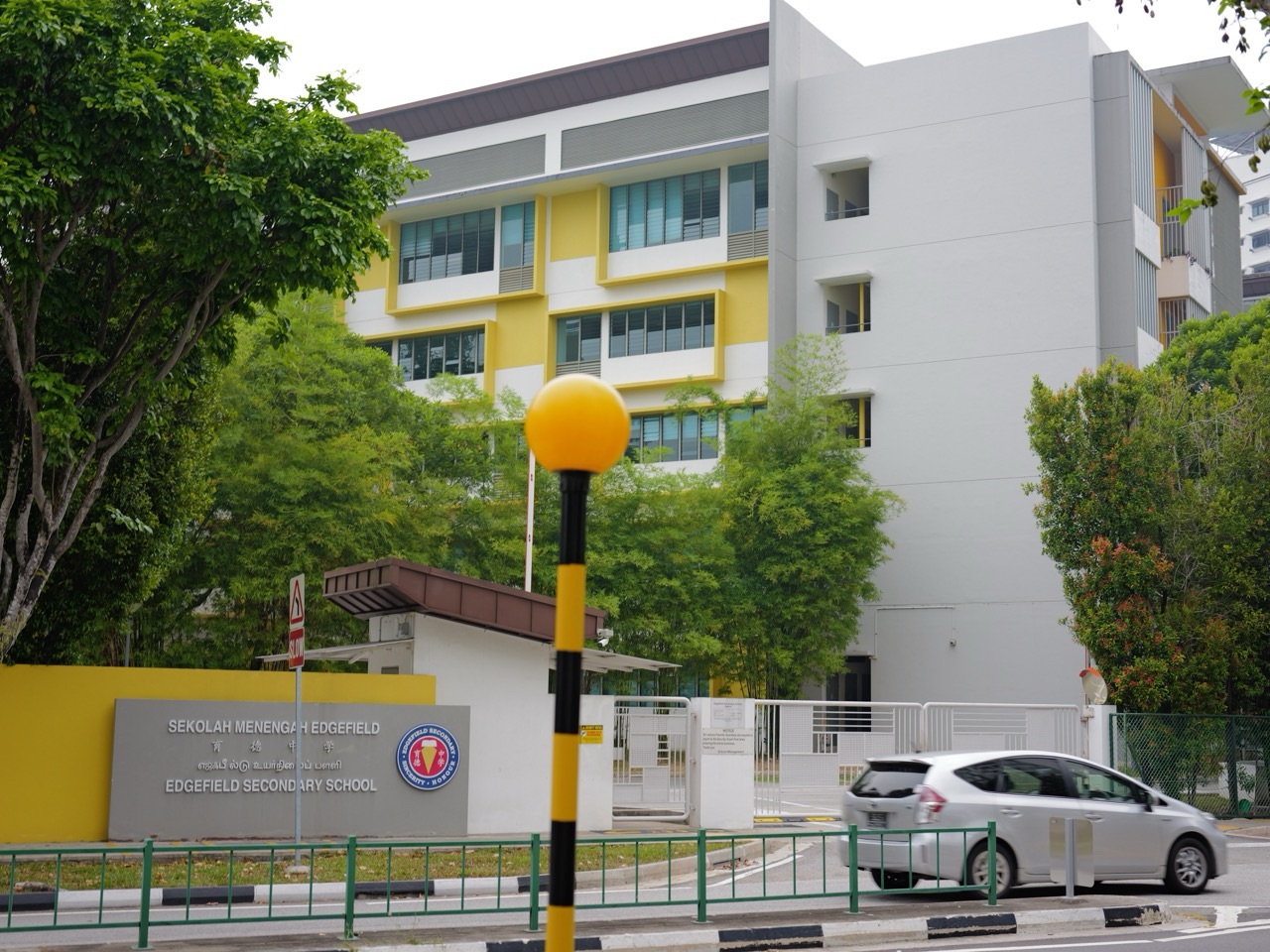
Students at Edgefield, Greendale, Punggol and Yusof Ishak secondary schools must follow their own teacher’s apparatus, laboratory rules, recording formats and assessment guidance. Practical work can take many forms, and the fact that a future 2027 SEC Science syllabus describes practical requirements for graduating candidates does not establish that an incoming Secondary 1 pupil will sit that examination immediately. Parents can still teach good scientific reporting safely at home by using provided tables, fictional datasets and thoughtful questions. This article focuses on the practical notebook, reporting discipline, teacher feedback and safe decision-making, not instructions for performing risky experiments.
- PG3 is the initial posting group; G3 is a subject level, not a laboratory qualification.
- Science practical learning includes question, method, observation, evidence, conclusion and reflection.
- Follow the exact school’s current safety and supervision requirements for all laboratory work.
- Understand the purpose of each step rather than copy instructions without meaning.
- Check safety symbols, protective equipment and teacher permission before handling apparatus.
- Record observations while they happen; never change an unexpected result merely to match a prediction.
- State quantities with units and distinguish raw data from calculations and interpretations.
- Tables should identify the measured variable, units, trials and relevant conditions.
- Graphs require a meaningful scale, appropriate labels and accurate representation of observations.
- Explain independent, dependent and controlled variables in the context of the question.
- Distinguish random variations from systematic problems; repeating a poor method does not fix bias.
- A report should answer the original question, identify evidence and acknowledge limitations.
- Students can practise report-writing using safe hypothetical data without conducting a home laboratory experiment.
- School feedback and repeated independent analysis should determine whether extra teaching is needed.

G3 Science practical work: a Punggol family guide
1. Definition lock: laboratory work and Posting Groups
PG3 is an administrative admission arrangement following the PSLE, while G3 names the academic level of a subject. A student’s ability to conduct practical work must be developed through instruction, practice and responsible supervision. It cannot be inferred from the posting label. An academically confident teenager may still be unfamiliar with an apparatus or unsure how to record evidence systematically.
Full Subject-Based Banding separates admission from later subject-level learning in a more flexible framework. It also creates common form-class experiences across learners with different profiles. Parents should avoid language suggesting that only one posting group is capable of careful practical work. The ability to observe, question and follow safety procedures is a teachable competence that all learners should develop.
Laboratory work differs from reading about an experiment. A written description may show an idealised sequence, while real measurements can vary and unexpected events can occur. The point of supervision is to ensure appropriate equipment use and to help students learn from observations without compromising safety or integrity.
Ask the teenager what they are trying to find out, what evidence would answer the question and which rules apply. If those answers are unclear, the next step is clarification from the teacher, not rushing to complete the method for the sake of appearing confident.
2. Practical learning begins before apparatus is touched
A scientific activity should have a clear question or objective. Students often focus on the visible equipment and overlook why a comparison is being made. The purpose guides which variable is measured, how results are recorded and what conclusion would be meaningful. Without a purpose, the student may collect numbers that are difficult to interpret.
Imagine a hypothetical worksheet about how the amount of light relates to measured plant growth. Before any practical activity, the learner should identify which variable would change and how growth would be defined. An undefined statement such as ‘the plant grew better’ is difficult to test. A recorded length or other specified measure gives the analysis a clearer basis.
The school teacher decides whether and how a practical is carried out, including relevant precautions. At home, the family can examine the hypothetical question on paper and design a table without conducting the experiment. This separates useful scientific reasoning from unnecessary risk.
Encourage the child to explain the purpose in one sentence before discussing the steps. A good answer might identify the relationship being investigated and the data that would address it. This short habit strengthens focus and reduces later reports that contain attractive observations unrelated to the original question.
3. The method is a chain of justified decisions
A procedure should not be treated as a chant to memorise. Each instruction has a purpose: setting a condition, making a measurement, controlling a factor or protecting a person. When students understand those functions, they can follow a supervised practical more accurately and explain why a particular result may be unreliable.
Parents can ask the child to annotate a teacher-provided method with reasons. Which step establishes a fair comparison? Which step records an outcome? Why is a particular measuring instrument appropriate? If the pupil cannot answer, seek clarification rather than inventing an explanation. The teacher’s actual instructions remain authoritative.
An important distinction is between following a method and redesigning it. Students should not change school laboratory procedures without permission to make an activity more exciting or faster. A modification could change the scientific comparison or create a safety risk. Responsible creativity can occur during planning and discussion with the teacher.
A well-understood procedure also supports written evaluation. If an observation is surprising, the learner can ask which part of the method may have affected it. That is more productive than saying the experiment failed and copying the expected answer from another group.
4. Identify the role of each variable
Many practical reports ask students to distinguish independent, dependent and controlled variables. The independent variable is the factor deliberately changed, the dependent variable is the measured response, and controlled variables are held comparable where possible. Students need to explain the scientific purpose of each, not merely identify letters in a table.
Return to the fictional plant example. Light is the independent variable if it is intentionally changed, while a defined measure of growth is the dependent variable. Plant age, water or starting condition might need control depending on the question. If other influences also vary, a conclusion about light alone becomes less secure.
Ask why a controlled variable matters. Saying ‘because it must remain the same’ repeats the rule without explaining it. A better answer identifies how that factor could otherwise influence the measured result. The ability to articulate that mechanism is evidence of conceptual understanding.
Use a second hypothetical scenario with a different surface topic, and ask the learner to classify the variables without copying the previous example. This demonstrates transfer. Any real experiment must still follow school guidance, including what factors may safely be manipulated.
5. Laboratory safety is a learning outcome, not a warning label
Practical science can involve chemicals, glass, heat, electricity, living specimens or specialised tools. Students must follow their school’s current safety instructions, teacher supervision and appropriate protective requirements. The point is to prevent harm while developing professional habits. Parents should never encourage a child to reproduce an unfamiliar school experiment at home after watching an online demonstration.
A capable student asks questions before using something they do not understand. If an instruction, label or symbol is unclear, the pupil should seek the teacher’s guidance. Confidence should not be confused with pretending to know every procedure. A safe classroom depends on communication as much as technical skill.
Unexpected spills, broken apparatus or other incidents should be reported promptly through the teacher’s process. Concealing an incident to avoid criticism can create additional danger. This is also a lesson about scientific integrity: trustworthy work requires honesty about what occurred rather than a performance of perfect control.
At home, practise interpreting a written risk-assessment scenario instead of performing risky procedures. Ask what should be clarified, who has authority to proceed and why a suggested shortcut might be inappropriate. These discussions help the learner understand safety without providing unauthorised laboratory instructions.
6. Raw observations must be preserved
Raw data record what was observed or measured before interpretation. A common error is to overwrite a surprising value with one that matches the textbook prediction. This destroys evidence and prevents the student from investigating what actually happened. Scientific reporting should separate observation from expectation.
Suppose a fictional temperature dataset contains five measurements that do not follow a perfectly smooth line. The learner should record them as supplied, then consider whether a measurement problem or genuine variation might explain the pattern. There is no ethical reason to erase the irregular point merely to make a graph attractive.
Students should also distinguish direct observations from inferred explanations. A notebook entry ‘the liquid became cloudy’ describes an appearance; ‘a specific substance formed’ is an interpretation that may require further evidence. The difference can be subtle, which is why careful recording matters.
Ask the teenager to create two columns labelled observation and interpretation for an original safe scenario. If they place a causal explanation in the observation column, ask what they saw directly. This exercise improves writing discipline and the reliability of future scientific conclusions.
7. Good tables tell readers what the numbers represent
A table needs a meaningful title or context, clear headings and appropriate units. Data for repeated trials should be arranged consistently. If one column contains time in seconds and another contains measured distance in centimetres, the headings should say so. A row of numbers without labels cannot be interpreted reliably.
Use a fictional set of observations rather than performing a practical at home. For example, provide three times and three corresponding temperature values, all explicitly invented. Ask the student to arrange them and check whether the ordering is logical. The purpose is to practise organisation, not to claim anything about actual water temperature at a Punggol site.
A table may also need space for qualitative observations, such as appearance or texture. Students should avoid mixing numerical values and commentary without a clear structure. If a calculation is required, preserve the original measured values separately so that the reader can follow how the result was obtained.
Check the completed table by asking a person unfamiliar with the task to explain what one row means. If they cannot identify the measured quantity or unit, the table needs revision. Good scientific communication reduces the amount of guessing required from the reader.
8. Units, precision and significant measurement details
A number without a relevant unit can become meaningless in Science. Ten could describe seconds, grams or centimetres, with very different implications. Recording units at the time of observation is safer than adding them later from memory. The child should also understand that instruments have limits on what they can measure reliably.
Do not report implausibly many decimal places simply because a calculator displays them. The precision of a final result should reflect the available measurements and the school’s reporting expectations. An answer that appears mathematically exact can still give a false impression of scientific certainty when the data are approximate.
Students may need to distinguish accuracy from precision. Accuracy concerns closeness to the true value, while precision concerns consistency among repeated readings. A set of readings can agree closely and still share a systematic error if an instrument or method is unsuitable.
Ask the learner how a measurement was made before accepting a polished result. What scale was used? How were readings recorded? Could parallax or a similar observation error affect them? The answer should use the specific teacher-approved context, not a generic explanation inserted into every report.
9. Graphs show relationships, but only when drawn appropriately
A graph must fit the kind of data being represented. Continuous measurements over time may be represented differently from categories such as preferred methods of transport. The student’s school may specify the correct graph type. The child should understand why, rather than copy the previous worksheet’s layout.
Every axis requires a label, unit and suitable scale. A graph with a vertical scale that changes inconsistently is difficult to interpret. A graph drawn with a carefully chosen scale should make the main pattern visible without manipulating the reader’s impression. Neatness matters because it supports accuracy.
Teach the student to describe observations before explaining them. ‘The measured value increased between the first and third observations’ is a description. ‘The heating method caused the increase’ is a causal claim requiring the experimental context. A graph can support the first without proving the second by itself.
Ask whether a line between points indicates measured values at every instant. Sometimes it is a convenient visual connection rather than a complete record of the process. Students should state the evidence and avoid treating an interpolated shape as indisputable data.
10. Repeated trials and irregular results
Repeated observations can help a student assess consistency, but repetition is not a magic repair for poor experimental design. If all trials use a flawed measuring instrument, results may be consistently wrong. Students must consider both the number of trials and the quality of the method.
A fictional dataset may contain four similar results and one value that differs substantially. Ask what might explain the difference, but do not automatically tell the learner to discard it. Possible causes include recording errors, uncontrolled conditions or genuine variation. The report should say what is known and what remains uncertain.
If the school requires an average, teach the mathematical procedure and the interpretation. An average summarises selected observations; it does not erase a known anomaly or imply that the process was perfectly uniform. The learner should be able to explain which values were included and why.
Reflection matters. What would make the comparison more reliable next time? Another measurement, clearer conditions or a better recording method may help, depending on the activity. A thoughtful improvement is one that addresses a diagnosed limitation rather than simply asking for more trials.
11. A strong conclusion answers the original question
Students often finish a practical report with the sentence ‘The experiment was successful.’ That is usually less informative than an explanation of what the observations suggest about the question. A conclusion should connect evidence to a scientific concept and remain proportionate to the method’s reliability.
Imagine a fictional comparison that shows one group of plants had greater recorded growth under specified conditions. A defensible conclusion describes the difference and its context. It should not declare that one treatment always guarantees superior growth in every environment. The scope of the claim matters.
Teach the learner to name one relevant observation and explain why it supports the conclusion. If the evidence is weak or incomplete, acknowledging that limitation is more scientific than an unsupported confident statement. The child is learning to value accuracy over performance.
Ask the teenager to read the original investigation question and then the final conclusion. Does the conclusion answer what was asked? If it instead discusses an unrelated environmental benefit, the report needs revision. Purpose and evidence must remain connected from beginning to end.
12. Evaluation identifies limitations that matter
An evaluation is not a ritual statement that human error occurred. The student should identify a plausible source of uncertainty or limitation and explain how it might affect the outcome. An issue matters when it could change the interpretation of the evidence. Vague lists of errors do not demonstrate understanding.
Suppose a hypothetical measurement was taken at different times under changing conditions. The learner can explain why this reduces comparability and how a better plan could control the timing. The proposed improvement directly addresses the limitation. That is stronger than saying simply to be more careful next time.
Some limitations concern sample size, others measurement precision or the inability to hold relevant factors constant. The student should distinguish them. Not every experiment needs the same generic improvement, and a recommended change should remain safe and realistic within the school’s approved procedures.
Parents can ask three questions after reading an evaluation: What specifically went wrong or remained uncertain? How might that affect the result? How would the proposed change address it? If the answers are clear, the report demonstrates genuine scientific judgement.
13. A sample report using explicitly fictional data
Create an entirely fictional classroom dataset for a question about how recorded plant height varies across three observations. State that no actual experiment was conducted and the values are invented for practice. For example, the heights might be 4 cm, 6 cm and 7 cm on three designated observation dates. The learner can organise the values without handling any living specimens or equipment.
The report should begin with the hypothetical purpose, then show the supplied data in a table with units. In analysis, the student can describe the increasing recorded height and the difference between the first and final observations. There is no evidence that any one external condition caused the change because the invented dataset gives no controlled comparison.
A well-qualified conclusion might state that the fictional measurements increased over the specified observations, while additional information would be needed to evaluate possible causes. This is useful because it trains the student not to turn a simple descriptive pattern into a causal claim.
Finally ask what data a real supervised investigation would need: comparable conditions, defined measurement method, perhaps repeated samples and clear safety rules. Planning the evidence is educationally valuable even when the practical itself is neither possible nor appropriate at home.
14. Digital tools can assist without manufacturing understanding
Students may use spreadsheets, simulations, photographs or learning platforms as directed by their school. These tools can help organise and display information, but they cannot decide whether a conclusion is justified. A spreadsheet can calculate an average correctly from incorrect or incomplete entries. The student remains responsible for understanding the data.
Digital charts can also hide axis problems if the learner accepts default settings uncritically. Ask the child to inspect units, chart type and the relationship represented. A polished graphic with no meaningful caption is not a complete scientific explanation.
Artificial intelligence tools may produce plausible descriptions of experiments or suggest improvements, but they can be wrong, overly confident or inconsistent with the school’s approved procedure. Students should not submit generated reports as if they were personal observations or follow unverified laboratory instructions. The school’s academic-integrity and safety requirements take precedence.
The best use of technology is to support accountable thinking. A pupil should be able to explain the graph, calculation or paragraph in their own words and return to the actual data. If the tool’s output cannot be justified, it should be checked or rejected.
15. Reporting is a form of English and Mathematics practice
Science practical reports draw heavily on skills developed in other subjects. English helps students write precise explanations and use terms consistently. Mathematics helps them handle ratios, graphs, averages and units. Digital literacy helps them manage sources and data. These connections do not make Science a substitute for those subjects; they show how learning transfers.
A student may have the right Science idea but write ‘it became more’ without explaining what quantity increased. A more precise sentence identifies the variable and unit. Another may produce a neat graph but use a misleading scale. The teacher can target the communication or mathematical issue without assuming the underlying Science concept is entirely wrong.
Parents can encourage cross-subject explanation by asking the learner to verbalise a calculation and then write the conclusion in complete English. What does the number mean? Which evidence supports the claim? What uncertainty remains? These questions combine accurate calculation with responsible communication.
Do not turn every home discussion into a high-stakes report. Short, thoughtful corrections build transfer more effectively than copying long model answers. The objective is a teenager who can explain a result to someone who did not watch the activity.
16. Punggol’s applied programmes are contexts, not automatic lab assignments
Several Punggol secondary schools publish applied learning themes involving environment, engineering or sustainable technology. Families may recognise hydroponics, design prototypes or environmental observations in those descriptions. These are valuable contexts, but no parent should assume that every incoming PG3 student uses identical apparatus or completes a named experiment in their first term.
Use the school programme as a prompt for safe reasoning questions. What would be measured in a project about reducing water use? Which data would support a claim that an intervention helped? How would a team distinguish measurement from assumption? Such discussion supports scientific habits without inventing the school’s actual curriculum.
The local waterway and park network can inspire interest in environmental evidence. However, parents should not collect water samples, handle unknown organisms or enter restricted areas for the sake of an informal homework exercise. The school and relevant authorities provide rules for supervised field and laboratory activities.
Teach the child that scientific curiosity includes responsibility to people and the environment. A good question can often be explored first through public datasets, diagrams and existing research before any practical is considered.
17. A three-stage method for improving reports
Stage one is diagnosis. Read a recent piece of schoolwork and identify whether the main problem is recording, analysis, conclusion or evaluation. A pupil who omits units needs a different correction from one who invents a causal explanation. Avoid assigning an entire new workbook before locating the specific gap.
Stage two is focused practice. Provide a short fictional dataset and ask the learner to create a table, describe one trend and write a qualified conclusion. Give feedback on the principle, not just the number of words. If the answer is vague, ask which observation it describes and whether it overstates the evidence.
Stage three tests independent transfer. Several days later, provide another unfamiliar dataset without prompts. Can the teenager label units, select a suitable representation and acknowledge a limitation? A corrected paragraph that can be reproduced independently shows more learning than one copied from the teacher’s answer key.
Discuss persistent problems with the Science teacher. If additional support is considered, ask whether the tutor can diagnose practical-report reasoning without conducting unsafe or unnecessary experiments. Effective teaching should improve the student’s judgement and independence.
18. A first-term practical-learning checklist
During orientation, find out the actual school’s laboratory rules, equipment requirements and method for asking questions. Students should know that they must follow teacher supervision and may not improvise hazardous procedures. Make the safety instructions part of ordinary school readiness rather than a one-time warning ignored afterward.
After the first supervised practical activities, ask the pupil to describe the objective, data recorded and key finding. Do not pressure them to reproduce the experiment at home. If the child cannot say what was measured, return to the teacher’s worksheet and practise reading the method and table carefully.
Later in the term, review one marked report and identify a repeat error. Maybe measurements lack units, conclusions exceed the evidence or evaluations contain generic statements. Repair the exact issue and test a new example. Keep a short record of successful corrections rather than a large collection of copied answers.
The strongest outcome is a learner who asks careful questions, works within safety rules, records evidence honestly and writes what the data justify. Those skills support G3 Science, future studies and responsible decisions outside school. They matter even when no formal laboratory grade is attached to the activity.
Frequently asked questions about school Science practicals
Does PG3 mean the student already knows how to conduct experiments?
No. PG3 is an admission group. Practical competence develops through appropriate supervised instruction, practice and feedback regardless of the child’s posting label.
Should parents reproduce school Science experiments at home?
Not when chemicals, heat, electricity, specialised apparatus or other risks are involved. Follow school safety directions. Parents can support reasoning with fictional tables and safe observation instead.
What belongs in a practical report?
Follow the school’s required format, but typical elements include the purpose, method, observations or results, interpretation, conclusion and limitations where relevant. Accuracy and a defensible connection to the question matter.
What is wrong with changing an unexpected reading?
It misrepresents observations and undermines the trustworthiness of evidence. Unexpected results should be recorded and investigated, not altered to match a prediction.
Are observation and inference identical?
No. Observation records what was actually seen or measured. Inference provides an explanation drawn from evidence and may require further support.
How do students improve a vague evaluation?
Identify a specific limitation, explain how it might affect the result and propose a suitable authorised improvement that addresses the limitation.
Does the 2027 SEC practical component apply to incoming Secondary 1 pupils?
No. The 2027 SEC is for the relevant graduating cohort. Incoming Secondary 1 students follow their school’s supervised lower-secondary programme before later national examinations.
When can tuition help?
When a specific report-writing, concept, graph or evidence-analysis weakness persists. A tutor should use safe examples, respect school rules and check the student’s ability to reason independently.
Your next step
Read the child’s actual Science practical worksheet and laboratory safety rules. Ask them to identify the investigation question, what was measured, the evidence they recorded and what the conclusion can legitimately claim. Practise report-writing with a short clearly fictional dataset rather than recreating experiments at home. If a weakness persists, use the teacher’s feedback to design a narrow independent correction.
Official references and related Punggol guides
MOE G2/G3 Lower Secondary Science syllabus, 2024 update · MOE Full Subject-Based Banding · SEAB G3 subject syllabuses for 2027 graduating candidates · G3 Science concepts and evidence guide · Applied learning across four Punggol secondary schools.
Independent education guidance for Punggol parents, reviewed against MOE and SEAB materials available on 1 November 2026. Data and procedures used for illustration are hypothetical. Teachers’ safety instructions and the actual school curriculum always take priority.


