
How PG1 works at Punggol for Food and Consumer Education (FCE) is about practical life skills, not simply whether a student can cook one dish. Posting Group 1 is the Secondary 1 admission group under Full Subject-Based Banding (Full SBB); FCE is one of the shared lower-secondary common curriculum subjects. Through appropriate learning about nutrition, food preparation, food and kitchen safety, consumer information, budgeting and sustainable choices, students can develop the ability to make everyday decisions responsibly. The skills matter at home, in a school canteen, when shopping and when working with other people. FCE is not a permanent student stream or a subject reserved only for PG1 pupils.
For Punggol families in 2027, the most useful starting questions are what the school teaches, how practical work is supervised and what the child can already do independently. MOE’s lower-secondary FCE syllabus describes nutrition and health, consumer literacy and food science, alongside applying knowledge through meal planning, discerning choices, budgeting and suitable practical tasks. Parents can support the same thinking through food-label reading, comparisons of everyday purchases and safe meal planning without turning the home kitchen into an unsupervised school laboratory. A child should learn why a choice is appropriate, not memorise a recipe and assume it answers every nutrition or consumer question.
- PG1 and FCE: PG1 is a posting route; lower-secondary FCE is a common curriculum experience under Full SBB, with school-specific timetabling.
- Core learning: nutrition and health; food choice and safety; consumer awareness; needs and wants; budgeting, spending and sustainable consumption.
- Healthy Plate reference: Singapore’s Health Promotion Board uses a general visual guide of half fruit and vegetables, one quarter wholegrains and one quarter lean protein or alternatives.
- Safety first: follow Singapore Food Agency guidance on hygiene, separation, proper cooking and appropriate storage; practical work involving knives, heat or appliances needs suitable adult or teacher supervision.
- Parent-friendly practice: compare two food labels, plan a hypothetical meal, evaluate an advertisement or prepare a simple shopping budget.
- Avoid false precision: meal needs vary; do not turn a general classroom guide into an individual medical diet, weight target or treatment plan.
- Punggol contexts: neighbourhood shops, school canteens, supermarkets and One Punggol Hawker Centre provide familiar consumer examples, not fixed prices or guaranteed menu items.
- School check: confirm FCE lesson and practical arrangements, ingredient rules, accessibility and current assessment requirements.
- Future pathways: lower-secondary FCE and any later upper-secondary nutrition, food or technical subjects are different choices governed by the actual school’s offerings.

FCE teaches decisions that young people already make
A Secondary 1 student may choose breakfast, select a school lunch, buy a snack, compare prices online or decide what to do with leftovers. These decisions involve information, resources and responsibility. FCE creates a place to discuss them explicitly. It can teach why a food choice is more balanced, how a product claim should be evaluated and what safe food handling requires. It is serious education because ordinary choices affect everyday life.
The subject is especially relevant when a child begins travelling to school more independently. Parents cannot supervise every purchase or lunchtime decision. They can, however, help the student develop useful questions: What is this food? How much does it cost? What does the label really say? Will this choice meet my needs? Is the item stored and handled safely? Learning to ask before acting is valuable in food, shopping and many other situations. Independence grows through understanding rather than a long list of unexplained prohibitions.
A shared subject can reveal strengths beyond exam grades
Under Full SBB, lower-secondary students can learn common curriculum subjects in mixed form classes while taking academic subjects at levels appropriate to their individual profiles. FCE is among the shared subjects. A child who finds written Mathematics difficult may still display careful organisation during an approved practical task, while another who performs well academically may need guidance following a kitchen safety routine. Different strengths become visible when the activity changes.
This does not mean that numeracy or language are irrelevant. Reading instructions, measuring ingredients, checking information and explaining choices draw on both. The point is that practical contexts can show why foundational skills matter. A pupil may understand fractions more clearly when considering proportions, or discover the importance of precise language when communicating a food-allergy warning. The shared learning environment also supports cooperation, though teachers must ensure each learner participates meaningfully rather than allowing one confident pupil to do everything.
What MOE’s FCE syllabus covers
MOE’s lower-secondary FCE teaching syllabus includes nutrition and health, consumer and food literacy, food science and the use of knowledge in different contexts. Published assessment objectives include interpreting information, reasoning about healthier or more responsible choices, budgeting and preparing or evaluating suitable dishes. The document provides a national curriculum framework; individual school arrangements for project work, practical sessions and assessment may differ.
Parents should not infer that every student will perform the same set of recipes or complete identical practical exercises. Ask the school what its current module covers and how learning is assessed. A child may be asked to interpret food information, plan an appropriate meal or explain a shopping decision. Those tasks should be taken seriously even when no knife or cooking pan is involved. Good FCE combines understanding and action: knowing what a responsible choice requires and being able to apply it.
The first distinction: needs versus wants
Consumer education begins with recognising the difference between an essential need and an optional preference. A student may need lunch during a school day, but may want a particular premium drink or additional dessert. The distinction is not about moralising pleasure. It is about making decisions when money, time or resources are limited. A sensible choice can include enjoyment while still respecting the priorities that matter.
A useful hypothetical example gives the student a fixed weekly allowance and asks what must be paid for first. Include meals, transport where applicable and optional purchases. Ask what would happen if all the money were spent on the first day. The child can see that budgeting involves planning across time rather than judging a single price in isolation. Do not assume every household has the same financial circumstances or that a parent’s chosen allowance is a national standard. Keep examples clearly illustrative.
Budgeting is a plan, not a punishment
A budget helps people decide how to use limited resources deliberately. For a Secondary 1 learner, the calculations can be straightforward: record available money, essential planned spending, optional spending and what remains. This is a practical use of G1 Mathematics. The student should explain why a number belongs in a particular category and whether the plan is realistic over several days.
Use fictional amounts to avoid exposing the family’s finances. For example, imagine that a student has $30 available for a set of activities and expects to spend $18 on essential items, leaving $12 for other choices. If one item becomes more expensive, the student should revise the plan. Ask them to identify trade-offs rather than simply produce the correct subtraction. Good consumer literacy includes flexibility and a willingness to adapt when assumptions change.
A price tag is not the entire cost
Students often compare only the headline price. Yet products may differ in quantity, durability, packaging, delivery fees, required accessories or how often they must be replaced. Consumer education teaches children to ask what they are actually getting. A small package may seem cheaper while costing more per unit, or a discounted item may still be inappropriate for the intended use.
Try comparing two fictional packages of rice or stationery with clearly stated weights and prices. Calculate the unit cost and discuss whether quality and need also matter. If the item is food, include expiry or storage considerations using the correct label information. This teaches the child to combine numbers with context. The cheapest option is not always the most suitable, and a promotional claim does not establish quality merely because the label looks impressive.
Advertising works by influencing attention
Advertisements may highlight colour, urgency, popularity, discounts or endorsement. Students should learn to recognise when a statement is factual, when it is persuasive and what evidence would support it. A product marked “best choice” may provide little information about the criteria used. A “limited-time offer” may encourage a purchase before the buyer compares alternatives. The correct response is not automatic distrust of every advertisement but careful interpretation.
A family can use fictional adverts rather than exposing a child to unnecessary shopping pressure. Ask which claims are verifiable and which rely on opinion. Does the advertisement give a unit price? Does it state what the discount is calculated from? Is there an important condition in small print? This exercise builds reading comprehension, numeracy and judgment. Those skills are useful when purchasing school supplies, food and digital services, not only when taking an FCE assessment.
My Healthy Plate is a visual starting point
Singapore’s Health Promotion Board provides the My Healthy Plate guide as a simple way to think about balanced meals. Its quarter-quarter-half illustration generally shows half a plate of fruit and vegetables, one quarter wholegrains and one quarter lean protein or suitable alternatives. This helps students visualise variety without treating food as a collection of isolated nutrient names. It is a general education tool rather than an individually prescribed menu.
Ask the child to examine a hypothetical lunch and identify which food groups are present or missing. The purpose is understanding, not criticising a person’s body, weight or appetite. Actual dietary needs differ by age, activity, health conditions, allergies and other circumstances. If the student has special dietary or medical requirements, parents should follow qualified professional advice. The curriculum can promote informed general habits without turning every family meal into a strict nutrition audit.
A balanced meal is not a perfect photograph
A common misunderstanding is that every meal must look exactly like a diagram. In real life, foods may be mixed together, shared across dishes or eaten at different times. HPB explains that the Healthy Plate visual is flexible and that different food choices can contribute to balance. Teach students to identify the components rather than police the appearance of a plate.
For instance, a hypothetical meal might include wholegrain rice, vegetables and tofu. Ask how the combination relates to the visual guide. Another meal might contain less produce, and the family could discuss how variety may be achieved across other meals. Avoid rigid rules or weight-focused language with children. The goal is thoughtful food literacy, positive relationships with food and the ability to understand credible health information, not fear of ordinary eating.
Food groups have different roles
Students may learn that carbohydrates, proteins, fats, vitamins, minerals and water contribute to the body’s needs. It is easy to memorise these words without understanding how food provides energy or supports growth and maintenance. Use age-appropriate explanations and real food examples, while keeping the detail aligned with the syllabus. A food may provide several nutrients, so simplistic claims that each item has only one function can mislead.
A useful activity is to compare the main components of two ordinary meals and ask what the student notices. The child can read reliable nutrition information and explain the role of variety. Do not attempt to diagnose a deficiency from a classmate’s lunch or recommend supplements as a home FCE project. Individual nutrition concerns belong with qualified professionals. A school subject teaches principles and informed choices, not the right to judge other people’s personal health.
Reading a nutrition label carefully
Packaged food information can include ingredient lists, nutrition panels, serving sizes and other statements. A student should know that numbers on a label have units and contexts. A product may give information per serving, per 100 grams or per package. Confusing those bases can lead to incorrect comparisons, even when the arithmetic is otherwise accurate.
For a safe educational example, imagine one drink with a label stating a quantity of sugar per 100 millilitres and another with a value per bottle. Ask which numbers must be converted before a fair comparison is possible. Then discuss what the nutrition information can and cannot establish. Avoid instructing a child to restrict food or drink based on an isolated statistic. The broader goal is reading data accurately and making informed decisions appropriate to individual needs.
Ingredients and allergens require attention
Ingredient lists can be important for understanding what a food contains, and allergy information can be critical for someone with a diagnosed allergy. Students should learn to read labels and follow actual school or healthcare instructions. They should not infer that a product is safe for a person with an allergy merely because a particular ingredient is not obvious in the marketing picture.
For school practical work, families should communicate relevant allergies, dietary restrictions or other safety concerns through the school’s official procedures. Never ask a teenager to test a suspected allergy by tasting a food. Teachers and appropriate healthcare professionals should guide necessary accommodations. This is an example of why FCE is serious: careless assumptions can have consequences, and responsible decisions depend on accurate information and safety awareness.
Clean hands and surfaces before preparing food
Food safety includes good hygiene. Singapore Food Agency guidance explains the importance of washing hands and maintaining clean equipment and work surfaces. These actions reduce the risk of transferring contamination during food preparation. Students can understand the principle without conducting risky experiments with microorganisms or spoiled food.
At home, an appropriate adult can model safe handwashing and cleaning routines while explaining when they are needed. Ask the child to identify surfaces that come into contact with food and why equipment must be washed between tasks. Avoid pretending that a clean-looking surface is automatically free of every hazard. The school may teach additional rules for its specific kitchen facilities. Follow those procedures rather than relying on a generic internet checklist.
Separate raw food from ready-to-eat food
Cross-contamination can occur when microbes or other hazards are transferred between foods, utensils or surfaces. Singapore Food Agency advises keeping raw and ready-to-eat foods appropriately separated and cleaning equipment thoroughly. A pupil may understand the instruction better if it is explained as preventing transfer rather than simply as a rule that teachers repeat.
Use a paper-based kitchen layout exercise. Ask where different tasks would take place and which utensils need to be kept separate or cleaned before reuse. Do not invite a student to handle raw meat as an experiment. The educational objective is to identify a risk and the responsible step that reduces it. Safety rules become easier to remember when the learner understands the reason and can describe the consequence of ignoring the rule.
Cooking and chilling require actual safety guidance
Proper cooking and temperature control are important in food safety. Singapore Food Agency’s published guidance gives specific recommendations for storing, preparing, cooking and handling foods. At home, follow current authoritative advice for the actual ingredients and situation. A teenager’s school practical assignment should be carried out only under suitable supervision, particularly where heat, knives or equipment are involved.
Parents should avoid using vague folk rules such as “it smells fine, so it must be safe.” Appearance and smell cannot reliably establish the safety of all foods. Teach the child to follow labels, appropriate storage instructions and safe-handling practices. If a household has a question about a specific food item, consult the relevant official guidance rather than invent a universal time or temperature from memory. Responsible food literacy combines common principles with attention to the exact context.
Leftovers are a resource-management issue too
Food waste involves money, effort, resources and environmental consequences. A family can discuss meal planning, appropriate portions and safe handling of leftovers without creating guilt around eating. SFA advises using appropriate clean containers and storage practices for cooked food. It is not sensible to save an item that cannot be stored safely merely to avoid waste.
A learning task might involve planning meals from a fictional shopping list so fewer ingredients are left unused. Ask whether the plan respects food safety and what happens if someone is absent. The child discovers that efficient planning requires both flexibility and caution. Do not instruct students to consume questionable leftovers as an environmental gesture. Protecting health and reducing unnecessary waste are complementary responsibilities when decisions are made carefully.
Food culture matters in a multicultural community
Food is connected with families, religions, celebrations, heritage and personal preferences. A Punggol student may encounter different cuisines in a hawker centre and at school. FCE can encourage curiosity about these traditions while also teaching respect. A dish should not be treated as a stereotype that fully defines a culture or a person.
A useful conversation begins with an actual family recipe or public menu description. Ask what ingredients or preparation methods are characteristic of the dish and what the family knows about its significance. If something is uncertain, say so. Avoid appropriating a tradition or presenting one person’s explanation as the only correct account. The goal is to learn that food choices operate within social and cultural contexts as well as nutritional ones. Such understanding strengthens respectful communication in mixed form classes.
One Punggol Hawker Centre as a consumer-learning example
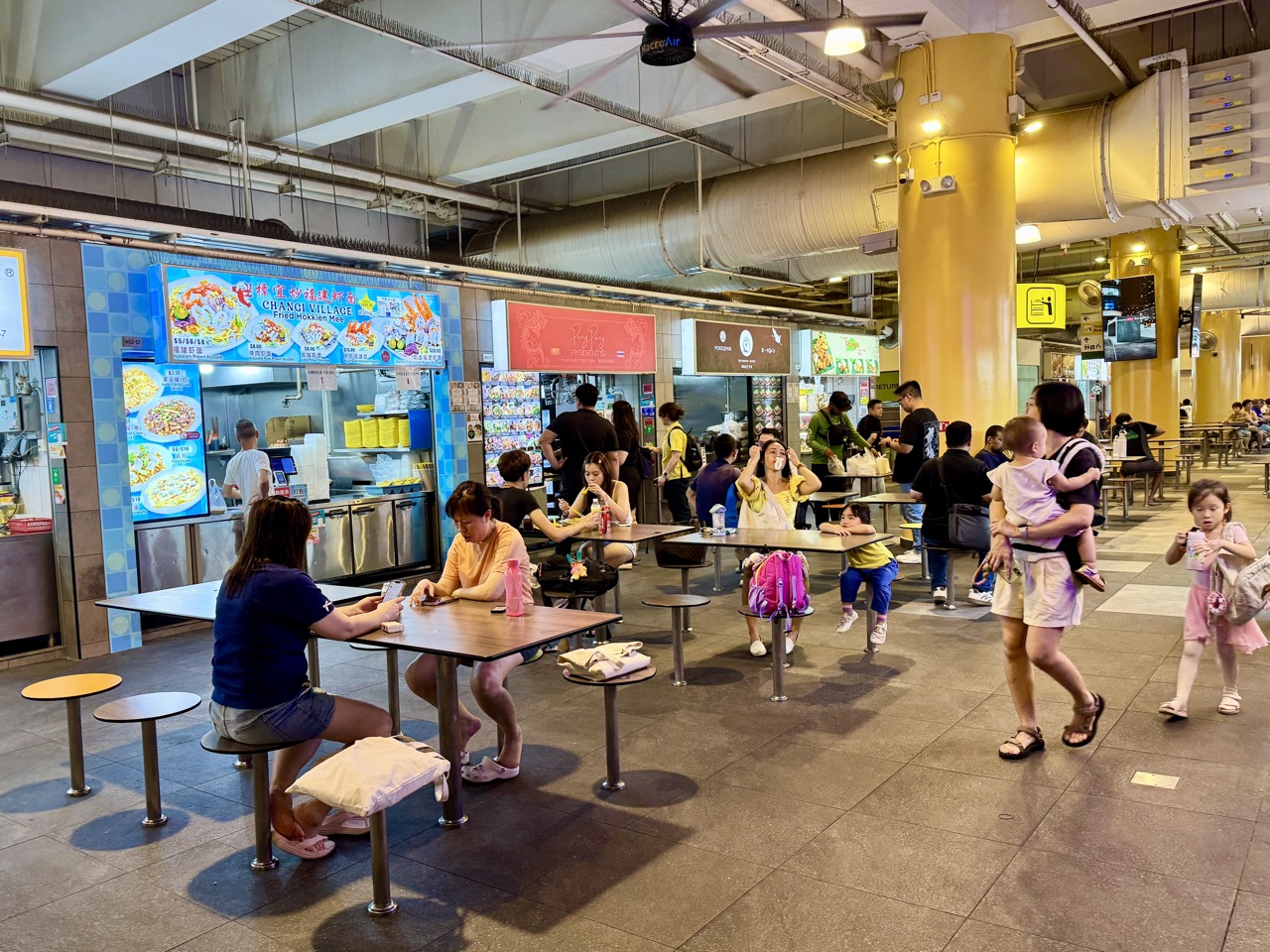
One Punggol Hawker Centre offers a familiar local setting for discussing menus, choices, queues, prices and shared public spaces. A family can use it to ask how a customer chooses a meal within a budget or identifies what information is needed before ordering. Menu items and prices change, so a responsible educational article should not invent a fixed stall menu or guarantee a particular price.
A simple hypothetical task is to give the student an imaginary amount of spending money and ask them to explain which factors would influence a meal choice: budget, personal preferences, ingredients, portion needs and available information. A second question can ask how to behave respectfully while queuing or returning trays according to current rules. This connects consumer literacy with citizenship and practical independence. No purchase is required for the reasoning exercise.
What a smart supermarket comparison looks like
A supermarket contains several types of information: product quantity, unit price, ingredients, storage instructions, promotional conditions and branding. It is easy for students to focus on the largest discount symbol. Teach them to compare like with like. An item costing less per package may not cost less per unit, and a larger package can create waste if the family cannot use it appropriately.
Use clearly fictional prices or dated evidence from a real receipt. Ask the learner to calculate the cost per unit and explain any important differences in size or quality. Then introduce a realistic constraint: limited storage, a known ingredient requirement or an item needed only once. The best choice may change. This illustrates that Mathematics supports decisions but does not replace judgment. FCE is not a lesson in always buying the cheapest object.
Online shopping introduces another kind of literacy
Teenagers are exposed to digital promotions, recommendations, sponsored content and purchase prompts. They should learn to distinguish a seller’s claim from an independent piece of evidence and recognise the difference between an authorised purchase and clicking an attractive link. A very cheap offer may still be unsuitable, misleading or fraudulent. Students should follow family rules and avoid entering payment details without appropriate adult permission.
An educational scenario can compare two fictional product listings. Ask which details are missing: product size, return conditions, delivery cost or seller identity. Teach the child not to share personal information casually. This supports cyber wellness alongside consumer awareness. The subject matter is not a request for a teenager to create accounts or begin shopping independently. It is preparation for making safer, better-informed choices.
Sustainability should be explained through trade-offs
Sustainable consumption is not just memorising the phrase “reduce, reuse, recycle.” The child should consider how a choice affects resources, waste and practical needs. A reusable item can be useful if it is durable and genuinely used; buying several versions for the sake of a sustainability label may be counterproductive. A food package that looks environmentally friendly may still need evaluation of its actual claims.
A family can examine an ordinary decision: use a serviceable container already owned or purchase a new one advertised as sustainable. Ask what information is needed and whether the proposed change genuinely solves a problem. Avoid sweeping claims about environmental impact without reliable evidence. The lesson is careful reasoning. Responsible consumption includes resisting unnecessary purchases, considering safety and understanding that one visible feature rarely tells the entire environmental story.
Cooking skills begin with planning and organisation
Practical food preparation involves reading a recipe, preparing ingredients, following safe procedures, managing time and evaluating results. Some students enjoy the physical task but overlook instructions. Others measure accurately and struggle with sequencing. A school practical lesson can reveal these patterns, but parents should not assume that all FCE courses use the same recipes or equipment.
At home, a safe paper exercise can ask the learner to put preparation steps in order and explain which ingredients or tools would be needed. If the family chooses to prepare food, suitable adult supervision and food-safety practice are essential. Let the child take an appropriate role rather than complete the entire task for them. The educational objective is independence built through accurate understanding, not a polished photograph of a meal assembled by the parent.
Time management is part of practical competence
Some food-related tasks involve several steps with different preparation or cooking times. The learner should understand dependencies: a surface must be cleaned before use, certain ingredients require preparation before combining, and equipment must be handled in an appropriate sequence. Planning helps avoid both wasted time and unsafe improvisation.
Use a fictional task with three or four harmless steps and ask the child to arrange them in order. Discuss which steps can be completed before others. This is a transferable skill. The same habit supports school projects, homework and preparation for the next day. An FCE task can make planning visible because the results of poor sequencing are often immediately noticeable. Good teaching uses that feedback constructively rather than humiliating a student for an ordinary beginner’s mistake.
The relationship between FCE and G1 Mathematics
FCE frequently uses comparison, proportion, decimals, percentages and budgeting. The student may need to scale a hypothetical quantity, compare units or calculate remaining spending money. Those tasks connect abstract Mathematics to a meaningful decision. They can be especially helpful when a child struggles to interpret word problems but understands a practical context.
For instance, a fictitious recipe calls for two units of one ingredient per four servings. What would a proportional amount for two servings be? Ask what must be halved and why. Use paper calculations unless the school has authorised a safe practical activity. The goal is not advanced culinary technique. It is recognising that a mathematical relationship still matters when it appears in ordinary language. This kind of transfer can support stronger number sense.
The relationship between FCE and English literacy
Recipes, labels, advertisements, consumer notices and safety instructions all require reading. A pupil may know a food name yet misunderstand a qualifier such as “per serving,” “keep refrigerated” or “contains.” Teach the child to underline words that change what an instruction means. Then ask them to restate the message accurately before acting.
A useful exercise compares two short product descriptions and asks what is actually stated, what is implied and what remains unknown. The learner should not invent missing facts. This improves comprehension and responsible decision-making together. An English language problem can appear inside an FCE task, just as a numerical problem can. Parents who notice the exact obstacle can select a suitable teaching response instead of assuming that the child simply needs to pay more attention.
A practical four-week parent learning routine
In week one, explore needs and wants through a fictional school spending plan. In week two, read food labels and discuss the Healthy Plate visual using balanced, non-judgmental language. In week three, examine kitchen-safety scenarios and identify responsible actions using SFA guidance. In week four, prepare a simple consumer comparison or safe meal-planning project and ask the student to justify the decisions.
This is a family learning routine, not a school’s official term plan. Choose one short activity per week and relate it to the actual FCE work when possible. Do not make a child count calories, restrict eating or prepare food unsupervised to complete the tasks. Keep the emphasis on understanding information and acting responsibly. A small exercise that a student can explain independently may be more useful than a large project assembled for display.
Worked example: a discount that hides the unit price
Imagine a fictional Punggol student, Mei, comparing two packaged products. The first has a prominent “special offer” sign, while the second has a simpler price label. Mei initially chooses the first because the advertisement looks more generous. Her parent asks her to compare the quantities and compute a unit price using the fictional figures supplied for the exercise. The second turns out to cost less for the quantity needed.
Mei’s improved explanation identifies the relevant comparison and notes the limitations: quality, storage and suitability could still matter. She has learned that advertising is not the same as evidence of value. The exercise combines Mathematics, reading and consumer judgment without demanding an actual purchase. This is precisely the kind of transferable thinking that makes FCE worthwhile beyond school assessment.
Worked example: a safe routine matters more than speed
Imagine a fictional student, Faris, who is excited about preparing food during an authorised school practical. He wants to start immediately but has not read the instructions or checked the safety arrangements. His teacher reminds the class to organise the workspace, understand the process and follow approved equipment procedures before beginning. Faris learns that speed is not the first measure of competence.
Later, his reflection notes that planning made the task easier and reduced confusion. The useful evidence is not merely that he produced a dish. It is that he can explain why particular safety and organisational steps were necessary. Families can reinforce the same principle at home by discussing safe, supervised routines rather than encouraging risky demonstrations. Responsible independence is developed through attention to procedure.
What to ask at a Punggol secondary school open house
Parents can ask how FCE is delivered, how practical lessons are supervised, which equipment students use and what assessment evidence teachers expect. Where a child has food allergies, disability-related access needs or other relevant restrictions, discuss those privately with the appropriate school staff. Do not assume that a general statement about a shared subject settles individual safety arrangements.
Ask for examples of how students learn consumer literacy as well as food preparation. Can they compare products, understand labels and explain decisions? Does the programme encourage thoughtful use of resources? These questions help families understand the educational purpose. The choice of school should still consider the whole child’s needs: academic support, travel, social adjustment and CCAs. One attractive kitchen or display does not establish that a school is automatically suitable for every PG1 pupil.
FCE is not a guaranteed pathway to a particular upper-secondary subject
Lower-secondary FCE provides foundational life skills and exposure. Later subject choices in nutrition, food science or related areas depend on the school’s actual upper-secondary offerings and the student’s eligibility. Families should not infer that a child who completes FCE will automatically be able to take a particular SEC subject or obtain an admission advantage at a post-secondary institution.
If the student enjoys food science, hospitality, nutrition or consumer research, encourage them to explore responsibly through reading, school guidance and age-appropriate experiences. Continue developing English, Mathematics and Science foundations. As upper-secondary selection approaches, consult the current school subject list and applicable official syllabuses. The future possibilities are worth investigating, but a twelve-year-old should not be promised a career based on one successful practical lesson.
Health conversations require care and respect
Food education can become harmful when adults use it to shame children about weight, appearance or appetite. A classroom lesson about balanced choices should not be turned into a personal medical judgment. Different pupils may have dietary needs, cultural practices, allergies or health circumstances that are not visible to classmates. Encourage respectful discussion and avoid commenting on the food or body of another child.
If a family has a medical question about diet, allergies or a particular condition, seek advice from a qualified healthcare professional. This article and the general Healthy Plate guide are not individual treatment plans. The correct educational outcome is a student who can read information and make responsible choices without fear or stigma. Good consumer understanding includes respect for the person making the decision.
Frequently asked questions about PG1 FCE
Is FCE only for PG1 students? No. Lower-secondary FCE is a common curriculum subject under Full SBB, with pupils from different academic subject levels able to share learning experiences according to school timetabling.
Is FCE simply a cooking lesson? No. The curriculum includes nutrition, food and consumer literacy, responsible spending, sustainable consumption and safe practical application.
Should every meal be exactly quarter-quarter-half? The Healthy Plate is a general visual guide, not a rigid medical prescription. Dietary needs and meal patterns vary; individual health concerns require appropriate professional advice.
Can my child cook independently at home to prepare for FCE? Only within age-appropriate tasks and suitable adult supervision. School practical work should follow its own safety rules. Do not create hazardous home experiments.
Do FCE marks guarantee access to food-related SEC subjects? No. Later subject combinations depend on the school’s current offerings and eligibility rules. The lower-secondary curriculum and national examination pathways are separate questions.
What is the simplest useful parent activity? Compare two fictional products using quantity, unit price, ingredients or storage information, then ask the child to justify a choice with clear evidence.
Official references and connected Punggol reading
Read the MOE lower-secondary FCE syllabus, MOE Full Subject-Based Banding, HealthHub’s My Healthy Plate guide and Singapore Food Agency food safety tips. Check actual school offerings through MOE SchoolFinder. See PG1 Design and Technology and PG1 G1 Mathematics for connected practical learning.
This article was prepared using information available in November 2026. It does not replace school kitchen rules, individual nutrition guidance or current food-safety instructions. The next sensible step is to let the child explain one meal-planning or spending decision accurately, check it against a trustworthy source and practise making a similar decision independently.


