
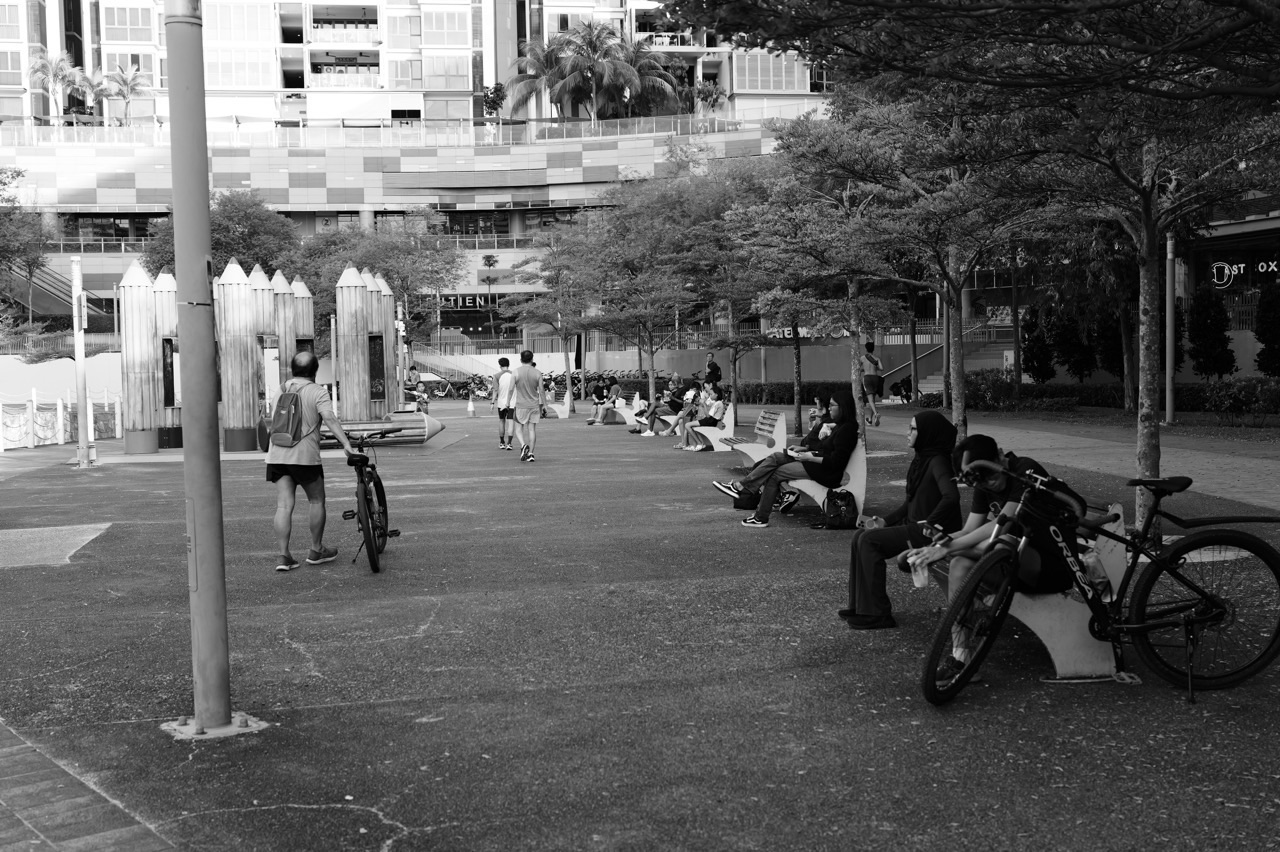
Taijiquan is a genuine Punggol West community class extending into January 2027, but the official listing contains an important revised timetable that readers should use instead of earlier summaries. The current onePA Taijiquan (HealthierSG) course C027248827 shows 3 November 2026–12 January 2027, eleven sessions on Tuesdays from 8–9:30pm, with fees from S$70 to S$80. Its registration is marked closed, with 27 October as the registration deadline. The class is organised by Punggol West Community Club and lists the community square beside Block 218 as its normal venue, with Block 219 Multi-Purpose Hall as a temporary location during the period ending 10 November. Parents and adults must check the exact venue before attending.
Taijiquan is more than a slow sequence of arm movements. A good class develops controlled weight shifts, balance, attention, coordinated steps and an understanding of how a form connects from one movement to another. It is also part of Chinese martial-arts traditions, but should not be sold as a guaranteed medical treatment or instant self-defence qualification. This guide explains the actual Punggol West course, why an older late-October schedule can differ from the updated live page, how to find an appropriate new intake, what a first lesson can safely teach, how Taijiquan differs from qigong, and how a resident can build a realistic long-term routine without making false health promises.
- Live official source checked 1 November 2026: onePA Taijiquan (HealthierSG), course C027248827, Punggol West CC.
- Current listed span: Tuesday 3 November 2026–Tuesday 12 January 2027, eleven 8–9:30pm sessions; not the previously summarised 27 October start and twelve-session figure.
- Registration currently marked closed; the listing gives 27 October 2026 as the registration deadline. No immediate enrolment is promised.
- Published fee range S$70–S$80 depending on the onePA payment category; verify any future intake’s checkout.
- Minimum age seven; the organiser says to contact the named trainer at 9764 7093 for evaluation before signing up.
- Current venue field: Punggol West Community Square beside Block 218, with a temporary Block 219 Multi-Purpose Hall location during the period ending 10 November 2026.
- The Punggol West CC administrative address is 259C Punggol Field, #01-47; it is not necessarily the class meeting place.
- Trainer listing names Hiew Kwee Kee, with training and Wushu coaching experience; suitability requires a direct enquiry.
- A separate onePA Punggol 21 CC Taijiquan course in late 2026 also shows closed registration and its own timetable, venue and trainer.
- First learning goals: appropriate stance, safe balance, deliberate weight transfer, coordinated stepping, awareness of space, smooth transitions and attention to instruction.
- HealthHub includes tai chi among examples of activities supporting strength and balance; it is not a personalised cure or replacement for clinical rehabilitation.
- Traditional Taijiquan and health qigong share some movement ideas but are not the same course or syllabus.
- Any 2027 new term, actual place, cancellation and weather relocation must be verified through the organising community club.
Definition lock and source correction — 1 November 2026: The live onePA C027248827 record shows 3 November 2026 and eleven sessions, superseding an older 27 October/twelve-session description. Registration is closed. This course is run through PA, not an ActiveSG gym pass, and no clinical health results are promised.

The most useful fact: the live course shows eleven sessions
When a course begins near a publication date, different websites may show different versions of a term calendar. The current onePA course C027248827 lists Tuesday 3 November 2026 as the start and eleven sessions through 12 January 2027. An earlier Punggol event summary described an October start and twelve lessons. The live official registration page should take precedence for the current product.
That discrepancy is not a reason to invent a missed lesson or claim the organiser made a particular correction without evidence. It is a reason to check the actual session table and confirm with the CC. A reliable 2027 guide tells a participant which record to use now rather than repeating an outdated number.
Closed registration changes the next step
The course currently displays a closed-registration message. Someone who finds the January end date should not assume they can start attending in the middle of the term. The organiser’s actual enrolment process determines whether another intake, assessment or waitlist is available.
If interested, contact the CC about a later programme instead of transferring money to an unverified third party. The ability to enquire is not the same as an accepted registration. This simple distinction can save residents time and disappointment.
A fee range is not an offer to sell a seat
OnePA shows fees of S$70–S$80 for the listed Taijiquan term. The exact price depends on the account and applicable terms. A past payment amount does not make the product available after registration has closed, and it cannot be reused as the guaranteed price of a future term.
Before paying for any later course, check the number of lessons, dates and any attire or materials requirements. A lower headline fee is not necessarily better if the evening timetable is impossible to attend. A realistic household budget includes the practical cost of the commitment.
Why the coach asks for evaluation
The official requirements say prospective participants should contact the trainer for evaluation before signing up. This is important because the programme may have an ongoing sequence or expect certain movement abilities, even though the published minimum age is seven. The listing does not say every person automatically qualifies.
Ask what the class assumes a new learner already knows. If the participant has no experience, request an appropriate beginner recommendation. The aim of evaluation is to match a person to a suitable environment, not to make them feel that curiosity is unwelcome.
The age minimum is seven, not universal suitability
The course states a minimum age of seven. That is an administrative entry condition, not a promise that a seven-year-old and an older adult should practise identical movements at the same pace. Participants can have different balance, attention and mobility requirements.
The coach should explain how the group is taught and what adjustments are possible. Parents should not enrol a younger child by assuming the age rule will be waived. An appropriate class fits its participants rather than using a broad age label as a complete assessment.
The community square and Block 219 are different places
The onePA venue field names Punggol West Community Square beside Block 218 and describes Block 219 Multi-Purpose Hall as a temporary location during the period ending 10 November 2026. A participant who travels automatically to the community club’s office may miss the actual teaching site.
Use the organiser’s latest meeting instructions for the specific Tuesday. Ask whether the temporary arrangement remains in effect on 3 or 10 November and what happens afterward. Local events often use shared open spaces whose access can shift without changing the course title.
The CC administrative address is not the class location
Punggol West Community Club’s onePA directory identifies its office at 259C Punggol Field, #01-47. That is useful for contacting staff or visiting the counter, but the Taijiquan lesson is advertised at nearby community areas rather than necessarily in that office building.
A sensible family calendar contains the course code, actual exercise site, organiser contact and any temporary venue note. Writing only ‘Punggol West CC’ can produce an avoidable navigation problem, especially after dark.
Why Tuesday 8–9:30pm matters
A ninety-minute class ending at 9:30pm may be convenient for working adults but late for some younger participants. The journey home, time for food and next-day commitments need consideration. Choosing a course is not only about physical interest; it is also a scheduling decision.
Review school and work arrangements before registering for a future term. A good exercise habit is one a person can sustain without constant conflict. An appealing class that regularly interrupts sleep or family obligations may not be the right match.
What Taijiquan is
Taijiquan is a Chinese martial-arts tradition taught through interconnected movements, posture and coordinated changes of weight. Some people practise it for cultural understanding, recreational activity and mindful movement, while others study its martial applications. The exact style and syllabus vary by teacher and programme.
A beginner should ask whether the class teaches a named form, particular style or general introductory movements. Avoid assuming that every Taijiquan course consists of the same fixed routine. Understanding the curriculum helps the learner choose intelligently.
Why slow does not necessarily mean easy
Many Taijiquan forms are practised at a deliberately measured pace. That can make the activity look effortless, but maintaining balance during slow weight shifts can be demanding. A student may discover that moving carefully requires more concentration than moving quickly.
A coach should introduce suitable movements progressively and allow adjustments. Slow movement is not proof that every person can perform the exercise safely without guidance. The purpose is controlled practice, not forcing a deep stance because the movement appears gentle.
The idea of continuous movement
A Taijiquan form connects several actions rather than stopping rigidly after every position. A learner may first practise isolated elements before joining them into a flowing sequence. That process develops awareness of transitions and the relationship between different parts of the body.
Do not rush a beginner to perform a long form beautifully in the first lesson. It can be more useful to understand a small movement and how the next one follows. Continuity grows from familiarity and coordinated repetition.
Body weight and controlled transfer
A common teaching concept involves shifting weight carefully between the feet while maintaining balance. This can help learners become aware of where their support lies during a movement. However, the appropriate depth, speed and range depend on the individual and the instructor’s judgement.
An adult who feels unstable should not force a change simply to imitate the strongest student. The teacher can suggest a suitable progression or alternative. Learning is valuable when the participant gains control rather than merely following a visual pattern.
Balance is an ability to develop, not a promise
HealthHub identifies tai chi among examples of exercise that can support strength and balance in older adults. That is a useful public-health context, but it does not mean a particular community class guarantees that every participant will avoid falls or recover from an existing condition.
The learner should think about gradual changes and appropriate effort. Someone with a health concern may need personal advice and a programme tailored to them. An exercise class is not a medical assessment or physiotherapy appointment.
The role of posture
An instructor may explain how to keep the body organised while moving, so that steps and arms form one coherent action. The aim is awareness and control rather than a rigid pose held at any cost. Different people may require modifications that a photograph cannot show.
Ask for clarification when a cue feels uncomfortable. A good teacher can explain the intention and choose a suitable alternative. Correcting posture should support a safe movement, not become a contest to look identical.
Shoulders and hands during movement
A beginner may concentrate on where the hands should travel and forget the rest of the body. Taijiquan teaching often connects arm movement with stance and stepping. If those elements are taught separately at first, that is a sensible way to reduce complexity.
A relaxed, controlled sequence can be more useful than exaggerated gestures. The coach should decide the actual movement and avoid making unsupported claims about invisible energy or guaranteed treatment effects. Participants can value cultural language without turning it into medical proof.
The importance of stepping
A form can include deliberate forward, backward and sideways steps. Moving from one position to another asks the learner to coordinate weight, direction and awareness of nearby people. In a crowded community square, that spatial awareness is also a safety requirement.
An instructor may start with shorter steps and controlled turns. If a participant loses balance, the task can be simplified rather than accelerated. Good progress is a repeatable step completed calmly and appropriately.
Why turning slowly can still be challenging
A turn changes the direction of the body and may alter how weight is supported. Some participants find it more difficult than moving in a straight line. The learning environment should allow sufficient space and clear guidance.
Do not reproduce complex turns on slippery household tiles or near obstacles. A supervised class provides the opportunity to learn safe sequences and ask for adjustments. The aim is confidence in control, not the greatest possible rotation.
A form is a sequence with purpose
A named Taijiquan form is a sequence of linked movements belonging to a particular tradition or syllabus. Different classes may teach different forms or portions of a form. A beginner does not need to memorise an entire long sequence before benefiting from instruction.
A small section learnt accurately can be a real achievement. Ask the teacher what is being consolidated and how the learner can remember it safely. Progress comes from understanding and repetition rather than rushing toward an impressive performance.
How the instructor might introduce new material
A teacher can demonstrate a movement, explain the purpose, offer a manageable practice and gradually connect it to the next action. Different students may need more repetitions or alternative cues. An older adult and a young participant can understand the same concept at different speeds.
A class that revisits familiar material is not necessarily repetitive in a negative sense. Motor learning depends on practice, and subtle improvements may become visible only after several sessions. A supportive learning atmosphere allows everyone to ask questions.
What a first 90-minute lesson can reasonably include
A hypothetical introductory class might include orientation, gentle warm-up, simple stance awareness, a few coordinated movements, a short sequence and time for questions. The actual Punggol West programme may be ongoing or teach material beyond a newcomer’s level; the trainer’s evaluation therefore matters.
This is an educational planning example, not a claim about the named course’s published syllabus. Beginners should be assessed before joining, especially where the group is following an established form. An unsuitable class can frustrate a keen student.
A realistic four-visit foundation
A new learner might first understand the environment and basic weight transfer, then learn controlled stepping, then connect hand and foot movements, and finally consolidate a short section of a form. Some learners may need more time on one foundation, and that is normal.
Do not promise that four sessions will create a complete Taijiquan practitioner or solve a health problem. The useful outcome is a clearer, safer movement process. The instructor should choose the true progression.
Older adults and Taijiquan
Taijiquan can appeal to older adults because its measured movement and group setting may support regular activity. HealthHub discusses tai chi in the context of balance exercises. But a particular individual may have pain, dizziness, fatigue or mobility restrictions that change what is appropriate.
Ask about standing duration, turning, floor conditions, rest and possible adaptations. A qualified teacher can explain the class, while individual medical concerns may need clinical guidance. The word HealthierSG in a course title is not a guarantee of medical supervision.
A working adult starting after years of inactivity
Someone returning to exercise may appreciate a predictable Tuesday evening class and a routine that emphasises deliberate movement. Yet ninety minutes may feel demanding if the person has not been active recently. The participant should choose suitable intensity and allow rest.
A good plan might begin with an appropriate introductory class and ordinary movement during the week. Avoid adding multiple new physical programmes all at once without considering time and recovery. Sustainable participation matters more than an ambitious opening schedule.
Children and attention during evening classes
A seven-year-old may meet the published minimum age but still find a late class difficult after school. Concentration and willingness to follow instructions are important, especially where the group includes adults. A parent should ask whether the course genuinely welcomes a first-time child.
The child should not be forced to memorise a long sequence after a tiring day. A suitable lesson builds confidence and gives clear manageable tasks. Parents can support the child through realistic scheduling and respectful encouragement.
How Taijiquan differs from Wushu performance classes
Taijiquan belongs to wider Chinese martial arts, and some Wushu programmes include Taiji forms. However, a community Taijiquan class focusing on slow sequences may differ considerably from a children’s Wushu programme teaching stances, fast movements or competitive routines.
Choose based on the actual coach and programme, not a vague cultural label. A family interested in Punggol’s Wushu courses should read their separate course descriptions. The names overlap historically, but the expected training experience may be different.
How Taijiquan differs from Qigong
Health Qigong programmes often focus on controlled movements, breathing and attention, with specific sets of exercises such as Ba Duan Jin or Liu Zi Jue depending on the provider. Taijiquan may use longer connected martial-arts forms and additional movement concepts. Neither should be described as interchangeable with the other.
A resident should ask what sequence the class teaches and whether their interests fit. Both can be explored without promising supernatural results. The value lies in instruction and appropriate regular practice.
Why weapons are a separate concern
Some advanced Taijiquan traditions include sword, sabre or other weapon forms. A beginner community class should not be assumed to teach those simply because the trainer’s biography mentions them. Weapon practice requires appropriate supervision and space.
Do not buy a sword or attempt movements at home from an online article. Ask the coach whether any equipment is included and at what level it becomes relevant. A safe first lesson may involve no objects beyond ordinary clothing and personal belongings.
Attire and shoes for an outdoor or temporary venue
A community-square class may take place on a different surface from an indoor multi-purpose hall. The organiser should explain footwear and attire appropriate for that location. Comfortable non-restrictive clothing may be suitable for some classes, but participants need to follow the actual provider’s rules.
Check the area for wet ground, obstacles and crowding before practising. Do not assume a smooth-looking outdoor surface is safe in all weather. If the venue changes, the footwear and access advice may need updating as well.
Rain, haze and class relocation
An outdoor community square can be affected by rain, lightning, air quality and competing community events. The Punggol West course already contains a temporary-hall note, showing that location details matter. Only the organiser can confirm whether a particular Tuesday is moved or cancelled.
Watch for official communications rather than moving to a nearby shelter independently. A class that is not authorised to use a corridor or play area should not improvise there. Responsible participation respects public space and operator safety decisions.
Why an evening route should be planned
The class begins at eight and ends at nine-thirty in the evening. A Punggol resident may be close geographically but still need to navigate between blocks and the community square after dark. The nearest LRT access and pedestrian path depend on the participant’s home and the confirmed temporary venue.
Share the precise meeting point with family members. Plan an appropriate route and allow enough time to reach the group. The class is more enjoyable when the person arrives calmly rather than rushing from an unrelated address.
Comparing group instruction with self-practice
A learner may enjoy practising familiar movements individually after an instructor has established suitable technique, but first-time learning from a video can conceal errors and create uncertainty about balance. A group class provides feedback, an agreed routine and a chance to ask questions.
Any self-practice should follow the instructor’s advice and use a safe environment. Do not attempt unfamiliar difficult positions or weapon movements independently. Developing reliable skill is more useful than accumulating videos watched.
Why HealthierSG wording needs context
The onePA listing labels the course HealthierSG, reflecting a public community focus on physical activity. This should not be read as evidence that the class is a clinical treatment, prescribed rehabilitation or guaranteed therapy for a specific health condition.
HealthHub supports the broader value of physical activity, including strength and balance, but people need suitable activities and individual advice. A trustworthy guide avoids promising cures or certain results from a particular ninety-minute weekly class.
The importance of a qualified instructor
The official listing names Hiew Kwee Kee and outlines relevant Wushu and coaching experience. That provides a concrete person for enrolment enquiries, but a biography cannot establish every detail of the student’s future class. The actual teacher must manage safety, progression and the participant’s needs.
Ask how the instructor supports first-time learners and what evaluation involves. A good answer is specific and respectful. The most important feature is how the person teaches the real participant, not only how many certificates appear in a profile.
Why refunds and missed lessons matter
The onePA remarks say lessons missed by the participant are not replaced or refunded, while organiser-caused cancellations may be rescheduled under the programme’s terms. A family should understand that an evening activity is a fixed term, not a flexible visit pass.
Review the actual conditions before committing to a future intake. If work travel or school events make attendance unpredictable, consider another course. Transparent terms prevent frustration and support sustainable planning.
A small personal practice log
An individual can keep brief notes such as which movement felt more controlled, whether the venue was comfortable and what question to ask the coach. There is no need for a complicated journal or a ranking system. The aim is to learn from the experience.
A useful note might be ‘I could change direction more smoothly when I slowed down.’ That describes observable progress without making a medical claim. Revisiting one foundation can be a genuine achievement.
A fictional Punggol adult looking for a new intake
Imagine a Punggol working adult who finds the course end date in January 2027 and assumes it is a January starter. They open the current onePA page and discover an earlier November beginning and closed registration. Instead of attending unregistered, they contact the CC about a future option.
If an appropriate class opens, they ask the trainer about level, venue and the late finish. Their first sessions emphasise controlled movement and learning the routine. This is a realistic path because it uses current information rather than a convenient assumption.
A fictional parent checking the venue
A parent plans to accompany an older child to Punggol West Taijiquan. They notice that the official record mentions Block 219 as a temporary hall and the community square near Block 218 as the normal site. Before travelling, the parent asks the trainer which location applies to the specific date.
The child arrives at the correct place and receives the instructor’s assessment. If the class is not suitable, the family can choose a different activity. Accurate venue checks are a practical part of good educational guidance.
Should someone expect fast results?
A participant may notice that certain movements feel clearer after a few sessions, but meaningful physical progress varies with prior activity, appropriate effort and individual circumstances. Taijiquan is not a shortcut to instant flexibility, exceptional balance or freedom from all health problems.
Ask the teacher for a realistic learning goal. A good objective might be understanding a few connected movements and attending consistently. Enjoyment and safe regular participation are worthwhile outcomes on their own.
The historical and cultural dimension
Taijiquan has an established place in Chinese martial-arts culture, with traditions and styles that differ in how forms are presented. A community course may introduce that context alongside physical learning. A student can appreciate the history without needing to accept every traditional explanatory claim as a clinical fact.
A curious learner can ask about the style being practised and the meaning of a form’s name. This makes the experience richer while keeping practical safety and evidence in view. Respect for tradition and accurate public information can coexist.
Frequently asked questions about Punggol West Taijiquan
What is the official current start date? The live onePA record for C027248827 shows 3 November 2026, not the earlier 27 October summary. How many sessions? Eleven through 12 January 2027 on the live page. Is registration open? It is marked closed. What are the hours? Tuesdays 8–9:30pm. What is the fee? The listing shows S$70–S$80 for that term.
Where do participants meet? The record names the Community Square by Block 218, with a temporary Block 219 MPH arrangement; confirm the actual date’s location. Must a beginner contact the coach? Yes, the remarks require evaluation before signing up. Is this an ActiveSG gym class? No, it is organised through onePA. Does it cure balance disorders? No medical outcome is guaranteed. What should I do now? Ask the CC about a confirmed new intake.
Official sources, booking and correction notes
- OnePA — current Punggol West Taijiquan C027248827 (3 Nov, 11 sessions, closed)
- OnePA — Punggol West CC directory and office contact
- OnePA — distinct Punggol 21 CC Taijiquan late-2026 listing
- HealthHub — physical activity, strength and balance for older adults
- HealthHub — safe activity and fall prevention guidance
- ActiveSG — current senior programmes and how to register
- onePA — current community martial-arts course directory
- eduKatePunggol — earlier 27 Oct article with older term figures (live source supersedes)
- eduKatePunggol — Punggol Wushu learning and class guide
Your Next Step
Open the live C027248827 onePA page and use its updated dates. Since registration is marked closed, ask Punggol West CC whether a new intake is planned, then discuss evaluation and the exact temporary or normal venue with the trainer. Choose a suitable class and follow individual professional advice where necessary.


