
ActiveSG Punggol 2027/2028 preschool sport: children aged three to six benefit from varied, enjoyable movement—running, balancing, jumping, catching, throwing and playing with others—rather than early competitive pressure. Singapore’s preschool physical activity guidance recommends at least 180 minutes of activity across the day for this age group, including at least 60 minutes of moderate-to-vigorous movement. This is not a three-hour continuous sports class or a requirement to buy special coaching.
Punggol Sport Centre at 11 Sentul Crescent began a phased public opening on 27 October 2026, but that did not automatically create classes for every preschool age. The official ActiveSG Multi-Sport Programme is described for ages five to twelve, with published 2026 sessions at locations including nearby Sengkang rather than Punggol. Parents planning 2027 or 2028 should choose safe daily play first and then verify any named coached programme, age band, price and location before registering.
- Age range: focus on children aged 3–6, distinguishing ages 3–4 from the 5–6 year-old programme band
- Daily movement: at least 180 minutes of varied activity across the day, with 60 minutes moderate-to-vigorous for ages 3–6
- Core skills: locomotion, stability, object control, listening and turn-taking
- Local places: appropriate Punggol playgrounds and safe public spaces; Sport Centre activities only when confirmed
- Multi-Sport: the official introductory programme starts at age five and is not automatically hosted at Punggol
- Supervision: parents or authorised instructors must follow the actual programme’s handover and safety rules
- Cost: free play is valuable; compare genuine lesson fees, equipment and travel
- 2027–2028: verify new programme venues, age limits and facility opening notices
The most valuable first sports experience is often an ordinary game a child asks to play again. Parents can make movement familiar, safe and enjoyable without treating preschool years as an elite selection process.

Definition lock: movement skills are not a preschool sports league
Fundamental movement skills are the basic ways young children learn to move and control objects. Running, balancing, jumping, catching, throwing, kicking and changing direction develop through safe play, exploration and supportive teaching. A three-year-old does not need a formal league, competitive ranking or specialised sports equipment to begin learning.
Parents sometimes assume the new Punggol sports centre should become the place where every preschool activity happens. In reality, a safe local playground, open appropriate public space and supervised games at home are often more practical for this age. A coached programme can supplement that play when genuinely age-suitable.
The goal from ages three to six is broad confidence, curiosity and an enjoyable relationship with movement, not early specialisation in one sport.
What Singapore recommends for ages three to six
HealthHub’s preschool physical activity guidance recommends that children aged three to six spend at least 180 minutes in a variety of physical activities spread across the day. Of this, at least 60 minutes should involve moderate-to-vigorous activity. The recommendation covers a whole day, not a demand for a continuous three-hour class.
A typical day might include movement during preschool, playground time, short family games and active exploration. Adults should interpret the guidance as encouraging variety and reducing excessive sitting, not as an instruction to measure every minute or force a tired child to keep running.
Children differ in ability and circumstances. Where a child has relevant developmental or health concerns, ask a qualified professional for individual advice rather than applying a generic quota rigidly.
How Punggol Sport Centre fits the picture
Punggol Sport Centre is at 11 Sentul Crescent and began phased public operations on 27 October 2026. Its initial gym and selected court opening did not automatically create preschool lessons for every sport or grant access to all planned pools and specialist areas. Families should distinguish physical infrastructure from an authorised children’s programme.
A child may see a beautiful building and want to try swimming or tennis. That interest can be valuable, but a public pool or court has rules and supervision needs. Some facilities may not suit a child of that age, even if an older sibling can use them.
Check the actual operator’s programme, minimum age, staffing and venue. Do not promise a 2027 preschool class merely because ActiveSG owns a regional sports complex nearby.
Ages three and four: playful control first
Three- and four-year-olds often learn best through short active stories and imaginative play. Walking like a large animal, jumping between safe ground markers or gently rolling a ball can encourage coordination without requiring a complicated lesson plan. Their attention and willingness can change quickly.
Parents should make room for both guided play and child-led exploration. A child may enjoy rolling a ball more than chasing it. That is a normal starting point, not an indication that the child lacks sporting potential.
Keep activities age-appropriate, away from traffic and under suitable adult supervision. Play should end or change when the child is overwhelmed or tired.
Ages five and six: broader skill combinations
Five- and six-year-olds may be ready for more involved activities with simple rules, partners and changing movement demands. They can practise throwing towards a large safe target, stepping around obstacles, catching a gentle ball or cooperating in a small game. The emphasis remains on exploration rather than technical perfection.
SportSG’s Multi-Sport Programme specifically describes an age range of five to twelve, making parts of the programme potentially relevant to older preschool children. Yet the particular run’s age bands, venues and availability must be checked individually.
For a five-year-old who has never joined organised activity, a short supervised taster may be more comfortable than a demanding all-day camp.
Locomotion: moving the whole body
Locomotor movement involves travelling from one position to another: walking, running, hopping, skipping and similar actions. Preschoolers develop these skills at different rates. A playful game can encourage moving in varied directions while teaching them to notice other people and obstacles.
A parent might ask a child to move to a coloured marker and stop when a friendly signal is given. This introduces control, not just speed. An adult can demonstrate a simplified action rather than demand that the child’s body moves exactly like a trained athlete.
Choose clear space free from slippery surfaces and unexpected traffic. A playground may be appropriate under supervision, while the middle of a shared cycling path is not.
Object control: balls, catching and throwing
Object-control skills include rolling, receiving, throwing, kicking and striking appropriate objects. Children may learn to guide a soft ball before they can reliably catch one. A large, gentle object can make the experience more manageable than a small hard ball.
Turn-taking helps the child watch, wait and respond. Two people can practise rolling a ball between them before trying a more challenging distance. Praise attention and effort rather than only successful catches.
Use suitable equipment and avoid projecting balls towards strangers, roads or windows. A child should learn that shared public spaces have rules even when the game is playful.
Stability: balance and stopping
Stability skills involve maintaining body control while still or moving, such as standing, turning, stepping and landing. A young child who can run quickly may still need practice slowing down or changing direction without falling. Games that include stopping can be more instructive than racing.
A safe stepping path or a short pretend ‘freeze’ game can encourage control. Avoid elevated unsupported balance challenges or copying gymnastics stunts from videos. The point is to choose difficulty that suits the child’s present ability.
Make safety visible: clear the surface, keep sharp objects away and provide appropriate support. Physical confidence grows gradually through successful manageable experiences.
Why variety beats early specialisation
A child who only practises one sporting action may miss opportunities to explore other movement patterns. Different games offer different experiences of coordination, space and social rules. At preschool age, enjoyment and broad movement foundations usually matter more than selecting a single lifelong competitive sport.
A parent who loves football may encourage kicking but can also offer jumping, rolling, catching and balancing games. Another family that enjoys badminton can still let a child try athletics-style play without buying an expensive racket.
The child has time to discover preferences. A well-rounded first experience should open possibilities rather than turn every play session into talent identification.
Free play and coached sessions serve different purposes
Free play gives children room to invent goals, negotiate games and explore movement voluntarily. A coached session provides structured instruction, group routines and possibly access to specialised equipment. Both can be useful, but neither should be misrepresented as the only legitimate way to be active.
A three-year-old may need mostly ordinary playful opportunities, while a child closer to Primary 1 might enjoy a short organised sports introduction. The choice depends on readiness, current activities and the quality of the actual programme.
Do not replace daily play with a single weekly paid lesson and assume the child’s movement needs have been completely addressed.
The difference between a class and a reserved court
A family can book a public court under its rules, but that does not mean a qualified coach is included or that the operator will supervise young children. Parents remain responsible for suitable conduct and supervision unless the child has entered a properly registered programme with a stated handover arrangement.
A court may be occupied by older players and use equipment or activity levels unsuitable for preschoolers. A parent should choose a permitted gentle game or a genuine age-appropriate lesson, not improvise a preschool class on an unsuitable surface.
Confirm the exact product: admission, court reservation or coached programme. Keeping these distinct prevents confusion at check-in.
ActiveSG Multi-Sport starts at five, not three
SportSG describes its Multi-Sport Programme as an introductory three-day experience for children aged five to twelve. The published December 2026 run has age bands of five to six, seven to nine and ten to twelve. It does not establish an eligible place for a three-year-old or automatically include every child aged four.
Families should use the stated age band rather than assume that a younger sibling can join because the activity looks simple. Group size and instructional format are planned around particular developmental stages and supervision rules.
Check the current programme page for 2027 or 2028, not an old fee table. The child must meet the actual class’s eligibility before registration.
Sengkang is a real nearby Multi-Sport option
The official December 2026 Multi-Sport venue list includes Sengkang Sport Centre at 57 Anchorvale Road, alongside Delta, Jurong and Bedok locations. Punggol is not listed for that particular run. A parent can therefore research Sengkang as a genuine nearby option without pretending a class has been confirmed at Sentul Crescent.
Travel is part of suitability. A five-year-old may need a parent to accompany the journey, while an adult with work commitments may find a short evening schedule more practical than a distant early-morning class.
Any 2027 or 2028 location change needs a new official announcement. Do not copy the 2026 programme date into a future holiday calendar.

SportSG school-holiday catalogues need careful reading
ActiveSG’s wider school-holiday catalogue includes many sports and formats, from parent-child activities to racket games, athletics and gymnastics. The presence of a sport in the national catalogue does not prove that it is available at Punggol, that all preschool ages qualify, or that the programme is accepting new enrolments.
Parents can use the catalogue to discover interests, then open the actual session to verify coach, venue, dates, required equipment and any prerequisites. A ‘learn a sport’ category may contain several different products intended for children and youths.
Read the full registration entry before telling a child they are booked. Discovery and confirmation are different steps.
Parents should know the handover rules
Preschoolers need clear adult responsibility before and after organised activity. A programme that accepts a child for a scheduled class should explain check-in, collection, toilet breaks, emergency contacts and whether parents remain onsite. A general sports hall may not provide childcare simply because children are present.
A child who knows which adult is responsible is more likely to feel secure. Parents can describe the sequence in simple language before the first lesson, avoiding an abrupt handover to an unfamiliar instructor.
Never leave a preschooler unattended around gym equipment, pools or busy court games. Follow the actual organiser’s supervision conditions.
What a child should wear
Comfortable clothing and suitable footwear allow children to move without unnecessary restriction. Programmes may also require hair to be secured, jewellery removed and water brought to the session. These details come from the specific activity rather than a universal preschool sports uniform.
A parent can avoid spending heavily before a taster by checking whether equipment is provided. Soft balls and simple play materials are often enough for home games, while specialist sports require properly arranged gear.
Confirm the exact kit list before departure. A surprising number of first-session frustrations arise from unsuitable footwear or arriving without an item the provider has already requested.
Building listening skills through games
Children gradually learn to follow simple instructions, wait and notice peers while enjoying movement. A game where everyone stops on a signal or takes turns rolling a ball can support these habits. The learning is real even when no score is kept.
Parents should remember that attention varies by age and fatigue. A lengthy explanation before a game may be less effective than one clear instruction, a demonstration and the opportunity to try.
Keep corrections gentle and specific. The goal is to help a child participate willingly, not transform every play moment into a disciplinary test.
Sharing, taking turns and early sportsmanship
Teamwork at preschool age begins with ordinary social actions: waiting for a turn, offering a toy, cooperating on a simple goal and responding when another child is upset. An adult can model these behaviours during ball games without lecturing about professional sportsmanship.
Two children who cannot yet coordinate a formal team can still practise passing and celebrating one another’s efforts. A small disagreement is an opportunity to explain fair rules and help them negotiate.
Supervision remains necessary, particularly where children use shared equipment. Adults should step in when behaviour creates a safety risk rather than expecting young players to resolve everything independently.
When a child dislikes structured sports
A preschooler who is reluctant to attend a class may be overwhelmed by group size, unfamiliar instructions, loud noise or the pace of the activity. This does not mean the child dislikes all movement. Free play in a familiar environment can be a valuable alternative.
Ask what felt difficult and consider whether a shorter session, smaller group or different sport would be more suitable. If the child has relevant sensory or developmental needs, discuss practical support with the provider.
Never force participation through embarrassment or comparisons with other children. The purpose of a first sports experience is to develop confidence and enjoyment.
Children with developmental differences
Preschool children develop movement and communication skills at different rates. Some may need additional support with transitions, understanding group instructions, sensory comfort or equipment. A suitable provider should be able to discuss practical adaptations and whether a session can safely meet the child’s needs.
An adapted plan might use simpler visual instructions or a quieter introductory experience, depending on the individual. It would be misleading to assume every mainstream class or regional sports facility automatically offers specialist support.
Parents can consult qualified professionals where developmental concerns require evaluation. A local guide should not diagnose a child based on sports performance.
Playground 295 and neighbourhood options
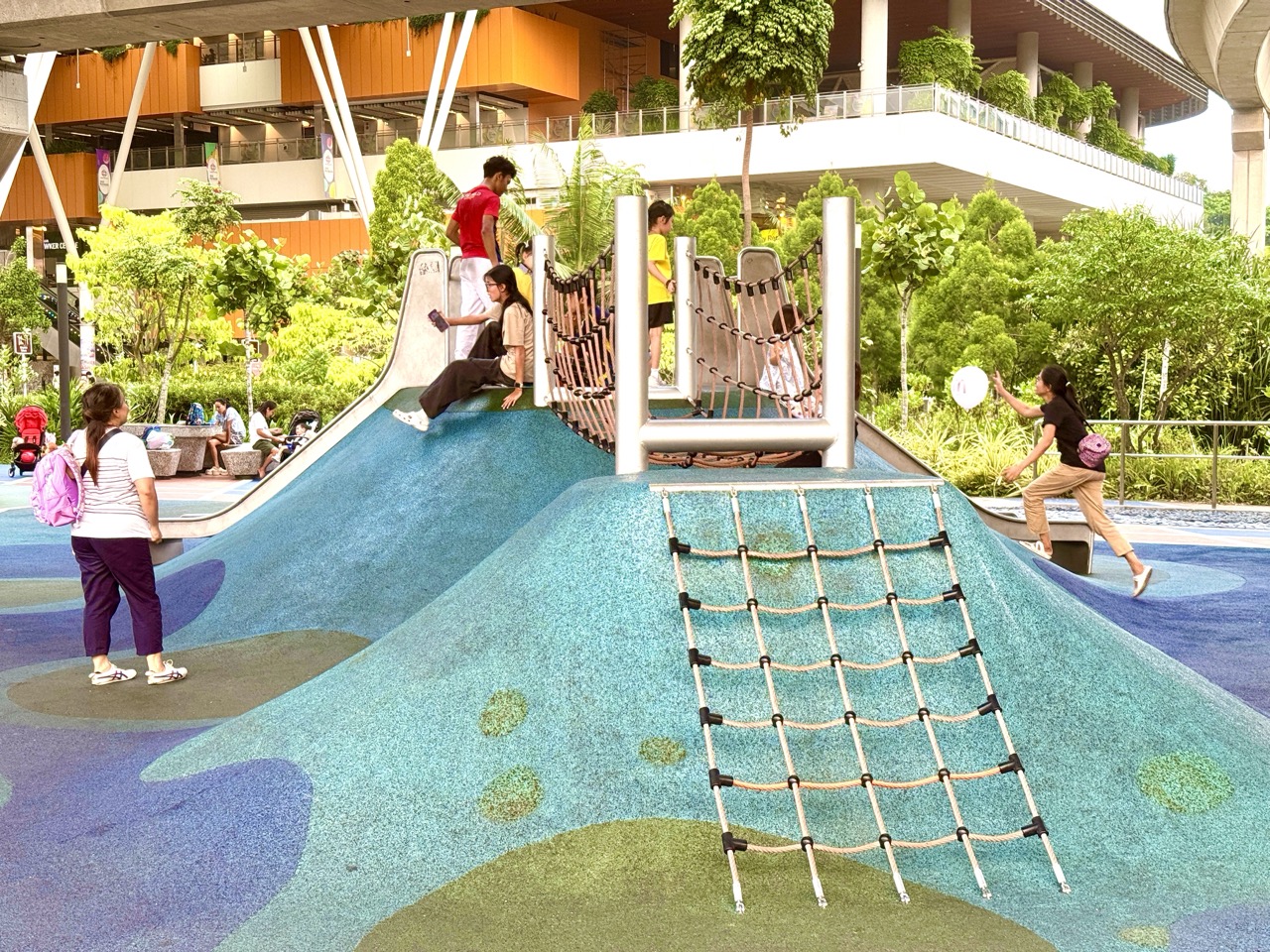
Punggol has neighbourhood playgrounds and community courts outside the major sports centre. These can be useful for short playful activity close to home. The intended type of play must suit the actual space: a children’s playground is not a high-speed football pitch, and a public basketball court may have other users.
Families can practise simple movement in an appropriate area without paying for a full court booking. The convenience can help children develop a consistent relationship with play across many ordinary days.
Respect other users, posted rules and the needs of residents nearby. The most useful location is often the one the family can access safely and repeatedly.
Water-play interest is not swimming competence
Many young children enjoy splashing, but enjoyment in shallow water does not establish swimming ability. Punggol’s planned swimming complex needed a separate opening check after the late-October 2026 soft launch. Other water-play attractions around Punggol are operated separately and have their own tickets and rules.
A formal beginner swimming programme should match the child’s age, readiness and supervision needs. A family cannot assume that an ordinary swim pass includes instruction or that a child with water confidence needs no adult attention.
Follow the operator’s water-safety and accompaniment policies. Never treat a waterway, canal or waterfront edge as a place for unsupervised swimming.
Rain, lightning, haze and heat in Singapore
Punggol’s outdoor play can be interrupted by thunderstorms, haze or high heat. Preschool children may not recognise early signs of becoming overly tired or uncomfortable, so adults should monitor conditions and respond appropriately.
An activity can be moved to a safe indoor setting or deferred; it need not continue merely because the family has planned a weekend outing. A sheltered sports court is still subject to the operator’s safety directions.
Check NEA advisories and follow current facility closures. Water, suitable clothing and flexible expectations are more valuable than insisting on perfect adherence to a timetable.
A rainy-day movement plan
Rain does not require a child to spend the entire day sitting in front of a screen. Where home space permits, quiet safe movement games can offer variety without heavy equipment or noisy impact on neighbours below. The activity should not create hazards around furniture or slippery floors.
Simple imagination-based actions such as reaching, stepping and gentle balancing can be adjusted for the child’s ability. Adults should not encourage dangerous jumping from household furniture or unsupervised movement near windows.
A small indoor plan complements outdoor play rather than replacing it permanently. Choose activities that suit the home and the neighbours’ shared living environment.
Preschool, sleep and the active day
The Singapore preschool activity guidelines also discuss sedentary behaviour and quality sleep. A day packed with classes is not automatically healthier if the child becomes overtired and loses the routines needed for meals and rest.
Parents can spread activity across nursery, home and neighbourhood rather than demand a single long session. Predictable bedtimes and a calmer winding-down period can support the next day’s readiness to play.
Observe the child’s behaviour and individual needs. Avoid turning activity minutes into a source of anxiety or treating the recommendations as a competition between families.
How to budget for a first sport
A three- or four-year-old may need ordinary play more than expensive specialised coaching. For a five- or six-year-old interested in a class, the total cost includes programme fees, transport, suitable clothing and parental time. A cheap headline price can become less attractive when the trip is difficult.
SportSG’s published programme fees may vary by age, eligibility and season, and ActiveSG credits are subject to particular rules. Do not treat the December 2026 promotional terms as guaranteed 2027 or 2028 subsidies.
Try a limited suitable activity before committing to a long programme. A parent should pay for a real confirmed class rather than a speculative local opening.
How to judge a preschool instructor
An effective young-child coach explains movement simply, keeps the environment safe and provides opportunities to succeed without constant public comparison. Parents can ask about group size, appropriate qualifications, physical touch, communication and safeguarding.
Watch whether children receive understandable directions and patient correction. A provider who only praises the strongest young player may not be the best match for a first-time beginner. Equally, an impressive sports building is not evidence of teaching quality.
Choose the real programme and verify its supervision arrangements. The instructor’s suitability matters more than marketing claims about producing champions.
A four-week play experiment
Week one can focus on an enjoyable local movement game. Week two adds variety through rolling, catching or safe balancing. During week three, the child might try a suitable supervised programme if interested, and week four can review what the child actually enjoyed.
This is not an exact training prescription. Children may repeat the same simple activity many times because it feels familiar and satisfying, and some will need more time before joining a group.
Use the experience to discover preferences. A family does not have to purchase another class merely because a programme is available.
The Primary 1 transition
As a child approaches Primary 1, movement experience can help them feel more comfortable with simple PE games, directions, changing partners and sharing equipment. However, primary-school PE has its own curriculum; attending a commercial class is not a prerequisite for entering school.
Parents can support readiness through varied play and gentle social learning. A child who can listen, ask for help and enjoy moving has a useful foundation even without formal competition results.
Keep school transitions in perspective. Sport should remain one enjoyable part of childhood alongside reading, family time, sleep and friendships.
What to verify in 2027
Check the current availability of Punggol’s named facilities and any genuine age-five or age-six programmes. A national Multi-Sport page may continue to list Sengkang or change centres, but only a newly dated registration can establish the next season.
A 2026 opening-week account should not be repeated as the current status of every swimming or specialist facility. Separating stable movement advice from dated venue information protects parents against wasted trips.
Read the actual age, equipment, supervision and refund rules before paying. Future plans are not present-day bookings.
What to verify in 2028
Children who were three in 2026 will be older in 2028, and their movement skills, school commitments and preferences may change. The right programme should change with the child rather than remain fixed around an early preschool identity.
Recheck official classes, age bands, dates and facility access. A short multi-sport introduction may suit a child who has become curious, while another may still prefer ordinary free play with family and friends.
The long-term aim is a child who associates movement with confidence, safety and enjoyment, not an early medal collection.
Frequently asked questions
How active should a child aged three to six be?
HealthHub recommends at least 180 minutes of varied activity spread through the day, including at least 60 minutes of moderate-to-vigorous movement. This does not mean a three-hour continuous sports lesson.
Does ActiveSG Multi-Sport accept three-year-olds?
The officially described Multi-Sport introductory programme is for ages five to twelve. Check an individual programme if seeking another activity for a younger child rather than assuming this one accepts them.
Is the 2026 Multi-Sport programme held in Punggol?
The published December 2026 programme lists Sengkang, Delta, Jurong and Bedok locations, not Punggol. A later Punggol offering would require a separate official listing.
Can a preschooler use a normal court booking?
A court booking is not coached childcare. The venue’s permitted activity, age requirements, suitable equipment and adult supervision all need checking.
Do young children need expensive sports lessons?
No. Safe varied play and basic movement exploration are valuable. A suitable supervised taster can add experience when the child is ready and interested.
What if my child is afraid of a sports class?
Consider whether noise, unfamiliar people or pace is the issue. Try a gentler experience and discuss individual needs with a provider rather than forcing participation.
Is water play the same as swimming skill?
No. A child who enjoys splashing still needs appropriate supervision, and formal swimming lessons are a separate service. Check the intended pool’s actual operating status.
What should I check for a 2028 preschool class?
The child’s current age and readiness, the exact programme venue, instructor supervision, fees, equipment, and live admission conditions.
Official sources and other relevant Punggol guides
- HealthHub: physical activity guidelines and movement skills for preschoolers
- HealthHub and KKH: toddler activity, play and development
- ActiveSG: Multi-Sport programme ages five to twelve
- ActiveSG: December 2026 Multi-Sport dates and actual centres
- SportSG: national children and youth holiday programmes
- MyActiveSG+: live sports programme registration and facility bookings
- eduKatePunggol: general children’s sports and holiday planning
- eduKatePunggol: supervision, safeguarding and parent guidance
Your next step
Choose one simple active game the child can enjoy today and one variety to try later. If your five- or six-year-old wants coached sport, check a current confirmed programme and its exact venue before making promises or payments.
Fact-check: 1 November 2026. Preschool activity guidance is general public health education, not developmental diagnosis. Future 2027–2028 ActiveSG Punggol preschool classes and pools are not represented as confirmed unless listed by the operator.


