
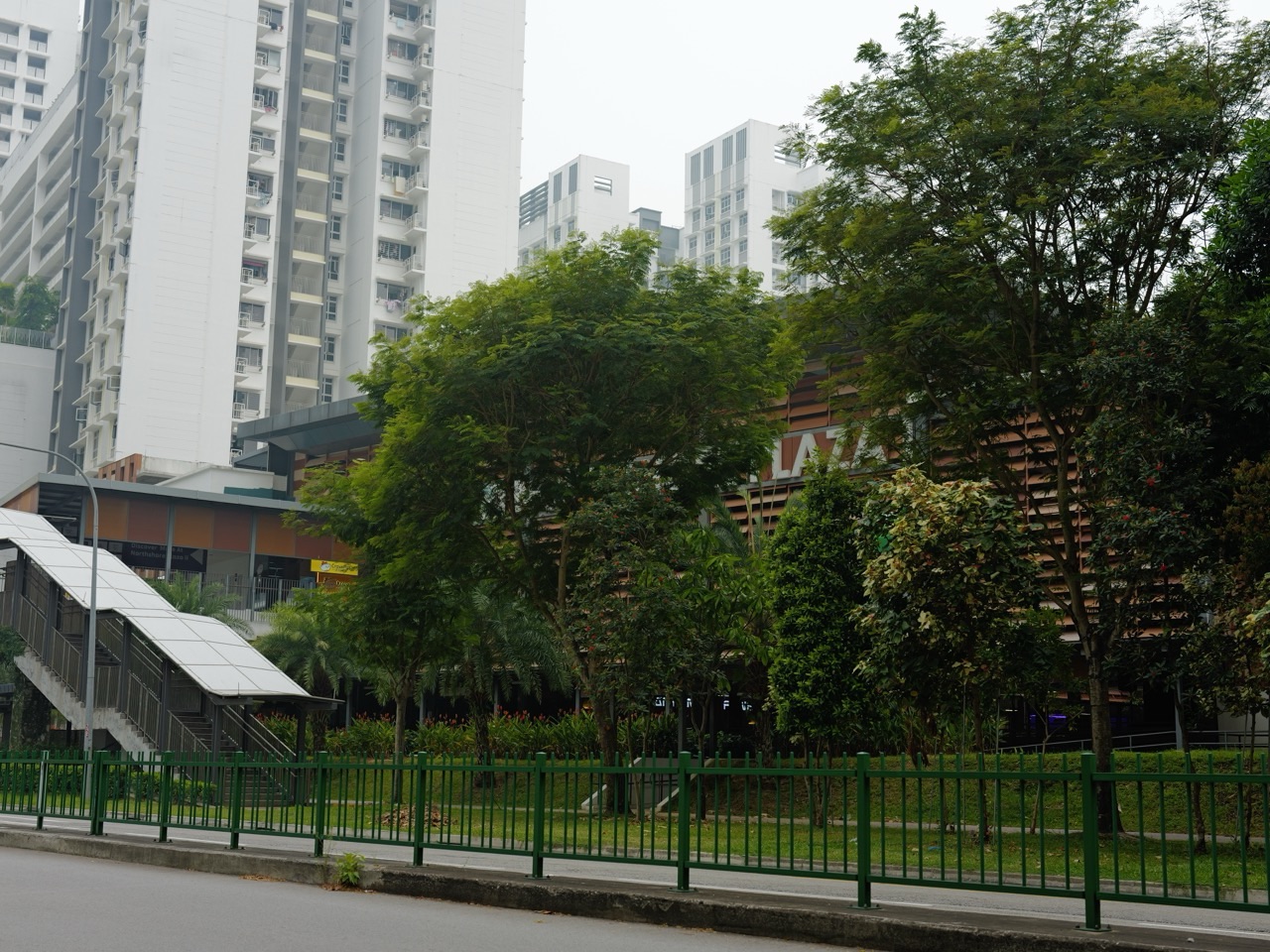
Punggol residents move through MRT and LRT stations, bus interchanges, neighbourhood crossings, shopping centres and public walkways every day. On some of those journeys, the ground contains textured strips or raised dots. They are not decorative tiles. They are part of a tactile guiding system intended to give people with visual impairment information that can be detected underfoot or with a white cane.
Tactile paving in Punggol matters because a transport journey is made of many small decisions: finding an entrance, following a route, recognising a point of caution, identifying a service counter and continuing through a crowded area. A box left on the path or a queue that blocks the textured surface can erase the usefulness of an otherwise thoughtful design. Accessibility is therefore partly a matter of infrastructure and partly a matter of how other people behave around it.
This guide explains what directional and warning tactile ground surface indicators are, what the markings cannot guarantee, how families and shop operators can keep routes usable, and how to offer help without taking away a person’s independence. It is not a survey certifying that every Punggol station exit, bridge or building is step-free; routes and features need to be checked at the exact location and time of travel.
The five things to remember
- Textured paving communicates information through touch. It is designed especially for people who are blind or have low vision.
- Different textures have different jobs. Directional indicators can help with orientation; warning indicators alert users to locations requiring attention.
- The colour is not the full message. Feel, pattern, context and visual contrast all matter; do not assume every yellow surface has the same function.
- An accessible route is only useful while clear. Luggage, delivery carts, bicycles, shopping displays and waiting crowds can obstruct it.
- Ask before helping. Give the person a choice, listen to their answer and do not seize a white cane or pull someone by the arm.
1. What does ‘tactile’ mean?
Tactile means detectable through touch. Most people read a station through signs, light, landmarks and colour. A person with visual impairment may also use sound, memory, cane technique, assistance, environmental cues and tactile surfaces. The raised features on selected floor or pavement sections provide another layer of information.
Singapore’s Land Transport Authority describes tactile guidance as physical cues detected by foot or white cane. Its Tactile Guiding System explainer describes how such cues help commuters find essential station facilities, including passenger service points and designated boarding areas. The goal is more independent travel, not forcing everyone to use exactly the same walking path.
It is important not to reduce the whole subject to a colour or to imagine that a tile can replace accessible design, clear announcements and a safe crossing. A strong system provides several complementary cues.
2. Directional strips and warning studs
Directional indicators
Directional tactile indicators help with orientation along a defined route or toward a specific point. Think of them as a textured guide that a person may incorporate into an established navigation method. They do not automatically indicate the fastest route, and they do not guarantee that every continuation beyond them is barrier-free.
Warning indicators
Warning tactile indicators help draw attention to a situation that needs care, such as a change in the travel environment, a point of hazard or a location where a traveller must make a decision. The precise design and placement depend on the code and context. They are not instructions to cross immediately, step onto a road or ignore surrounding conditions.
The Building and Construction Authority’s Code on Accessibility in the Built Environment explains the requirements for accessible building design. The current 2025 edition distinguishes warning and directional tactile ground surface indicators and addresses how accessibility features are used. A resident should follow the current code and building operator’s instructions rather than relying on a decade-old diagram circulating online.
3. Why the texture matters more than a bright colour
A bright or contrasting colour may help people who retain useful vision, but not everyone can distinguish colours the same way. A tactile surface is useful because its raised features can be recognised without relying only on sight. Depending on the site and system, visual contrast also helps people who can use it.
This means it is mistaken to tell a child, ‘all yellow tiles are for blind people’ or ‘every row of dots means a road’. The purpose comes from the design, texture, placement and surrounding cues. If a route is unfamiliar, the safe lesson is to respect the surface and let its intended users navigate without added obstacles.
4. How this affects an everyday Punggol journey
Consider a family travelling from a Punggol LRT stop to the town centre. They may need to use a lift, cross a concourse, pass a queue, locate a bus stop and move through a mall. Some parts of that route may have tactile guidance; others may depend more on staff directions, signage, kerb design, crossings or the person’s own orientation skills.
The North East Line and LRT network, pedestrian crossings and public buildings are different environments, with different designs and responsible parties. Do not promise that the presence of guidance at one entrance means the entire door-to-door route is independently navigable for every traveller.
Where uncertainty matters—such as a new construction diversion, a closed lift or unfamiliar building entrance—check the latest notices or seek information from the operator. A route that worked last month may have temporary obstructions today.
5. The most common everyday obstructions
- Bicycle or scooter parking: A parked device across a guiding strip can force another person into an unfamiliar path.
- Delivery trolley or parcel stack: Items left at an entrance may block the exact route to a building or service counter.
- Event queue: People waiting across a textured indicator can make the route hard to detect.
- Temporary promotional display: Merchandising may narrow the usable passage even if there is technically room to squeeze past.
- Wet-floor barriers: A legitimate safety barrier should be placed and managed so that the diversion is safe, communicated and usable.
- Renovation materials: Contractors should not assume that a brief obstruction is harmless simply because someone can walk around it.
A good test is not whether an able-bodied shopper can get through. Ask whether a person using a white cane could detect a safe, continuous route without suddenly meeting an unexpected object at ankle or waist height. A person with a mobility aid or stroller may have different access needs, which reinforces the value of keeping the full route free.
6. How to offer help respectfully
- Approach without startling the person and say briefly that help is available.
- Ask, ‘Would you like any help finding the entrance or crossing?’ rather than physically intervening immediately.
- Wait for their answer. If they say no, respect their decision.
- If they accept, ask what form of assistance they prefer and which destination they want.
- Give precise, calm information about a known obstruction or closure. Avoid directions such as ‘over there’ without context.
- Never take hold of a white cane, guide dog, wheelchair or the person without invitation.
- If you do not know the safe route, say so and help find a staff member or reliable information source.
The goal is to support agency. A person may already know their route, use particular techniques or simply prefer to travel independently. Unwanted grabbing can be confusing and unsafe even when the intention is kind.
7. What parents can teach their children
Children naturally ask why a pavement has bumpy lines. Use that curiosity to explain that some public places contain information intended for people who use touch or a cane. The correct response is to leave the route clear and not treat the texture as a toy, queue marker or skateboard track.
A useful school-level activity is to observe a station floor from a safe public place and distinguish directional tiles from other paving. Discuss what makes a building easier to use for someone with different abilities. Do not blindfold children and send them into live pedestrian traffic to ‘simulate’ blindness. That is unnecessary and can create danger.
Parents can also explain that not every visually impaired person uses the same aid or experiences the same level of sight. Accessibility is a collection of choices and environmental supports, not one simplified story about everybody walking with a white cane.
8. What shopkeepers, event organisers and delivery teams should check
A business at a Punggol mall or neighbourhood centre can perform a simple opening check. Are freestanding displays blocking the accessible route? Have delivery crates drifted into a corridor? Does a promotional queue block the direct route to a lift or counter? Are temporary signs causing users to detour into an unsafe section?
Event organisers should think about accessible arrival, not just accessibility at the main stage. A participant may need to get from a bus stop to the venue and then find a reception desk, toilet and exit. If a construction or event arrangement interrupts the normal route, the operator should provide a properly planned alternative rather than asking users to improvise.
A responsible check considers ordinary foot traffic and people with mobility or visual needs. It does not require a shopkeeper to redesign tactile paving themselves; changes to infrastructure belong to the appropriate building owner and qualified professionals.
9. Why a wheelchair ramp and a tactile strip do different jobs
A ramp is principally an accessible way to negotiate a change in level for people with mobility needs, including wheelchair users and others who cannot use stairs easily. A tactile indicator provides information that can assist navigation. One does not replace the other. The presence of tactile paving does not prove that a route is step-free, and a ramp does not necessarily provide orientation for a visually impaired person.
Singapore’s accessibility framework treats the built environment as a connected system. BCA’s 2025 accessibility code, introduced for relevant new building and alteration works, updates provisions for different users. A household checking a route for a senior, child, stroller user or person with a disability should ask about lifts, accessible entrances, path widths, crossings and any works or temporary closures, not only one feature.
10. What to do when tactile paving is damaged or blocked
- Keep clear of the damage or obstruction and do not attempt an unsafe repair.
- Record the exact location: station, exit, block, street, building level and nearest fixed landmark.
- Describe the issue factually: missing tiles, detached surfaces, blocked guiding route or temporary display across a passage.
- Include a photo taken without obstructing people or compromising their privacy.
- Report to the responsible station staff, building manager, Town Council or appropriate public feedback channel.
- If there is an immediate danger, alert the operator directly rather than relying only on a non-urgent online report.
- Recheck the report if the obstacle remains and its risk changes.
Avoid speculating that the installation is non-compliant merely because the pattern differs from an image you found online. The applicable code edition, building works, intended route and site-specific design must be reviewed by those responsible.
11. Four situations that show why small details matter
A delivery trolley blocks a station route
A staff member needs to move goods but leaves a trolley on a guiding strip. Other commuters might walk around it easily. A person relying on that route may discover the obstacle only at close range. Moving the trolley to an authorised place keeps the route usable for everyone.
A queue forms near a counter
An event draws a long queue across the accessible route. Organisers should manage the line and keep a clear path rather than assume the crowd will part at the right moment. The correct position of a queue barrier should be considered during planning.
A child offers to ‘lead’ a stranger
A child sees someone using a white cane and wants to help. The parent teaches the child to ask politely, wait and respect the answer. A gentle question is more valuable than grabbing the person’s arm or cane.
A familiar route is diverted
Works change the usual pedestrian flow near a local facility. Travellers should check the operator’s current instructions. Residents who observe a genuinely unsafe or obstructed path can report it with a precise location. A temporary diversion is not an excuse for leaving the user without meaningful guidance.
12. What accessible design teaches us about Punggol
Punggol is a town of linked neighbourhoods, transport nodes, waterfront routes, community spaces and homes. Physical connections matter only if people can use them reliably. A bridge that joins two parts of the town may be impressive, but the experience also depends on approach paths, crossings, signage, lifts, maintenance and considerate behaviour.
This is a broader civic lesson. Accessibility is not charity offered at the point of difficulty. It is planned participation: designing the system so a wider range of residents can move, study, work, shop and live with dignity. Small daily actions such as moving a parcel off a guiding path are part of that system.
Frequently asked questions
Are the bumpy strips in Punggol just for decoration?
No. Where installed as tactile ground surface indicators, the raised features communicate navigation or warning information, particularly for people with visual impairment.
Does a row of textured tiles tell me it is always safe to cross?
No. Warning and guiding features are not an authorisation to enter traffic or ignore signals. Use the applicable crossing rules, surrounding cues and trained navigation methods.
Are all yellow tiles tactile indicators?
No. Colour alone cannot define an indicator’s purpose. Look at the actual raised pattern, the site design and its surroundings.
Should I help someone who is using a cane?
You may offer help, but ask first and respect their answer. If assistance is accepted, follow their preferences rather than assuming physical guidance is necessary.
Where should I report a broken tactile path?
To the operator or authority responsible for the precise location: transport staff for station facilities, managing agents for private buildings and the relevant public agency or estate-management channel for public and common areas.
Official sources and related Punggol reading
- LTA — Tactile Guiding System: Studs and Strips
- BCA — Code on Accessibility in the Built Environment, current edition
- BCA — 2025 accessibility-code revisions and implementation
- eduKate Punggol — The Complete Punggol Guide
Reviewed 31 October 2026. This article explains general accessibility principles and is not an accessibility audit of any particular Punggol location. Building conditions, diversions and operating arrangements can change; check the relevant operator for the route you need.


