
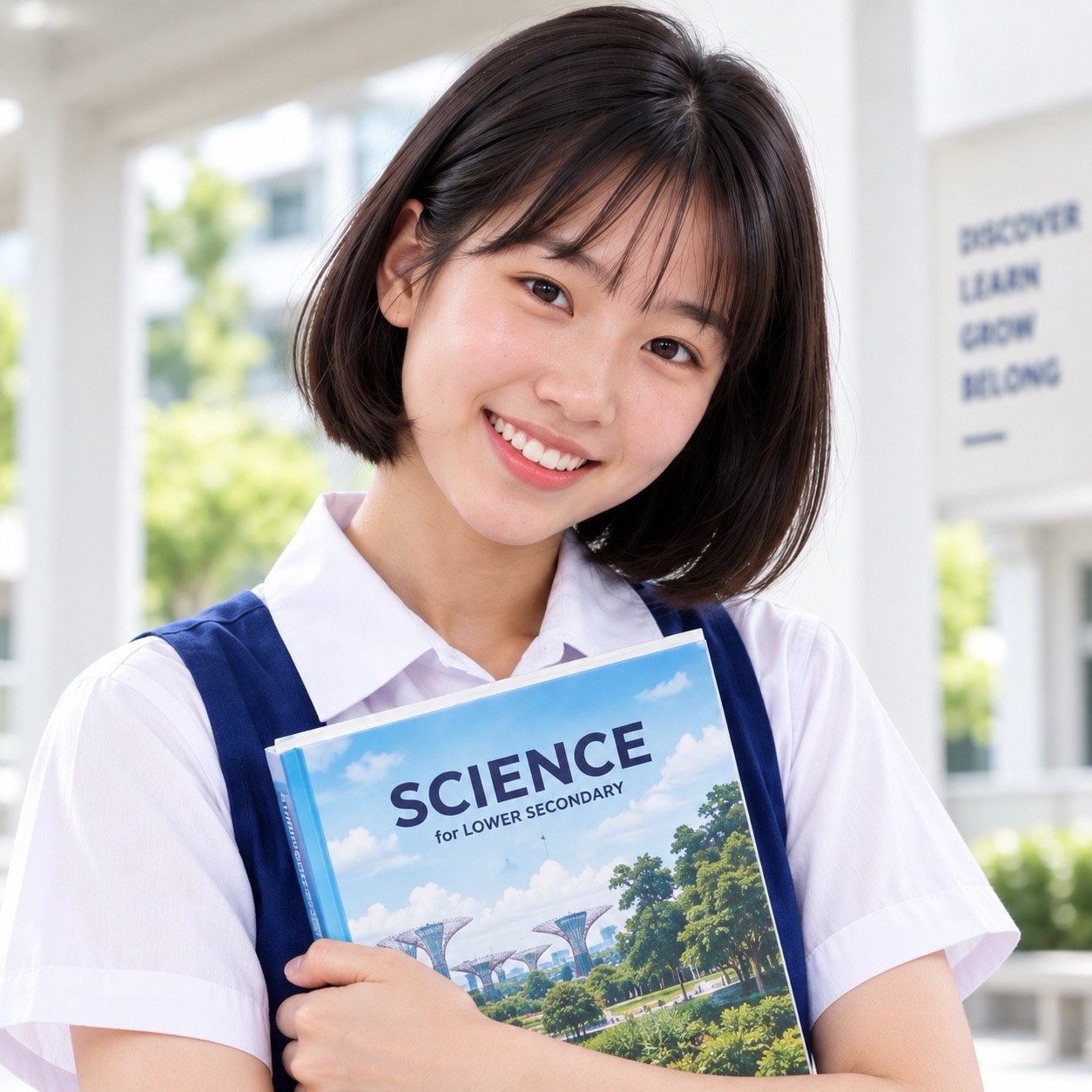
Did you know? For a child entering Primary 3 in 2027, Science is not simply a new collection of facts to memorise. It is a new way of deciding how we know something is true. Children begin moving from everyday observations to describing patterns, proposing explanations and testing ideas. That is the real starting point for strong Primary Science.
This guide is written for families in Punggol whose children are starting Primary 3 in 2027. It explains what the published MOE syllabus is asking of students, what can be practised safely at home, and how to recognise whether tuition is building reasoning rather than dependence. It is not a claim that a special new 2027 Primary 3 examination format has been announced.
What is actually changing for a Primary 3 child in 2027?
The biggest transition is from learning about the world through general primary-school activities to studying Science explicitly. The national framework is MOE’s published 2023 Primary Science Syllabus, which organises learning around Diversity, Cycles, Systems, Energy and Interactions. These are strands across the primary years, not a promise that every theme is examined in full in Primary 3.
Families should use the MOE Primary Science Syllabus 2023 and MOE primary subjects and syllabuses as the source of truth. The SEAB PSLE is authoritative for the Primary 6 leaving examination, but a P3 student in 2027 is not sitting the PSLE that year. The child is establishing a foundation for the upper-primary years. School-level teaching sequences and assessment tasks can differ.
For many P3 pupils, early learning includes distinguishing groups of living things, describing basic life cycles, comparing materials and observing magnetic behaviour. The exact sequence should come from the child’s school plan. What matters more than rushing ahead is knowing how to classify, observe and justify.
The hidden problem: knowing the word is not the same as understanding the idea
Ask a student, “Is a whale a fish?” A child who has memorised that whales are mammals may answer correctly. The next question shows deeper understanding: “What evidence would help you classify it?” The student now has to use characteristics rather than appearance alone. A whale lives in water and has a fish-like shape, but those surface features do not settle its biological classification.
This distinction explains why some children score well on vocabulary practice yet struggle with unfamiliar pictures or experiments. They know isolated labels, but they do not know which observations are relevant. Effective Primary 3 Science tuition should make the thinking visible before adding more worksheets.
- Observation: What did you directly see, measure or notice?
- Comparison: Which properties are the same, and which are different?
- Inference: What explanation is supported by the evidence?
- Prediction: If one condition changes, what might happen?
- Check: What could prove the explanation incomplete or wrong?
A safe mini-investigation: magnets, paper clips and the distance between them
Try a short investigation with one small magnet, a paper clip and several sheets of ordinary paper. Keep the magnet and paper clip the same. Place one paper sheet between them, then three sheets, then five; observe whether the magnet still attracts the clip. Avoid powerful magnets and keep magnets away from small children, electronic devices and medical implants as appropriate.
Question: Does increasing the separation between a magnet and the same paper clip affect attraction? Variable deliberately changed: number of paper sheets separating them. Variables kept similar: magnet, paper clip, paper thickness, placement and starting position. Record: the number of sheets at which attraction still occurs. Repeat to check consistency.
The educational value is not that every household will get the same threshold. Magnet strength, paper thickness and positioning affect results. The value is learning to change one factor at a time and to state exactly what the observation supports. If the clip moves through one sheet but not five, the pupil should say that, rather than inventing a universal rule that magnets never act through paper.
A useful Science answer has three parts: a clear claim, an observation that supports it, and a reason that connects the two.
What Primary 3 Science answers often get wrong
- Overgeneralisation: “All metals are magnetic.” Test claims against examples and counterexamples; not every metal is attracted to an ordinary magnet.
- Guessing from appearance: A child places an animal in a category because of its habitat or colour, without using relevant characteristics.
- Describing instead of explaining: “The paper clip moved” reports a result; it does not explain the role of magnetic attraction.
- Multiple variables: A pupil changes the magnet, the paper clip and the distance together, then attributes the outcome to a single cause.
- Unsupported certainty: “This experiment proves it always happens.” A better response specifies the tested conditions.
A four-week routine a Punggol family can actually sustain
Week 1 — Observe and describe
Spend ten minutes on three evenings asking the child to describe an everyday object precisely: what material it appears to be made of, what it does, what was actually seen and what remains a guess. Keep the conversation short and cheerful.
Week 2 — Sort and justify
Use simple cards with animals, objects or materials. Have the child create a grouping rule, then ask what would make that rule fail. Encourage one sentence beginning with “I grouped these because…” rather than memorising a long model answer.
Week 3 — Test one idea
Conduct one safe comparison, such as the magnet-and-paper experiment, with a small results table. Let the child identify which condition changed. A parent should resist giving the conclusion before the student has described the evidence.
Week 4 — Explain without prompts
Return to the same scientific concept using a different example. If a child needs exactly the same wording as last week, the knowledge has not yet transferred. Have the child explain it to another family member and correct any unsupported claims.
Where a three-student tutorial can help
In a focused small group, one child can propose an explanation, another can question the evidence, and a third can check whether the investigation was fair. A tutor can correct an incorrect inference at the point it appears, rather than only marking the final sentence wrong. The class size itself is not magic; the feedback and follow-through matter.
Families can explore the Primary 3 Science learning pathway, eduKate’s inquiry-focused Science teaching guide and how three-student tutorials work. These pages describe the learning approach; the school syllabus remains authoritative for what is taught.
Five questions to ask before choosing Primary 3 Science tuition
- Does the tutor check whether my child can explain an answer instead of only recalling a definition?
- Will lessons follow the school’s order without rushing straight into Primary 6 exam drilling?
- How are fair tests, observations, tables and scientific vocabulary taught?
- Can the tutor show examples of corrected reasoning, not just a marked score?
- What can our child do independently after a month that they could not do before?
Frequently asked questions
Does Primary 3 Science require PSLE past-year papers?
No. PSLE papers test an upper-primary end point. An early P3 learner usually benefits more from accurate observation, vocabulary in context, simple scientific reasoning and appropriately pitched school questions. Later exam tasks become easier when these foundations are dependable.
Should parents buy many Science assessment books in 2027?
Not before checking what your child can explain. A well-chosen school text, a notebook and a few carefully discussed questions may be more helpful than large amounts of repetitive work. Quality of thinking matters more than page count.
What if my child can memorise facts but cannot answer application questions?
Ask the child to underline the evidence in the question, say what is being compared and complete an explanation using their own words. Then change one feature of the situation and see whether the reasoning still works.
The takeaway for Punggol families
Primary 3 Science in 2027 should begin with curiosity and end with more independent reasoning. The parent’s practical job is to notice the difference between a child who knows a word and a child who can use evidence. Build that habit early, and the later Science curriculum has something dependable to stand on.
Further reading: MOE Primary Science Syllabus 2023 · Punggol learning-system guide · P3 Science topics explained. Information reviewed 27 October 2026. Check MOE and your child’s school for syllabus or assessment updates.


