
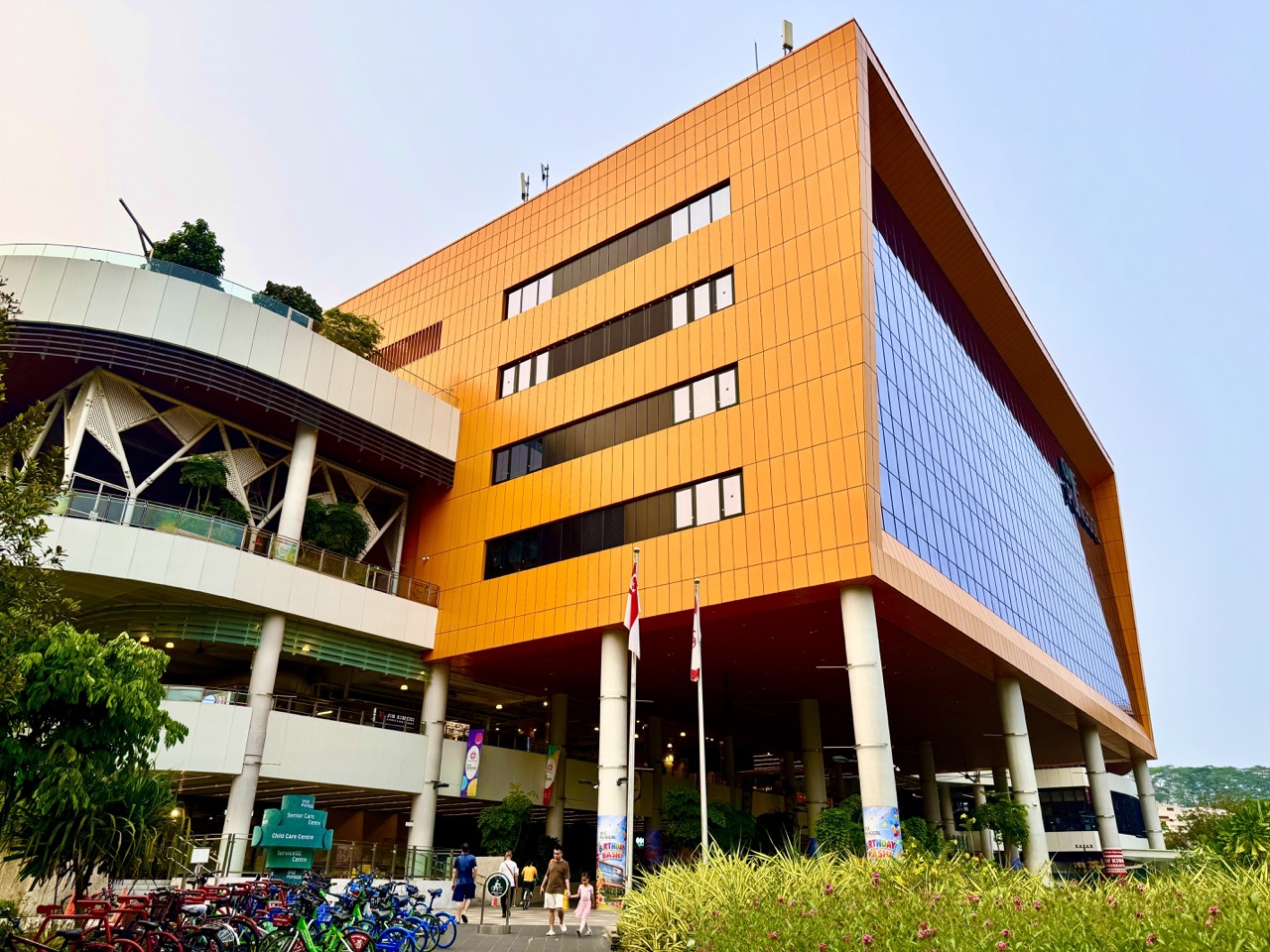
Did you know that an event listing can be a call for volunteers, not a ticket to a single afternoon programme? The People’s Association’s onePA website carries an invitation titled “Community Volunteers Needed – Join Punggol Coast Division (One Punggol CC) – 2026”, with a published listing period of 1 April 2026 to 31 March 2027.
That makes it relevant to residents planning how to participate in their neighbourhood during the first months of 2027. But the date range is not an announcement of a daily eight-hour shift, an exact schedule of community projects or a guarantee that a place has been assigned to you. The listing is a recruitment and enquiry route for people interested in discovering volunteering opportunities in the Punggol Coast division.
Verified 27 October 2026. Primary source: official Punggol Coast community volunteer recruitment listing on onePA. For the national sign-up process, see People’s Association Community Volunteering. This article belongs to the Punggol Events series because it helps residents join the programmes that make neighbourhood life possible, while clearly separating a recruitment window from an event timetable.
Quick facts: the 2027 Punggol Coast volunteer listing
- Listing name: Community Volunteers Needed – Join Punggol Coast Division (One Punggol CC) – 2026.
- Organising committee: Punggol Coast CCC, as shown in the onePA record.
- Published recruitment period: 1 April 2026–31 March 2027.
- Displayed closing date: 31 March 2027.
- Displayed time field: 10am–6pm. This describes the listing’s published time window; it is not proof of a volunteer shift each day.
- Location stated: One Punggol.
- Official CC address: 1 Punggol Drive, #04-05, Singapore 828629.
- Official One Punggol CC phone: 6600 5292, as shown in the CC directory.
- Official One Punggol CC email: pa_onepunggolcc@pa.gov.sg, verified against the CC directory.
- General PA Community Volunteer age threshold: At least 15 years old; individual opportunities may have additional rules.
- Primary event link: Punggol Coast community volunteer listing.
- General process: PA’s Community Volunteering information.
The question to ask is not “What am I attending from 10am to 6pm every day until March?” It is “How do I express interest, choose an appropriate community cause, and confirm the actual time and responsibilities of a particular opportunity?”
What is actually confirmed for 2027?
The onePA entry runs through 31 March 2027 and invites interested people to join as community volunteers in the Punggol Coast division. It says volunteers can explore opportunities to contribute alongside others with a shared purpose. That is a genuine published recruitment call which extends into the future year.
The record does not publish a separate timetable for beach cleanups, festive performances, school programmes, home visits or specific volunteer deployment dates. Those may resemble activities that volunteer organisations conduct in general, but they are not promises made in this particular listing. We should not fill a calendar with invented activities to make a recruitment page appear more exciting.
If you want to take part in a specific weekend or cause, the next step is to contact One Punggol CC or use the official volunteering portal to find an actual opportunity. The right response to missing information is a targeted enquiry, not a fictional schedule.
The recruitment entry also carries a displayed 10am–6pm time range. It would be a serious mistake to turn this into “volunteer every day from 10am to 6pm”. Individual opportunities can have their own sessions, supervision, start and end times and eligibility. Treat the listing time as a publishing field unless the organiser separately confirms a particular assignment.
Community Volunteer versus Grassroots Volunteer
The People’s Association distinguishes Community Volunteers (CVs) from Grassroots Volunteers. Its general information explains that Community Volunteers can explore opportunities based on a cause, skill or project and may choose levels of involvement suited to them. Grassroots Volunteers are associated with grassroots organisations and contribute to programmes, neighbourhood relationships and ongoing community work.
These are related forms of participation, but they are not automatically the same registration, commitment or role. Signing up as a CV does not, by itself, mean appointment to a grassroots committee, permission to represent government agencies or entitlement to manage residents’ data.
A person interested in helping for one event might begin by exploring a project-based volunteering role. Someone keen on sustained community organising might ask about other avenues after gaining experience. The appropriate route depends on availability and the organisation’s actual needs, not a universal ladder promised by this Punggol Coast recruitment page.
The PA explanation of its volunteering routes is a better source for the distinction than a forwarded chat message. Read it before selecting a programme that may involve ongoing commitments.
Who can join? Start with the published age condition
The national PA Community Volunteer page states that an individual may sign up as a CV if they are at least 15 years old. That is a general scheme threshold, not a promise that every particular volunteer assignment accepts every person aged 15 or older.
A task involving physical labour, vulnerable people, transportation, personal information or specialist training may require additional supervision, vetting or eligibility. Those conditions must be checked with the organiser of the specific opportunity. Never infer an unrestricted right to participate from the general scheme’s age minimum.
Parents of students below 15 can still encourage suitable community habits—keeping shared places clean, being considerate of neighbours, supporting school-sanctioned activities—but should not attempt to register an underage child in a scheme that publishes a higher minimum. Ask about appropriate alternatives rather than misstate the child’s age.
For people who are not Singapore citizens or permanent residents, the distinction between volunteering schemes matters. The Ministry of Culture, Community and Youth stated on 7 October 2026 that the PA Community Volunteering scheme welcomes participants regardless of citizenship or residency status, while formal grassroots leadership has different conditions. That does not remove eligibility rules for a particular assignment. Always check the current opportunity’s requirements.
Official background: MCCY parliamentary response on participation pathways for non-resident Community Volunteers.
Where do I register or enquire?
PA’s Community Volunteering guide describes a general route: go to onePA, select Discover Volunteering Opportunities, log in through the official process using Singpass, follow the account onboarding if it is your first visit, provide the requested consent, and explore opportunities matching your interests.
That is the national onboarding path, not confirmation that the Punggol Coast listing itself has places for a particular project. The current onePA event record also tells interested residents to contact One Punggol CC. If a local contact is easier, use the official community club directory for a verified email or telephone number.
The One Punggol CC directory lists pa_onepunggolcc@pa.gov.sg, 6600 5292 and the office at 1 Punggol Drive, #04-05, Singapore 828629. Its counter-service hours are given as 10am–6pm, subject to the current outlet notice.
There is an important data-quality issue: the email address printed inside the particular volunteer event description contains an apparent formatting error, displaying an extra dot after the @ symbol. Do not copy that malformed address as though it were a tested contact. Use the independently verified pa_onepunggolcc@pa.gov.sg from the official CC directory or call 6600 5292.
Why verifying the contact address matters
It may seem minor to verify one email address in a local community article. In reality, a malformed address can lead to bounced messages, missed opportunities and confusion about whether an organiser has ignored your enquiry.
The published event listing has useful dates and a genuine official URL, yet a single contact line appears mistyped. That does not make the entire recruitment call fictional. It simply means readers need a second official source for the correct communication channel.
If you receive a reply from an unexpected sender asking for payment, login credentials or identifying documents outside the authorised registration system, verify the request independently. Use the official onePA website or the CC phone number instead of relying only on the details in a forwarded message.
OnePA and PA are legitimate official sources, but volunteers should still exercise ordinary online caution. Avoid entering Singpass credentials into a link sent by an unfamiliar individual. Navigate to the official service through a trusted browser route and complete the stated authentication process there.
This approach is not about distrust of the programme. It is about making joining the community both convenient and safe.
What could community volunteering involve?
PA describes opportunities that may be cause-based, skills-based or project-based. In practical terms, someone might be interested in helping at a public event, supporting a reading-related activity, sharing a useful skill or helping a local team communicate with neighbours. These are illustrative possibilities, not a confirmed vacancy list for Punggol Coast in January, February or March 2027.
Before committing to any particular activity, ask what the actual work is. Is it standing at an information desk? Helping with event setup? Accompanying a supervised group? Translating a notice? Supporting a one-off community learning session? Different roles carry different responsibilities.
The organiser should explain what participants will do, who supervises them, how long the activity takes and what resources are provided. Some roles may require briefing, safety arrangements or orientation. The recruitment call itself does not provide those details.
A potential volunteer should not interpret “I want to help” as automatic permission to visit vulnerable residents, collect personal information or make decisions on behalf of the organiser. Safe service happens within defined roles and with the right consent.
A good first contribution can be modest. It is often better to complete a clearly scoped task reliably than to promise participation in every event and repeatedly cancel.
How to choose a cause that fits your actual abilities
Start with interest. Do you enjoy communicating with people, organising objects, translating languages, helping others learn digital skills, or planning simple activities? Then examine constraints: how many hours can you realistically give, what physical conditions suit you and what support would you need?
A student might prefer structured participation during a school break. An adult with family commitments might need weekend opportunities. A retiree may be available on certain weekdays but prefer activities without prolonged standing. These are planning examples, not claims about specific Punggol Coast vacancies.
Ask the organiser which actual opportunities match your circumstances. If a role is unsuitable, decline it politely and ask about another when available. Community participation is valuable when it is sustainable, not when volunteers exhaust themselves trying to accept every request.
Think about the difference between doing a job and supporting a cause. Sometimes the most useful task is repetitive: arranging chairs, giving clear directions or checking supplies. The impact may not be glamorous, but it can help a programme work smoothly.
Be respectful of the organiser’s standards. A person with professional expertise may still need local training or authorisation before applying that skill within a community programme.
Is the 31 March 2027 date a volunteer deadline or an event date?
The official record displays 1 April 2026–31 March 2027 as its listing range and 31 March 2027 as its registration closing date. In context, this is best understood as a window for expressing interest or recruitment, not an exact commitment period for everyone who signs up.
The source does not say that people who register in February will be assigned a March shift, that every registered volunteer must participate until the last day, or that no further opportunities will exist after March. Such outcomes depend on the organiser’s subsequent programmes and future listings.
If you want to serve at a particular cultural celebration, open house, sports event or workshop, find that event’s own volunteer requirements. Do not purchase an unrelated public-event ticket believing it grants staff or volunteer access. Registration as a participant, vendor and volunteer are different processes.
Similarly, do not treat the onePA listing’s displayed 10am–6pm time as the working hours for every volunteer placement. A realistic contribution starts only after a particular assignment, role description and timetable are confirmed.
This makes the recruitment listing important as a 2027 gateway, even though it is not itself a precise calendar of event deployments.
Students: learning from service without collecting imaginary credentials
A young person may see community volunteering as an opportunity to develop confidence, teamwork and responsibility. That can be valuable. But the programme should not be presented as a guaranteed source of academic credit, school CCA hours, leadership appointments or admissions advantages.
If a student needs documented service hours for an actual school programme, ask the school in advance which activities qualify and what verification is required. Separately ask the community organiser whether it can provide attendance records or confirmation letters for the specific assignment. Neither outcome is guaranteed by this recruitment listing.
The most meaningful lesson comes from performing a task responsibly: arrive as agreed, understand instructions, communicate respectfully, respect privacy and finish the work. A student may learn more from accurately guiding ten visitors than from writing a dramatic description of “changing lives” for a portfolio.
Parents can ask students a question after volunteering: “What did people need, what did you do, and what would you improve next time?” That builds observation and self-assessment. It avoids reducing the community to a source of certificates.
For under-15 children, look for age-appropriate service through approved school or family channels rather than trying to bypass PA’s general CV signup age condition.
Adults: combining volunteering with work and family
A working adult may be genuinely interested in Punggol Coast community life but unable to commit to a weekly fixed timetable. PA describes the CV scheme as offering flexibility in levels of involvement. The practical meaning of that flexibility still depends on the individual opportunity being offered.
Before accepting, check the dates and expectations against work shifts, childcare, eldercare and rest. State your availability accurately. A volunteer who offers two reliable hours may be more useful than one who promises a whole day but is consistently unavailable.
If a task requires travel away from One Punggol, ask where the actual deployment location is. The recruitment page names One Punggol as the physical venue for the listing, but this is not a guarantee that every future volunteer activity takes place inside that building.
Decide in advance how you will handle unexpected schedule changes. A short message to the organiser at the earliest opportunity is better than a no-show, especially if a team depends on a particular role being covered.
Good volunteering should strengthen community ties without creating unsafe demands on the volunteer’s own household.
Seniors and people with access needs
Community service need not be limited to physically demanding activities. But no specific Punggol Coast vacancy should be assumed to provide seated work, mobility support, a quiet room or a special arrangement until the organiser confirms it.
If you have access needs, describe the practical task requirements rather than sharing more medical information than necessary. For example, you might ask whether a role involves prolonged standing, lifting objects, outdoor heat, stairs or communication in a crowded setting. Those facts are directly relevant to choosing a safe assignment.
The One Punggol CC directory identifies wheelchair accessibility and other community-club facilities, but a listed building feature does not establish the accessibility of every external deployment. Confirm the exact event venue where you will serve.
For someone trying volunteering for the first time, a short orientation or clearly supervised activity may be a more comfortable introduction than a complex logistical role. Ask about briefing and a designated point of contact.
The goal is participation that respects both the volunteer and the people being helped.
Safety, privacy and boundaries matter
Volunteers may encounter personal stories, names, contact details or photographs. These should not become content for a personal social-media post without appropriate permission and organisational rules. A resident asking for help has not automatically consented to their situation being publicised.
Follow the organiser’s policies on photography, personal information and communications. Never request a resident’s passwords, financial account access or one-time passcodes. Do not accept sensitive documents into a private personal chat when the programme has an authorised way to handle them.
When an issue is beyond your role, refer it to the assigned staff or suitable official service. A volunteer is not automatically an emergency responder, social worker, healthcare professional or enforcement officer. An interest in helping does not create professional authority.
For children and vulnerable people, follow the organiser’s safeguarding and supervision procedures. Never independently organise private meetings or transport as an unofficial extension of the volunteer role.
These safeguards protect relationships. Community trust is built by doing the promised job carefully, not by taking on responsibilities that have never been assigned.
Practical skills that volunteering can develop
One useful skill is clear communication. An event volunteer may need to repeat accurate directions, explain a queue or answer a question without inventing details. When unsure, saying “I will check with the organiser” is more responsible than offering a confident guess.
Another is time management. Arriving before a briefing, understanding where materials should go and completing a task by an agreed deadline are small habits with real effects on the team.
A third is collaboration. Community programmes often rely on people with different experiences, languages and ages. Listening to others and sharing work fairly can be more important than who takes the lead.
For teenagers, these are transferable skills worth reflecting on. For adults, service may create new acquaintances and more understanding of neighbourhood needs. The possible benefits are reasonable educational observations, not promises of employment, academic selection or other rewards.
Learning from participation becomes most useful when people can describe what they actually did and what they would change, rather than dressing up a small task as a grand achievement.
A first enquiry that makes it easier for the organiser to respond
A concise enquiry should identify the programme accurately and state what you need to know. You can mention the Punggol Coast community volunteer recruitment listing that runs through 31 March 2027, your age eligibility if relevant, the kinds of causes you care about and the days or times you are realistically available.
Ask whether there is a current 2027 volunteer opportunity matching that availability, whether any training or onboarding is required, and whether you should register through the national onePA CV route. Ask for actual dates and the deployment location; the recruitment listing itself does not supply them.
Do not send identity documents or personal background information in an initial enquiry unless an official and secure process requires them. The CC can direct you toward the right route.
Official contact: One Punggol CC directory, telephone 6600 5292, email pa_onepunggolcc@pa.gov.sg. These details are more reliable than the malformed email printed inside the event description.
What volunteering does not automatically give you
It is not an offer of paid employment. PA operates separate staff recruitment channels, and a community volunteer call should not be confused with a job advertisement.
It is not a guarantee of training for a professional licence or skill qualification. A specific opportunity might include an orientation or learning activity, but the recruitment record does not promise a credential.
It is not automatic appointment to a grassroots leadership post or a committee. Community and grassroots participation have different routes and conditions.
It is not blanket permission to speak for residents, collect signatures, handle their documents or represent a government department. Any such duties require separate explicit authorisation and guidance.
These boundaries are not reasons to avoid serving. They are reasons to choose an opportunity whose responsibilities are clear.
A realistic four-step start
Step 1: Decide what matters to you. A cause might involve connection, learning, inclusion or practical help. Choose one broad area of interest without assuming a matching slot is currently open.
Step 2: Read the official information. Use PA’s Community Volunteering guide and the specific Punggol Coast recruitment listing.
Step 3: Register or ask a local question. Follow the PA onePA onboarding process if appropriate, or ask One Punggol CC what current opportunities it needs help with and how to apply. Confirm age and other eligibility.
Step 4: Accept only a clear assignment. Check date, location, briefing, equipment, supervision, travel and the task itself. If suitable, commit and turn up as agreed. If not, ask about another opportunity.
A community programme often begins with ordinary reliability. It does not require the volunteer to have an impressive biography.
Frequently asked questions
Is there a Punggol Coast volunteering programme officially listed for 2027? Yes. A onePA recruitment entry runs 1 April 2026–31 March 2027. That is a verified call for community volunteers extending into 2027, not a detailed roster of actual volunteer events.
Does it mean I must volunteer 10am–6pm? No. The page displays that time range as part of a long-running recruitment listing. Specific shifts, if any, must be established by the actual opportunity and organiser.
Is it free to register? The public event listing does not establish an unqualified price or financial policy for every possible related activity. Use the actual official onboarding route and clarify any unexpected fee requests independently before making payment.
Can a 15-year-old join? PA’s general Community Volunteer scheme states a minimum age of 15. A particular project may have further requirements, so confirm them before participation.
Can non-citizens volunteer? MCCY’s October 2026 response says the PA Community Volunteering scheme welcomes people regardless of citizenship or residency status. That does not guarantee eligibility for every role or for formal grassroots leadership.
Is One Punggol definitely where all volunteer shifts happen? No. It is the listed venue for the recruitment record and the community-club contact point. Individual opportunities may have other locations.
Which email should I use? Use the independently verified One Punggol CC email pa_onepunggolcc@pa.gov.sg or call 6600 5292. The specific recruitment listing displays an apparently malformed email address.
Does registration guarantee I will receive volunteer work? No. General onboarding and placement into a specific opportunity are separate steps. Dates, vacancies and suitability need confirmation.
Sources, dates and the most important editorial distinction
The onePA Punggol Coast volunteer listing establishes the published recruitment window, local division and invitation to join. The People’s Association Community Volunteering page establishes the general sign-up route and age threshold. The One Punggol CC directory provides the independently verified phone, email and office address.
For wider opportunities and the difference between community and grassroots volunteer schemes, the PA volunteer overview is useful. For residency questions, the 7 October 2026 MCCY response gives official context.
This guide deliberately avoids advertising invented January–March 2027 deployment dates. A published recruitment period is an opportunity to enquire; only a confirmed assignment is an event on your personal calendar.
Final thought: the future of a neighbourhood is made together
Punggol’s 2027 calendar will contain activities organised for residents. Behind many such activities are people who give time, practical skills and careful attention. The official Punggol Coast recruitment listing remains dated through 31 March 2027, giving residents a verifiable starting point for enquiring about involvement.
Start small, verify the organiser and choose a role you can fulfil well. That is a more useful beginning than promising to do everything. Official sources checked 27 October 2026: Punggol Coast volunteer listing and PA Community Volunteering guidance.


