
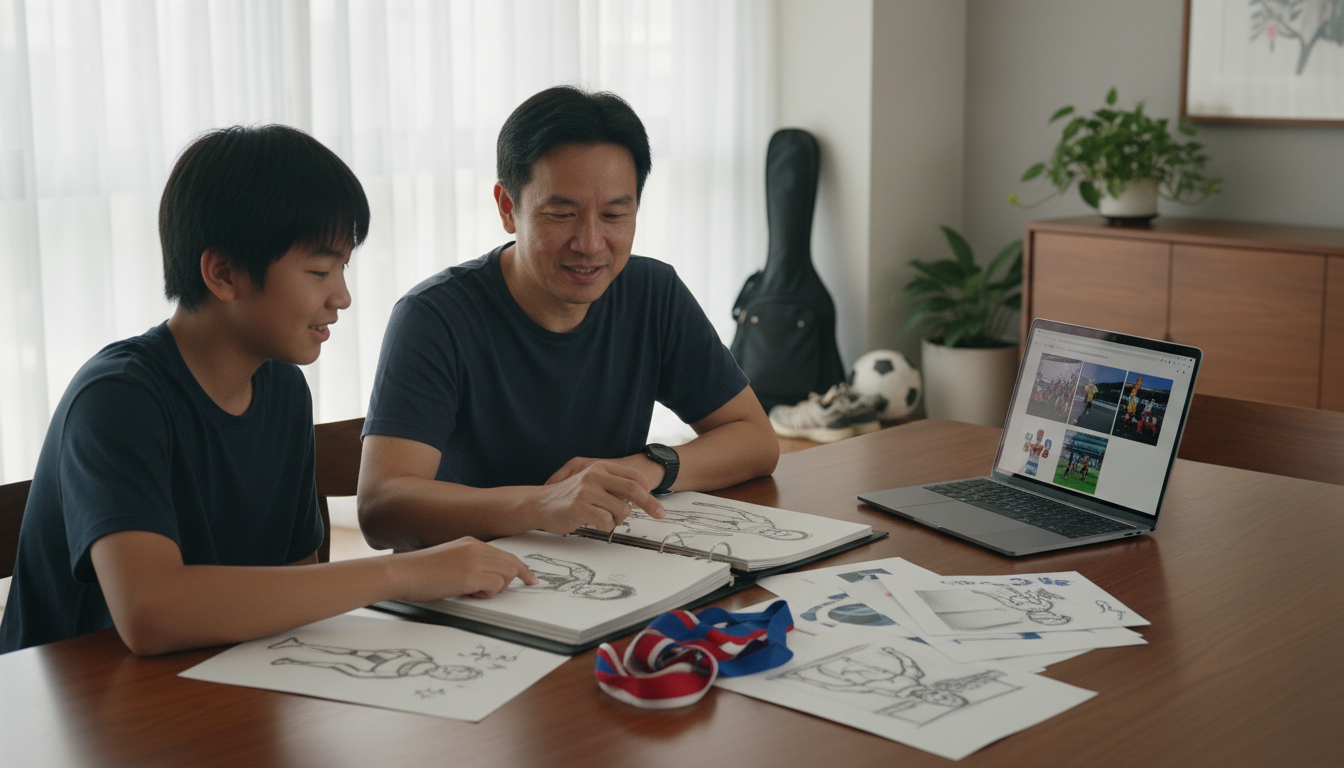
Bukit Timah Education 2027 is not only about choosing the secondary school with the best-known name. For a Punggol family looking at secondary schools around Bukit Timah, Direct School Admission (DSA-Sec) can be relevant when a Primary 6 child has a real talent or distinctive strength that the school can nurture. It is not a way of buying admission, skipping ordinary school choice, or avoiding the need for a suitable learning environment.
Did you know that there are two different planning clocks? Students entering Secondary 1 in 2027 applied for DSA-Sec in 2026. Those planning for Secondary 1 entry in 2028 should monitor the next exercise in 2027; its official dates must be checked when released. As at 27 October 2026, the DSA-Sec preference submission window for 2027 entry, held from 19 to 23 October 2026, has already closed.
This Bukit Timah Education 2027 guide helps parents separate application deadlines from portfolio preparation, understand authentic CCAs, evaluate the daily trip from Punggol, and know whom to ask when admission decisions feel confusing. The aim is to give a child genuine choices rather than another performance to manage.
First, Understand Exactly What DSA-Sec Is
Direct School Admission to secondary schools allows applicants to seek a school place on the basis of talents and strengths such as sport, performing arts, leadership, language or specific academic interests, depending on the offerings of each participating school. Each school’s selection criteria and available talent areas are published separately. An application is considered by the school; neither applying nor attending a trial guarantees an offer.
The first question is not, ‘How can we build a portfolio quickly?’ It is, ‘What has the child been doing willingly, persistently and meaningfully before the application?’ A child who writes stories every week has a different kind of evidence from one who is told to join a writing competition two months before selections. A child who enjoys practising an instrument is different from one who only wants the school brand.
Official guidance is available through MOE DSA-Sec information and the individual school’s admission pages. For a family living in Punggol, use MOE SchoolFinder to check school locations, programmes and official contact information rather than guessing that every school described as ‘Bukit Timah’ sits within a convenient commute.
2027 Intake Versus the 2027 Application Year: Do Not Mix Them Up
- Secondary 1 entry in January 2027: DSA-Sec applications were submitted during the 2026 exercise. School websites published May–June application dates, selection activities and the October preference window.
- DSA-Sec preferences for 2027 entry: the 2026 preference submission period ran from 19 October to 23 October; review the child’s existing submitted preference record, not a new application plan.
- Allocation: successful matching outcomes for the 2027 entry cohort are released with the PSLE results, through the primary school and the applicable official process.
- Secondary 1 entry in 2028: prospective applicants should prepare evidence during 2026–2027 but wait for MOE and school announcements about the 2027 exercise rather than copying 2026 dates.
- DSA-JC and polytechnic or ITE early admission: these are different, later-stage exercises with their own eligibility and calendars. They must not be confused with DSA-Sec.
For example, a parent might read an article dated ‘May 2026’ and assume its application deadline is the one to use in May 2027. That can result in a missed window or an invalid assumption about talent offerings. Always keep three separate fields in a family planner: school entry year, application year and the exact school’s published deadline.
Which Talent Areas Are Worth Considering?
Start with a child’s demonstrated strengths, then identify schools that offer a credible environment for those strengths. Talent labels are neither a contest for the longest achievements list nor a substitute for genuine interest. If a school offers a particular DSA pathway, look for the selection criteria and the kind of development the child will actually receive after enrolment.
Sports and movement
Evidence might include consistent training, competition participation where relevant, coach feedback, sportsmanship and willingness to work as part of a team. A parent should ask whether the child still wants to train when a session is tiring or a result is disappointing. Performance alone does not describe the child’s fit with a school team’s rhythm.
Music, performance and the arts
A strong portfolio may show progression over time: early pieces, more demanding work, rehearsals, performances, improvement after critique and reflection on the work. The school may use auditions or practical exercises. Recordings or polished images should be authentic and should not overstate a child’s role.
Science, technology, writing and academic interests
The most informative evidence often comes from questions the child pursues independently. A coding project with clear explanation, a science investigation with a thoughtful conclusion, or a writing portfolio that has been revised can tell a richer story than an unconnected certificate collection. Schools decide what they assess; parents should match their evidence to the published talent area.
Leadership and service
Leadership evidence may be a student who took responsibility, noticed a problem, helped a team and reflected on the outcome. Genuine kindness and service can matter more to a young person’s growth than a title printed on a certificate. Where a school selects for leadership, inspect what qualities and documents it actually requests.
How to Build a Useful Portfolio Without Turning Childhood into a Marketing Campaign
A portfolio is a record of learning, not a designed illusion of success. A short selection of honest evidence is easier for teachers and admissions panels to understand than dozens of certificates without a common story. Choose samples that show interest, practice, feedback and improvement. Include failures or revisions where appropriate, because development is part of ability.
- One-page learner profile: the activity, how long the child has practised, what they enjoy and what they want to learn next.
- Two or three authentic work samples: original writing, performance recordings, projects or sporting evidence relevant to the school’s selection criteria.
- A progress timeline: what changed between an early attempt and a later attempt; show improvement rather than only final polish.
- A contribution example: a concrete way the child supported teammates, peers or a community project.
- Verification: confirm certificates and accomplishments are accurate, current and genuinely the child’s own.
- Child’s explanation: practise speaking naturally about one project, one setback and one lesson learnt.
A useful interview practice question is, ‘Tell me about a time you were not good at this yet.’ Strong answers contain an actual obstacle, an action the child took and a result or learning. Parents should not give the child a rehearsed paragraph that sounds unlike their normal language. They should help the child recall what truly happened.
How DSA Choice and Secondary 1 Posting Relate
MOE’s DSA portal has allowed up to three school-and-talent choices, with restrictions on how many applications can be made to one school. These are application choices, not three guaranteed offers. In the later school-preference stage, applicants who have confirmed or waiting-list offers submit their preferences using the official instructions. That stage can be decisive for allocation.
A student successfully placed through DSA-Sec is generally expected to honour the school’s commitment and develop the talent for which they were admitted. This is why the family’s decision must be about everyday school life, not merely a celebratory application result. Check the commitment requirements in MOE’s and the school’s latest notices before accepting a pathway.
If the child does not receive DSA placement, it does not mean the child is untalented. Use the normal Secondary 1 posting exercise according to the PSLE result and the options for which the child is eligible. A realistic six-choice school list remains important. Our Bukit Timah Education 2027 secondary-school and SEC guide explains the Full SBB and 2027 examination landscape for families making these decisions.
Bukit Timah Versus Punggol: The Journey Test
A Punggol family can admire an activity or curriculum at a Bukit Timah school, but a long commute changes how often the teenager can train, eat dinner with family, sleep and complete independent work. Some CCAs involve early sessions, competitions or late activities. The exact route depends on the chosen school, MRT stations, bus stops and the student’s starting point in Punggol; do not quote a universal travel time.
- Travel once at the actual weekday start time, not only on a weekend.
- Repeat the return journey at the end time for a normal CCA day.
- Write down transfers, walking segments, weather exposure and safe pick-up options.
- Ask whether the school offers structured support for students who stay back for activities.
- Check whether the child has enough time after travelling for dinner, homework and rest.
- Compare against a genuinely appealing school nearer Punggol rather than treating location as an afterthought.
Transport is part of educational opportunity. A child’s availability for clubs, friendship and recovery depends on it. A great programme is a poor fit if the journey makes every school day a test of endurance.
What to Do If a Child Has Strong Interests but No Competition Prizes
Ask the school’s DSA coordinator what kind of ability or potential its selection process considers. Some schools say applicants without extensive prior experience may still apply, but the actual approach depends on each school’s talent area. Meanwhile, help the child keep doing the activity for its own sake. Record practice examples and reflections without claiming that attendance equals elite performance.
Good development often looks ordinary: a young speaker learning to organise a two-minute argument; a robotics student learning to debug independently; a sports team member supporting someone after a loss. Those small changes are useful even if the eventual DSA outcome is unsuccessful.
What to Do if Applications or Interviews Do Not Go Well
- Clarify facts: identify the school, talent area and official status of the application. Do not rely on rumours or third-party messaging groups.
- Protect the child’s confidence: explain that selection outcomes reflect limited places and school criteria, not the worth of the child.
- Use another path: continue planning for mainstream Secondary 1 posting or for next academic stages where appropriate.
- Retain the interest: let the child pursue their art, science, sport or leadership activities after the selection cycle.
- Ask the correct authority: contact the school’s DSA coordinator for school-specific selection questions, and MOE for exercise-wide rules.
School-Fit Scorecard: Ask Five Questions Before Saying Yes
1. Learning: Can my child access the school’s curriculum and receive help when learning becomes difficult? 2. Talent development: Does the school provide meaningful coaching or mentorship in the actual DSA area? 3. Belonging: Would the child feel comfortable in the school’s routines and peer culture? 4. Family practicality: Is the commute sustainable from Punggol through a full week of CCAs? 5. Pathway: Are there realistic options as interests develop toward SEC, JC, ITE, polytechnic or university?
Invite the child to rate each area separately from the parent. A large disagreement may reveal something important. A parent might value reputation while the child values a welcoming arts teacher and time to practise. That conversation is useful evidence, not a problem to suppress.
A Miniature Case Study: The Robotics Child and the Music Child
Imagine two Primary 5 children in Punggol. One keeps repairing a small programming project even after three failures and documents what each mistake taught. The other practises piano consistently but does not yet enjoy public competitions. Both have evidence of interest, but they would need different school searches and preparations. The first family might look for a school’s STEM mentoring and project culture; the second should consider the reality of performance commitments and practice support.
Neither child should automatically apply to every prestigious Bukit Timah school. A family should shortlist only the schools whose published talent areas match the child, then test whether the full school experience is suitable. This approach helps the child build real capability even if no DSA offer arrives.
When Would Academic Tuition Help?
DSA selection is not an argument for extra tuition. If a child’s subject foundations are unstable, support should diagnose the exact learning gap. Our eduKateSG Secondary 1 Mathematics learning approach gives an example: the shift from primary arithmetic to secondary algebra is a change in reasoning language, so teaching should address misconceptions and independently reusable skills, not just increase worksheet volume. This is a learning-design reference, not DSA coaching or a promise of admission.
A small, appropriately matched tutorial can help a student prepare for the curriculum they will face wherever they are posted. But protect time for the talent that motivates the child; a school week filled with tuition and portfolio polishing can undermine the curiosity that made DSA worth considering.
Frequently Asked Questions
Can parents still apply in October 2026 for DSA-Sec entry in 2027?
The normal 2026 DSA-Sec application and preference windows have already passed. Check the portal and your primary school for your child’s actual application status. The 2027 exercise is intended for a later Secondary 1 entry cohort; do not assume an October 2026 application can be made.
Must the child already have many awards?
There is no universal prize-count rule. Every participating school publishes its selection approach, and relevant evidence of aptitude, potential and genuine interest can matter. Check the school’s requirements directly.
Is the order of the initial three DSA applications the final school preference order?
No. Initial application choices and the later preference-submission stage are distinct steps. Follow the MOE portal instructions for the relevant stage and year.
Is the school closest to a parent’s workplace automatically best?
Not necessarily. Consider who brings the child to school, who collects them, the CCA timetable, emergency arrangements and where the family actually lives.
Official Links, Cross-Reading and Date Check
- MOE DSA-Sec information
- MOE SchoolFinder
- MOE transition to secondary school
- Bukit Timah Education 2027 secondary-school and SEC guide
- Bukit Timah Education 2027 primary-school guide
- eduKateSG Secondary 1 Mathematics learning approach
Updated 27 October 2026. Exact DSA dates, talent areas, shortlisting arrangements and commitments are school- and cohort-specific. Verify all current details before acting.


