
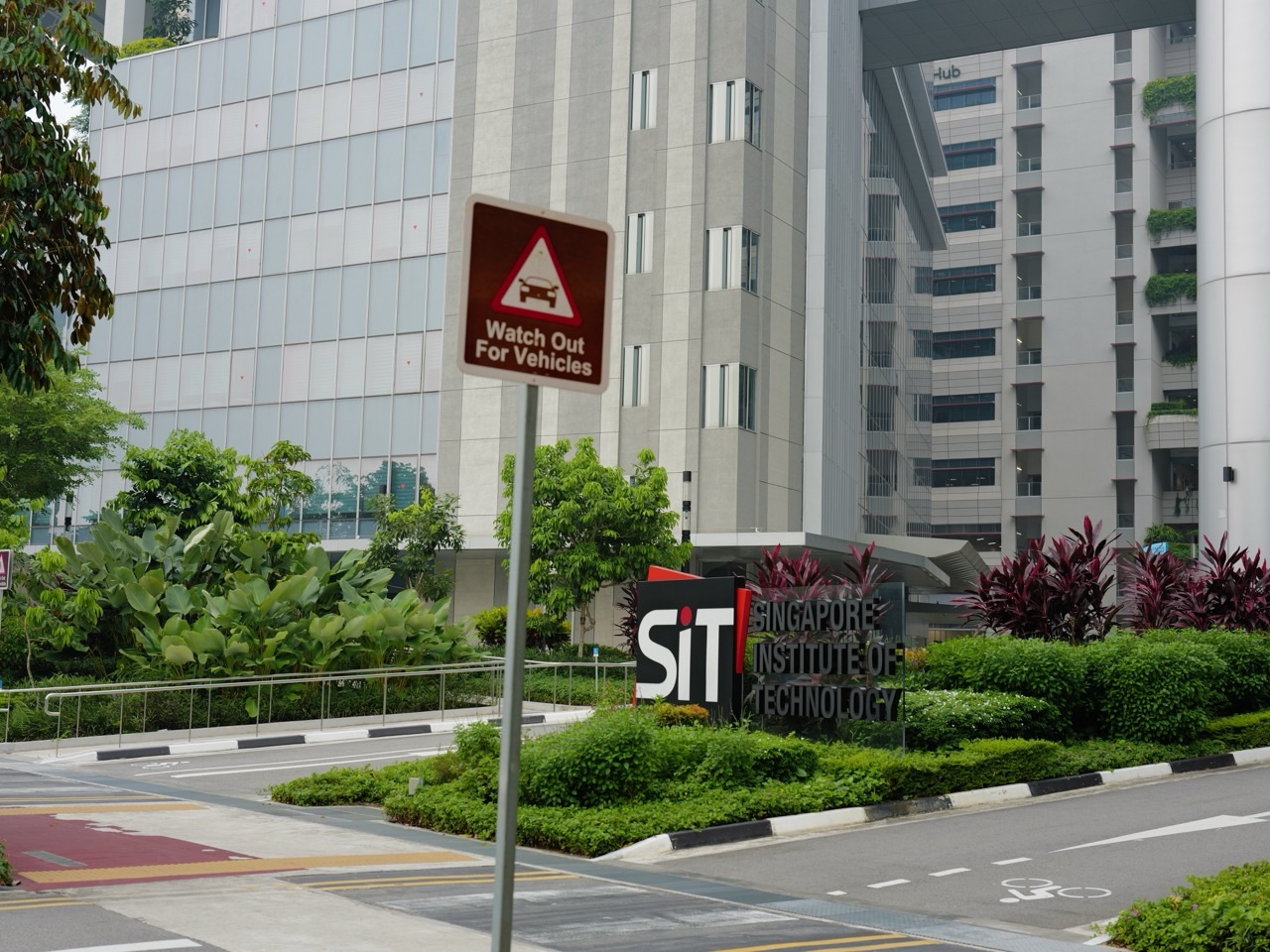
Quick answer, checked 23 October 2026: The Singapore Institute of Technology (SIT) and NVIDIA-linked SNAIC AI Programme is at its October 2026 interview stage for the January 2027 intake. Applications for that intake have already closed. SIT’s published enrolment schedule places offers to selected candidates in November 2026 and gives a planned programme run from 18 January to 2 July 2027. A different intake, expected in June 2027, is described separately on SIT’s register-interest page; its applications are scheduled to open in January 2027. These are institutional timelines, not guaranteed individual appointments, job offers or confirmed admission for anyone who expresses interest.
For Punggol residents, the immediate news is about the transition from application to selection, not a newly opened opportunity to apply for the January cohort. The wider significance is a six-month applied AI training route in the Singapore Institute of Technology’s Punggol setting. It brings together classroom learning, technical assessment and work on industry problems, with a demanding full-time schedule. This article is for applicants awaiting a decision, families evaluating whether a mid-career learner can manage the commitment, and students curious about how education becomes skilled professional practice.
Primary sources: SIT’s SNAIC AI Programme course and January 2027 selection schedule and SIT’s intake and register-interest information. Recheck these pages before taking a consequential action because the university reserves the right to change published details.
The dates families need to understand now
- July–August 2026: the published January-intake application period; this is closed as of 23 October.
- August–September 2026: competency assessments for shortlisted applicants, according to SIT’s schedule.
- October 2026: candidate interviews; the published timetable identifies the month, not an individual appointment date.
- November 2026: offers are scheduled to be sent to selected candidates; an invitation to interview is not an offer.
- 18 January–2 July 2027: SIT’s published programme dates for the January cohort, subject to institutional changes.
- January 2027: applications are expected to open for the separate June 2027 intake; expressing interest now is not the same as applying or being accepted.
SIT says only shortlisted people are informed of competency assessment arrangements, enrolment depends on all criteria and required selection stages, and placement is not guaranteed until registration is confirmed. It also says that even eligible candidates who satisfy selection conditions are enrolled on a first-come, first-served basis. These points matter to anyone tempted to treat a place in the interview queue as a reserved training seat.
There is a small but important distinction between ‘January 2027 intake’ and ‘June 2027 intake’. The first refers to a named cohort with an already closed application window and October/November selection milestones. The second is a later potential application opportunity. Combining their dates produces a misleading story, especially for a person who must decide whether to resign from a job or rearrange family care.
What the six-month programme actually involves
SIT describes the programme as developed with the Infocomm Media Development Authority under the TechSkills Accelerator initiative. The training uses materials from the SIT x NVIDIA AI Technology Centre and includes NVIDIA Deep Learning Institute content. The ambition is practical competence in AI engineering, not simply a collection of introductions to popular software.
Its published structure is eight weeks of full-time, in-person instruction at SIT Punggol Campus, generally Monday to Friday from 9 am to 5 pm, followed by 16 weeks of full-time, on-site industry attachment, generally Monday to Friday from 9 am to 6 pm. The industry stage uses teams of four or five and involves supervision, progress checks, demonstrations and milestones. These are scheduled study and work obligations, not an evening self-paced course.
The subject areas span Python and machine-learning foundations, data engineering and machine-learning operations, deep learning, computer vision, language-model training and fine-tuning, speech and multimodal systems, retrieval-augmented generation, agentic AI, and safety, verification and trust. Each label represents a skill family; mastering a tool’s interface does not automatically demonstrate mastery of the underlying method.
A practical comparison helps. Learning to ask an AI chatbot to summarise a report takes little time. Building a trustworthy system to retrieve appropriate source material, answer with citations, handle ambiguous queries, test failure cases, protect data and present results to a real organisation demands engineering discipline. The course structure is designed around the latter kind of work.
Who meets the published entry criteria?
SIT lists Singapore citizens and permanent residents as eligible nationalities. Applicants must be able to undertake the six-month full-time schedule; they need foundational Python programming ability, including variables, functions, control flow and data handling; and they require either a recognised degree or a relevant diploma together with at least two years of relevant work experience. These are threshold conditions. Meeting them does not remove the need for assessments, interviews and available places.
Consider three hypothetical readers. A degree-holder who can explain functions, write Python and work full-time may meet several headline conditions but still need to perform well in selection. A relevant-diploma holder with sufficient professional experience may be eligible even without a university degree, provided the particular criteria are satisfied. A Secondary 4 pupil who is fascinated by AI is not the intended January 2027 applicant: this article can inform long-term educational choices, but it is not an invitation for a child to enrol.
Readers should resist inventing additional prerequisites. The course covers technical subjects, but a family’s own preferred qualification, brand of certificate or employer recommendation is not necessarily an official selection requirement. Equally, reading a brief list of prerequisites is not a substitute for the full course conditions and any instructions sent to a real applicant.
If you are interviewing this October, what should you do first?
Start with the email or official SIT instruction identifying your interview arrangement. Check its date, location or online platform, documents, permitted materials and response deadline. Where the instruction is unclear, use the university’s official contact channel rather than social-media speculation. Neither this article nor a neighbour’s experience can confirm an individual interview time.
The second task is to explain your technical experience without overselling it. Choose a project you actually worked on, state the problem, describe your own contribution, identify the data you used, and acknowledge a limitation. Interviewers can often learn more from a clear explanation of one real problem than from ten unverified claims of expertise.
The third task is to demonstrate basic Python reasoning. You should be comfortable with variables, lists, dictionaries, functions, loops, conditional logic and reading a small dataset. A candidate who cannot distinguish an output from an input or explain a function’s purpose will find intensive AI labs unusually hard, regardless of enthusiasm for generative AI.
Finally, show that you understand the timetable. Six months of full-time participation can affect employment, family responsibilities, transport and income. Saying ‘I can commit’ is stronger when you have already inspected your calendar, consulted affected household members and understood the institution’s attendance rules.
A Python foundation check that reveals more than memorisation
Consider a small list of hypothetical sensor readings: [22, 24, 25, 29]. You want the mean. Sum the values to get 100, divide by four and obtain 25. A Python learner should recognise that the intended computation is sum(readings) / len(readings), with a separate check to avoid division by zero if the list is empty.
Now suppose the last reading, 29, is flagged as unusually high under a simple example rule that treats a value greater than 28 as an alert. The student must distinguish the arithmetic mean, the alert threshold and any actual evidence of a fault. A threshold crossing is an observation under a rule, not yet proof of a particular failure.
Here is readable pseudocode to discuss with a teacher or mentor: set readings to [22,24,25,29]; if the list contains at least one value, calculate the total divided by its length; for each reading, flag it if it exceeds 28. Then ask whether the calculation should include all readings, whether the threshold makes sense and what to do if a device reports no valid value.
Why is this a useful interview check? It tests decomposition. The learner separates three operations: valid input, calculation and decision. That habit scales from beginner Python to data pipelines and deployed AI systems. The sophisticated frameworks may change; the discipline of knowing what your code is doing remains.
From school Mathematics to machine learning: the reasoning bridge
A Primary school pupil learns the meaning of average and proportion. A Secondary student develops algebraic relationships, functions, gradients and probability. A post-secondary student can go further into matrices, optimisation, statistics and algorithms. AI engineering draws on this continuum. It is unwise to jump directly to fashionable model names while leaving the foundational reasoning unexamined.
Worked example: imagine a data project that predicts the temperature of a room from the hour of day. One simple model is y = 0.5x + 23 over a restricted range, where x means hours after 8 am and y is predicted degrees Celsius. At x = 4, the prediction is 25 degrees. If the observed reading is 27 degrees, the residual is 27 − 25 = 2 degrees. This does not tell us what caused the difference, but it helps identify where the model is inaccurate.
A learner should also notice that the linear model may not remain sensible across an entire day. At night, room conditions can reverse. That is why the domain of a model matters. A mathematical formula without its range, assumptions and observed error is not a complete explanation.
The same thinking improves machine learning. A good practitioner does not ask only, ‘Can the model produce a prediction?’ The more revealing questions are: how accurate was it on unseen cases; which mistakes were costly; was the data representative; and what does a user need to understand before trusting the output?
What selection interviews may reveal about responsible AI
SIT’s published course topics include safety, verification and trust. That matters because applied AI systems can create convincing incorrect answers, reflect biased data, leak private information or respond badly to unfamiliar inputs. An engineer must know how to measure, constrain and communicate such risks.
Suppose a hypothetical customer-support system gives a confident answer about a refund policy that was revised yesterday. The model might have retrieved an old document or generated text unsupported by any source. A suitable investigation would ask where the answer came from, when the source was last updated, whether the system cited the correct policy, and how a human reviewer can intervene.
A useful response is not merely ‘we need a better model’. It may require newer data, document-version control, tighter retrieval permissions, a refusal rule when evidence is inadequate, and a test suite of known cases. A student who can recognise this is learning systems engineering rather than prompt novelty.
The practical education point for younger readers is simple: when an AI system makes a claim, identify the source, compare it with the original and check the date. When uncertainty remains, do not convert a guess into a fact.
RAG, agents and the difference between information and action
Retrieval-augmented generation, commonly abbreviated RAG, combines a language model with relevant information retrieved from a separate collection. An agentic system may go further by choosing tools, planning steps or taking actions under defined permissions. Neither architecture guarantees correctness merely because it has a modern name.
In a hypothetical university information assistant, a good retrieval system should find the right, current programme page and distinguish the January 2027 closed intake from the June 2027 interest process. A weak system might combine the two and tell an applicant to apply now for a cohort whose applications closed in August.
Imagine the same assistant could submit a registration. The consequences are greater: mistaken action could expose private data or create an unintended application. Sensible design requires authorisation, confirmation, logging and an appropriate way to recover from errors. The more consequential an action, the stronger the verification and human oversight usually need to be.
This offers an immediate lesson for students. Correct interpretation of a source is part of technical skill. Being able to automate a step does not mean it should be automated without limits.
What the industry attachment is—and what it does not guarantee
The 16-week attachment is described by SIT as team-based work on practical business problems under supervision. It includes progress checks, demonstrations, written documentation and a final presentation. Students should prepare to collaborate, to explain trade-offs and to keep evidence of tests. They should not expect to work alone on a personal invention with no deadlines.
The description does not guarantee that a particular participant will be placed with a favourite company or work on a chosen application. Nor does completing the programme guarantee employment, a promotion or admission to a future SIT degree. A training project is a structured opportunity to demonstrate competence; subsequent outcomes depend on separate decisions and conditions.
A strong team project typically starts with a measurable question and a baseline. If the goal is to improve document search, the team should define what counts as a correct retrieval, measure current performance, record latency and error rates, and then compare the proposed method fairly. A glossy demonstration without those checks can be misleading.
A valuable portfolio should explain the original problem, why the chosen approach was appropriate, the training or source-data limits, the evaluation method, the result and remaining failure cases. If the work contains a partner’s confidential information, obtain permission before publishing any implementation or dataset.
Fees and stipend: separate a published figure from your household budget
SIT lists a one-time enrolment fee of S$1,090 including GST and a monthly stipend of S$4,000 for participants across the six-month programme. Those are official published programme figures, not a promise that an unselected applicant will receive any money. Always check the applicable award conditions, actual disbursement arrangements and any subsequent changes with SIT.
A purely illustrative calculation multiplies the stated S$4,000 by six months to obtain S$24,000 in scheduled stipend value over the programme, before considering the timing of payments or other personal circumstances. Subtracting S$1,090 would produce S$22,910 as a simple arithmetic difference, but that is not take-home pay and it does not account for lost wages, taxes if applicable, travel, meals, childcare, medical needs, or other commitments. Do not make a career decision on that subtraction alone.
Ask three practical questions. Can the household manage the first weeks of the course if payments arrive later than expected? What obligations exist to an employer, sponsor or family member? What happens financially if the participant must withdraw or fails an attendance requirement? These answers belong in the written programme and personal employment conditions; inventing them would be irresponsible.
A careful financial conversation is not a sign of weak motivation. It is part of protecting a genuine learning opportunity from preventable family strain.
Attendance and certification: read the exact rule
The SIT course page says a Certificate of Attainment requires 100% course attendance and successful assessments. It provides for a Certificate of Participation when the attendance condition is met but assessments are not passed. Absences need supporting documents and approval to count appropriately under the course’s policy. Do not assume a single email or medical document automatically resolves every absence issue.
The course also incorporates eligible NVIDIA Deep Learning Institute modules that may yield additional certificates if the relevant module conditions are completed. These are not identical to the SIT Certificate of Attainment, nor does the programme imply every credential is obtained automatically.
For a working adult, it makes sense to review appointments, caregiving, health needs and commuting before confirming registration. The first eight weeks typically run until late afternoon, but the industry phase extends to 6 pm on weekdays. The change in daily schedule is small on paper yet significant for a person who collects a child from school or manages evening work.
A six-week preparation pathway for a future cohort
For someone who missed the closed January application, a later opening is an opportunity to prepare rather than a reason to search for unofficial back doors. SIT’s register-interest information identifies January 2027 as the planned opening month for applications to the separate June intake. Treat that as a future milestone subject to SIT confirmation.
- Week 1: test Python fundamentals independently. Write a function, use a conditional and handle an empty dataset without copying a ready-made solution.
- Week 2: revisit algebra, averages, percentages, probability and clear graph interpretation. Keep a record of mistakes and corrected reasoning.
- Week 3: complete a tiny data-cleaning task with explicit units, missing-value handling and an explanation of every transformation.
- Week 4: compare two simple baseline methods for a classification or prediction problem, and report where each fails.
- Week 5: build a source-grounded information project using public documents and test both correct and unsupported questions.
- Week 6: write a one-page project report that describes the problem, method, measurable results, limitations and ethical safeguards.
This is a suggested self-study plan, not the SIT syllabus or an official selection preparation course. Applicants should adjust it to their prior skill and the university’s published instructions. The purpose is to build evidence of independent problem solving, not to cram for questions nobody outside the assessment team can know.
How Punggol’s education geography makes the story meaningful
A neighbourhood learner can now see the proximity of primary and secondary schools, the Punggol Regional Library, the Singapore Institute of Technology campus and the industry ecosystem of Punggol Digital District. Each stage has a different function. Schools develop broad foundations and personal growth. Public libraries support reading and enquiry. Polytechnics, ITE and universities develop more specialised knowledge. Industry training shows how competencies behave under practical constraints.
Location alone does not confer access. Being a Punggol resident does not waive SIT’s entrance rules, create reserved training seats or give permission to use restricted university equipment. What local proximity can offer is motivation: a young person can connect today’s algebra, reading and computing practice to visible adult work.
The Panasonic smart-building testbed article examines a different concrete PDD development—the July 2026 use of the district’s digital infrastructure to test facilities-management systems. The present article focuses on human training and selection milestones. Both illustrate the relationship between technology and the education needed to apply it responsibly.
What schools and parents can teach long before university
Primary 3–4: explain patterns
Give children a small table of safe, familiar measurements. Ask them to describe change and distinguish the number from its meaning. Practise explaining conclusions in a complete sentence. This builds language precision as well as numeracy.
Primary 5–6: choose the right mathematical operation
Have a learner decide whether a real-world question requires an average, difference, fraction, ratio or percentage. Then ask the learner to estimate what a sensible answer should look like. A calculation without interpretation is incomplete.
Secondary 1–2: understand variables and algebra
Teach the student to identify inputs and outputs, represent relationships symbolically, and check calculations by substitution. Mistakes with negative numbers, brackets and proportional reasoning should be diagnosed early rather than hidden by more advanced worksheets.
Secondary 3–4: test models and evidence
Encourage fair comparisons, data collection ethics, debugging and clear technical reporting. Students may encounter code through school or appropriate enrichment programmes, but should never be told that owning a powerful computer substitutes for analytical reasoning.
Post-secondary: build a demonstrable project
A strong applied-project portfolio answers five questions: what problem was attempted, who needed the result, what method was used, what evidence shows it worked, and how it could fail. Ethical documentation and collaboration matter as much as a polished interface.
What to do if the November offer does not arrive
Check the exact communication channel specified in your application, including the university’s formal status messages. Do not conclude that silence on a particular date means every applicant has received a final answer. SIT states the timetable can change and that only shortlisted candidates are notified for certain stages. Use its published enquiries route for clarification rather than posting private application identifiers publicly.
If you are not selected, separate a specific rejection from a general belief that you cannot learn AI. Reflect on whether the gap concerns Python, relevant professional experience, time commitment, technical assessment performance, available places or something else you have evidence for. An unselected applicant may be a very capable learner who needs a more suitable course or later intake.
There are other routes through post-secondary modules, part-time courses, employer-supported training, projects and independent study. However, do not treat an alternative course as automatically equivalent to the SNAIC credential or its particular industry attachment. Compare teaching time, verified outcomes, assessment demands, support and actual enrolment rules.
What should a selected candidate confirm before accepting?
- The offer identifies the correct January 2027 cohort and the actual response deadline.
- The official fee, stipend, schedule and payment conditions are clear in writing.
- The full-time attendance conditions are compatible with family, work and health obligations.
- You know when and where the initial on-campus attendance begins, and what the permitted arrival procedure is.
- Your prior employment or sponsorship obligations have been assessed appropriately.
- Required documents are provided only through genuine university channels.
- You understand that the industry project allocation and later employment are not personally guaranteed.
- You preserve allowed records of successful acceptance and correspondence without exposing private application details.
An offer is a serious invitation, but an applicant should still read the terms and seek clarification about ambiguities. If a message requires payment to an unfamiliar account or pressures the applicant to bypass university procedures, verify it directly with SIT. Personal data and banking information should never be shared through links of uncertain origin.
Common questions about the January 2027 intake
Can I still apply to start in January 2027?
SIT’s published course information says that the July–August 2026 application period is closed. Do not treat an online interest form for a future cohort as an application to the closed one.
When are the interviews?
The published timeline states October 2026 but does not supply a universal interview date. Real candidates should follow their direct official instructions.
When do offers come out?
November 2026 is the stated month for offers to selected candidates, subject to the university’s timetable. Being eligible or interviewed is not confirmation of a training place.
Is it online or part-time?
The published delivery is full-time, in person for the eight-week initial training and full-time on-site for the subsequent 16-week industry stage. People needing evenings-only or fully remote education should explore other programmes.
Do I need a computing degree?
The published qualification route is a recognised degree, or a relevant diploma with at least two years’ relevant experience, alongside Python knowledge and other conditions. Check the official full eligibility terms rather than assuming either that a computing degree is always mandatory or that a short introductory certificate is sufficient.
Does a S$4,000 stipend mean it is a salaried job?
No. SIT describes it as a programme stipend for participants, not a guaranteed salary or an offer of employment after training. Clarify tax, employment, CPF or other personal implications with the appropriate authority or adviser for your actual circumstances.
Can my child prepare now for this type of opportunity?
Yes, through reading, Mathematics, Science, English, logical thinking and age-appropriate programming. The progression should be appropriate to the student’s school level. No Primary school pupil needs industrial AI tools to start learning how to reason from data.
Will the next intake open in January 2027?
SIT’s interest page says the next June 2027 intake is expected to open applications in January 2027. That future plan should be rechecked on SIT’s official pages; registering interest is not acceptance.
A source-aware Punggol learning plan
A useful habit is to pair every exciting announcement with one modest, measurable skill. After reading about this programme, a Secondary 1 learner might practise equations and explain graph patterns. A junior college or polytechnic student might write a small, tested Python project. A graduate considering enrolment might inspect Python foundations and create an evidence-based portfolio. The learning step should be aligned with readiness, not with the length of a technology buzzword list.
For students who are weak in algebra, a structured tutorial should identify why errors recur: are brackets expanded incorrectly, are negative signs mishandled, are units forgotten, or is the learner applying a procedure without understanding what it represents? The eduKate Secondary 1 Mathematics small-group teaching reference provides an example of correcting foundational reasoning rather than simply assigning more questions. That is a pedagogical example, not a claim that the Clementi venue is part of SIT’s programme.
For a broader directory of related school and lifelong-learning material, the Punggol Education and Town-Life Article Index provides local onward reading. The previously published June 2027 SNAIC intake guide covers the separate future enrolment track. This article intentionally concentrates on the October 2026 interviews and November 2026 offer stage for the January cohort.
Verified status versus speculation
Confirmed in SIT’s published information: a closed July–August 2026 application window, October interviews, November offer timeline, 18 January–2 July 2027 run, full-time programme structure, published eligibility, S$1,090 enrolment fee, S$4,000 monthly stipend and certification conditions. Not confirmed for a particular reader: whether that person was shortlisted, the date and outcome of their interview, whether they will receive a place, their individual project partner or whether completion will result in a job.
A reliable article should never merge those categories. A six-month curriculum is a substantial educational opportunity, but the individual’s next move depends on direct verified correspondence and written conditions. The same source-reading discipline is essential in academic work: preserve the date, identify the decision-maker and do not turn a conditional sentence into a promise.
Official sources and next reading
- SIT: SNAIC AI Programme, January 2027 timeline, delivery, eligibility, fee and stipend
- SIT: SNAIC register-interest page and separate June 2027 intake
- SIT: Punggol Campus and applied-learning ecosystem
- IMDA: TechSkills Accelerator (TeSA)
- eduKatePunggol: Panasonic and the PDD smart-building testbed, July 2026
- eduKatePunggol: Education and Town-Life Article Index
Editorial update: 23 October 2026. Institutional dates may change. This independent local education article does not represent SIT, NVIDIA or IMDA, does not process applications and does not guarantee enrolment, stipends, work placements or employment.


