
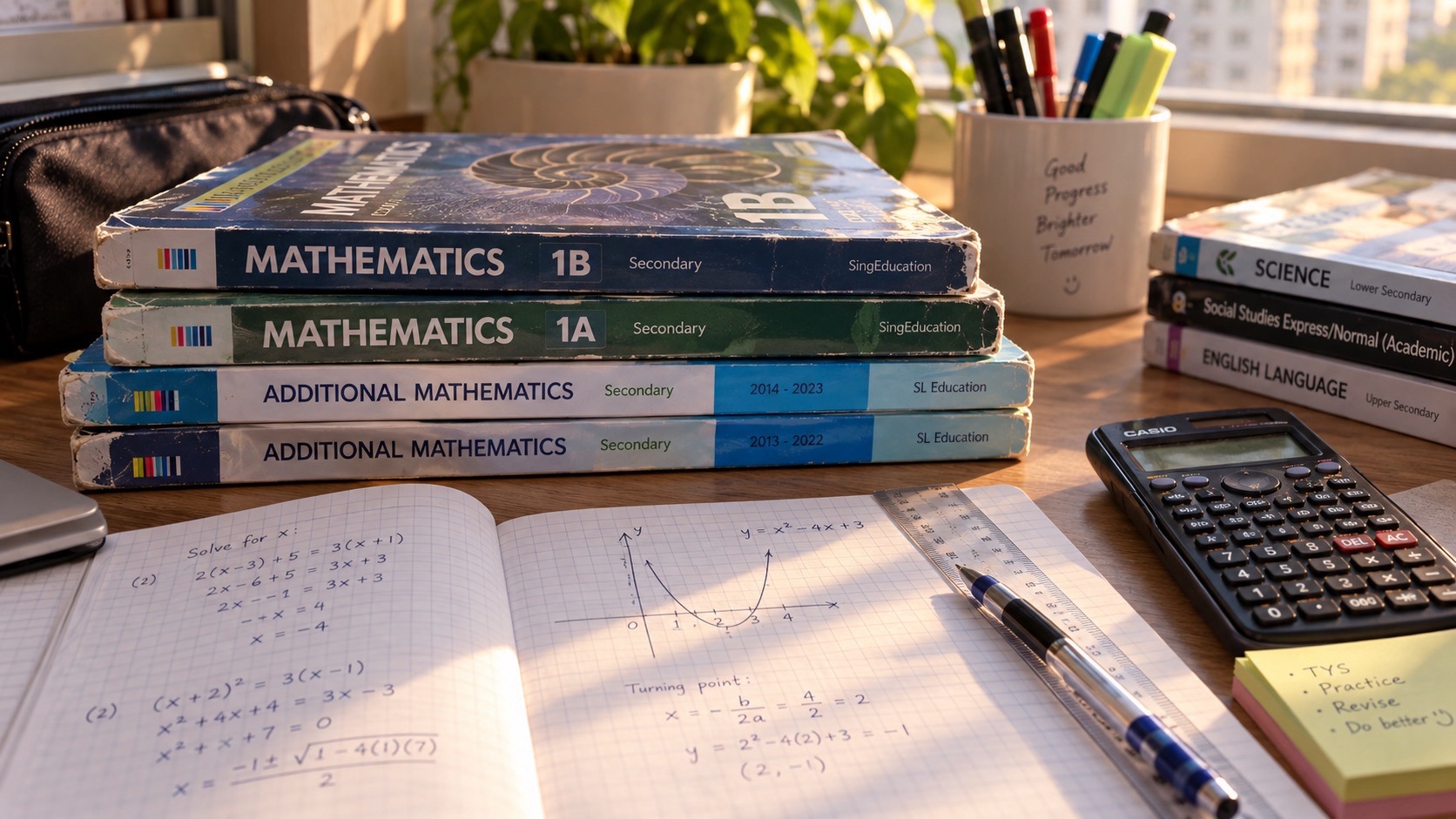
Quick answer. Measurement Units, Dimensional Analysis and Estimation connects the measurement and geometry foundations of Singapore Primary Mathematics with more demanding Secondary and pre-university reasoning. A Punggol student should follow the relevant national syllabus and their school’s actual subject level. The key is to identify what the question measures, use the right representation and unit, then verify the result.
This article explains the mathematical concepts through original worked examples, plausible incorrect approaches, changed independent questions and a manageable learning routine. Advanced theorems and coordinate extensions are not automatically compulsory for every Primary pupil. Understanding the meaning of length, area, volume and transformations should come before racing into formula lists.
Reviewed October 2026. MOE and SEAB govern national syllabus coverage and examinations. Every worked number here is an educational illustration, not a national examination item or a measurement of a named Punggol building.
Quick facts
- Name the unknown: length, area, volume, angle, rate or coordinate.
- Draw or label the relevant figure and its dimensions.
- Use units consistent with the quantity.
- State which geometric properties remain unchanged.
- Apply a formula only when its assumptions hold.
- Check through estimation, inverse calculation or a second diagram.
- Retest with altered dimensions or orientation without prompts.
Choose the topic
- 1. Metric prefixes
- 2. Millimetres and centimetres
- 3. Metres and kilometres
- 4. Square units
- 5. Cubic units
- 6. Litres and millilitres
- 7. Time units
- 8. Speed
- 9. Density
- 10. Rate of flow
- 11. Dimensional consistency
- 12. Conversion factors
- 13. Significant figures
- 14. Rounding
- 15. Error bounds
- 16. Estimation
1. Metric prefixes
Concept and definition. Metric prefixes is understood by naming the mathematical quantity and its units, identifying the relevant shape or relationship, and determining which measurements or conditions are given. A clear diagram helps distinguish a boundary from a surface, a surface from a solid, and a change in position from a change in size. The chosen formula must match the actual quantity being asked for.
Worked example. 2.5 km equals 2500 m because one kilometre is one thousand metres. Notice how the result is labelled with the correct measurement or coordinate meaning. The student should be able to explain why the formula applies, which values were substituted and whether the magnitude is reasonable.
Tempting wrong method. Multiplying by 100 instead of 1000. This is a conceptual error if the learner chose the wrong quantity, even when the arithmetic itself was accurate. Ask which unit the wrong method would produce and whether that unit matches the question.
Independent changed question. 0.75 km equals 750 m. Later ask for a new metric prefixes problem using a different diagram or unknown, without showing the previous solution. The pupil should draw, calculate and check independently.
Further reasoning. A rectangular array with 3 rows and 2 columns contains 6 unit squares. Adding one row increases its area by 2 unit squares; moving the existing squares without overlap preserves the total count. This simple invariant connects to geometry, scale, transformations and dimensional reasoning. Ask what changes when lengths are doubled: a linear measure doubles, area of a similarly scaled shape quadruples, and volume increases eightfold.
Teaching check. Observe whether the student can distinguish the object being measured, select the correct formula, convert units and justify the answer. A mistaken formula and a copying slip require different repairs. Preserve a first attempt and a changed independent retest.
2. Millimetres and centimetres
Concept and definition. Millimetres and centimetres is understood by naming the mathematical quantity and its units, identifying the relevant shape or relationship, and determining which measurements or conditions are given. A clear diagram helps distinguish a boundary from a surface, a surface from a solid, and a change in position from a change in size. The chosen formula must match the actual quantity being asked for.
Worked example. One square metre is 10,000 square centimetres because 100 cm×100 cm=10,000 cm². Notice how the result is labelled with the correct measurement or coordinate meaning. The student should be able to explain why the formula applies, which values were substituted and whether the magnitude is reasonable.
Tempting wrong method. Converting square units with only a factor of 100. This is a conceptual error if the learner chose the wrong quantity, even when the arithmetic itself was accurate. Ask which unit the wrong method would produce and whether that unit matches the question.
Independent changed question. Two square metres equal 20,000 cm². Later ask for a new millimetres and centimetres problem using a different diagram or unknown, without showing the previous solution. The pupil should draw, calculate and check independently.
Further reasoning. A rectangular array with 4 rows and 3 columns contains 12 unit squares. Adding one row increases its area by 3 unit squares; moving the existing squares without overlap preserves the total count. This simple invariant connects to geometry, scale, transformations and dimensional reasoning. Ask what changes when lengths are doubled: a linear measure doubles, area of a similarly scaled shape quadruples, and volume increases eightfold.
Teaching check. Observe whether the student can distinguish the object being measured, select the correct formula, convert units and justify the answer. A mistaken formula and a copying slip require different repairs. Preserve a first attempt and a changed independent retest.
3. Metres and kilometres
Concept and definition. Metres and kilometres is understood by naming the mathematical quantity and its units, identifying the relevant shape or relationship, and determining which measurements or conditions are given. A clear diagram helps distinguish a boundary from a surface, a surface from a solid, and a change in position from a change in size. The chosen formula must match the actual quantity being asked for.
Worked example. One cubic metre equals 1000 litres, so 0.25 m³ equals 250 litres. Notice how the result is labelled with the correct measurement or coordinate meaning. The student should be able to explain why the formula applies, which values were substituted and whether the magnitude is reasonable.
Tempting wrong method. Treating cubic metres and litres as numerically identical. This is a conceptual error if the learner chose the wrong quantity, even when the arithmetic itself was accurate. Ask which unit the wrong method would produce and whether that unit matches the question.
Independent changed question. 0.6 m³ equals 600 litres. Later ask for a new metres and kilometres problem using a different diagram or unknown, without showing the previous solution. The pupil should draw, calculate and check independently.
Further reasoning. A rectangular array with 5 rows and 4 columns contains 20 unit squares. Adding one row increases its area by 4 unit squares; moving the existing squares without overlap preserves the total count. This simple invariant connects to geometry, scale, transformations and dimensional reasoning. Ask what changes when lengths are doubled: a linear measure doubles, area of a similarly scaled shape quadruples, and volume increases eightfold.
Teaching check. Observe whether the student can distinguish the object being measured, select the correct formula, convert units and justify the answer. A mistaken formula and a copying slip require different repairs. Preserve a first attempt and a changed independent retest.
4. Square units
Concept and definition. Square units is understood by naming the mathematical quantity and its units, identifying the relevant shape or relationship, and determining which measurements or conditions are given. A clear diagram helps distinguish a boundary from a surface, a surface from a solid, and a change in position from a change in size. The chosen formula must match the actual quantity being asked for.
Worked example. 18 km/h equals 5 m/s because 18×1000/3600=5. Notice how the result is labelled with the correct measurement or coordinate meaning. The student should be able to explain why the formula applies, which values were substituted and whether the magnitude is reasonable.
Tempting wrong method. Multiplying by 3.6 when converting km/h to m/s. This is a conceptual error if the learner chose the wrong quantity, even when the arithmetic itself was accurate. Ask which unit the wrong method would produce and whether that unit matches the question.
Independent changed question. 36 km/h equals 10 m/s. Later ask for a new square units problem using a different diagram or unknown, without showing the previous solution. The pupil should draw, calculate and check independently.
Further reasoning. A rectangular array with 6 rows and 5 columns contains 30 unit squares. Adding one row increases its area by 5 unit squares; moving the existing squares without overlap preserves the total count. This simple invariant connects to geometry, scale, transformations and dimensional reasoning. Ask what changes when lengths are doubled: a linear measure doubles, area of a similarly scaled shape quadruples, and volume increases eightfold.
Teaching check. Observe whether the student can distinguish the object being measured, select the correct formula, convert units and justify the answer. A mistaken formula and a copying slip require different repairs. Preserve a first attempt and a changed independent retest.
5. Cubic units
Concept and definition. Cubic units is understood by naming the mathematical quantity and its units, identifying the relevant shape or relationship, and determining which measurements or conditions are given. A clear diagram helps distinguish a boundary from a surface, a surface from a solid, and a change in position from a change in size. The chosen formula must match the actual quantity being asked for.
Worked example. 2.5 km equals 2500 m because one kilometre is one thousand metres. Notice how the result is labelled with the correct measurement or coordinate meaning. The student should be able to explain why the formula applies, which values were substituted and whether the magnitude is reasonable.
Tempting wrong method. Multiplying by 100 instead of 1000. This is a conceptual error if the learner chose the wrong quantity, even when the arithmetic itself was accurate. Ask which unit the wrong method would produce and whether that unit matches the question.
Independent changed question. 0.75 km equals 750 m. Later ask for a new cubic units problem using a different diagram or unknown, without showing the previous solution. The pupil should draw, calculate and check independently.
Further reasoning. A rectangular array with 7 rows and 6 columns contains 42 unit squares. Adding one row increases its area by 6 unit squares; moving the existing squares without overlap preserves the total count. This simple invariant connects to geometry, scale, transformations and dimensional reasoning. Ask what changes when lengths are doubled: a linear measure doubles, area of a similarly scaled shape quadruples, and volume increases eightfold.
Teaching check. Observe whether the student can distinguish the object being measured, select the correct formula, convert units and justify the answer. A mistaken formula and a copying slip require different repairs. Preserve a first attempt and a changed independent retest.
6. Litres and millilitres
Concept and definition. Litres and millilitres is understood by naming the mathematical quantity and its units, identifying the relevant shape or relationship, and determining which measurements or conditions are given. A clear diagram helps distinguish a boundary from a surface, a surface from a solid, and a change in position from a change in size. The chosen formula must match the actual quantity being asked for.
Worked example. One square metre is 10,000 square centimetres because 100 cm×100 cm=10,000 cm². Notice how the result is labelled with the correct measurement or coordinate meaning. The student should be able to explain why the formula applies, which values were substituted and whether the magnitude is reasonable.
Tempting wrong method. Converting square units with only a factor of 100. This is a conceptual error if the learner chose the wrong quantity, even when the arithmetic itself was accurate. Ask which unit the wrong method would produce and whether that unit matches the question.
Independent changed question. Two square metres equal 20,000 cm². Later ask for a new litres and millilitres problem using a different diagram or unknown, without showing the previous solution. The pupil should draw, calculate and check independently.
Further reasoning. A rectangular array with 8 rows and 2 columns contains 16 unit squares. Adding one row increases its area by 2 unit squares; moving the existing squares without overlap preserves the total count. This simple invariant connects to geometry, scale, transformations and dimensional reasoning. Ask what changes when lengths are doubled: a linear measure doubles, area of a similarly scaled shape quadruples, and volume increases eightfold.
Teaching check. Observe whether the student can distinguish the object being measured, select the correct formula, convert units and justify the answer. A mistaken formula and a copying slip require different repairs. Preserve a first attempt and a changed independent retest.
7. Time units
Concept and definition. Time units is understood by naming the mathematical quantity and its units, identifying the relevant shape or relationship, and determining which measurements or conditions are given. A clear diagram helps distinguish a boundary from a surface, a surface from a solid, and a change in position from a change in size. The chosen formula must match the actual quantity being asked for.
Worked example. One cubic metre equals 1000 litres, so 0.25 m³ equals 250 litres. Notice how the result is labelled with the correct measurement or coordinate meaning. The student should be able to explain why the formula applies, which values were substituted and whether the magnitude is reasonable.
Tempting wrong method. Treating cubic metres and litres as numerically identical. This is a conceptual error if the learner chose the wrong quantity, even when the arithmetic itself was accurate. Ask which unit the wrong method would produce and whether that unit matches the question.
Independent changed question. 0.6 m³ equals 600 litres. Later ask for a new time units problem using a different diagram or unknown, without showing the previous solution. The pupil should draw, calculate and check independently.
Further reasoning. A rectangular array with 9 rows and 3 columns contains 27 unit squares. Adding one row increases its area by 3 unit squares; moving the existing squares without overlap preserves the total count. This simple invariant connects to geometry, scale, transformations and dimensional reasoning. Ask what changes when lengths are doubled: a linear measure doubles, area of a similarly scaled shape quadruples, and volume increases eightfold.
Teaching check. Observe whether the student can distinguish the object being measured, select the correct formula, convert units and justify the answer. A mistaken formula and a copying slip require different repairs. Preserve a first attempt and a changed independent retest.
8. Speed
Concept and definition. Speed is understood by naming the mathematical quantity and its units, identifying the relevant shape or relationship, and determining which measurements or conditions are given. A clear diagram helps distinguish a boundary from a surface, a surface from a solid, and a change in position from a change in size. The chosen formula must match the actual quantity being asked for.
Worked example. 18 km/h equals 5 m/s because 18×1000/3600=5. Notice how the result is labelled with the correct measurement or coordinate meaning. The student should be able to explain why the formula applies, which values were substituted and whether the magnitude is reasonable.
Tempting wrong method. Multiplying by 3.6 when converting km/h to m/s. This is a conceptual error if the learner chose the wrong quantity, even when the arithmetic itself was accurate. Ask which unit the wrong method would produce and whether that unit matches the question.
Independent changed question. 36 km/h equals 10 m/s. Later ask for a new speed problem using a different diagram or unknown, without showing the previous solution. The pupil should draw, calculate and check independently.
Further reasoning. A rectangular array with 10 rows and 4 columns contains 40 unit squares. Adding one row increases its area by 4 unit squares; moving the existing squares without overlap preserves the total count. This simple invariant connects to geometry, scale, transformations and dimensional reasoning. Ask what changes when lengths are doubled: a linear measure doubles, area of a similarly scaled shape quadruples, and volume increases eightfold.
Teaching check. Observe whether the student can distinguish the object being measured, select the correct formula, convert units and justify the answer. A mistaken formula and a copying slip require different repairs. Preserve a first attempt and a changed independent retest.
9. Density
Concept and definition. Density is understood by naming the mathematical quantity and its units, identifying the relevant shape or relationship, and determining which measurements or conditions are given. A clear diagram helps distinguish a boundary from a surface, a surface from a solid, and a change in position from a change in size. The chosen formula must match the actual quantity being asked for.
Worked example. 2.5 km equals 2500 m because one kilometre is one thousand metres. Notice how the result is labelled with the correct measurement or coordinate meaning. The student should be able to explain why the formula applies, which values were substituted and whether the magnitude is reasonable.
Tempting wrong method. Multiplying by 100 instead of 1000. This is a conceptual error if the learner chose the wrong quantity, even when the arithmetic itself was accurate. Ask which unit the wrong method would produce and whether that unit matches the question.
Independent changed question. 0.75 km equals 750 m. Later ask for a new density problem using a different diagram or unknown, without showing the previous solution. The pupil should draw, calculate and check independently.
Further reasoning. A rectangular array with 11 rows and 5 columns contains 55 unit squares. Adding one row increases its area by 5 unit squares; moving the existing squares without overlap preserves the total count. This simple invariant connects to geometry, scale, transformations and dimensional reasoning. Ask what changes when lengths are doubled: a linear measure doubles, area of a similarly scaled shape quadruples, and volume increases eightfold.
Teaching check. Observe whether the student can distinguish the object being measured, select the correct formula, convert units and justify the answer. A mistaken formula and a copying slip require different repairs. Preserve a first attempt and a changed independent retest.
10. Rate of flow
Concept and definition. Rate of flow is understood by naming the mathematical quantity and its units, identifying the relevant shape or relationship, and determining which measurements or conditions are given. A clear diagram helps distinguish a boundary from a surface, a surface from a solid, and a change in position from a change in size. The chosen formula must match the actual quantity being asked for.
Worked example. One square metre is 10,000 square centimetres because 100 cm×100 cm=10,000 cm². Notice how the result is labelled with the correct measurement or coordinate meaning. The student should be able to explain why the formula applies, which values were substituted and whether the magnitude is reasonable.
Tempting wrong method. Converting square units with only a factor of 100. This is a conceptual error if the learner chose the wrong quantity, even when the arithmetic itself was accurate. Ask which unit the wrong method would produce and whether that unit matches the question.
Independent changed question. Two square metres equal 20,000 cm². Later ask for a new rate of flow problem using a different diagram or unknown, without showing the previous solution. The pupil should draw, calculate and check independently.
Further reasoning. A rectangular array with 12 rows and 6 columns contains 72 unit squares. Adding one row increases its area by 6 unit squares; moving the existing squares without overlap preserves the total count. This simple invariant connects to geometry, scale, transformations and dimensional reasoning. Ask what changes when lengths are doubled: a linear measure doubles, area of a similarly scaled shape quadruples, and volume increases eightfold.
Teaching check. Observe whether the student can distinguish the object being measured, select the correct formula, convert units and justify the answer. A mistaken formula and a copying slip require different repairs. Preserve a first attempt and a changed independent retest.
11. Dimensional consistency
Concept and definition. Dimensional consistency is understood by naming the mathematical quantity and its units, identifying the relevant shape or relationship, and determining which measurements or conditions are given. A clear diagram helps distinguish a boundary from a surface, a surface from a solid, and a change in position from a change in size. The chosen formula must match the actual quantity being asked for.
Worked example. One cubic metre equals 1000 litres, so 0.25 m³ equals 250 litres. Notice how the result is labelled with the correct measurement or coordinate meaning. The student should be able to explain why the formula applies, which values were substituted and whether the magnitude is reasonable.
Tempting wrong method. Treating cubic metres and litres as numerically identical. This is a conceptual error if the learner chose the wrong quantity, even when the arithmetic itself was accurate. Ask which unit the wrong method would produce and whether that unit matches the question.
Independent changed question. 0.6 m³ equals 600 litres. Later ask for a new dimensional consistency problem using a different diagram or unknown, without showing the previous solution. The pupil should draw, calculate and check independently.
Further reasoning. A rectangular array with 13 rows and 2 columns contains 26 unit squares. Adding one row increases its area by 2 unit squares; moving the existing squares without overlap preserves the total count. This simple invariant connects to geometry, scale, transformations and dimensional reasoning. Ask what changes when lengths are doubled: a linear measure doubles, area of a similarly scaled shape quadruples, and volume increases eightfold.
Teaching check. Observe whether the student can distinguish the object being measured, select the correct formula, convert units and justify the answer. A mistaken formula and a copying slip require different repairs. Preserve a first attempt and a changed independent retest.
12. Conversion factors
Concept and definition. Conversion factors is understood by naming the mathematical quantity and its units, identifying the relevant shape or relationship, and determining which measurements or conditions are given. A clear diagram helps distinguish a boundary from a surface, a surface from a solid, and a change in position from a change in size. The chosen formula must match the actual quantity being asked for.
Worked example. 18 km/h equals 5 m/s because 18×1000/3600=5. Notice how the result is labelled with the correct measurement or coordinate meaning. The student should be able to explain why the formula applies, which values were substituted and whether the magnitude is reasonable.
Tempting wrong method. Multiplying by 3.6 when converting km/h to m/s. This is a conceptual error if the learner chose the wrong quantity, even when the arithmetic itself was accurate. Ask which unit the wrong method would produce and whether that unit matches the question.
Independent changed question. 36 km/h equals 10 m/s. Later ask for a new conversion factors problem using a different diagram or unknown, without showing the previous solution. The pupil should draw, calculate and check independently.
Further reasoning. A rectangular array with 14 rows and 3 columns contains 42 unit squares. Adding one row increases its area by 3 unit squares; moving the existing squares without overlap preserves the total count. This simple invariant connects to geometry, scale, transformations and dimensional reasoning. Ask what changes when lengths are doubled: a linear measure doubles, area of a similarly scaled shape quadruples, and volume increases eightfold.
Teaching check. Observe whether the student can distinguish the object being measured, select the correct formula, convert units and justify the answer. A mistaken formula and a copying slip require different repairs. Preserve a first attempt and a changed independent retest.
13. Significant figures
Concept and definition. Significant figures is understood by naming the mathematical quantity and its units, identifying the relevant shape or relationship, and determining which measurements or conditions are given. A clear diagram helps distinguish a boundary from a surface, a surface from a solid, and a change in position from a change in size. The chosen formula must match the actual quantity being asked for.
Worked example. 2.5 km equals 2500 m because one kilometre is one thousand metres. Notice how the result is labelled with the correct measurement or coordinate meaning. The student should be able to explain why the formula applies, which values were substituted and whether the magnitude is reasonable.
Tempting wrong method. Multiplying by 100 instead of 1000. This is a conceptual error if the learner chose the wrong quantity, even when the arithmetic itself was accurate. Ask which unit the wrong method would produce and whether that unit matches the question.
Independent changed question. 0.75 km equals 750 m. Later ask for a new significant figures problem using a different diagram or unknown, without showing the previous solution. The pupil should draw, calculate and check independently.
Further reasoning. A rectangular array with 15 rows and 4 columns contains 60 unit squares. Adding one row increases its area by 4 unit squares; moving the existing squares without overlap preserves the total count. This simple invariant connects to geometry, scale, transformations and dimensional reasoning. Ask what changes when lengths are doubled: a linear measure doubles, area of a similarly scaled shape quadruples, and volume increases eightfold.
Teaching check. Observe whether the student can distinguish the object being measured, select the correct formula, convert units and justify the answer. A mistaken formula and a copying slip require different repairs. Preserve a first attempt and a changed independent retest.
14. Rounding
Concept and definition. Rounding is understood by naming the mathematical quantity and its units, identifying the relevant shape or relationship, and determining which measurements or conditions are given. A clear diagram helps distinguish a boundary from a surface, a surface from a solid, and a change in position from a change in size. The chosen formula must match the actual quantity being asked for.
Worked example. One square metre is 10,000 square centimetres because 100 cm×100 cm=10,000 cm². Notice how the result is labelled with the correct measurement or coordinate meaning. The student should be able to explain why the formula applies, which values were substituted and whether the magnitude is reasonable.
Tempting wrong method. Converting square units with only a factor of 100. This is a conceptual error if the learner chose the wrong quantity, even when the arithmetic itself was accurate. Ask which unit the wrong method would produce and whether that unit matches the question.
Independent changed question. Two square metres equal 20,000 cm². Later ask for a new rounding problem using a different diagram or unknown, without showing the previous solution. The pupil should draw, calculate and check independently.
Further reasoning. A rectangular array with 16 rows and 5 columns contains 80 unit squares. Adding one row increases its area by 5 unit squares; moving the existing squares without overlap preserves the total count. This simple invariant connects to geometry, scale, transformations and dimensional reasoning. Ask what changes when lengths are doubled: a linear measure doubles, area of a similarly scaled shape quadruples, and volume increases eightfold.
Teaching check. Observe whether the student can distinguish the object being measured, select the correct formula, convert units and justify the answer. A mistaken formula and a copying slip require different repairs. Preserve a first attempt and a changed independent retest.
15. Error bounds
Concept and definition. Error bounds is understood by naming the mathematical quantity and its units, identifying the relevant shape or relationship, and determining which measurements or conditions are given. A clear diagram helps distinguish a boundary from a surface, a surface from a solid, and a change in position from a change in size. The chosen formula must match the actual quantity being asked for.
Worked example. One cubic metre equals 1000 litres, so 0.25 m³ equals 250 litres. Notice how the result is labelled with the correct measurement or coordinate meaning. The student should be able to explain why the formula applies, which values were substituted and whether the magnitude is reasonable.
Tempting wrong method. Treating cubic metres and litres as numerically identical. This is a conceptual error if the learner chose the wrong quantity, even when the arithmetic itself was accurate. Ask which unit the wrong method would produce and whether that unit matches the question.
Independent changed question. 0.6 m³ equals 600 litres. Later ask for a new error bounds problem using a different diagram or unknown, without showing the previous solution. The pupil should draw, calculate and check independently.
Further reasoning. A rectangular array with 17 rows and 6 columns contains 102 unit squares. Adding one row increases its area by 6 unit squares; moving the existing squares without overlap preserves the total count. This simple invariant connects to geometry, scale, transformations and dimensional reasoning. Ask what changes when lengths are doubled: a linear measure doubles, area of a similarly scaled shape quadruples, and volume increases eightfold.
Teaching check. Observe whether the student can distinguish the object being measured, select the correct formula, convert units and justify the answer. A mistaken formula and a copying slip require different repairs. Preserve a first attempt and a changed independent retest.
16. Estimation
Concept and definition. Estimation is understood by naming the mathematical quantity and its units, identifying the relevant shape or relationship, and determining which measurements or conditions are given. A clear diagram helps distinguish a boundary from a surface, a surface from a solid, and a change in position from a change in size. The chosen formula must match the actual quantity being asked for.
Worked example. 18 km/h equals 5 m/s because 18×1000/3600=5. Notice how the result is labelled with the correct measurement or coordinate meaning. The student should be able to explain why the formula applies, which values were substituted and whether the magnitude is reasonable.
Tempting wrong method. Multiplying by 3.6 when converting km/h to m/s. This is a conceptual error if the learner chose the wrong quantity, even when the arithmetic itself was accurate. Ask which unit the wrong method would produce and whether that unit matches the question.
Independent changed question. 36 km/h equals 10 m/s. Later ask for a new estimation problem using a different diagram or unknown, without showing the previous solution. The pupil should draw, calculate and check independently.
Further reasoning. A rectangular array with 18 rows and 2 columns contains 36 unit squares. Adding one row increases its area by 2 unit squares; moving the existing squares without overlap preserves the total count. This simple invariant connects to geometry, scale, transformations and dimensional reasoning. Ask what changes when lengths are doubled: a linear measure doubles, area of a similarly scaled shape quadruples, and volume increases eightfold.
Teaching check. Observe whether the student can distinguish the object being measured, select the correct formula, convert units and justify the answer. A mistaken formula and a copying slip require different repairs. Preserve a first attempt and a changed independent retest.
Four complete worked clinics
Length conversion
Problem and solution. 2.5 km equals 2500 m because one kilometre is one thousand metres.
Common wrong approach. Multiplying by 100 instead of 1000.
Changed independent question. 0.75 km equals 750 m.
Check the relevant units, conditions and a reasonable estimate before accepting the result.
Area conversion
Problem and solution. One square metre is 10,000 square centimetres because 100 cm×100 cm=10,000 cm².
Common wrong approach. Converting square units with only a factor of 100.
Changed independent question. Two square metres equal 20,000 cm².
Check the relevant units, conditions and a reasonable estimate before accepting the result.
Volume conversion
Problem and solution. One cubic metre equals 1000 litres, so 0.25 m³ equals 250 litres.
Common wrong approach. Treating cubic metres and litres as numerically identical.
Changed independent question. 0.6 m³ equals 600 litres.
Check the relevant units, conditions and a reasonable estimate before accepting the result.
Speed conversion
Problem and solution. 18 km/h equals 5 m/s because 18×1000/3600=5.
Common wrong approach. Multiplying by 3.6 when converting km/h to m/s.
Changed independent question. 36 km/h equals 10 m/s.
Check the relevant units, conditions and a reasonable estimate before accepting the result.
Six-week learning sequence
Week 1. Diagnose length, area, volume and unit misunderstandings in actual schoolwork. Keep the work appropriate to the learner’s current school stage.
Week 2. Use physical objects or labelled diagrams to connect formulas to quantities. Keep the work appropriate to the learner’s current school stage.
Week 3. Explain a complete worked example, then gradually remove prompts. Keep the work appropriate to the learner’s current school stage.
Week 4. Revisit the concept after a gap with changed dimensions or rotated shapes. Keep the work appropriate to the learner’s current school stage.
Week 5. Mix measurement and geometry topics so the learner must choose the method. Keep the work appropriate to the learner’s current school stage.
Week 6. Assess an unfamiliar problem independently and select the next syllabus target. Keep the work appropriate to the learner’s current school stage.
Frequently asked questions
Does Punggol use a separate geometry syllabus? No. Relevant mainstream schools follow Singapore’s national Mathematics curriculum.
Why are square and cubic units different? Area measures two-dimensional extent, while volume measures three-dimensional space.
Can a diagram be rotated without changing its shape? Yes. Rotation preserves lengths and angles for a rigid shape.
Does doubling a dimension always double area? No. Scaling every length by two multiplies area by four and volume by eight.
Should Primary pupils learn every circle theorem? No. Follow the child’s current syllabus and readiness.
Can a formula give the wrong answer even with correct arithmetic? Yes. The formula may measure the wrong quantity or violate a condition.
How should parents correct a misconception? Explain the relevant representation and unit, then retest with a changed question.
Can these examples guarantee a school grade? No. Learning examples cannot guarantee examination outcomes.
Official curriculum and connected Mathematics guides
- MOE Primary Mathematics syllabus
- SEAB SEC syllabuses
- SEAB A-Level syllabuses
- Immutable Mathematics teaching reference
- Coordinate geometry and gradient
- Trigonometry and triangles
- Revision and retrieval practice
The goal is a learner who can identify a geometric relationship, choose and justify the right method, use correct units and independently check a changed question. These habits support the whole Primary-to-university Mathematics pathway.


