
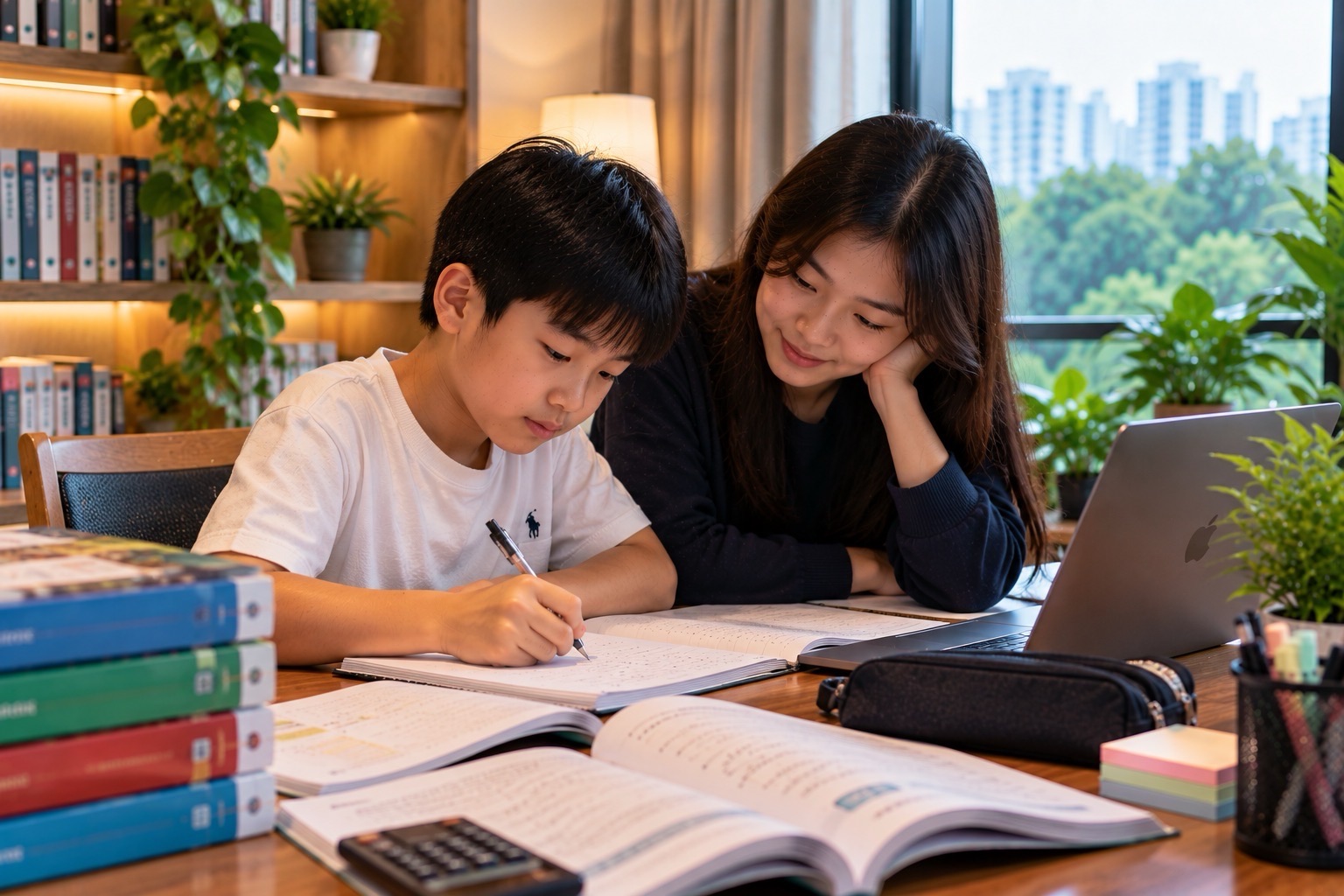
Quick answer. Singapore’s school–home partnership framework asks parents and educators to work together to raise students who are confident, kind, resilient and increasingly able to manage their own learning. MOE’s refreshed Guidelines for School–Home Partnership, introduced in September 2024 and still used in 2026, emphasise respectful communication, adult role modelling and real relationships with healthy digital habits. They do not require parents to perform teachers’ work or teachers to provide unrestricted personal messaging at any hour.
Parents Gateway (PG) is an official MOE–GovTech communication application that lets parents receive school announcements, submit consent responses, manage travel declarations, book applicable parent–teacher meeting slots and access parenting resources. A Parent Support Group (PSG) is different: parents volunteer time, talents and ideas to support school activities and community relationships. PSG members do not decide national examinations, guarantee Primary 1 admission, obtain confidential records about other children or act as substitute school principals.
Punggol has concrete examples. Punggol Green Primary’s July 2026 PSG page lists a 2026 executive committee with representatives serving the P1–P6 levels, and describes support for learning journeys and celebrations. Waterway Primary’s August 2026 page describes its parent volunteers, trust-based mission and school-community activities. Punggol Cove Primary’s current 2026 parent information portal publishes curriculum briefings, term letters, school booklists, student-wellbeing contacts and a PSG route. Their details should not be treated as identical timetables or enrollment rules at every Punggol school.
MOE’s 2026 Parent Support Group guidance also describes Support Circles: parent groups in school clusters share ideas and resources, with up to four nominated representatives per school according to the current site. They are collaborative networks, not admissions committees. This guide explains how each relationship works, what to do when a concern arises, responsible volunteering, privacy, group activities and practical school-home routines. It includes original teaching and communication scenarios, a four-week plan, 26 FAQs and official source links. Fact-checked 21 October 2026.
What Parents Gateway and PSGs actually do
| Resource | Best used for | Not used to decide |
|---|---|---|
| Parents Gateway | School notices, consent, meetings, travel declarations | National exam or P1 school allocation |
| School subject teacher | Classwork, academic feedback and misunderstandings | Another child’s private case |
| PSG | Authorised volunteering and school-community partnership | Marks, admissions or disciplinary sanctions |
| PSG Support Circle | Inter-school sharing and collaboration | Government policy or official school posting |
| School general office | Official administration and urgent school contact | Private tutoring services |
Quick navigation
- 2026 school–home partnership expectations
- Parents Gateway features
- Punggol Green, Waterway and Punggol Cove examples
- Support Circles and PSG volunteering
- Student privacy and parent feedback
- FAQs and primary sources
1. Partnership begins with clear responsibilities
A school teaches the curriculum and provides an environment for pupils to learn and develop. Parents manage home routines, relationships and practical support, while helping children take increasing responsibility for their own work. Some tasks overlap, but partnership is not a transfer of professional teaching obligations to the family.
A parent should be able to ask for academic clarification without demanding that a teacher replace the caregiver every evening. Teachers should likewise recognise when family circumstances make a particular request difficult.
A constructive partnership names the shared goal, assigns realistic actions and reviews progress. It is stronger than a long conversation in which nobody knows what will happen next.
2. The refreshed 2024 guidelines remain relevant in 2026
MOE introduced refreshed Guidelines for School–Home Partnership during the September 2024 Work Plan Seminar. The principles include mutual respect, modelling constructive behaviour and helping children form healthy relationships and digital habits.
Official school pages in 2026 continue to present these themes to parents. They are not a separate scored national examination or an automatic contract entitling a caregiver to a particular classroom decision.
The value is practical: families and staff can disagree on a teaching issue without making the disagreement a personal attack. The pupil learns from the way adults handle uncertainty.
3. Respectful communication is more than polite wording
A respectful message gives relevant facts, asks an appropriate question and recognises the other person’s responsibility. It avoids insults, speculation about another child or demands for confidential staff records.
For example, “My child used the last digit to compare 29 and 32 on two tasks; can you explain how the class is approaching place value?” gives a clear starting point.
A message that says “You are not teaching anything” provides little usable evidence and can delay resolution. Precision and courtesy improve both the relationship and the chance of useful teaching.
4. Teachers need work-hour boundaries
Educators spend the school day teaching, planning, supervising and handling responsibilities to many pupils. The refreshed partnership approach supports reasonable channels and expectations rather than immediate responses to every late-night message.
A routine homework query can be sent through the school’s published email or communication channel and addressed in the normal process. An urgent student safety issue calls for the school’s urgent contact procedure instead.
Parents can help by distinguishing urgency from convenience. Teachers should communicate clearly about the appropriate channel and normal response expectations.
5. Adult role modelling affects children’s conduct
Children notice how adults discuss school staff, neighbours and other children. A parent who corrects a mistaken claim responsibly demonstrates the same evidence-based thinking the pupil is expected to use in class.
If a school decision is disputed, adults can gather facts and ask constructive questions rather than make public accusations in front of the child. Respect does not mean silently accepting a genuine problem.
Students learn that disagreements can be addressed through accurate records, reasoned communication and appropriate escalation. These are wider life competencies, not only school administrative rules.
6. Real connections include attention beyond screens
MOE’s guidelines link family relationships and healthy digital habits. A household can use Parents Gateway efficiently while still spending time listening to a child’s experiences without immediately opening another app.
Ask what was interesting, difficult or surprising about the school day. A child may describe friendship, food, art or a Maths task; all can reveal important aspects of wellbeing and learning.
A digital reminder is useful for consent and schedules, but it cannot substitute for a supportive relationship where the learner feels comfortable discussing a difficulty.
7. What Parents Gateway actually provides
Parents Gateway is an official application developed by MOE and GovTech. Its published features include school announcements, consent forms, booking available parent–teacher conference slots, travel declarations and parenting resources.
A parent can manage communications about multiple children from the appropriate account under the application’s access rules. But a notification is not an independent decision about whether a child’s assessment mark should change.
Use the official app and school notices rather than relying exclusively on a parent-group screenshot. Exact features and permissions should be checked in the current version and school setup.
8. Parents Gateway is not the Student Learning Space
Parents Gateway primarily helps adults receive and respond to school communications. Student Learning Space (SLS) supports assigned learning resources and tasks. They are separate systems with different users and educational purposes.
A pupil who cannot log in to SLS may need school-based account assistance; a parent who cannot see a child in PG has a different onboarding or record issue. The same solution should not be assumed to fix both.
Families should use official help guidance and safeguard account credentials. A tuition agent does not need the family’s app password to explain homework.
9. Consent forms are a responsibility, not decoration
A school may send an excursion, camp or activity consent form through Parents Gateway. The parent should read what is authorised, including dates, safety information, costs and any health or travel requirements before responding.
Tapping a consent option without understanding the activity can create confusion. Equally, failing to reply by the school deadline may affect the child’s participation under the actual procedure.
Keep an accurate family calendar and ask the school for clarification where necessary. The digital form makes communication easier but does not eliminate informed consent.
10. Booking a teacher meeting through PG
Parents Gateway can offer booking slots for parent–teacher meetings where a school enables the function. Parents should choose a suitable slot and prepare one or two concrete concerns or questions.
A fifteen-minute meeting is more productive when the family brings an independent work sample than when it uses all the time to compare other children’s scores. Teachers can then discuss strengths, errors and a realistic follow-up.
The app manages scheduling; it does not itself guarantee a particular teacher or meeting duration beyond what the actual school has offered.
11. Travel declarations and family routines
School travel declarations can help institutions track relevant absence or travel information under their procedures. Parents should submit accurate dates and details through the official function where appropriate.
A planned holiday during school term is a separate attendance issue from an approved school learning journey. Parents should not assume submitting a travel declaration automatically creates permission for any absence.
Check the actual school’s attendance guidance and the relevant learning that will be missed. Responsible digital administration complements rather than replaces communication.
12. What a Parent Support Group is
MOE’s PSG site describes volunteer parents contributing their time, talent and thought to support the school community. A PSG may organise activities, help parents connect and provide constructive suggestions that benefit children.
Members are not government employees merely because they belong to a PSG, and membership does not confer authority to change grading or national school placement rules. The school coordinates relevant projects and safeguarding requirements.
A parent can contribute in small ways as well as through an executive role. Real participation is more important than a prestigious volunteer title.
13. Punggol Green Primary’s 2026 PSG
Punggol Green Primary’s official page updated in July 2026 describes a PSG committed to a caring educational environment and shows an executive committee with level representatives for Primary 1 through Primary 6.
It mentions parent contributions to learning journeys, celebrations and partnership activities, alongside encouragement for new volunteers to join through an authorised school-linked form.
This is an authentic example of a current Punggol PSG, not proof that every primary school uses the same committee structure or has vacancies in every role. Parents should contact the relevant institution directly.
14. Waterway Primary’s approach
Waterway Primary’s August 2026 PSG page describes a vision grounded in respect, integrity, self-discipline and empathy. Its mission emphasises supporting school learning, positive family partnerships and a community of parents.
The page includes a registration route and images of parent volunteers engaged in activities. It also displays a list labelled as the 2025 executive committee, which should not be misrepresented as an updated 2026 roster.
A parent interested in joining can use the current school link and ask which activities need support. Membership should be based on suitable contribution rather than assumptions about entry privileges.
15. Punggol Cove’s parent information system
Punggol Cove Primary’s October 2026 parent page lists term letters, P1 orientation, curriculum briefings for different levels, school booklists, ICT resources, student-wellbeing personnel and a Parent Support Group route.
This demonstrates the wider system surrounding communication. A parent might need a P4 subject briefing rather than a PSG meeting, or a welfare contact rather than a general event-volunteering link.
Reading the current page before emailing many people can save time. Its published contacts and procedures belong to that school, not every Punggol institution.
16. Punggol Cove’s PSG heritage
Punggol Cove’s historical PSG page describes its first meeting in February 2017 and earlier parent participation in learning journeys and school-community activities. Those examples show how the group developed as the newer town and school grew.
Historical activities are not a promise of a 2026 or 2027 event with the same date and venue. Current volunteer registration should be obtained from the updated school information.
Families can appreciate the history while asking how present parent volunteers are trained, supervised and involved safely in today’s programmes.
17. PSGs support the school rather than run admissions
A parent volunteer may help with a school event or offer relevant professional skills. That does not automatically create priority for a younger child in Primary 1 registration or entitlement to a secondary DSA offer.
Formal P1 phases recognise specific qualifying connections under MOE rules; ordinary PSG membership should not be mistaken for satisfying every parent-volunteer category. Documentation and actual eligibility remain necessary.
A family should never pay an organisation promising a school place in exchange for a PSG donation. Verify admissions independently from MOE’s current portal.
18. A PSG should respect school permissions
MOE’s PSG guidance says members should observe school rules and avoid representing the school publicly unless authorised by school leadership. A group may have a supportive role without independent authority to issue press statements or use school branding.
A volunteer planning an activity should work with the partnership teacher or other designated officer, obtain appropriate permissions and follow safeguarding expectations.
This distinction protects pupils, parents and the institution. A well-run PSG does not need to exaggerate its formal authority to make a meaningful difference.
19. The three Ts: time, talent and thought
Parents can contribute time to an approved activity, talent through suitable professional or personal skills, and thought through constructive suggestions. Each form can have value even for working parents with limited availability.
A parent skilled in design might help prepare an accessible information sheet; another could assist with logistics; another may offer insights about supporting multilingual families. The activity still requires the school’s agreement.
The goal is sustainable volunteering that responds to real pupil needs. A single highly visible event is not inherently more useful than regular small contributions.
20. Parent Support Circles connect PSGs
MOE’s Support Circle page, updated June 2026, says PSGs are grouped with nearby school parent communities, enabling cooperation and sharing. Junior colleges and Millennia Institute participate in a separate common circle, while many other circles follow school clusters.
Each school may nominate up to four key representatives to its circle. This is a coordination arrangement, not a new government admissions board.
Parents can learn from another school’s experience without assuming a procedure or fee at that institution automatically applies to their own. School context still matters.
21. Support Circles have no universal appointed chair
MOE’s current Support Circle FAQ describes the circles as collaborative rather than having a single formal leader above all participating groups. PSG representatives coordinate ideas and continue to work with their own school’s executive committee.
A parent might encounter a group chat managed by representatives. This is a tool for collaboration, not permission to share confidential child information or promise collective authority over school leaders.
Participation is most useful when it improves relevant resources and relationships rather than becoming another source of school rumours.
22. PSG collaboration needs school awareness
MOE recommends that PSGs planning joint activities keep partnership teachers and school leadership informed. This helps ensure plans are appropriate, resourced and aligned with child safety and learning goals.
Two Punggol PSGs might wish to share a parent workshop or community activity. That is possible in principle but still needs the schools’ agreement and realistic responsibilities.
A parent should not make external venue commitments or publish a registration link on behalf of the school before authorisation. Good intention is not a substitute for programme governance.
23. Activities should have an educational purpose
MOE’s PSG planning guidance describes support for pupils, teachers, schools and parents. A meaningful event should identify the intended benefit and what participants will actually do.
A book-sharing afternoon could support reading enjoyment and family connection. A digital-wellness workshop could help caregivers discuss phone routines. Both need suitable content, permissions and practical supervision.
An event should not be evaluated only by attendance photos or social-media engagement. The best question is whether it addressed a genuine need in an appropriate and sustainable way.
24. School volunteers need safeguarding awareness
A parent helping at a learning journey may supervise assigned tasks, but should follow the school’s instructions about pupil contact, photographs, transport, emergencies and reporting. Volunteering is not an invitation to access all student records.
A caregiver who notices a safety concern should inform the authorised teacher or organiser promptly. They should not independently discipline another person’s child using unapproved procedures.
Respect for boundaries protects trust in the volunteer system. Parents contribute most effectively when they support rather than replace the professional staff in charge.
25. Privacy rules apply to parent chat groups
Parents may discuss logistics in messaging groups, but children’s examination marks, medical information, family circumstances and disciplinary allegations deserve strong privacy protection. A screenshot forwarded widely can create unnecessary harm.
Ask permission before sharing identifiable photographs or information from school activities. Use official school notices for policy instead of treating every message in a parent chat as authoritative.
A PSG discussion should support a safe community. The right way to resolve a specific case is through the school and relevant consent procedures, not public exposure of pupils.
26. How to correct a school rumour responsibly
Imagine someone forwards a claim that all P3 Mathematics WAs have been cancelled. Before repeating it, a parent checks the school’s current assessment circular and the national MOE rules. The official policy may not match the message.
A helpful response distinguishes verified information from a question still needing confirmation, and directs parents to the real notice. It does not embarrass the sender or invent a conspiracy about teachers.
This is an example of adult modelling: children learn evidence checking from how caregivers handle uncertainty in their own communities.
27. A parent–teacher meeting should identify a learning goal
A family concerned about a child’s Maths performance can bring one genuine question, show what the pupil attempted without hints and ask the teacher to identify the first inaccurate step.
The meeting should end with a small practical goal, for example comparing two-digit numbers using tens and ones, and a way to recognise independent improvement. This avoids demanding a general promise of perfect grades.
A PSG volunteer can share general learning resources, but should not become the assessor of another family’s individual case. The subject teacher remains the appropriate academic contact.
28. Original Maths error: 32 versus 29
A fictional Primary 2 pupil chooses 29 as greater than 32 because nine is larger than two. This shows the student is comparing ones digits without recognising place value.
The teacher models 32 as three tens and two ones, and 29 as two tens and nine ones. Three tens already exceed two tens. The learner then tries 41 versus 38 with no prompts.
If they correctly explain four tens versus three, the concept has begun to transfer. This original example illustrates what a productive parent–teacher conversation can achieve without requiring an early formal examination.
29. Original reading inference task
A child reads: “Maya packed an umbrella after seeing dark clouds outside.” The directly stated detail is the umbrella and the clouds. Rain is possible, but the sentence does not prove it had started.
A parent may ask which words support the answer rather than simply supply it. A new sentence about closing a window after thunder tests whether the child can distinguish evidence and inference.
A teacher can advise on the current comprehension goal and appropriate difficulty. A parent’s job is to support the idea honestly, not fill in graded work for the child.
30. PSG activity design can use a simple action plan
MOE’s PSG resource library offers editable templates for terms of reference, annual work plans, finances, activities and leadership handover. A volunteer planning a family workshop can use those to make roles and resource needs explicit.
A concise plan should state purpose, participants, risks, permissions, resources, venue, responsibilities and how the organisers will review the outcome.
Templates are aids, not a replacement for school authorisation. A group should avoid collecting unnecessary personal data simply because a form makes it easy to do so.
31. Volunteer finances need transparent records
A PSG may handle school-supported activity resources, donations or reimbursements under approved arrangements. The relevant school and current guidance govern how funds may be used and documented.
MOE’s Support Circle information notes that PSG funding has been provided under the School Operating Fund block grant, subject to consultation and available resources. This is not an unconditional cheque that any parent group can spend independently.
Keep records of legitimate costs and approvals. Money management should be understandable to organisers while protecting any private information supplied by donors or families.
32. New volunteers can contribute without executive roles
Some parents may wish to help once a year with an approved activity, while others have capacity for regular planning or executive work. Both contributions can support children. MOE’s PSG guidance encourages involvement according to time, skills and interest.
A working caregiver should not feel that education support requires attendance at every daytime event. Home routines, respectful teacher communication and helping the child grow independent remain valuable.
Volunteer recruitment should welcome diverse families without treating available free time as proof of greater care for children.
33. PSG succession makes school communities sustainable
MOE’s 2026 PSG succession guidance describes preparing future leaders and carrying out a structured handover. Parent volunteers graduate from the school along with their children, so experience and materials can be lost without good transition.
A group can preserve approved templates, activity lessons and contact procedures without keeping confidential pupil data longer than necessary. New volunteers need clear responsibilities and opportunities to contribute.
A successful handover supports continuity without making one strong personality indispensable. Community partnership should survive normal family changes.
34. Parent disagreement is normal, not automatically a crisis
Volunteers may have different opinions about event timing, the use of funds or which activity to prioritise. MOE’s PSG guidance suggests managing differences respectfully and focusing on children’s interests.
The group can identify the decision required, consult the school and record a clear outcome. A disagreement is easier to resolve when the task and authority are explicit.
Parents should avoid treating a personal preference as a binding instruction to teachers. Collaboration is valuable precisely because participants can listen and adjust.
35. Parent feedback is not the same as an official complaint
A PSG can gather constructive suggestions about family workshops or general school experience. A specific allegation of bullying, unsafe collection or incorrect administrative treatment may need the school’s formal individual procedure instead.
Those processes have different privacy requirements. Group volunteers should not investigate other children’s discipline or demand personal academic records.
A parent can ask the appropriate school contact where to send an urgent or unresolved concern. The goal is a fair response without turning the PSG into an informal court.
36. The role of COMPASS and wider partnership
MOE’s school–home partnership framework has been developed in consultation with schools and parents, including the advisory context of COMPASS. The guiding message is shared responsibility with respect and a focus on pupils’ holistic development.
Parents can contribute ideas to wider education dialogue without expecting every individual recommendation to become an immediate national rule. School and ministry policy processes have their own responsibilities.
Constructive civic participation is valuable when informed by accurate information, real family experience and an understanding of implementation limits.
37. School communication is more than Parents Gateway
A school’s parent portal may include term letters, email contacts, newsletters, subject briefings, booking processes and emergency numbers. Parents Gateway is an important tool but not always the only appropriate channel.
Punggol Cove’s October 2026 parent page is a concrete example, listing curriculum briefings, booklists, school contacts and student-wellbeing roles. Some matters call for a scheduled meeting rather than a quick consent form.
A parent should locate the latest school communication guide and keep emergency contacts accessible even if their phone notifications are delayed.
38. When an app notification does not arrive
A parent might miss a school notice because of device permissions, account association or a technical problem. The right response is to check the official app settings and the school’s help channel rather than assume the teacher intentionally withheld information.
For time-sensitive activity consent, verify the deadline directly using the school’s authorised contact. A class parent may remind others but should not collect personal credentials or forge a response.
Digital reliability supports a good partnership, but family accountability and formal school records remain important.
39. Parent–child conversations are not assessment interrogations
A child who returns home may want to describe a friend or a difficult activity before discussing marks. Listening can reveal fatigue, exclusion, pride or confusion that a report card alone would miss.
Try one open question and one specific learning follow-up. For example, “Which part of the Science activity surprised you?” followed by “What evidence made you think that?” invites reflection.
A calm conversation builds trust and insight. Repeated pressure to recount every mark can make children less willing to share mistakes, undermining the same independence adults seek to develop.
40. How to support school learning without completing homework
A caregiver can help establish time, space, materials and a manageable routine. They can ask the child to explain a method or identify where it became confusing, but should not submit adult-produced writing as the pupil’s own graded work.
Teachers need authentic evidence. A perfect homework page completed through constant hints may conceal a misconception that later resurfaces under independent conditions.
The useful home goal is growing self-management. Recognise when the child attempts a challenging task honestly and ask the teacher for guidance if the difficulty persists.
41. School events can strengthen family connection
A learning journey, reading activity or celebration can provide opportunities for parents and children to share meaningful experiences. Punggol Green and Waterway Primary both publish examples of parent participation in learning or school-community activities.
The event’s value depends on its purpose, safety and inclusive design. Parents should understand their assigned responsibilities and not assume every public photo reveals how all children participated.
A small well-run activity can build stronger relationships than a large event that leaves families confused about roles or permissions.
42. Punggol travel and work schedules affect volunteering
Families in Northshore, Oasis and Punggol Central may have different routes and working hours. A parent can contribute to a school PSG without being able to attend every daytime programme.
Discuss realistic roles, such as planning, translation, logistics or occasional supervised support, with the school. Volunteer systems that recognise diverse schedules can attract a wider group of parents.
Do not promise a school activity time before it is authorised, and do not equate commuting inconvenience with lack of interest in the child’s education.
43. A case study: one parent wants an academic fix
Imagine a fictional Punggol family whose P3 child struggles with Mathematics. The parent joins a PSG chat and asks whether the committee can instruct teachers to change the assessment. That misunderstands the group’s role.
A better sequence is to review the schoolwork, speak with the subject teacher and agree on a small conceptual goal. The PSG may help the parent find general MOE resources but should not handle the child’s confidential assessment case.
This separates community support from educational authority and preserves the relationship needed for actual progress.
44. A case study: two PSGs plan a joint event
Suppose two fictional Punggol school PSGs want to co-host a family digital-wellness discussion. Their representatives begin by consulting the relevant school partnership teachers, then clarify venue, child supervision, permitted content, privacy and funding.
The event could use authorised parenting resources and appropriate parent feedback. It should not demand children’s personal screen-use records or claim to offer clinical treatment.
MOE’s Support Circle guidance encourages collaboration with school awareness. The case demonstrates responsible planning rather than a real scheduled event at either school.
45. A four-week school–home partnership plan
Week 1: learn the school’s communication channels and the child’s actual subject and wellbeing contacts. Check Parents Gateway access and current term notices.
Week 2: ask the child about one school strength and one area needing support. Share a specific observation with the appropriate teacher if necessary.
Week 3: if interested in volunteering, read the school’s PSG information and choose a realistic contribution. Keep safeguarding and privacy requirements in view.
Week 4: review any agreed learning goal and communication routines, and contribute constructive feedback through the correct channel. Avoid creating more tasks than the family can sustain.
46. Common mistakes and the better system
Mistakes include treating PSG membership as a guaranteed P1 place, sending private student allegations in a group chat, assuming Parents Gateway makes immediate teacher responses compulsory, or confusing SLS and PG logins.
A stronger approach is to verify information, identify the responsible person, respect confidentiality and ask for actions the child can actually benefit from. Volunteer time should be used purposefully rather than to obtain status.
Partnership works best when the family supports independence, the school provides teaching and protection, and the wider parent community contributes within clear, authorised boundaries.
Frequently asked questions
What is MOE’s school–home partnership guidance about?
Respectful communication, adult role modelling, strong relationships and healthy digital habits supporting children’s holistic development.
When were the refreshed guidelines introduced?
In September 2024; MOE schools continued using them in 2026.
Does a parent have to teach every school subject at home?
No. Parents support routines, relationships and learning habits, while schools retain professional teaching responsibilities.
Can a parent demand immediate late-night teacher responses?
No universal entitlement applies. Follow the school’s reasonable communication and urgent safety channels.
What is Parents Gateway?
An official MOE–GovTech app for parent-school communication, announcements, consent forms and certain other functions.
Can Parents Gateway book teacher meetings?
Yes where the school enables parent–teacher meeting booking.
Can parents submit travel declarations in PG?
The app supports travel declarations under school procedures; these do not necessarily approve an absence.
Is Parents Gateway the same as SLS?
No. PG primarily supports parent communications; SLS supports assigned learning resources and tasks.
What is a Parent Support Group?
A school-linked volunteer group through which parents contribute time, talent and thought to school community activities.
Does PSG membership guarantee P1 admission?
No. Formal MOE P1 phase eligibility and other rules govern places.
Can a PSG member change a child’s school marks?
No. Academic assessment belongs to teachers, the school and relevant national authorities.
What is Punggol Green Primary’s PSG like?
Its July 2026 page describes parent volunteers, an EXCO with P1–P6 level representatives, learning journeys and celebrations.
Does Waterway Primary have a PSG?
Yes. Its August 2026 page describes its vision, mission and official volunteer registration.
Does Punggol Cove have PSG and parent information?
Yes. Its 2026 parent pages contain PSG, term-letter, curriculum and school support information.
Is a school PSG the same as a parent chat group?
No. A PSG operates as an authorised partnership group; informal chat membership does not confer school authority.
What are the three Ts?
Time, Talent and Thought—MOE’s description of ways parents can contribute.
What are PSG Support Circles?
Collaborative networks of school PSG representatives who share resources and good practices.
How many representatives can each school nominate to a Support Circle?
MOE’s current page says up to four key representatives.
Do Support Circles have an official admissions power?
No. They are community partnership networks, not school placement bodies.
Are parent volunteers allowed to share children’s medical records?
Not without appropriate authorisation and legitimate need; privacy and safeguarding rules apply.
Can PSGs host joint events?
Potentially, with relevant school leaders and partnership staff informed and arrangements approved.
Do working parents need executive positions to contribute?
No. Appropriate occasional activities and other skills can be valuable.
What if a parent’s app notifications fail?
Use official app troubleshooting and school contacts to verify time-sensitive notices.
Should a parent post bullying allegations in a group chat?
Use the school’s appropriate safeguarding channels and preserve children’s privacy instead.
What helps in a productive teacher meeting?
Bring specific independent work, clarify one error or concern and agree on a practical reviewable next action.
What should a new Punggol parent do first?
Find the school’s current contact channels, set up Parents Gateway, learn the child’s needs and join PSG only if the volunteering suits the family.
Official sources and related Punggol articles
- MOE school–home partnership refreshed guidelines announcement
- MOE PSG: welcome and three Ts
- MOE PSG 2026: resource library
- MOE PSG 2026: Support Circles
- MOE PSG: building relationships
- MOE PSG: activity planning and templates
- MOE PSG: leadership succession
- Official Parents Gateway information
- Punggol Green Primary 2026 PSG
- Waterway Primary 2026 Parent Support Group
- Punggol Cove Primary 2026 Parent Information
- Punggol Cove Primary PSG history
- MOE parent kit guidance
- MOE COMPASS School–Home Partnership
- Punggol Parents Gateway overview
- Punggol school leadership and feedback
- Punggol Primary 1–2 assessment and progress
- Immutable Clementi tutorial and teaching benchmark
Editorial verification, 21 October 2026. MOE’s refreshed partnership guidelines and 2026 PSG resource pages inform the national explanation, while Punggol school examples are limited to the dated information each school published. All family, volunteering and learning scenarios are fictional. Membership does not guarantee admissions, assessment outcomes or access to confidential information.


