
Complete reading index
Choose a verified date, business context, wildlife comparison or classroom exercise. Each chapter separates newspaper reports from later interpretation.
- 1. The short answer: Punggol’s crocodiles were moved towards Jurong
- 2. 10 November 1988: what the television news synopsis records
- 3. 11 November 1988: The New Paper’s larger three-week story
- 4. What did ‘2,500 crocodiles’ mean in a farm economy?
- 5. Why the old Punggol landscape could house unusual animal farms
- 6. Jurong Crocodile Paradise was a new business destination
- 7. Did the animals move in one day or over three weeks?
- 8. Were these Punggol’s wild crocodiles?
- 9. What the 1988 reports do not establish about transport safety
- 10. Crocodile skins and the economics of a specialized farm
- 11. Crocodile meat and historical marketing claims
- 12. The larger retreat of animal farms from Punggol
- 13. What National Heritage Board says about Yak Seng Farm
- 14. Jurong Crocodile Paradise and the rise of animal attractions
- 15. The difference between opening an attraction and moving its animals
- 16. What the sources tell us about weights and sizes
- 17. What a local history photograph can and cannot prove
- 18. Teaching the 1988 move as a history investigation
- 19. Why the 1988 move belongs in the larger story of Punggol
- 20. Frequently asked questions: the verified short answers
- 21. The difference between primary news, heritage summary and later interpretation
- 22. The Punggol history reading route
On 10–11 November 1988, Singapore news records described a large transfer of crocodiles from a Punggol farm to a new facility beside Jurong Bird Park. A National Archives TV synopsis mentions about 2,000 crocodiles moving in the morning; The New Paper reported a larger operation involving about 2,500 over three weeks. These are dated estimates and different reporting scopes, not a verified combined total.
The animals were headed to Jurong Crocodile Paradise, not released into Punggol’s waterways. This history separates captive reptile farming from wild crocodile encounters, explains the new attraction and distinguishes a planned transfer from a certified final count.
Choose your reading route
Quick facts · 1988 TV record · Newspaper report · Why numbers differ · Evidence
1. The short answer: Punggol’s crocodiles were moved towards Jurong
On 10 November 1988, a Singapore Broadcasting Corporation news programme reported that approximately 2,000 crocodiles were moving from a Punggol farm to Jurong Crocodile Paradise. The destination was described as being next to Jurong Bird Park. The following day’s New Paper featured the larger job as a three-week transfer involving about 2,500 crocodiles.
These are not necessarily contradictory headcounts. The TV segment describes crocodiles moving that morning; the newspaper describes the broader operation expected to unfold over a period. The two records may have used estimates or different counts, but the sources alone do not establish why each chose its number. An accurate account preserves the attribution instead of pretending a single audited total is available.
The relocation shows how rural Punggol’s agricultural and animal-related businesses were changing before housing and new-town planning transformed the area. The destination was a commercial reptile attraction, not a release of the animals into the wild.
The distinction is important. A captive crocodile on a farm belongs to a managed commercial operation. A wild crocodile sighted near fishermen is a different subject requiring different evidence. Punggol had examples of both, but they should not be combined into the same animal biography or risk discussion.
This article follows the TV synopsis, newspaper report, National Heritage Board’s agriculture material and National Library Board’s crocodile history. It is about a historical relocation and its economic meaning, not a modern guide to transporting dangerous animals.
2. 10 November 1988: what the television news synopsis records
The National Archives of Singapore preserves a synopsis of a Singapore Broadcasting Corporation English-language news broadcast dated 10 November 1988. Item 17 reports that some 2,000 crocodiles moved that morning from their Punggol home to Jurong Crocodile Paradise Private Ltd, beside Jurong Bird Park.
The entry is valuable because it is a dated audiovisual archive record. It gives the original broadcaster, broadcast date, broad subject and a time marker near the end of the programme. The record does not reproduce every image, interview or word of narration through its brief online synopsis.
The archived item is linked to a recording available under its access and reproduction conditions. A historian who wishes to study the visual sequence in detail would need authorised access to the recording rather than inventing what a camera showed. The text synopsis by itself is sufficient to establish that the relocation was reported on that date.
The phrase ‘some 2,000’ signals an approximate quantity. Readers should not convert it to an exact count of exactly 2,000 living animals with complete transport manifests. The record does not provide animal-by-animal information, transport vehicles or a final arrival inventory.
The synopsis also makes clear that the destination was a named business venture. The animals were not said to have moved to Jurong Bird Park itself. Describing Jurong Crocodile Paradise as ‘next to the bird park’ is a location reference, not evidence that the bird park received or owned them.
3. 11 November 1988: The New Paper’s larger three-week story
The New Paper’s issue of Friday, 11 November 1988, introduced the move as a striking local assignment. Its cover and page-three feature described a team facing the challenge of moving about 2,500 crocodiles from a Punggol farm to the new Jurong Crocodile Paradise. The cover referred to work spread over the next three weeks.
That wording has a different time horizon from a television report about the morning of 10 November. The newspaper is describing the scale of an overall undertaking, while the TV synopsis appears to mark a particular movement. Neither text supplies a complete manifest confirming which figure was actually reached.
The article included photographs credited to John Tan. Those images are historically valuable, but copyright and reproduction conditions should be respected. A WordPress heritage article can link readers to the original NewspaperSG issue without downloading and republishing newspaper photography as though it were owned media.
The feature’s dramatic language about dangerous animals and a difficult job is typical of attention-grabbing reporting. It can tell us about how the operation was presented to readers, while an exact safety or animal-welfare evaluation would require specialist documentation not present in the brief summary.
The important outcome of reading the two dates together is not to force a falsely precise headcount. It is to understand that a large-scale transfer was sufficiently newsworthy to be reported on television and in the newspaper within one day.
4. What did ‘2,500 crocodiles’ mean in a farm economy?
Thousands of captive crocodiles represent an organised livestock-style operation, not a handful of animals kept for display. Enclosures, feeding, disease observation, waste, staff, security and commercial relationships all matter. The November 1988 transfer hints at the substantial infrastructure required for such a business.
National Heritage Board’s Punggol agriculture resource describes earlier crocodile keeping within a mixed rural economy. In 1971, Yak Seng, also called Hay Farm, was reported to have 50,000 chickens, 8,000 pigs and 1,000 crocodiles. Those figures belong to a specific farm and year; they cannot be added to the 1988 transfer count as if they were simultaneous inventories.
Crocodile farming was commercially associated with animal skins, while meat could be sold as an additional product. The NHB account identifies food sales to a Jurong restaurant and mentions medicinal marketing claims made by an operator. Historical marketing does not prove that crocodile meat treats asthma or any other illness.
The 1988 operation therefore belongs to economic history as well as wildlife history. The animals were managed assets of a business, while the destination included exhibition and entertainment. This dual role raises questions about how commerce, public fascination and animal welfare were understood at that time.
The best local-history writing distinguishes four categories: wild crocodiles recorded in coastal waters, captive farm animals, animals displayed at private zoos, and the later Jurong attraction. They may share biological characteristics but belonged to different human systems.
5. Why the old Punggol landscape could house unusual animal farms
Before high-density HDB districts occupied much of modern Punggol, its road tracks led to fields, livestock holdings and other rural businesses. Farms raised pigs and poultry as well as crops. Some operators used land for reptiles and mixed animal enterprises, according to heritage accounts.
A business keeping dangerous large animals needed space for enclosure, transport arrangements and workers familiar with the risks. A rural location could offer some of those practical conditions, although it also imposed costs and created environmental pressures. The available sources do not describe the complete permits or physical layout of the Punggol farm used in the 1988 move.
The old area’s reputation for varied enterprises makes the crocodile story less implausible than it sounds to someone who knows only Punggol Waterway and a university campus. However, an unusual business should not be converted into a fictional tale of crocodiles roaming freely around every Punggol farmway.
Large mixed farms were tied to changing national land needs. Government decisions to concentrate and then phase out intensive animal production affected the region. This broader transition provides context for the late-1980s relocation without proving a single policy notice caused every individual crocodile to be transported.
A careful geographic account places the animals in a rural farming system, not at a modern walking-trail entrance. It avoids inventing the exact farm gate or map point unless the archive supplies a verified address.
6. Jurong Crocodile Paradise was a new business destination
The November 1988 records name Jurong Crocodile Paradise Private Ltd as the intended destination. The National Library Board’s history of crocodiles in Singapore dates the Jurong attraction’s opening to 1988. The site developed a reputation for displaying captive reptiles and staging performances for visitors.
This is a transition between kinds of commercial use. A farm focused on raising crocodiles for skins or other products can be different from an attraction that charges spectators and stages shows. A business may combine both, but the historical article should not assume that every transferred animal became part of a public performance.
The location beside Jurong Bird Park is an easy memory aid, but it must not mislead visitors into thinking the crocodiles belonged to the bird park. The names of the businesses and their operating roles were distinct.
The park was later known as Jurong Reptile Park and eventually closed in the 2000s. That later timeline should be treated as the destination’s own history, not as proof that all 1988 crocodiles survived until closure.
For Punggol, the key significance is that a major animal enterprise shifted away from the rural district. A once-local operation entered another part of Singapore’s leisure economy as Punggol itself moved towards a radically different future.
7. Did the animals move in one day or over three weeks?
The sources do not give a single complete movement ledger. National Archives’ broadcast synopsis mentions about 2,000 crocodiles moving on the morning of 10 November. The next day’s newspaper describes an operation involving about 2,500 over the following three weeks. These statements have different temporal scopes.
One possibility is that the television segment referred to an initial movement and the newspaper discussed the projected total. Another is that reporters used rounded figures from different briefings. Without further original transport records, both remain hypotheses rather than demonstrated explanations.
It would be a mistake to multiply the numbers, claiming 4,500 crocodiles moved. The two reports may describe overlapping animals in the same operation. Equally, selecting 2,500 as a verified completed tally ignores the difference between a plan and a final record.
The right answer for readers is that contemporaneous sources reported a major 1988 transfer of roughly two to two-and-a-half thousand reptiles. The sources’ exact wording and dates should accompany the statement so future researchers can revisit the discrepancy.
This is a useful study of data quality. A numerical report should be read with its unit, time window and status: actual count, estimate, planned total or completed outcome. Without those labels, impressive numbers often mislead.
8. Were these Punggol’s wild crocodiles?
No evidence in the relocation report suggests that 2,000 to 2,500 wild animals were rounded up from streams throughout Punggol. Both the broadcast and the newspaper describe crocodiles moving from a farm to a named commercial destination. They were captive animals associated with a business.
Wild crocodile reports have a separate Punggol history. In March 1960, newspapers described sightings and a vigil involving fishermen at a working coastal village. That episode belongs to encounters with reptiles in coastal waters and should not be fused with the 1988 farm move.
The distinction also matters for biology. Captive animals are managed through enclosures and human routines, whereas free-ranging animals interact with habitats and people in different ways. A newspaper photo of farm handling cannot establish the number of wild crocodiles living in a mangrove.
A present-day visitor must not infer that a large breeding population survives around Punggol Waterway because a farm once housed thousands of crocodiles. The historic industry no longer supplies current wildlife monitoring data.
A dedicated page on the 1960 scare can explain eyewitness sightings; the 1988 page explains the commercial relocation. Cross-linking gives readers a richer history without creating a false continuous story about one group of crocodiles.
9. What the 1988 reports do not establish about transport safety
The newspaper feature described the job as difficult and dangerous. The archive item documents that a large number of animals were moved. But the accessible excerpts do not provide every handling method, vehicle, staff qualification, veterinary procedure, accident record or welfare assessment.
This is important because historical storytelling can become irresponsible when it converts newspaper excitement into a practical guide. Moving large crocodiles requires expertise and compliance with applicable rules. Nothing in this article should be treated as instructions for restraining, loading or transporting dangerous reptiles.
A photograph, if accessed with proper rights, could show what happened at one moment. It would not automatically verify the safety of the entire project or how every animal was treated. A technical or veterinary report would serve a different evidentiary purpose from a general news story.
Avoid making unjustified claims at either extreme. The records do not prove that every animal was transported without difficulty, but they also do not justify accusations about mistreatment that are unsupported by the documented facts.
The responsible conclusion is deliberately narrow: public reporting described a major transfer, and specialist details remain to be established from operational records. Accurate history can acknowledge practical complexity without inventing procedures.
Original dated records
- National Archives: SBC news broadcast, 10 November 1988
- NewspaperSG: The New Paper, 11 November 1988
- NHB: Agriculture and Wildlife of Punggol
- NLB: Revulsion and Reverence—Crocodiles in Singapore
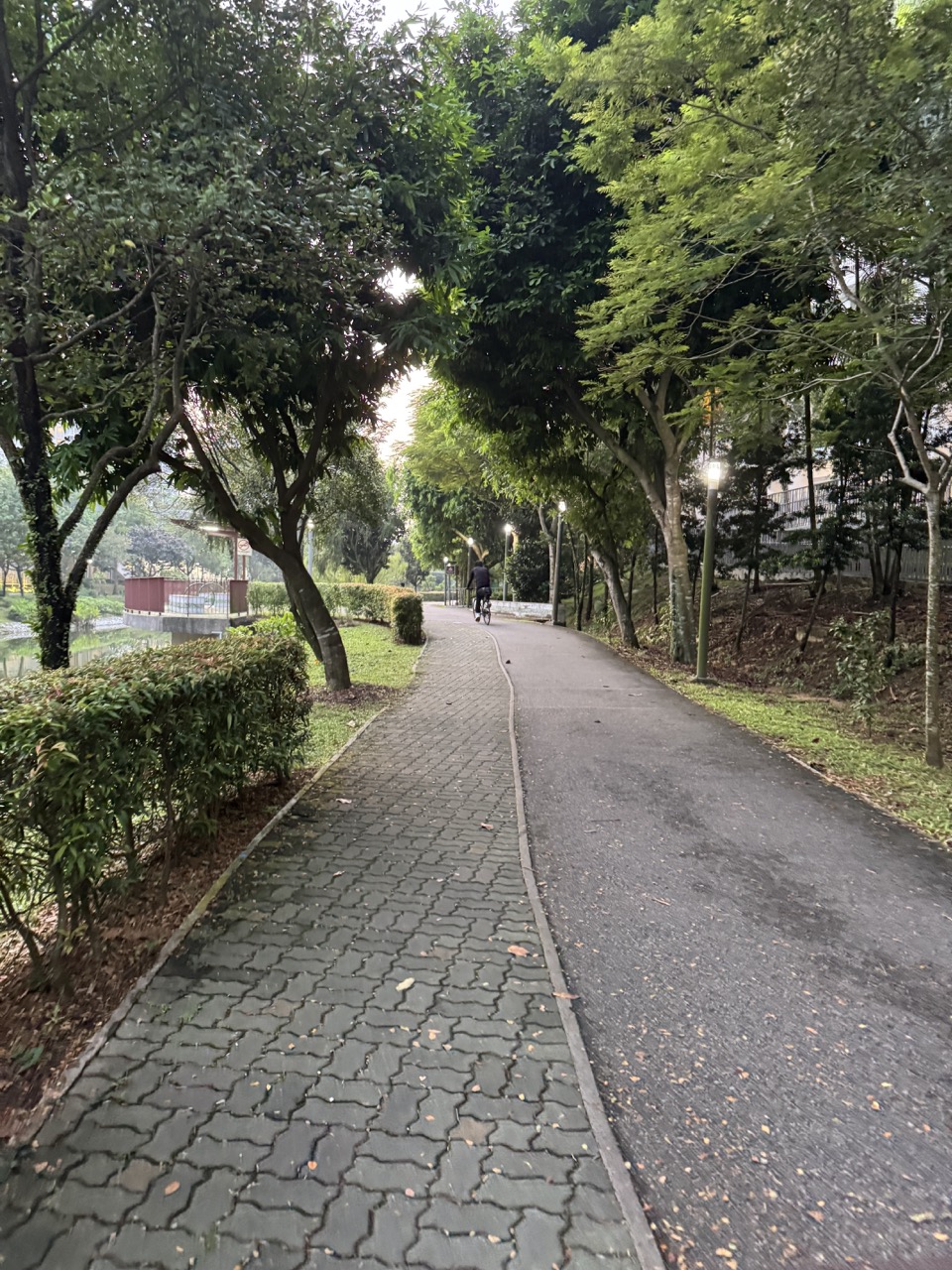
Historical image note: the featured photograph is modern Punggol scenery, not a picture of the 1988 farm, animals or trucks. The New Paper photos belong to their credited original photographer and are not reproduced as eduKate-owned media.
10. Crocodile skins and the economics of a specialized farm
National Heritage Board’s agricultural history identifies crocodile skin as a major reason such reptiles were farmed in Singapore. The product could enter specialist commercial markets distinct from the food trade that shaped pig and poultry farming. A hide is not a living animal; turning one into a saleable product requires production, handling and downstream businesses.
This context helps explain why thousands of crocodiles could be held at a rural operation. A farm might be organised around long-term animals rather than quick turnover. However, the November 1988 reporting does not provide a balance sheet or a count of animals at every stage of growth. The full economics of the Punggol farm remain unknown.
A reader should not assume all 2,500 were ready for harvesting or that every animal had equal commercial value. Their size and age would vary; the newspaper’s phrase ‘big and little’ underscores the mixed nature of the reported stock. Exact distributions would need an inventory.
The more useful question is how a specialized industry depended on land, enclosures, feed, labour and market access. These are hidden systems behind what a newspaper photographs as a spectacular move.
For a history-and-economics exercise, identify the inputs a farm needs and distinguish them from the products it sells. Avoid fabricating crocodile prices or projected profits when the original records do not give them.
11. Crocodile meat and historical marketing claims
NHB records that crocodile meat, which might otherwise have been discarded by an industry focused on skins, was supplied to restaurants including Seafood Paradise at Jurong Crocodile Paradise. The restaurant’s operator promoted meat using traditional Chinese medicinal ideas, including claims related to asthma.
This is a history of commercial marketing, not clinical confirmation that eating crocodile meat treats a respiratory illness. Medical outcomes require scientific evidence that the historical promotional material does not provide. Readers should not turn an old restaurant claim into healthcare advice.
The business example nevertheless demonstrates how producers can seek value from more than one part of their output. A sector may have a primary product and a secondary use for material that previously carried little monetary value. That principle applies to many industries, although the details of animal welfare, safety and regulation differ.
It would also be mistaken to assume the 1988 move was undertaken solely to supply the restaurant. The destination operated as a reptile attraction, and the source record does not break down the ownership or intended purpose of every animal after relocation.
The important historical interpretation is that crocodile farming bridged agricultural production, specialist material markets, food businesses and public entertainment. That unusual mixture helps explain why the relocation was notable to readers in 1988.
12. The larger retreat of animal farms from Punggol
The move occurred in a decade of significant change to Punggol’s agricultural landscape. Government plans for housing and environmental management increasingly constrained the long-term future of intensive farming in the area. Pig farms were being phased out, while other rural operations faced relocation or closure.
NHB’s history records the last 22 Punggol pig farms ceasing operations by November 1989. That is a separate milestone approximately a year after the crocodile transfer. Neither event should be used as evidence that every animal business ended on a single date.
The crocodile move shows how one specialised business responded through physical relocation of captive stock to a different Singapore district. A pig farm might face another kind of closure and restructuring. A family growing vegetables might make a different livelihood decision. The broader trend is real but its impact was not uniform.
The source does not specify that one named Punggol redevelopment project directly ordered the 1988 crocodile move. Without the relevant lease, acquisition notice or company correspondence, the safest wording is that it took place in the wider period of rural land-use transition.
For readers of Punggol’s modern waterfront history, the contrast is striking: a district once hosting very large reptile holdings later became identified with apartments, parks, schools and digital industries. The transformation deserves source-specific dates rather than a vague overnight-before-and-after story.
13. What National Heritage Board says about Yak Seng Farm
One of the best-documented agricultural establishments in Punggol was Yak Seng, sometimes called Hay Farm. National Heritage Board gives a 1971 snapshot of 50,000 chickens, 8,000 pigs and 1,000 crocodiles within that mixed operation. It is evidence of the scale and diversity of some farms at the time.
The 1971 figure does not establish that Yak Seng was the farm sending 2,500 reptiles to Jurong in 1988. Seventeen years separated the records, and farm ownership, stock and locations could have changed. The accessible 1988 news excerpts do not provide sufficient evidence to identify the exact farm as Yak Seng beyond doubt.
This is a classic source-merging hazard. A researcher encounters a named 1971 crocodile farm and an unnamed 1988 crocodile transfer, then assumes they must describe the same property. Similar subject matter is not proof of identity.
A trustworthy article instead says that crocodile farming is documented in Punggol well before the 1988 transfer and illustrates that earlier industry with the appropriately dated Yak Seng record. The transfer’s original farm identity remains a separate question unless a more detailed primary source establishes it.
This caution also matters when families search old farming photographs. A picture captioned Yak Seng in 1986 should not automatically be relabelled as the collection or transport site of the 1988 New Paper story.
14. Jurong Crocodile Paradise and the rise of animal attractions
Jurong Crocodile Paradise opened in 1988 and became part of Singapore’s changing leisure landscape. National Library Board history describes crocodile attractions of the 1980s and 1990s, including their performances and public interest. The facility was near Jurong Bird Park, an established major visitor destination.
A commercial animal attraction can combine animal holding, breeding, demonstrations and ticketed experiences. That differs from a farm whose core business involves products derived from animals. The same reptiles may move between contexts, but the public-facing purpose changes.
The Jurong business was subsequently associated with the name Jurong Reptile Park and eventually closed in 2006. Later history of the park should be investigated on its own terms. The closure date does not prove every crocodile moved in 1988 remained alive or on site until then.
NLB’s historical writing also records serious risks faced by performers handling crocodiles in the entertainment sector. Those events should not be glamorised or used as modern instructions. They show how ideas about audience attraction, animal welfare and acceptable danger have evolved.
The Punggol relocation connects local farming history with the creation of a high-profile reptile destination in another district. It is therefore a bridge between two different strands of Singapore’s development, not simply the disappearance of an odd farm.
15. The difference between opening an attraction and moving its animals
The 10 November archive broadcast and 11 November New Paper concern the relocation. A separate statement that Jurong Crocodile Paradise opened in 1988 concerns the attraction’s operation. Those are related milestones, but not identical actions.
A transfer may take place before a public venue is fully open. A press account might describe an upcoming opening, a partial facility or animals arriving as preparation continues. The sources used here do not establish a single detailed day-by-day opening schedule.
Readers should therefore avoid writing that all 2,500 crocodiles began performing for tourists on 10 November. That is not stated by the archival record. Moving animals, establishing facilities and admitting visitors are distinct phases of a commercial development.
This distinction is common in Punggol history. A school may first admit pupils before its official inauguration; a new transport station may start operations before a celebration; a farm move may precede a site’s full launch. Dates are clearer when the event type is named.
A good timeline places the November transfer beside the destination’s 1988 opening while leaving operational details open for verification from additional documents.
16. What the sources tell us about weights and sizes
The New Paper’s summary notes that individual crocodiles could be very large, with some described as weighing up to about 500 kilograms and extending around three metres. Those figures are part of the feature’s description, not a measured distribution of the entire 2,500-animal population.
A journalist may use a striking maximum to convey the difficulty of a story. It would be inaccurate to multiply 500 kilograms by 2,500 and announce a total transported biomass of 1.25 million kilograms. The largest reported animal is not necessarily the average animal.
Scientific measurement also has its own methods. Accurate length and weight records would come from handling logs or measured specimens, not a dramatic line on a newspaper cover. The accessible story does not provide such a dataset.
For Mathematics students, this makes an excellent lesson about maximum, mean and total. Knowing an upper example cannot establish an average; knowing a rounded headcount cannot establish a precise cumulative mass. Good quantitative writing makes these distinctions before calculating.
The larger educational benefit is scepticism about false precision. Impressive numbers are worth examining, but their reliability depends on how they were obtained and what they actually measure.
17. What a local history photograph can and cannot prove
The 1988 New Paper feature carried photographs credited to John Tan. That is a valuable contemporary visual record. But an image of one transport moment cannot prove the number of crocodiles loaded on every vehicle or the complete safety of the relocation.
Photography also has copyright. A history website should link to the original NewspaperSG record or obtain appropriate permission rather than copying its images without authority. The same principle applies to later photographs from the Jurong attraction.
The owned featured image on this eduKate article is a contemporary Punggol waterfront scene. It provides geographic context but is not labelled as a photograph of the reptiles or transport trucks. Clear captions prevent visually attractive illustrations from becoming false evidence.
A student comparing sources could examine the TV synopsis, newspaper issue index and later institutional historical accounts. Each has different strengths: broadcast-date precision, narrative detail and retrospective context. None automatically supplies an exact farm boundary.
Source-conscious photography means asking not only ‘What does the image show?’ but also ‘Where was it taken, when, by whom, and what evidence supports the caption?’ That habit is useful for every type of local history.
18. Teaching the 1988 move as a history investigation
A classroom lesson can begin with two cards. One says ’10 November 1988: SBC reports some 2,000 crocodiles moving from Punggol’. The other says ’11 November 1988: The New Paper describes about 2,500 over three weeks’. Ask students whether the cards are necessarily contradictory.
A strong answer notes that the time windows and language differ. The television item describes one morning, while the newspaper may refer to an overall planned operation. Students should also state that the sources do not prove a precise reconciliation. The conclusion can preserve both numbers.
For Geography, map the movement from the Punggol farming district to Jurong, but do not invent the truck route, journey duration or location of the exact original farm. Modern roads may not reproduce the road conditions of 1988.
For Science, distinguish native wild crocodiles from captive animals in an agricultural or zoological setting. Students can discuss habitat, animal welfare and why safety training matters without performing or imitating dangerous handling.
For English, write a headline that immediately answers the reader’s question without sensationalism: ‘Large Punggol Crocodile Farm Transfer Reported in November 1988’. Use the date and approximate figures within the article, and explain their limits. The goal is to communicate accurate information, not simply excite an audience.
19. Why the 1988 move belongs in the larger story of Punggol
The crocodile relocation looks unusual when Punggol is viewed only as a 2026 residential and technology district. That is why its archival evidence matters. It demonstrates that the earlier area could support animal industries whose requirements and markets were very different from those of apartment estates, schools and office campuses.
The National Heritage Board’s agricultural history records farms, livestock and the significant role of Punggol in Singapore’s food production and related businesses. The 1988 TV and newspaper reports show one concrete event during the later restructuring of that rural economy.
The move to Jurong did not mean Punggol was suddenly empty of farms, nor does it prove that one particular development plan caused every crocodile to leave. It shows a change in where a major commercial collection of animals was held. The broader historical interpretation is one of competing land uses, changing business models and new leisure destinations.
In the same era, other agricultural operations were facing pressures linked to land, water, pollution and changing planning priorities. By November 1989 the remaining group of major Punggol pig farms had ceased operations, according to NHB. That date should remain distinct from the crocodile transfer.
The most useful comparison is not a nostalgic judgement about which era was better. It is a systems question: what land, infrastructure, labour and governance did each economic form require, and why did later priorities make different uses of Punggol possible?
20. Frequently asked questions: the verified short answers
When did the crocodile move happen? National Archives records an SBC broadcast on 10 November 1988, and The New Paper reported the move in its issue of 11 November 1988.
How many crocodiles moved? The broadcaster described some 2,000 moving that morning; the newspaper discussed about 2,500 in a three-week operation. These are reported approximate quantities, not one verified completed inventory.
Where did the animals come from? The contemporaneous reports describe a Punggol crocodile farm. The accessible excerpts do not independently establish the precise farm boundary.
Where were they going? Jurong Crocodile Paradise, a new private attraction next to Jurong Bird Park.
Were the crocodiles released into waterways? The reports describe a transfer between captive animal facilities, not a release into the wild.
Was the destination Jurong Bird Park itself? No. Its proximity to the bird park is a geographical description, not evidence of common ownership or custody.
Was Yak Seng the exact farm involved? Yak Seng is a documented Punggol crocodile-holding farm in the 1971 NHB record. That alone does not establish it was the source of the 1988 transfer.
Why do 1971 and 1988 figures differ? They refer to different dates and possibly different operations or scopes. They should not be added or equated.
Was the 1988 count exactly 2,500? The newspaper used an approximate figure and described an undertaking extending across weeks.
Did all the animals arrive safely? The available news summaries do not provide a certified complete arrival and welfare report.
Did people visit crocodiles in Jurong? The attraction became known for public displays and performances, documented in NLB’s crocodile history.
When did Jurong Crocodile Paradise close? The later reptile park closed in the 2000s; the historical attraction is not a current operating destination.
Was Punggol’s 1960 crocodile scare connected? No documented connection has been established between those wild sightings and this farm transfer.
Why did Punggol have crocodile farms? The area’s earlier agricultural economy included unusual livestock-related ventures, especially for skins and related products.
Is crocodile meat a verified asthma treatment? A heritage source records historical medicinal marketing claims, not clinical proof of an effective treatment.
Can families recreate the move or visit the old farm? No historical report grants modern access or makes dangerous animal handling appropriate. Use archives and authorised public facilities for learning.
What is the most useful primary archive? The November 1988 SBC news synopsis and original New Paper issue.
21. The difference between primary news, heritage summary and later interpretation
The National Archives item is a catalogue record for an original television news broadcast. It establishes the programme date and the synopsis’s claim about roughly 2,000 crocodiles moving that morning. It should not be misrepresented as a complete veterinary report.
The New Paper’s 11 November issue provides a second, contemporary account. Its cover and feature present a broader three-week operation involving about 2,500 animals. The original photographs and article are subject to copyright; linking to NewspaperSG retains a reliable source trail.
National Heritage Board’s agricultural history and the National Library Board’s crocodile essay explain the larger commercial and social context. They do not turn the two contemporaneous numbers into an exact audited count.
The article therefore reports what can be established: a large movement of captive crocodiles from Punggol to Jurong in November 1988, documented by both television and print. It avoids inventing detailed truck routes, unnamed farm owners, specialist handling methods or the lifetime of any individual animal.
These boundaries make the page more useful, not less. A reader who knows exactly which claims are measured, estimated or interpreted can retrieve information confidently and recognise where further archives would improve the record.
22. The Punggol history reading route
The crocodile-farm relocation can be read alongside the existing eduKate article on Yak Seng and Punggol crocodile farming. That broader guide explains the unusual mixed animal economy; the present page focuses on a particular dated transfer and the differing archival counts.
The separate March 1960 Punggol crocodile-scare article concerns reported free-ranging animals and fishermen. It should not be treated as a prequel to this captive relocation. The Punggol Pig Centre training history concerns scientific farming education during the same general transition era.
For the wider town chronology, the Punggol master history directory follows land reclamation, rural businesses and new-town planning. Cross-links help readers move between distinct questions without duplicating a complete town history on every page.
Students can use the two contemporary figures as a data-literacy exercise and the old-versus-new industry contrast as a Geography case. Both tasks should preserve the original publication dates and avoid implying present-day crocodile access at Punggol or Jurong.
The central lesson remains straightforward: a significant reptile operation moved away from rural Punggol in November 1988, and good history records what the independent sources actually say about the scale and timing.
Sources and Punggol cross-references
- National Archives: SBC broadcast of 10 November 1988
- NewspaperSG: The New Paper, 11 November 1988
- National Heritage Board: Agriculture and Wildlife of Punggol
- National Library Board: Revulsion and Reverence—Crocodiles in Singapore
- eduKate: Punggol crocodile farms and Yak Seng
- eduKate: The March 1960 Punggol crocodile scare
- eduKate: Punggol Pig Centre training in 1981–1983
- Punggol History 89 master directory
Photo notice: current Punggol scenery is an illustration, not a 1988 farm or transport photograph. No claim of exact animal tally or contemporary safety permission is made.


