
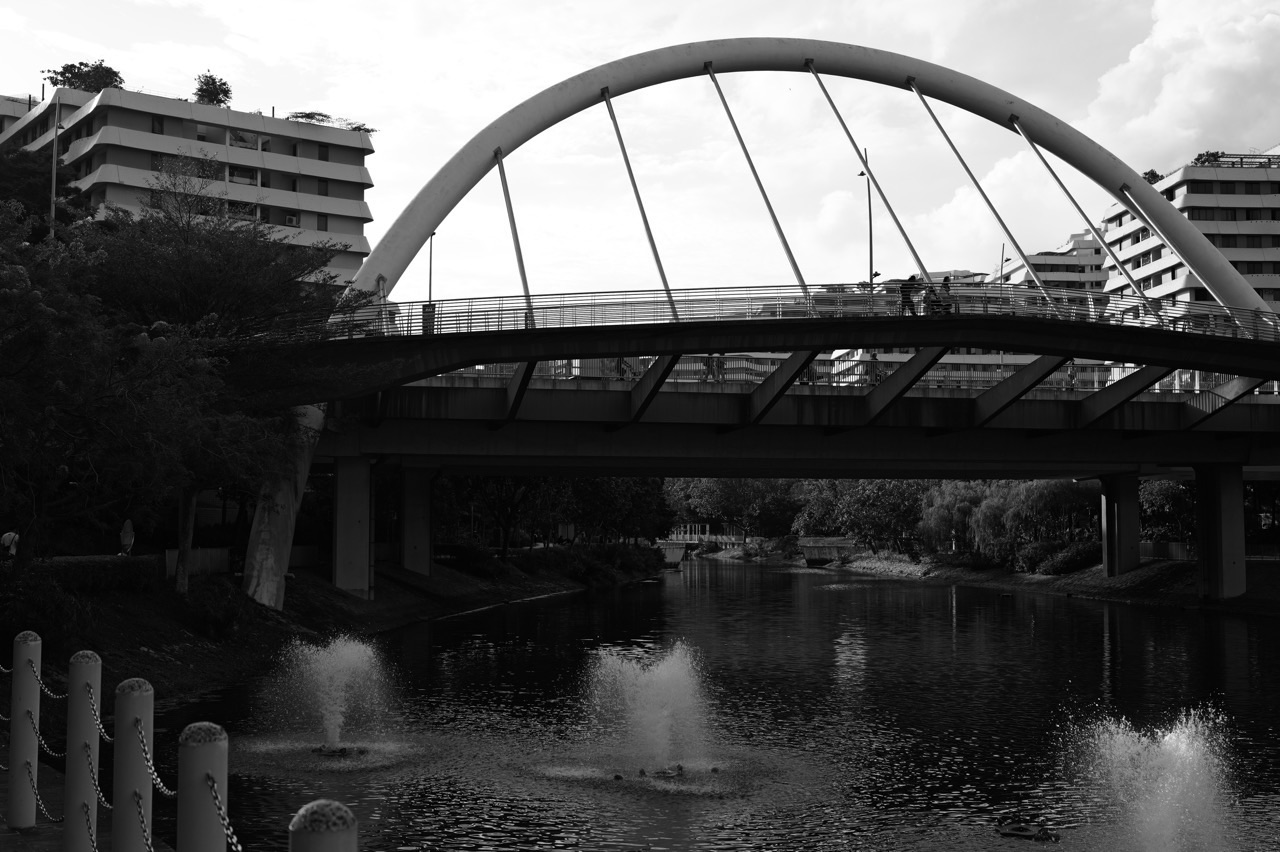
My Waterway@Punggol received two major forms of recognition in 2013: the FIABCI Prix d’Excellence Gold Award in the Public Infrastructure category and BCA’s Universal Design Mark Gold in the Non-Residential (New) category. Together, the awards show the Waterway being judged not only as a landscape or engineering project, but as public infrastructure intended for everyday use by people of different ages and needs.
For readers searching Punggol Waterway awards 2013, FIABCI Punggol Waterway or Universal Design Mark Punggol Waterway, the awarding body and category matter. These awards belong to My Waterway@Punggol, not to every housing estate beside it and not to Punggol Town as a whole.
Did you know? BCA’s project profile described the 4.2-kilometre waterway, five themed bridges, connections between facilities for different age groups, and design provisions such as concrete bollards, buffer planting and railings. The same public space was being evaluated for access, connection and safety at once.
The Crazy-Rich Idea: Public Infrastructure Is Valuable When People Can Actually Use It
A waterway can be beautiful and still fail as public infrastructure if it is difficult to reach, unsafe at the edges or disconnected from daily routes.
The 2013 recognition highlights a broader formula:
engineering + access + safety + identity + connection = useful public infrastructure.
Five Bridges Turned Two Banks Into One Network
Bridges do more than cross water. They change route choice.
Without crossings, the two banks behave like separate linear spaces. With well-placed bridges, residents can form loops, shorten journeys and combine destinations on both sides.
Universal Design Is About the Whole Journey
BCA’s recognition was not simply about one ramp or one accessible entrance.
It reflected connections between facilities and users across the Waterway environment. That makes accessibility a route problem as much as a building problem.
Safety Measures Can Support, Not Oppose, an Open Landscape
Concrete bollards, planting buffers and railings are easy to overlook because they are not the visual centrepiece.
But inviting people close to water creates a design obligation to manage edges, vehicles and fall risk without making the place feel hostile.
Future Housing Was Already Part of the Waterway Logic
BCA’s profile noted integration with future residential developments.
That matters historically because the Waterway was not designed as an isolated attraction waiting for visitors. It was intended to become part of the daily geography of a growing town.
For the wider mechanism, read Crazy Rich Punggol | Punggol Waterway, Reservoirs and the Luxury of Water as Public Life.
FIABCI Gold and BCA Gold Are Different Recognitions
- FIABCI: Prix d’Excellence Gold, Public Infrastructure;
- BCA: Universal Design Mark Gold, Non-Residential (New).
The shared year does not make them one award.
A Geography Lesson: Connectivity Changes Effective Distance
Two destinations can stay the same physical distance apart while becoming functionally closer when crossings and paths improve.
This is why bridge placement belongs in human geography as much as engineering.
An English Lesson: “Awarded” Is Not “Unchanged Forever”
An award records recognition under stated criteria at a particular time. It does not guarantee that every path, railing or facility remains identical today.
Evidence Boundaries
- The 2013 records establish the award names, categories and design features highlighted then.
- They do not establish present-day maintenance status.
- They do not make every adjacent housing project an award recipient.
- They do not prove every visitor experiences the space identically.
Evidence Anchors
The crazy-rich Punggol lesson is that great public infrastructure does more than exist. It connects, protects, invites and adapts to the town growing around it.
My Waterway@Punggol received the FIABCI Prix d’Excellence Gold award in the Public Infrastructure category in 2013. HDB’s awards chronology records this international recognition of the Waterway.
The same chronology lists a 2013 BCA Universal Design Mark Gold award in the Non-Residential (New) category. This second recognition provides a useful route into the history of how the waterfront was designed for public use.
For readers searching for Punggol Waterway awards, the award name, category and year matter. The 2013 recognition belongs to My Waterway@Punggol; it should be distinguished from awards for individual housing precincts or for Punggol Town as a whole.
Choose your reading route
What BCA highlighted · Access and safety together · What an award can tell us
Full article contents
CHAPTER 1 OF 3
1. What BCA highlighted
BCA’s 2013 project profile describes a 4.2-kilometre waterway along Punggol’s east–west corridor. It highlights connections between facilities for different ages and between the banks through five themed bridges.
The profile also notes consideration for integration with future residential developments. This means the Waterway was being read as part of a growing town, rather than as an isolated attraction.
CHAPTER 2 OF 3
2. Access and safety together
BCA identifies concrete bollards, buffer planting and railings among the safety measures designed to complement the natural setting. Its account helps explain how inviting people towards water also involved designing boundaries.
Our interpretation is that the recognition brings everyday use into the history of the project. A bridge, a connection between activities and a protective edge are less conspicuous than an overall landscape photograph, but each affects how people use a place.
Previous chapter · Contents · Next chapter
CHAPTER 3 OF 3
3. What an award can tell us
An award records recognition at a particular time and under a particular category. It does not establish that every path remains accessible today or that every facility has the same condition as in 2013.
For a historical comparison, use the dated project description to understand the design priorities, then use current observations for present-day conditions.
Sources: HDB’s Punggol awards chronology; BCA, Award Winners 2013.


