
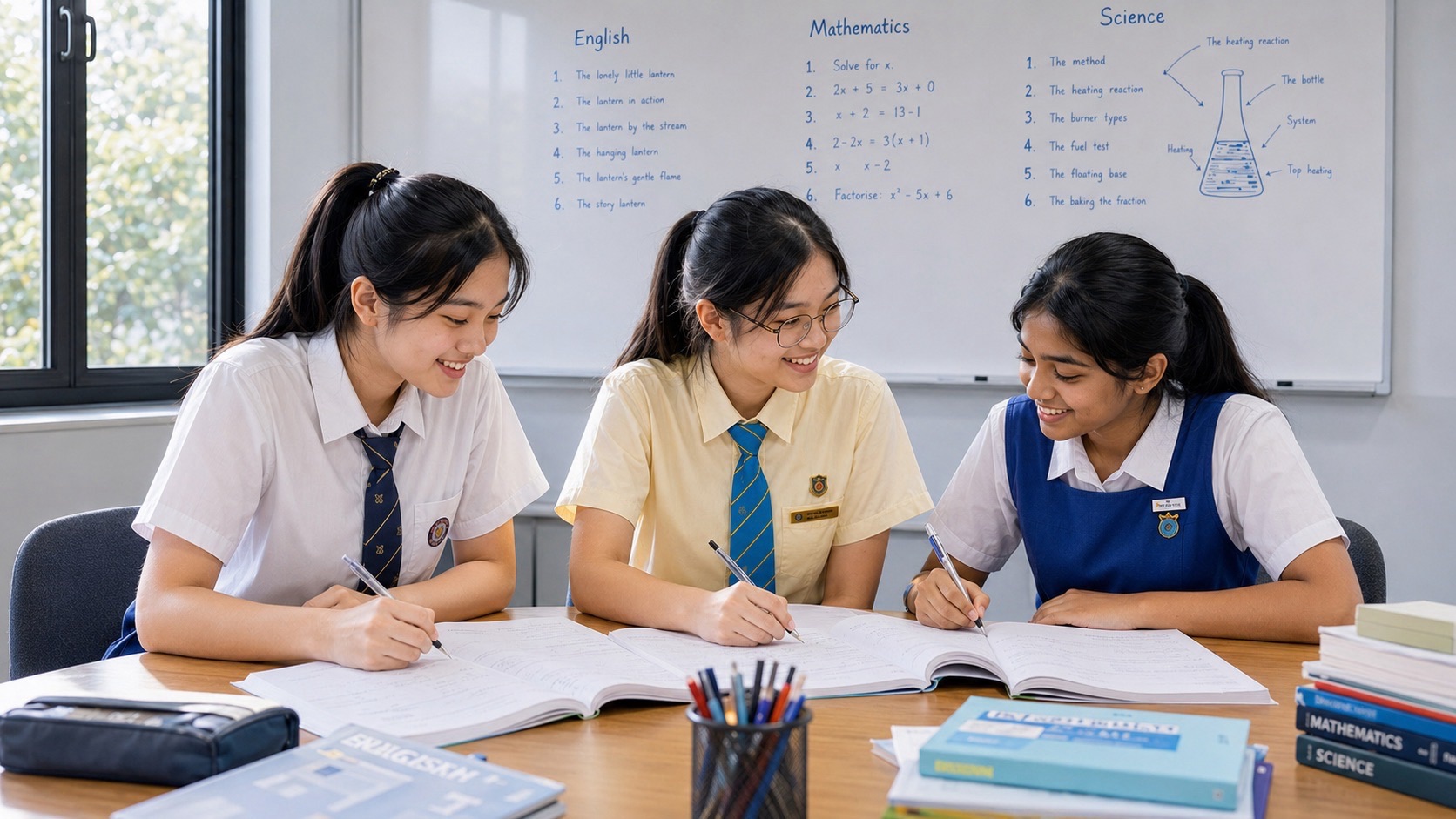
Two characters can experience the same afternoon and tell completely different stories about it. One calls it an adventure; the other remembers the worry of almost missing the bus. Neither necessarily lies. They simply notice different things. For a Secondary 2 learner, discovering that difference is a splendid introduction to theme and character comparison.
Why have Secondary 2 Punggol Literature tuition for themes and character comparison? Because students preparing for more demanding Secondary 2 Literature analysis, character relationships, theme essays and upper-secondary Literature need to connect individual scenes to larger ideas. They should be able to explain how a theme develops, compare what characters believe and do, and choose quotations that reveal both similarities and differences. The aim is a thoughtful, supported comparison—not a memorised list of character traits.
Once students can read a short scene carefully, a much bigger door opens. They can ask what a story thinks about belonging, responsibility, freedom or trust. A theme is not a moral printed on the last page. It is an idea tested by the events, relationships and choices that unfold across the work.
What is a literary theme, and what is it not?
Friendship is a topic. The difficulty of staying loyal when honesty is uncomfortable is a thematic claim. The first tells us what the text concerns; the second says something that can be examined through a character’s actions, the structure of the story and the writer’s choices.
This distinction matters because young readers often produce theme answers that are true but too broad: “The author shows family is important.” A better response asks: important in what way, to whom and with what consequences? A nuanced answer may recognise that care and control can coexist in a family, or that a friendship can be both supportive and demanding.
There is no need to turn every Secondary 2 story into a philosophical treatise. A useful lesson begins with one concrete scene, then explores how it connects to other moments. If the student cannot accurately explain the scene, larger claims about theme will rest on shaky ground.
Why comparison becomes more important in Secondary 2
At Secondary 1, a learner may explain one character’s reaction with relevant evidence. In Secondary 2, the next useful step is to ask how two characters react differently to the same pressure—or how one character changes between the beginning and ending of a story.
Comparison does not mean listing traits in separate columns and stopping there. It means asking what the contrast reveals. If one sibling talks freely while another hides their worries, their different responses may explore trust, responsibility or the fear of becoming a burden. The strongest point relates the difference back to the writer’s larger purpose.
A worked original story: Two Ways to Keep a Promise
Here is an original classroom extract written for this guide, not an assigned Literature text.
The class had promised to finish the community mural before Saturday. When rain soaked the unfinished wall, Farah went straight to the store cupboard for more paint. “We told them we’d finish,” she said. Her friend Ben watched the water collect along the pavement. “If we paint now, it’ll wash away again,” he replied. Farah dipped her brush anyway. Ben put his bag over the tin to keep the rain out. Neither of them went home.
Original eduKatePunggol prose practice
First ask what the characters share. Both are committed to the mural. Neither walks away. This is important because an unthinking comparison might label Farah responsible and Ben lazy simply because Ben hesitates.
Next ask where they differ. Farah acts immediately because the promise matters. Ben considers the conditions and worries that the effort may be wasted. His practical caution is not necessarily disloyal. He even protects the paint tin from rain.
Finally ask what the difference suggests about the theme. The scene offers more than “teamwork is good.” It presents responsibility as a tension between determination and judgement. The final detail—both staying to help—shows that people can share a commitment while disagreeing about how best to fulfil it.
A model analytical paragraph might read:
The writer presents responsibility through contrasting responses to the same setback. Farah’s insistence, “We told them we’d finish,” emphasises her determination to honour a promise, while Ben’s warning that the paint “will wash away again” suggests a more practical form of concern. Although they disagree about the best action, the final detail that “Neither of them went home” shows their shared commitment. The scene therefore complicates the idea that being responsible always means acting immediately.
Original model response, not an official marking scheme
The strength of this answer lies in its balance. It does not invent a villain. It explains how the contrast develops the story’s idea of responsibility.
A comparison map that helps students write rather than list
| Reading move | Question to ask | Evidence to seek |
|---|---|---|
| Shared pressure | What situation are both people responding to? | The same event, promise or conflict |
| Different choices | How do their actions or words diverge? | Contrasting dialogue, gestures or decisions |
| Possible motives | What might each person value or fear? | Clues supported by context, not invented thoughts |
| Development | Do their views change during the scene or story? | A decision, concession or consequence |
| Theme | What larger human question does the contrast explore? | Several connected moments that support one claim |
Students should use this table as a thinking aid, not a requirement to produce five paragraphs every time. Sometimes a single well-chosen contrast is enough for a short answer. A whole-text essay will need a broader line of development.
Five misunderstandings that make theme analysis difficult
- A theme is treated as a one-word label. Teach the learner to turn a topic into a specific statement that the text can support.
- Characters are reduced to “good” and “bad.” Ask how motives, actions and consequences complicate first impressions.
- The comparison is just two summaries. Require a sentence explaining what the similarity or difference means.
- One isolated line stands for the entire story. Trace another relevant moment and check whether the interpretation still fits.
- Quotations are collected before the claim is clear. Decide what the question asks, then select the evidence with the strongest analytical value.
The underlying difficulty may be earlier than the essay. A student who loses track of the speaker or cannot identify what a character literally does needs reading support first. An explanation that sounds sophisticated but relies on a misread event is not progress.
What would a good Secondary 2 Literature tuition lesson actually do?
Start with the student’s own school work
Compare a recent teacher-marked answer with the exact question. Is the claim too broad? Is one character portrayed inaccurately? Is the theme stated but not traced? Choose a specific problem rather than assigning an unrelated set of general Literature worksheets.
Model one meaningful comparison
Read a scene together and build a claim that accounts for a similarity and difference. An example might be: “Both characters value loyalty, but they disagree about whether loyalty requires immediate action.” That sentence gives the student something precise to prove.
Practise with a fresh pair of characters
Use a different short extract. The learner should identify the relevant evidence with less prompting. This is the test of whether the method has been learned rather than merely copied.
Develop an independent paragraph or two
Write a concise response with accurate quotation, comparative analysis and a return to the question. Discuss why another reading might be possible if the text is genuinely ambiguous. Gradually extend to a longer argument only after the paragraphs are sound.
In the eduKate learning approach, diagnosis and transfer matter more than worksheet volume. Students should leave a lesson able to do something they could not do alone when they arrived.
Does stronger theme analysis help with Secondary 3 subject choices?
Yes, because it reveals what upper-secondary Literature may demand of the learner: sustained reading, evidence-led interpretation and interest in complex human questions. But enjoyment and skill are not identical, and a single weak assessment should not decide a subject choice.
Parents should check whether the school offers full Literature or Literature within a Humanities combination at the relevant level, which texts and arrangements apply, and what the student’s teacher recommends. The SEAB SEC syllabus directory provides official upper-secondary examination information; it does not replace each school’s subject-selection advice.
Students who enjoy debate, stories and the reasons people act may find Literature rewarding. Those who struggle to write but have insightful spoken interpretations may simply need help translating their thinking to the page. A good tutor should help the family see that distinction.
A parent-friendly routine: two characters, one question
After a film scene, story chapter or school extract, ask, “How did these two people react differently?” Then ask, “What do they both care about?” Finally, “Where in the story did you notice that?” This is comparison in natural conversation, without making dinner feel like an examination.
The trick is to let the child explain and occasionally challenge the interpretation gently. There may be more than one defensible way to read the interaction. What matters is whether the student understands the evidence and can adjust their claim when the details demand it.
What progress looks like
| Before | After |
|---|---|
| “The theme is friendship” | A specific claim about how friendship is tested or changed |
| Two separate character biographies | A comparison built around shared pressure and contrasting responses |
| A long quotation copied into an answer | A short, relevant phrase that advances the interpretation |
| “The author teaches us a lesson” | An explanation of how scenes and decisions explore an idea |
For Punggol families considering tuition, ask for examples of individual feedback and check whether the tutor works from the child’s actual reading list. A very small class can allow valuable discussion, but it only helps when each learner’s own written reasoning is observed and improved.
The next step: from comparison to sustained prose analysis
Secondary 2 theme and character work forms a bridge to Secondary 3 narrative structure, more demanding prose study and flexible passage-based questions. The student can move from noticing one important contrast to tracking how a writer develops it across a whole story.
Explore the companion guides on Secondary 2 poetry analysis, drama and stage directions, and the Punggol Literature master guide.
In one sentence: Secondary 2 Literature tuition becomes valuable when it helps students compare characters thoughtfully, follow an idea through a text and explain what the differences reveal about the world of the story.


