
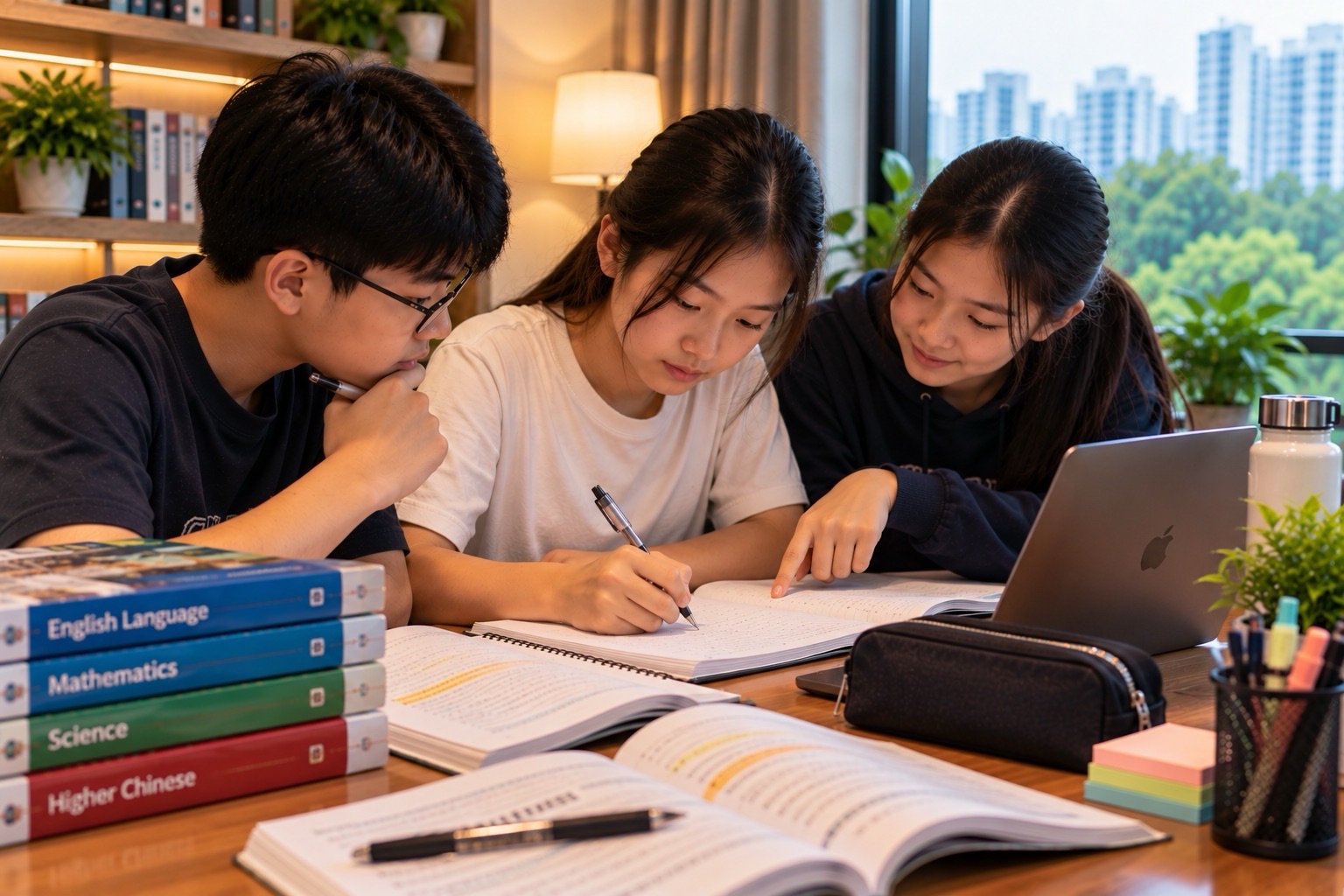
At the beginning of a story, someone opens a door and says, “I knew everyone had forgotten me.” A young reader may nod sympathetically. Then the tutor asks a mischievous question: Did everyone forget the character, or does the character merely believe they did? Suddenly, one ordinary sentence becomes an exciting reading problem.
Why have Secondary 1 Punggol Literature tuition for character analysis and narrative perspective? Because the transition to secondary Literature requires students to distinguish a character’s feelings from the narrator’s information, make evidence-based character inferences, recognise first-person and third-person point of view, and explain how storytelling choices influence readers. Good guidance helps a student replace plot retelling with thoughtful interpretation, one carefully chosen detail at a time.
Here is the delightful secret of Literature: the most interesting stories do not always tell us everything. The people in them remember selectively, feel unexpectedly, jump to conclusions and occasionally misunderstand themselves. Secondary 1 students can learn to enjoy this complexity without being buried under intimidating terminology. The skill is to notice what the text actually tells us, what it asks us to infer and what remains uncertain.
When does Secondary 1 Literature tuition genuinely help?
Some students love reading but struggle to answer questions beginning with “What impression do you get of…?” or “How does the writer make the character seem…?” The learner remembers the plot but has not learned to separate action, thought, motivation and presentation. Another student guesses wildly because they assume any imaginative response will count. Both need a better method, not simply a longer model answer.
Before enrolling in a tuition class, inspect the child’s recent school answers. Is the difficulty really literary analysis, or does an unfamiliar word prevent understanding of the sentence? Does the learner understand the scene but lack evidence? Can they explain their interpretation orally but not yet in writing? These are different problems and should lead to different teaching decisions.
Secondary 1 Literature provision and assessment vary with school programmes and subject levels under Singapore’s Full Subject-Based Banding arrangements. Some students encounter Literature through Humanities exposure rather than a uniform stand-alone examinable subject. The tutor should read the actual school task and avoid describing every lower-secondary exercise as preparation for an immediate O-Level examination.
Three questions that unlock character analysis
What does the character do?
Start with observable action: who moves, pauses, gives away an object, refuses a request or changes their mind? Actions are evidence, but they do not always explain themselves. A character who looks away could be ashamed, angry, distracted or trying to hide a smile. Reading must be more careful than assigning a single label.
What does the character appear to want?
Explore a plausible motivation using context. Does the character want approval, privacy, safety, fairness or the freedom to choose? Ask for a second clue. Students should learn that a convincing inference usually joins several details rather than resting on a vague impression.
How does the writer shape our view of the character?
Now investigate the art. Does the reader hear the character’s own voice, another character’s judgement or an outside narrator’s description? Does dialogue contradict an action? Is a key fact deliberately withheld? These questions move a learner from discussing a fictional person to analysing a literary text.
A worked original story: The Missing Invitation
The following short passage is an original teaching example written for this article, not an extract from a prescribed school text.
I was the last to reach the table. Four brightly coloured cards lay beside the cake. Nadia put her hand over them when she saw me. “They’re only place cards,” she said. Everyone seemed terribly interested in their drinks. I laughed because I could not think of anything else to do. Later, I found a fifth card under my chair. It had my name on it, written in Nadia’s untidy purple handwriting.
Original eduKatePunggol practice narrative
Ask a learner what happened. Five cards exist. The narrator initially sees four. Nadia covers them. Others look at their drinks. The narrator laughs and later finds a card with their name on it. The basic sequence matters because the ending may challenge an earlier interpretation.
Question: How does the first-person narration influence our view of Nadia? A quick response might be, “Nadia is mean because she hides the cards.” It is possible that the narrator experiences her action as unkind, but the text does not establish that Nadia intends harm. Perhaps the card was part of a surprise. Perhaps Nadia was embarrassed by something else. The reader knows what the narrator notices, not everything Nadia thinks.
A stronger paragraph might read: “Because the story is told in the first person, readers initially experience Nadia’s action through the narrator’s anxious interpretation. Nadia places a hand ‘over’ the cards while the other guests avoid looking up, creating the impression that the narrator may have been excluded. The late discovery of a fifth card complicates that impression, suggesting that the narrator’s first judgement may not tell the full story.”
Nothing in that answer requires the student to announce that the narrator is dishonest. An unreliable or limited perspective is not the same as a deliberate lie. The narrator may sincerely misunderstand an awkward moment. Secondary 1 students should learn that distinction early.
First-person and third-person: a practical comparison
| Narrative choice | What a reader often receives | Useful question |
|---|---|---|
| First-person “I” | A character’s account of events, thoughts and interpretations | What might this speaker not know? |
| Third-person limited | Access centred on one character, though told with “he” or “she” | Whose feelings are we allowed to see? |
| Broader third-person narration | Possible access to different characters or a wider picture | What does the reader know that a character does not? |
A simple exercise is to retell two sentences from a different point of view. In the original passage, the narrator thinks the guests are avoiding them. Rewrite a moment from Nadia’s viewpoint, but label the new version as an invented possibility, not something proved by the source. Then ask which new facts the original story does not actually reveal.
This teaches empathy and close reading together. Students learn to consider another interpretation without pretending that imagined evidence exists in the text.
Four mistakes tutors should catch before they settle in
- Mixing up author and narrator. A fictional first-person speaker is not automatically the real writer.
- Calling every pause “fear.” A pause can also suggest hesitation, calculation, surprise or restraint; context decides.
- Quoting too much. One precise word with a developed explanation is often more useful than copying half a paragraph.
- Treating an inference as a fact. “This suggests” is appropriate when the text invites interpretation rather than explicitly confirming a motive.
These are small errors with big consequences. If a child repeatedly misidentifies who sees or speaks in a passage, asking for longer answers merely stretches the misunderstanding across more sentences. Repair the reading first.
What a useful Punggol Literature tuition session could look like
A targeted session can begin with a familiar school scene and then move to a fresh passage. The sequence is simple, but the attention is precise:
- Diagnose: ask the learner to identify narrator, character, event and one surprising detail without help.
- Model: demonstrate how to distinguish what is known from what is inferred and what remains open.
- Practise: compare two interpretations of a character’s behaviour and test each against evidence.
- Write: produce one compact paragraph explaining how narrative perspective affects a reader’s impression.
- Transfer: repeat the process with an unfamiliar extract, using fewer tutor prompts.
The sequence reflects the eduKate learning principle of diagnosis before more worksheets. The goal is not to make every learner sound like a literary critic. It is to help each child think independently and explain a well-founded view in ordinary, accurate English.
A seven-minute reading conversation parents can try
After a chapter or a short story, ask just three questions: “Who is telling this bit?”, “What might that person be missing?” and “Which sentence made you think so?” Let the child disagree politely. If they support a different interpretation from the same text, that is the start of a worthwhile literary conversation.
Keep the practice light. Punggol families managing schoolwork, transport and CCAs may find a short, consistent discussion easier to sustain than another evening worksheet. A child who already reads and explains confidently might not need tuition at this stage; borrowing books and discussing stories may serve them better.
How can parents tell whether tuition is working?
| Starting difficulty | A meaningful improvement |
|---|---|
| “She is bad” with no reason | A qualified character judgement supported by an action or phrase |
| Confuses narrator with author | Can explain whose information shapes the telling |
| Guesses motives with certainty | Distinguishes explicit fact, reasonable inference and unknown detail |
| Retells the whole scene | Answers how the writer creates an impression in one focused paragraph |
If the learner can perform these moves on a new text without a memorised example, the skill is transferring. That is a stronger sign of success than being able to recite a list of literary terms.
How this builds the next stage
Narrative perspective lays groundwork for Secondary 2 drama, where characters reveal themselves not through a narrator but through speech, silence, movement and disagreement. It also supports English comprehension, provided we respect the difference between answering a comprehension question and analysing literature as art.
Continue with Secondary 1 close reading and inference, the eduKatePunggol character and theme analysis guide, and lower-secondary reading and inference.
The point of Secondary 1 Literature tuition is not to give a child the “right opinion.” It is to show them how to decide what a text can reasonably support—and how the telling makes that decision interesting.


