
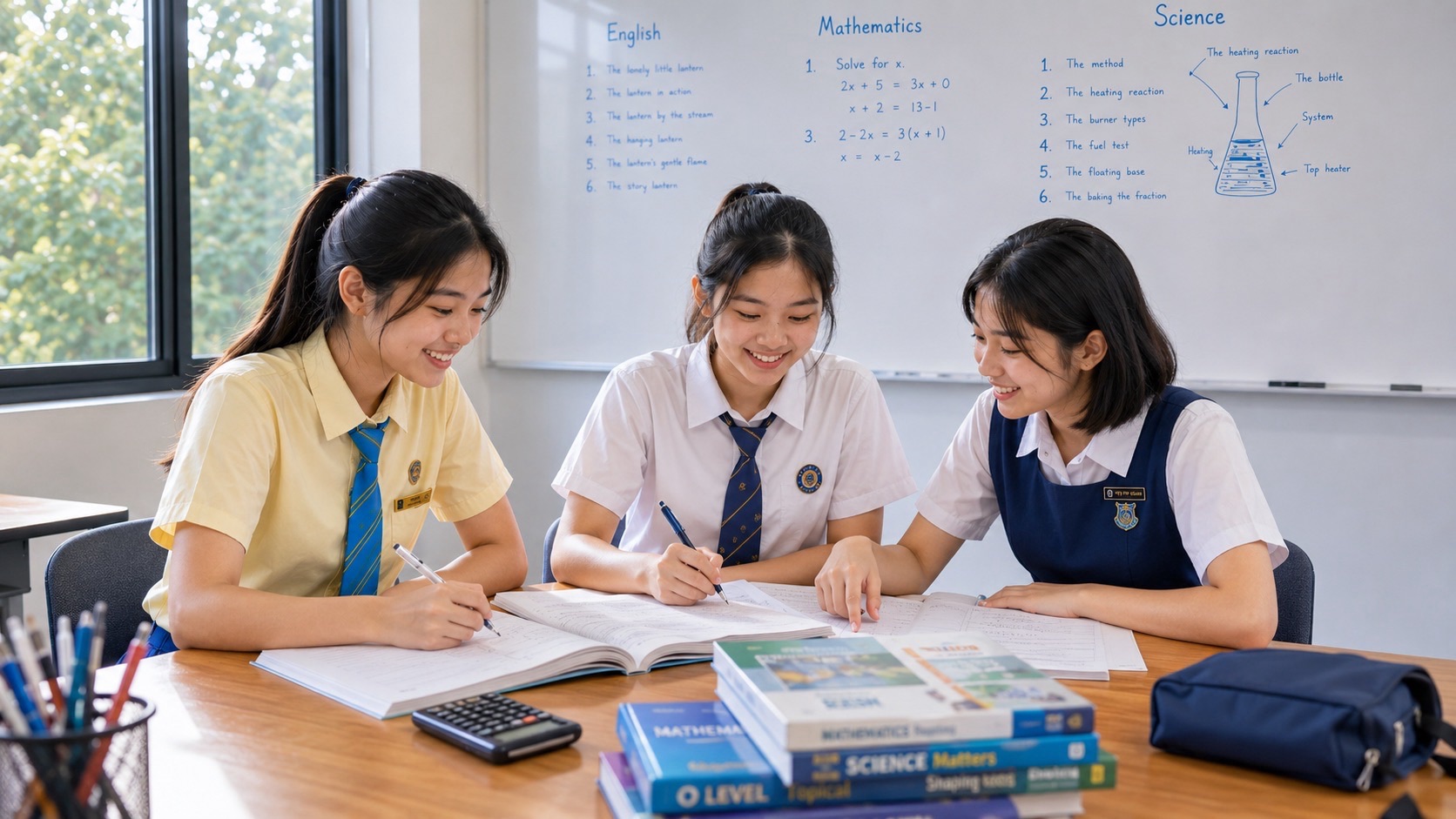
Punggol Science Tuition should help students manage Science exam anxiety by making the examination feel more predictable in process, even when the questions themselves are unfamiliar. Students often become anxious not only because the content is difficult, but because they are unsure how much they remember, how to start a hard question, how long to spend and what to do if their first method fails.
The core aim of supporting Science exam anxiety in Punggol tuition is to replace uncertainty with tested routines. Retrieval, paper navigation, time management, error analysis and recovery strategies can give students something concrete to do under pressure. Tuition cannot guarantee that a student will never feel nervous, and normal pre-exam stress may still occur. What it can do is make the learner more prepared, more familiar with the process and less dependent on everything going perfectly.
Explore related Science learning guides and choose your next reading step.
Exam Anxiety Is Not Always a Knowledge Problem
A student may know the Science and still feel unsettled by time pressure, unfamiliar wording or memories of a poor previous paper.
Another student may feel anxious because preparation is genuinely incomplete.
Tuition should distinguish the preparation problem from the performance-under-pressure problem.
The Core Aim: Make the Process Familiar
Students cannot control the exact questions that appear.
They can control how they prepare, how they begin, how they check and how they respond when they get stuck.
Familiar routines reduce the number of decisions that need to be made under pressure.
Retrieval Builds Evidence of Readiness
Students feel more secure when they can recall old concepts without notes.
Short mixed retrieval gives concrete evidence that knowledge is available.
See Science Retrieval Practice.
Past Papers Build Familiarity With the Exam Environment
Past-paper practice can reduce uncertainty about pacing, question styles and paper navigation.
It should be introduced progressively rather than used as constant high-pressure testing.
See Science Past Papers.
Time Management Reduces Panic
Students often become more anxious when they do not know whether they are spending too long on one question.
A clear first-pass, second-pass and checking routine can reduce that uncertainty.
A Hard Question Should Not Define the Whole Paper
Students need a release rule.
If a question is not moving after a sensible attempt, leave useful working, mark it and continue.
Returning later is strategic, not failure.
Confidence Should Come From Recovery
A student who has practised getting stuck and recovering is often more stable than a student who expects every question to feel easy.
See Science Confidence.
Preparation Should Reduce Last-Minute Uncertainty
A realistic study plan can prevent the final week from becoming a desperate attempt to review everything.
See Science Study Plan.
Do Not Make Every Tuition Lesson Feel Like an Exam
Constant timed testing can increase pressure without improving understanding.
Tuition should cycle through learning, retrieval, mixed application, timed practice and correction.
A balanced rhythm prepares the student while preserving deep learning.
Primary Students Need Calm Familiarity
Young learners benefit from short practice sections, predictable routines and clear correction.
The aim is to make Science tests feel like a familiar task rather than a dramatic event.
Primary 6 Students Need a Gradual PSLE Runway
Full-paper practice should increase gradually as the year progresses.
The child should already know how to manage MCQ, open-ended questions, data and checking before repeated full simulations begin.
Secondary Students Need Subject-Specific Routines
Physics, Chemistry and Biology can create different pressure points.
One student may fear calculations, another practical questions, another long explanations.
Practice should target the actual trigger.
Do Not Call Every Nervous Feeling a Problem
Feeling some tension before an important assessment can be normal.
The useful question is whether the student can still begin, think and use their routines.
If distress is persistent, severe or significantly interferes with daily life, families should consider seeking appropriate support from the school or a qualified health professional.
Use Short Simulations Before Full Papers
Timed sections are often a better starting point than full papers for students who feel overwhelmed.
Once the routine becomes familiar, the simulation can expand.
Practice the First Five Minutes of the Paper
Students can rehearse how they settle, read instructions and begin.
A familiar opening routine reduces uncertainty at the moment the paper starts.
Practice Recovery From a Blank Moment
If recall suddenly fails, the student can write what is known, draw a diagram, identify the model or move on temporarily.
Having a plan for a blank moment makes that possibility less frightening.
Use Personal Checking Lists
Checking becomes easier when the student knows their recurring risks.
- Units.
- Graph scale.
- Missing subpart.
- Incomplete comparison.
- Scientific term.
- Unanswered question.
A short checklist is more calming than random rereading.
Error Analysis Prevents Fear From Becoming Vague
After a bad test, classify what happened.
Specific errors can be repaired. A vague conclusion such as “I always fail Science” cannot.
Model Answers Should Not Become a Source of Pressure
Students can feel inadequate when their own wording does not match a polished model exactly.
Teach the scientific relationship and valid alternative wording.
Parents Can Help by Asking Process Questions
- “What part of the paper feels most uncertain?”
- “What is your plan if one question is hard?”
- “Which old topics are now stable?”
- “What are your top two checking risks?”
- “What is the next concrete repair?”
Process questions are usually more useful than repeated reminders about the final grade.
The Final Week Should Be Familiar
Use short retrieval, selected timed sections, error-map review and normal routines.
Avoid introducing a completely new study system in the final days.
Familiarity supports steadier performance.
The Night Before Should Not Carry the Whole Syllabus
If the plan has worked, the night before is for light consolidation and preparation rather than rescuing months of work.
Protecting sleep is part of exam readiness.
A Science Exam-Anxiety Routine
- Retrieve a few known concepts successfully.
- Review the personal checking list.
- Practise one timed section.
- Rehearse strategic release.
- Finish with one correction that has been successfully retested.
The goal is to remind the student of a working system.
How the eduKate Ecosystem Connects
For the broad final-year route, use Science Exam Preparation.
For students rebuilding after setbacks, use Science Tuition for Struggling Students.
Frequently Asked Questions
How can Science tuition help with exam anxiety?
By making preparation and paper routines more predictable through retrieval, timed practice, error analysis, checking and recovery strategies.
Should anxious students do more full papers?
Not automatically. Timed sections and targeted practice may be better until the student can use the routines calmly.
What should students do if they go blank in the exam?
Write what is known, identify the model or draw a useful representation, and move on strategically if necessary before returning later.
When should families seek extra support?
If distress is severe, persistent or significantly interferes with daily functioning, families should consider support from the school or a qualified health professional.
The Core Aim, in One Sentence
The core aim of supporting Science exam anxiety in Punggol tuition is to replace uncertainty with tested routines so students know what to do before the paper, during a difficult question and after a mistake.
The goal is not to promise zero nerves. It is to make sure nerves do not remove the student’s access to the Science they have learned.


