
Advanced English is not only about reading paragraphs and writing essays. Modern communication moves across text, tables, charts, images, captions, diagrams and speech. A strong Punggol student should be able to recognise the same underlying idea when its representation changes.
The deeper skill is meaning preservation: understand the information, change the format and keep the important relationship intact.
Representation changes the surface, not necessarily the idea
One idea can appear in many forms.
A written paragraph may explain that park usage increased. A table may show the numbers. A chart may make the trend visible. A photograph may show the space in use. A speaker may summarise the change aloud.
Each representation highlights something different.
Text gives relationships in words
Text is good for explaining cause, qualification, sequence and interpretation.
It can tell the reader not only that something changed, but why the writer thinks it changed and what limits apply.
Tables give exact values
Tables are useful when exact categories and numbers matter.
Students should learn to read headings, units, row labels and totals before drawing conclusions.
A table can support a claim, but the reader still has to interpret what the values mean.
Charts reveal patterns quickly
Charts often make comparison and trend easier to see than a paragraph of numbers.
Students should look for:
- overall direction;
- largest differences;
- peaks and dips;
- outliers;
- changes over time;
- what the chart does not show.
Images provide evidence, but images need interpretation
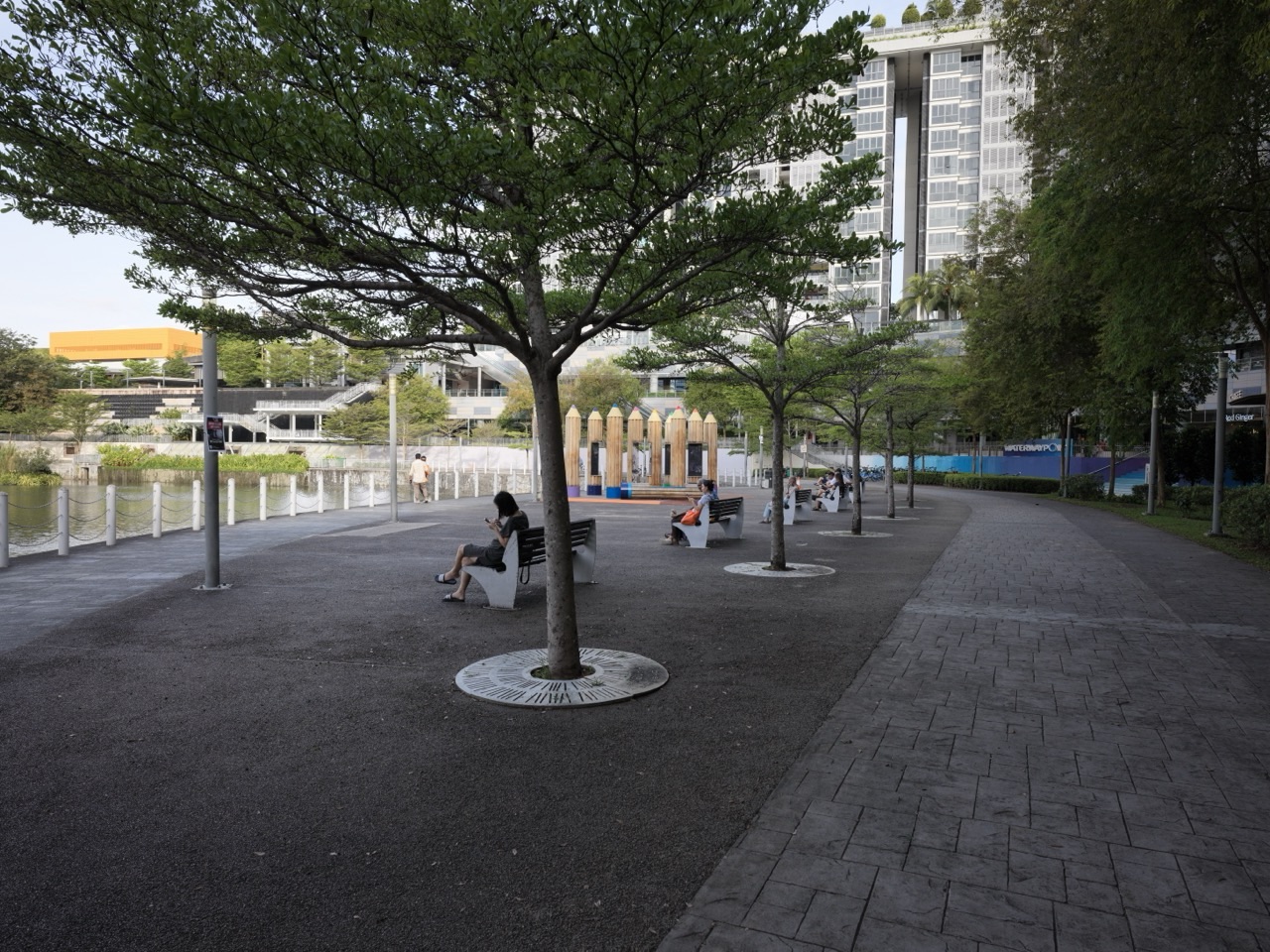
A photograph can show visible conditions, objects, people and spatial relationships. It cannot automatically prove the cause behind what is shown.
A crowded-looking path in one photograph does not prove the path is always crowded.
Advanced English requires students to distinguish observation from inference.
Captions frame images
A caption can direct the reader toward one interpretation.
“Families enjoying the Waterway” and “Crowds filling the Waterway” may describe the same image differently.
The image has not changed. The framing has.
The Reading Between the Lines route helps students analyse this effect.
Speech carries meaning through timing and emphasis
Spoken communication includes pace, stress, pause and intonation. These features can signal importance, uncertainty, contrast or emotion.
A spoken explanation may contain the same core information as a paragraph while organising it differently for listeners.
The representation shift is a comprehension test
If a student truly understands an idea, they should often be able to move it into another form.
For example:
- paragraph → three bullet points;
- table → one comparison sentence;
- chart → short oral explanation;
- image → neutral observation plus justified inference;
- speech → written summary.
The translation reveals whether the learner understands the structure or only recognises the original surface.
Compression changes with representation
A chart compresses numbers visually. A table compresses categories. A summary compresses words. An image compresses a scene.
Each form leaves some information visible and hides other information.
Advanced readers ask what was gained and what was lost during the representation change.
Multimodal questions need integration
Modern texts often combine several modes at once: paragraph, graph, image and caption.
Students should not read each element separately and stop there. They need to connect them.
Does the chart support the paragraph? Does the caption add information? Does the image merely illustrate, or does it provide evidence?
One representation can correct another
Sometimes a graph makes a vague written statement more precise. Sometimes a paragraph explains why a chart changes. Sometimes a caption reveals that an image is from a specific time or place.
Strong comprehension uses the representations together.
Representation choice is also a writing decision
Good communicators choose the form that makes the information easiest to understand.
If exact numbers matter, a table may be better than a paragraph. If the trend matters, a chart may be better. If explanation matters, prose may be necessary.
English includes selecting the right communication form, not only producing sentences.
FENCE™ applies across representations
eduKateSG’s FENCE™ English Learning System helps students ask what information belongs inside the answer, regardless of format.
A chart may contain five trends, but the question may ask for one comparison. An image may contain many visible details, but the task may ask only about accessibility.
The representation is broad. The answer route is narrow.
A Punggol Waterway multimodal exercise
Use one Punggol Waterway photograph together with a short description and a simple table of visitor counts.
Students can practise:
- describing only what the image shows;
- reading the exact values in the table;
- summarising the trend;
- comparing the visual impression with the numerical data;
- writing one careful conclusion that uses both sources.
The representation audit
- What is the core idea?
- What information is visible in this representation?
- What information is missing?
- What does another representation add?
- What can be concluded safely?
- What would become distorted if I translated it badly?
A weekly representation routine
- Take one short article with a chart or image.
- Explain the article in one sentence.
- Explain the chart in one sentence.
- Explain the image in one neutral sentence.
- Combine all three into one short paragraph.
- Give the same explanation aloud.
- Check whether any claim became stronger during translation.
How three-student tuition helps multimodal literacy
One student may focus on the image, another on the numbers and another on the prose. Comparing their interpretations makes the strengths and limitations of each representation visible.
The tutor can then train integration rather than isolated reading.
Signs representation flexibility is improving
- The student can explain charts without simply reading labels aloud.
- Images are described before they are interpreted.
- Tables are checked for units and headings.
- Captions are treated as framing information.
- Information can be translated across formats.
- Claims remain calibrated when the format changes.
- The student chooses communication forms more deliberately.
Continue the Punggol Advanced English journey
Continue through the wider eduKate ecosystem
- How English Works
- Vocabulary by eduKateSG
- FENCE™ English Learning System
- English Tuition at eduKatePunggol
Advanced English is flexible enough to move across representations. A student who can carry one idea accurately from text to table, chart, image and speech is not merely reading formats. They are controlling meaning across formats.
Browse more learning guides
Use the Punggol English article index to find another topic, or return to Learning Routes to choose a subject or school-year guide.


