
Advanced English becomes easier when students stop seeing every sentence, passage and writing task as a completely new problem. Strong Punggol students gradually learn to notice the deeper language pattern underneath the surface example.
A concrete example may be one paragraph, one sentence or one comprehension question. The advanced skill is to ask: what structure is operating here, and where else can I use it?
This is the move from example to pattern, from pattern to principle, and from principle to transfer.
Concrete examples are where learning starts
Examples are useful because language is easier to understand when students can see it doing real work. A student can observe how a paragraph develops an idea, how a connector changes direction or how a writer signals uncertainty.
At this stage, the example reduces abstraction. The student does not need to hold a rule in the air. They can point to the exact words and see the relationship.
The danger is staying trapped in the example
A student can become very good at one practised example without understanding the transferable pattern.
They may know how to answer one inference question because the wording is familiar, or reproduce one essay paragraph because the topic has been rehearsed. Then the next task looks different and the skill disappears.
That tells us the surface was learned, but the structure underneath was not yet clear.
Pattern 1: cause and effect
A student may first meet cause and effect through one sentence: “Because the rain continued, the match was postponed.”
The deeper pattern is not the word “because”. It is a relationship: one condition contributes to another outcome.
That same pattern can appear through “therefore”, “as a result”, “led to”, “resulted in”, “contributed to” or even across two sentences without an obvious connector.
Strong readers see the relationship even when the surface changes.
Pattern 2: contrast and qualification
Students often memorise connectors such as “however” and “although”. Advanced English asks them to see the logic underneath: two ideas are being held together, but they do not point in the same direction.
Once the pattern is understood, the student can recognise contrast through “whereas”, “despite”, “nevertheless”, “yet” or a change in tone.
The same pattern then becomes usable in writing and oral argument.
Pattern 3: claim → evidence → explanation
A strong paragraph often has an underlying architecture even when the sentences look different.
- State the central claim.
- Provide evidence, an example or a reason.
- Explain why the support matters.
- Connect back to the larger question.
Students who see this pattern can rebuild it on many topics instead of memorising one “perfect paragraph”.
Pattern 4: reference chains
Pronouns and repeated nouns create chains through a text. “The committee”, “it”, “the group” and “its members” may all refer to connected entities.
A student who reads only sentence by sentence may lose track. A student who sees the reference pattern follows meaning across the whole paragraph.
This is one reason the Discourse Markers and Connectors and wider reading routes matter: they make invisible links visible.
Pattern 5: problem → response → consequence
Many informational texts are organised around a problem, a proposed response and its consequences. This structure appears in environmental articles, education debates, public policy, technology and health writing.
Once students recognise the structure, they can read faster because they know what kind of information to look for.
They can also reuse the architecture in explanatory and argumentative writing.
From concrete vocabulary to abstract meaning families
Vocabulary learning improves when students move beyond individual words and notice meaning families.
For example, “suggests”, “indicates”, “supports”, “confirms” and “proves” belong to an evidence-strength family. “However”, “whereas”, “despite” and “nevertheless” belong to a contrast family.
The wider eduKateSG Vocabulary ecosystem uses these networks because connected words are easier to understand, retrieve and use.
From sentence examples to grammar principles
Grammar becomes more transferable when students understand the relationship being controlled.
Instead of memorising that one sentence uses “although”, the learner notices that the sentence contains concession: something remains true despite another fact.
Once the concept is clear, the student can express concession in several ways and recognise it in unfamiliar reading.
From model essays to writing architecture
The Independence Shift becomes much easier when students stop copying surfaces and start extracting structure.
A model essay is most useful when the student can answer: What is the introduction doing? What job does paragraph two perform? Where is the example? Where does the writer qualify the claim? How does the ending synthesise the argument?
The structure can then be rebuilt on a completely new topic.
From one comprehension question to a question family
Students should learn to classify questions by the work they require rather than by exact wording.
- direct retrieval;
- synthesis across locations;
- inference from evidence;
- tone or language effect;
- comparison;
- cause and consequence;
- summary and scope control.
The surface wording changes. The answer job remains recognisable.
The abstraction ladder
- See: study a concrete example.
- Name: describe what the example is doing.
- Compare: find another example with the same underlying relationship.
- Abstract: state the general principle.
- Transfer: use the principle in a fresh task.
- Verify: check that the principle really fits the new context.
This is one of the clearest routes from beginner dependence to Advanced English independence.
Why FENCE™ is important at the abstract level
A general principle can become overused. Not every paragraph needs the same structure, and not every question needs the same evidence pattern.
eduKateSG’s FENCE™ English Learning System helps students decide whether a pattern belongs inside this particular task.
Abstraction gives the student options. FENCE™ keeps those options relevant.
How real Punggol examples can help
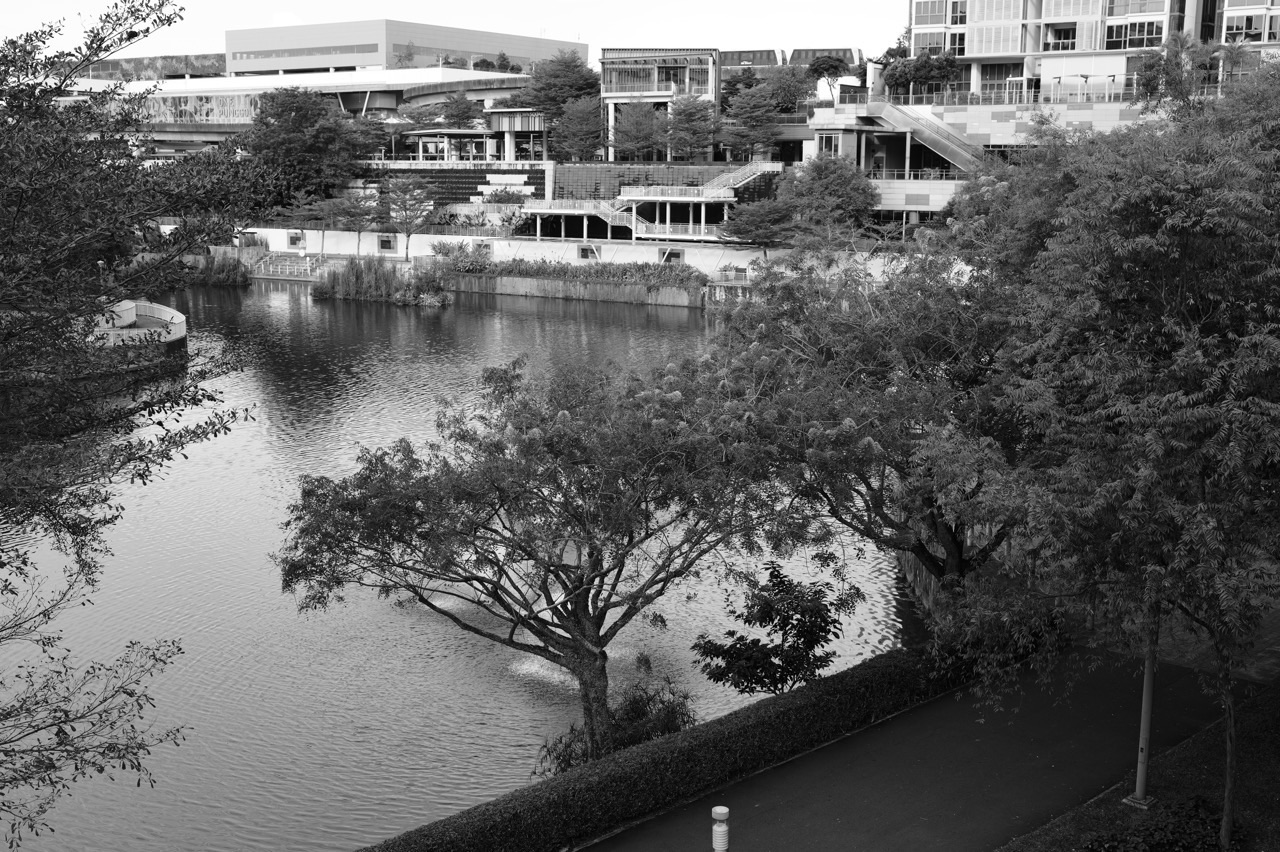
The environment around Punggol offers plenty of concrete material for language learning: the Waterway, transport connections, parks, housing, schools, community spaces and changing town infrastructure.
A student can begin with something visible — a path beside the waterway, a transport interchange, a new development — and practise moving from observation to description, from description to explanation, and from explanation to a broader idea about planning, community or environment.
Concrete local knowledge becomes a bridge into abstract language.
A weekly pattern-finding routine
- Read one short text.
- Find one useful sentence or paragraph.
- Name the relationship or structure.
- Find a second example that uses the same pattern differently.
- Write a fresh example on another topic.
- Explain what stayed constant and what changed.
The exercise can be brief. The important part is seeing beyond the surface.
How three-student tuition helps abstraction
Three students often notice different surface features in the same text. The tutor can use those differences to ask a deeper question: what do all three successful interpretations share?
That comparison helps students see the common structure and reduces dependence on one memorised answer.
Signs a student is seeing structure
- They can explain why a sentence works.
- They recognise familiar relationships in unfamiliar texts.
- They use writing structures on new topics.
- They classify questions by the job required.
- They transfer vocabulary families across contexts.
- They need fewer exact templates.
- They can describe what stayed constant when the surface changed.
Continue the Punggol Advanced English journey
Continue through the wider eduKate ecosystem
- How English Works
- Vocabulary by eduKateSG
- FENCE™ English Learning System
- English Tuition at eduKatePunggol
Concrete examples make English visible. Abstract patterns make English portable. Strong students learn to move between both: see the example, identify the structure, rebuild it somewhere new and check that it still fits. That is how Advanced English becomes a system rather than a collection of tricks.


