
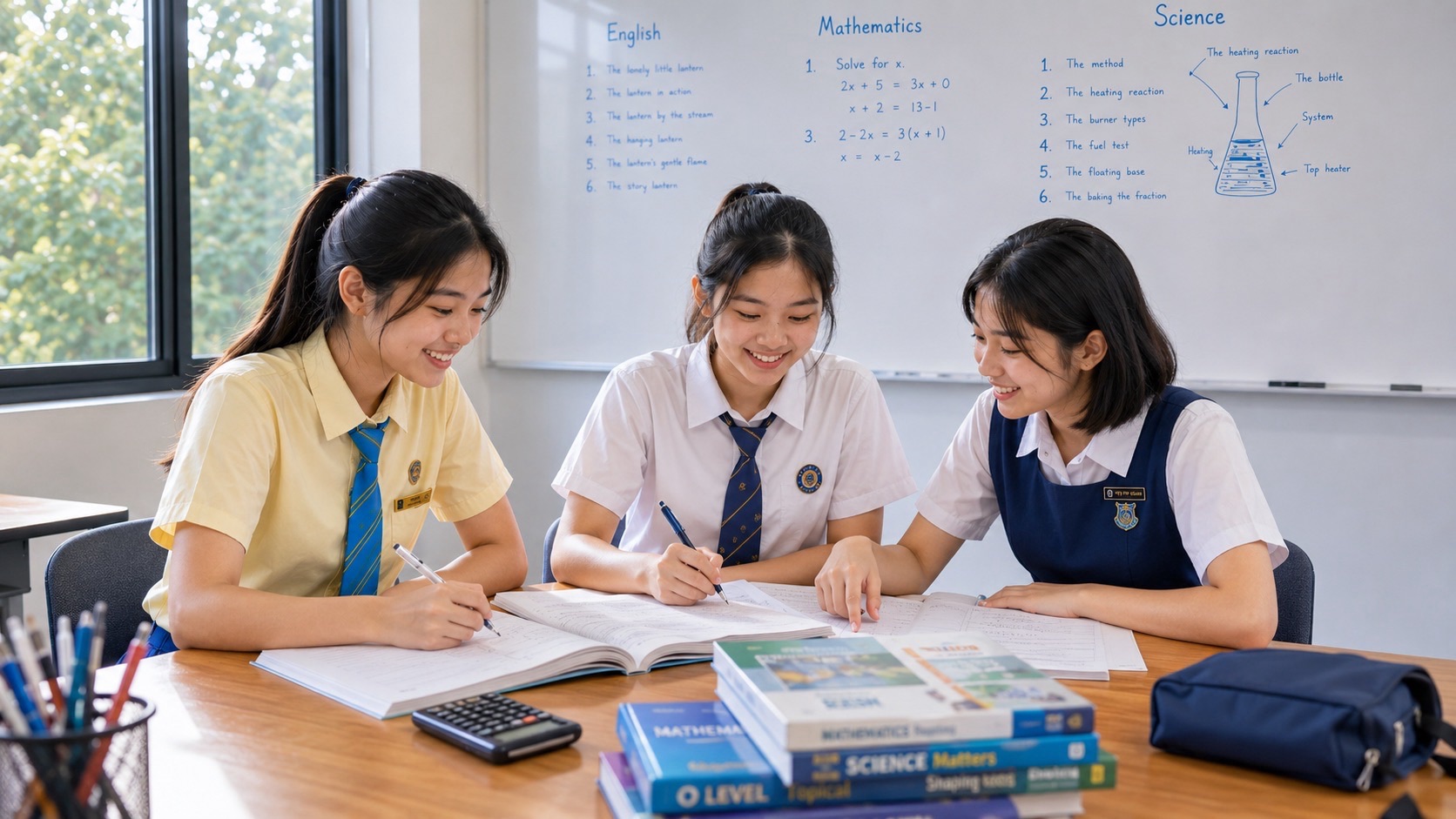
Education in Punggol can look like a sequence of bells, chapters, homework, CCAs and tests. A student can move through all of them, collect grades and still miss part of what school was meant to build. The stronger instruction is simple: use school; do not merely pass through it.
This is a student-facing idea. School provides teachers, subjects, deadlines, feedback, peers, facilities and repeated opportunities to practise under constraint. Those structures are temporary. The goal is to extract as much portable capability as possible before the structure becomes less available.
For a child growing up in Punggol, where school, tuition, library, transport and future institutions such as SIT and Punggol Digital District sit increasingly close together, the useful question is not only “What do I have to finish today?” It is “What can I learn to operate for myself?”
Use lessons to build understanding, not only notes
A lesson is valuable when something inside your model changes. You notice a relationship you did not see before. You can explain why a method works. You recognise a misconception that used to control your answer.
Copying complete notes can help memory, but the deeper test is whether you can reconstruct the idea later without the teacher beside you.
Use homework to make thinking visible
Homework is not only a compliance task. It is a place where you can discover which parts survive outside the lesson.
- Where did you start without difficulty?
- Where did you need to look back?
- Which question took too long?
- Which mistake repeated?
- Which method worked on one question but failed on another?
That information is useful to a teacher or tutor because it shows what kind of help is actually needed.
Use tests as measurement windows
A test is not your identity. It is a constrained sample of performance. Use it to see what remained accessible under time pressure and what did not.
The local article A Test Is a Snapshot — Education Is a Longer Film explains how to read marks without making them meaningless or absolute.
Use teachers as access to expert thinking
A teacher is more than a person who gives instructions and grades work. Good questions let you access how an experienced person sees the subject.
Instead of “Is this correct?”, try “Why does this method work here but not there?” Instead of “What is the answer?”, ask “What should I notice first?” The question you ask changes the quality of help you receive.
Use classmates to encounter other ways of thinking
Another student may represent the same problem differently, notice a detail you missed or explain an idea in language closer to your own.
Collaboration does not mean copying. It means comparing models and becoming more aware of your own.
Use CCAs to practise commitment under real conditions
CCAs can teach what happens when other people depend on you to arrive, prepare and continue after a poor performance. The feedback is social and immediate.
Use that environment to learn recovery, teamwork and identity. The existing What CCAs Teach That Classrooms Cannot page develops the route further.
Use tuition as a tool, not a replacement operating system
A tutor should help you see what you cannot yet see, practise what is unstable and become more independent. The goal is not to create a second school that carries every step for you.
Ask what the tuition is repairing. Is it knowledge, method, language, pace, examination control or learning independence? If nobody can name the job, more worksheets may simply add weight.
Use AI without disappearing from your own learning
AI can explain, compare, generate practice and provide alternatives. It can also make it easy to produce work that looks finished before your own understanding exists.
Stay present. Attempt first when appropriate. Compare the AI explanation with your own. Check sources. Ask why. Correct the output. Make sure the final answer contains thinking you could defend without the tool open beside you.
Use school to discover how you learn
Notice your own patterns. Do you understand while reading but forget after two days? Do you rush at the same step? Do you need a diagram before symbols make sense? Do you avoid starting when the first move is unclear?
Self-knowledge is one of the most portable things school can give you because later learning will not always come with a teacher who already knows how you work.
A weekly student audit
- What did I understand this week that I did not understand before?
- What mistake repeated?
- What can I now do with less help?
- What do I still need to ask someone?
- Which habit made the week easier?
- Which task taught me something beyond the task itself?
The quiet standard
School will eventually end. The timetable, teachers and exact examinations change. What should remain is a stronger internal system.
Use school while it is available. Extract knowledge, methods, judgement, relationships and learning habits from the structure around you. Do not merely pass through it.


