
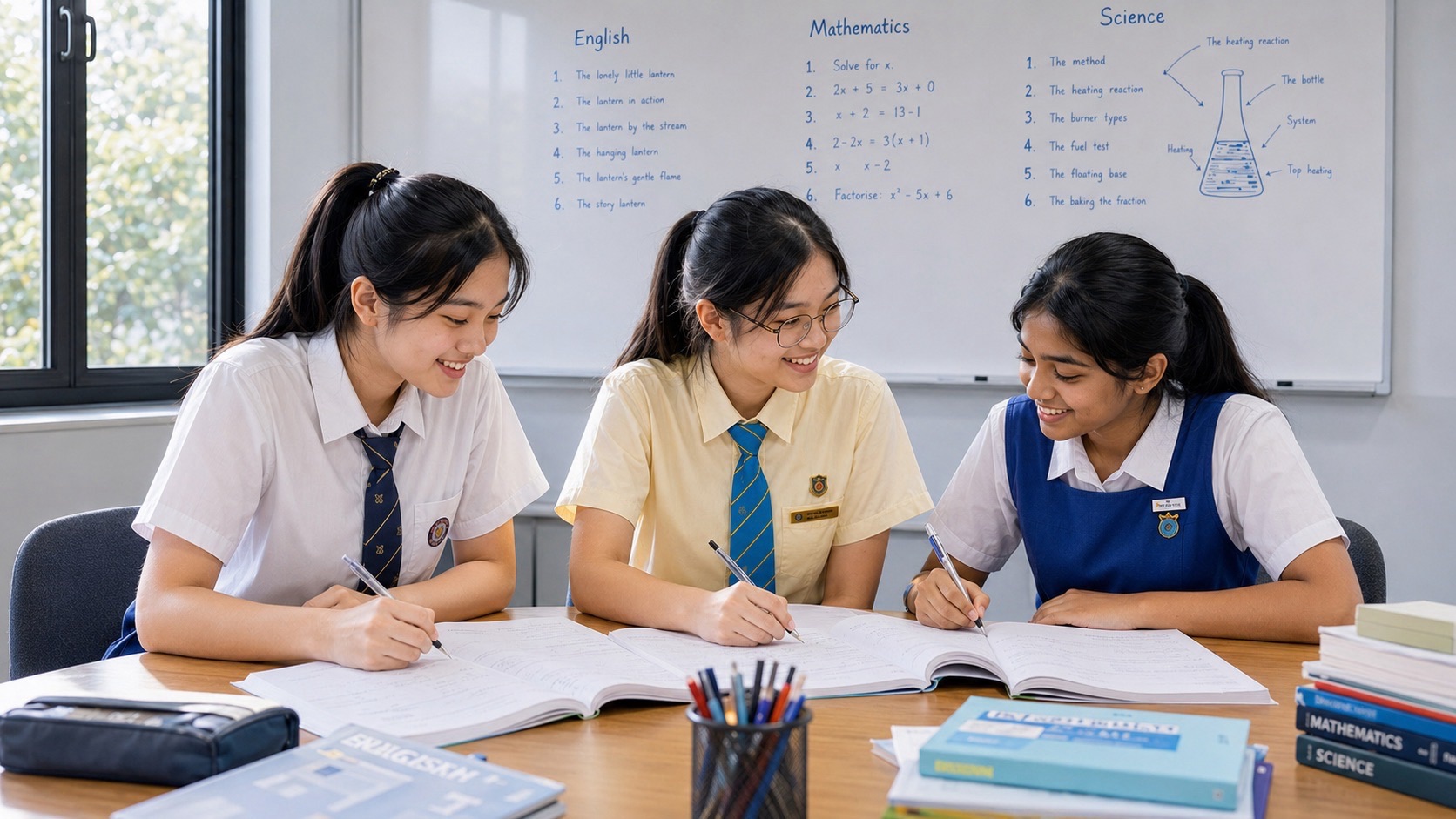
Education in Punggol often becomes a project of prevention. Parents remember forms, check homework, pack spare items, monitor deadlines, arrange tuition and step in before a mistake becomes visible. Much of this support is useful. But if every small failure is prevented, children lose opportunities to practise recovery.
For families moving through Punggol schools, Punggol tuition, PSLE and Secondary school, safe failure is an educational tool. The idea is not to expose children to avoidable harm. It is to allow small, recoverable consequences to teach what repeated reminders cannot.
The key word is safe. Adults remain responsible for judging which mistakes are developmentally useful and which are too costly.
1. Failure Gives Information
A forgotten worksheet reveals whether the child has a reliable packing system. A rushed project reveals whether time was planned realistically. A weak test reveals whether revision matched the actual demand.
If adults erase the consequence immediately, the information may never become meaningful to the child.
2. Not Every Mistake Needs Rescue
Parents can ask three questions before intervening: Is the child safe? Is the consequence proportionate? Can the child repair the situation?
If the answer is yes, waiting may be more educational than rescuing.
3. Natural Consequences Teach Better Than Manufactured Punishment
If a child forgets to pack a non-essential item, experiencing the inconvenience may be enough. Adding a large unrelated punishment can obscure the lesson.
The clean educational sequence is mistake, consequence, repair, better system.
4. Recovery Is the Skill We Actually Want
Adults cannot guarantee a mistake-free future. A stronger goal is to develop a young person who can notice the mistake, stay calm, communicate, repair what can be repaired and learn from the event.
That capability matters far beyond examinations.
5. Academic Failure Can Be Kept Local
A poor mark should describe a performance, not a person. “This method failed under these conditions” is more useful than “I am bad at Maths.”
Parents can help children keep a local problem local by asking what specifically happened.
6. Small Deadlines Are Good Practice
A forgotten low-stakes deadline may teach planning more effectively than a parent’s tenth reminder. The important step comes afterward: what cue or calendar change would prevent recurrence?
7. Do Not Use Major Examinations as Practice for Basic Organisation
Some failures are too expensive. Adults should intervene when the consequence is disproportionate, unsafe or difficult to reverse.
Children should practise organisation on ordinary school days, not learn it for the first time during a major examination.
8. Tuition Can Hide Failure Too Well
A tutor may be able to rescue every difficult question before the student experiences the full consequence of not knowing how to start. This can make lessons feel successful while independence remains weak.
Good support sometimes needs to pause long enough for the learner to experience being stuck and then practise recovery.
9. Avoid the Shame Layer
A natural consequence already contains information. Shame adds noise. “You always do this” converts one mistake into an identity claim.
Keep the discussion attached to the event and the next system change.
10. Parents Can Model Repair
Adults forget appointments, misjudge travel time and make poor decisions too. Saying, “I got that wrong; here is how I’m fixing it,” teaches that competence includes repair.
11. Strong Students Need Safe Failure
High-performing students may avoid unfamiliar problems because they are accustomed to success. A safe environment in which difficult work can go badly is important for intellectual growth.
The child learns that temporary failure does not threaten identity.
12. Struggling Students Need Bounded Failure
A child who already experiences repeated academic difficulty does not need endless exposure to defeat. The challenge should be calibrated so that effort can still produce visible progress.
Safe failure is useful only when recovery remains plausible.
13. Ask Four Recovery Questions
- What happened?
- What part was under your control?
- What can be repaired now?
- What system change should happen before next time?
14. Independence Requires Adults to Tolerate Imperfection
Children will often manage tasks less efficiently than adults. If parents reclaim control every time the child’s version is slower, ownership never fully transfers.
Some mess is the cost of learning how to manage oneself.
15. Education in Punggol Should Produce Better Recovery, Not Just Fewer Mistakes
A well-supported child should not emerge believing that capable people never fail. The stronger lesson is that capable people notice, diagnose, repair and improve.
That is why small, safe failures belong inside a serious education. They teach the child what to do after the plan breaks.
Continue Through eduKatePunggol
- Contents & Learning Routes
- The Responsibility Handover
- Teach a Child to Ask for Help
- The Family Recovery System
Explore the Punggol education and town-life library for related guides.


