
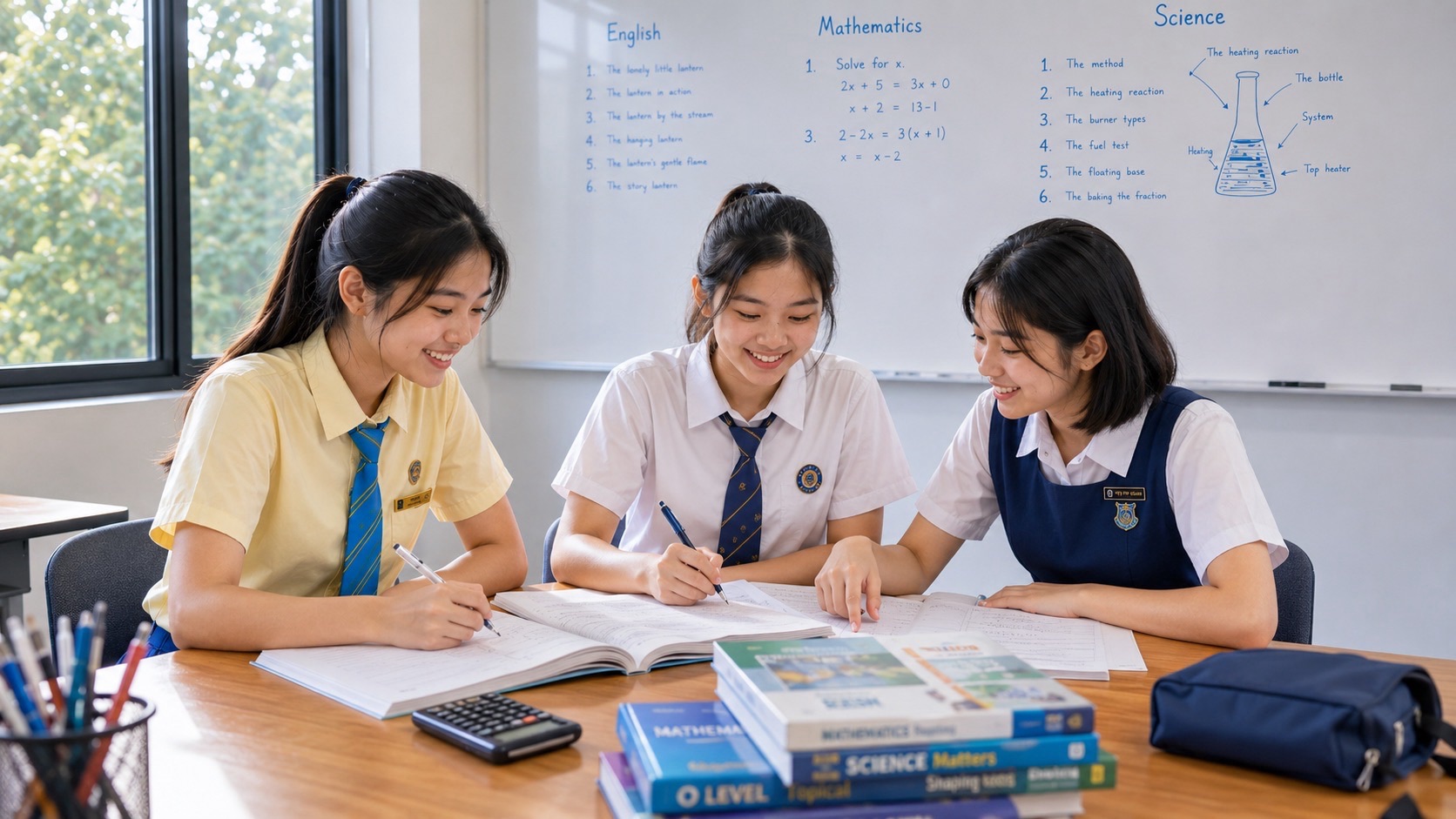
Education in Punggol becomes easier to evaluate when families ask what tuition is supposed to leave behind. The strongest outcome is not permanent dependence on a tutor. It is a stronger internal learning system inside the student.
That internal system is the child becoming better able to notice a problem, begin work, retrieve knowledge, choose a strategy, check an answer, recover from an error and seek the right kind of help when necessary.
For parents choosing or continuing tuition in Punggol, this gives a practical standard. A good programme should not merely make the child perform better while the tutor is present. Over time, it should make the tutor less central to the same class of learning problem.
The tutor initially carries more of the system
Early support may need to be explicit. The tutor identifies the weak link, explains the concept, chooses the practice sequence, provides prompts and helps the child interpret mistakes.
This is not dependence by itself. Scaffolding is useful when it allows the learner to perform work they cannot yet manage alone.
The test is whether the scaffolding can migrate inward
Over time, the tutor’s questions should become the student’s questions.
- “What is the question really asking?”
- “Which information matters?”
- “What method fits this structure?”
- “Does this answer make sense?”
- “Where did the first error occur?”
- “What should I try next?”
When the child begins asking these internally, tuition has installed part of the learning process rather than merely supplied answers.
The internal system has six operating functions
| Function | Student capability |
|---|---|
| Diagnosis | Can identify what is confusing or weak |
| Start | Can begin without waiting for a prompt |
| Method | Can select or build a reasonable strategy |
| Monitoring | Can notice when work stops making sense |
| Repair | Can use feedback to change the next attempt |
| Transfer | Can use the capability in a fresh context |
Marks can improve before the internal system improves
A tutor can help a child produce better work quickly through close guidance, carefully matched worksheets and immediate correction. That can be useful during recovery.
But parents should also watch whether the learner becomes more independent. The existing How Parents Can Tell Tuition Is Working article treats independence as part of the evidence trail.
Good help should become more precise, not simply more frequent
When the child gets stuck, the tutor should not automatically take over the whole problem. The smallest useful prompt often teaches more.
Ask for the first restart: identify the clue, draw the representation, recall the relevant rule or reread the sentence. The learner should carry as much of the remaining route as possible.
A strong internal system also knows when to ask for help
Independence is not isolation. Adults ask for help too. The difference is that a capable learner can bring a defined problem instead of handing over the entire task.
“I do not understand why the denominator changes here” is a stronger help request than “I cannot do fractions.” The first keeps ownership with the learner.
The family should see support fading in ordinary work
Progress may appear as fewer reminders, faster starts, better questions, less re-teaching, more accurate self-checking and smaller corrections after mistakes.
These changes can arrive before a dramatic mark jump. They matter because they reduce the cost of future learning.
Tuition should return the learner to school, not create a parallel dependency
The real environment is still the child’s school work and later independent life. A tuition method is valuable when it transfers back into those settings.
If the student performs only inside the tutor’s exact format, the capability has not travelled far enough.
A parent audit for internalisation
- Can the child begin more often without adult prompting?
- Can they explain what kind of help they need?
- Do corrections change later fresh work?
- Can they check their own answers more effectively?
- Does old material need less re-teaching?
- Can they use the skill in school as well as tuition?
The quiet standard
Tuition is strongest when it leaves behind more than completed worksheets and better short-term performance.
The deeper outcome is a student who carries more of the learning process inside themselves. The tutor remains valuable, but the learner becomes increasingly capable of moving without being carried.
Continue through A Finished Page Is Not Necessarily a Learned Idea, The Responsibility Handover and the eduKatePunggol Atlas.
Explore the Punggol Education & Town-Life reading library for related guides.


