
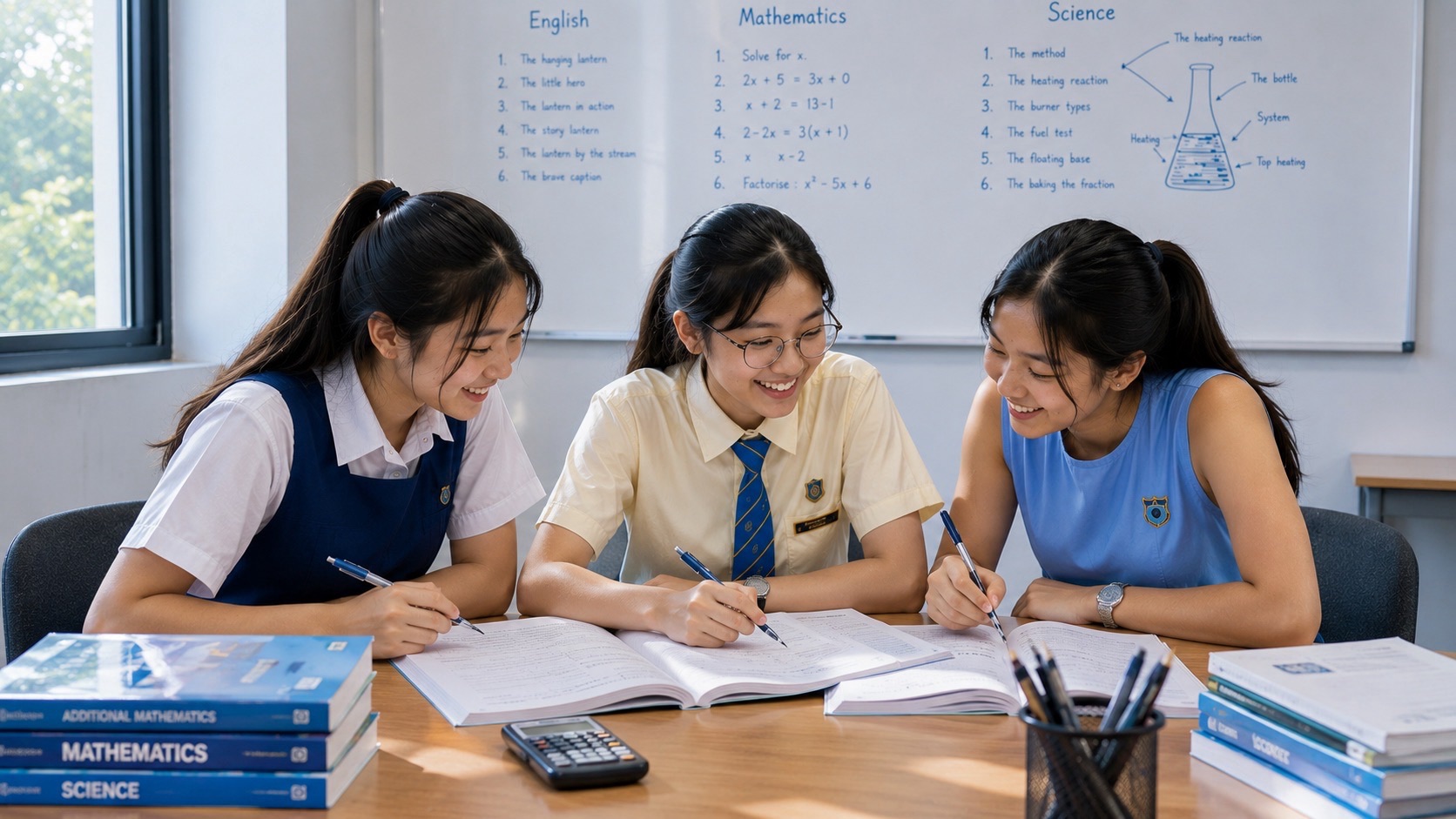
A worksheet has a next question.
A training system should have a next decision.
Those are not the same thing.
Mira answers correctly but needs three prompts.
Jonas answers incorrectly but explains the right principle.
Nadia answers correctly, quickly and without help on a new representation.
If all three simply receive Question 8 because Question 7 is finished, the sequence is administrative.
If each response changes what happens next, the sequence becomes adaptive.
Training branching is the deliberate use of the learner’s current response as evidence for choosing the next instructional action.
The branch may lead to another example.
A smaller task.
A contrast pair.
A cue.
A fresh reattempt.
A harder variation.
Or an exit from active practice.
Quick Read: Response → Interpretation → Next Move
Attempt → Observe → Classify the State → Choose the Next Branch → Reattempt → Update
A useful branch table looks like this:
- Wrong + no model: explain or use a worked example.
- Wrong + partly correct model: isolate the first weak step and repair.
- Correct + heavy prompting: reduce support and retest.
- Correct + slow: stabilise or build fluency.
- Correct + fast + familiar: vary the surface.
- Correct + varied: recombine or transfer.
- Stable across delay: move to maintenance or exit.
The point is not to build a complicated flowchart for every lesson.
The point is to stop pretending that the same next task is equally useful after every learner response.
Branching Is Different From Differentiation
Differentiation often means learners receive different materials or support based on known needs.
Branching is more local and dynamic.
The branch can change within five minutes because the learner’s latest attempt changes the evidence.
Mira may begin the session needing a worked example, then move to partial completion, then independent practice, then transfer—all inside one topic.
Training branching therefore operates at the level of the next instructional decision.
Branching Is Different From Progression
Training Progression asks when difficulty, speed, variation or independence should increase.
Branching asks which direction is justified by the latest evidence.
Sometimes the correct branch is forward.
Sometimes it is sideways into contrast.
Sometimes backward into a prerequisite.
Sometimes outward into transfer.
Progression describes dimensions of challenge.
Branching chooses the route.
The Learner Response Is More Than Correct or Wrong
A binary mark throws away information.
For branching, observe at least five features.
- Accuracy: was the response correct?
- Latency: how long did the learner need?
- Support: what prompts or hints were required?
- Reasoning: did the learner use a valid model?
- Transfer: did the response survive a changed surface?
Two correct answers can therefore branch differently.
Mira is correct after four hints.
Nadia is correct independently after a one-week delay.
The score is identical.
The training state is not.
Adaptive Learning Research and the Branching Principle
Adaptive-learning systems formalise a version of this idea by collecting learner-performance data and adjusting content or pathways dynamically. A 2025 open-access review in Computers and Education: Artificial Intelligence describes adaptive learning platforms as systems that use learner data to adjust instructional content and pathways. A 2025 systematic review in Computers & Education similarly reviews learner modelling in adaptive e-learning systems.
Human tutoring does not need a complex algorithm to use the core principle.
The next task should be chosen from evidence about the learner, not only from the location of the bookmark.
Branch 1: Explain
The learner has no workable model.
Another independent attempt is unlikely to help.
Use explanation, modelling or a worked example.
Then immediately ask for a small active step.
The branch should not become ten minutes of uninterrupted tutor performance.
Give enough structure for the learner to restart.
Branch 2: Decompose
The learner understands most of the task but repeatedly fails one component.
Do not reteach the whole task.
Isolate the smallest useful part.
Repair.
Then recombine.
Branch 3: Cue
The learner appears close to the route but cannot restart independently.
Use a small cue rather than a full explanation.
The companion article Training Cue Hierarchy develops this branch in detail.
The principle is:
Give the smallest hint that restores productive thinking.
Branch 4: Contrast
The learner knows two methods but chooses the wrong one.
Use Training Contrast or Training Interference.
Put the competing cases side by side.
Train the feature that changes the decision.
Branch 5: Repeat
The learner understands the rule but execution remains fragile.
Use Training Repetition.
Repeat the target operation with feedback.
Then change the surface once stability emerges.
Branch 6: Vary
The learner is reliable on the trained surface.
Now variation can test whether the underlying rule has been learned.
Use Training Perturbation or Training Invariants.
Change one feature.
Ask what remains.
Branch 7: Recombine
A component is stable in isolation.
Return it to the whole task through Training Recombination.
If it collapses, the next branch may be more fluency, better cue recognition or gentler integration.
Branch 8: Progress
The learner is accurate, independent and stable under the current conditions.
Increase one relevant dimension.
Speed.
Complexity.
Variation.
Transfer distance.
Independence.
Do not increase everything at once.
Branch 9: Maintain or Exit
The learner continues succeeding after delay and under authentic conditions.
The correct next task may be less practice.
Move to Training Maintenance or use Exit Criteria.
Adaptive training must be willing to stop adapting a skill that no longer needs active intervention.
Mira: Same Question, Different Branch
Mira solves a quadratic equation correctly but says she chose factorisation because “this chapter is factorisation.”
The answer is correct.
The method-selection model is fragile.
Do not simply give a harder quadratic.
Branch to contrast.
Place one factorisable and one non-factorisable quadratic side by side.
Ask what structural feature changes the preferred method.
The response—not the score—chose the next task.
Jonas: Wrong Answer, Correct Principle
Jonas gives an inference that is slightly too strong.
He explains correctly that inference must stay within evidence.
The concept exists.
Calibration is weak.
Branch to a contrast pair where one adjective crosses the evidence boundary.
Do not reteach inference from the beginning.
Nadia: Correct, Fast, Independent
Nadia identifies variables correctly in a familiar experiment.
She explains why.
No prompt is needed.
Branch to variation.
Change the apparatus.
If success survives, branch again to a full unfamiliar investigation.
Branching in a Three-Student Class
A three-student room makes branching practical because the tutor can observe each learner’s route.
All three students can work on the same broad topic.
Mira receives a contrast pair.
Jonas receives a cue and fresh reattempt.
Nadia receives a transfer case.
The lesson remains coherent while the next task becomes learner-specific.
This is one reason eduKatePunggol’s 3-pax model values visibility: branching depends on knowing what happened inside the attempt.
Branching Should Not Become Constant Task Switching
Adaptive does not mean restless.
If the learner needs ten correct repetitions, do not branch after every one simply because a new path is available.
The branch should change when the learner state changes meaningfully.
Stable acquisition deserves enough continuity to stabilise.
Branching Should Not Offload All Regulation to the Tutor
There is another danger.
The tutor becomes so adaptive that the learner never learns to choose a branch independently.
A 2026 systematic review of self-regulated learning in K–12 digital environments warns that personalised systems can support performance while still offloading regulation away from the learner if the learner is not helped to develop their own regulatory competence.
So branching should eventually become shared.
Ask Mira:
What should your next training task be, and what evidence makes you choose it?
This connects branching to Training Independence.
A Simple Human Branching Protocol
After a meaningful attempt:
- 1. Observe: accuracy, speed, support and reasoning.
- 2. Classify: missing model, unstable component, cue dependence, selection problem, fluency problem or stable capability.
- 3. Choose one branch: explain, decompose, cue, contrast, repeat, vary, recombine, progress or exit.
- 4. Reattempt: obtain new evidence quickly.
- 5. Update: keep or change the branch.
This keeps adaptation evidence-based rather than intuitive improvisation.
Failure Mode: Branching on Mood
The tutor changes task because the student looks bored.
Maybe boredom matters.
But first inspect performance.
Is the task already mastered?
Too easy?
Too difficult?
Or simply requiring sustained attention?
Branch from evidence, not theatre.
Failure Mode: Correct Means Harder
One correct answer immediately produces a harder question.
But the learner may have guessed, copied or relied on a prompt.
Before progressing, inspect the process.
Correctness is evidence.
It is not the whole learner state.
Failure Mode: Wrong Means Easier
A wrong answer automatically produces an easier question.
But the learner may understand the concept and have made one execution error.
An easier conceptual task may reduce the wrong dimension.
Instead, repair the specific execution and reattempt at the same conceptual level.
Failure Mode: The Branch Never Returns
The learner branches backward into foundational repair and stays there for weeks.
Every branch needs a return criterion.
Repair the dependency.
Then retest the target skill.
The branch exists to restore forward motion.
A Parent Branching Audit
- Does the child’s response actually change what happens next?
- Is the next task chosen from evidence or just worksheet order?
- Does a wrong answer lead to diagnosis before more volume?
- Does a correct answer get checked for independence and transfer?
- Can the learner explain why the next task was chosen?
- Does the training eventually make the learner better at choosing their own next step?
A Tutor Branching Audit
- What did the latest response tell me?
- Which learner-state hypothesis is most likely?
- Which branch would give the highest-value next evidence?
- Am I adapting the relevant dimension?
- When will I retest?
- What would make me change branch again?
- Can the learner increasingly participate in branch selection?
The Deeper Idea: A Training Plan Should Be a Living Decision System
A fixed plan assumes the learner will behave as predicted.
Real learners do not.
Sometimes they learn faster.
Sometimes an old weakness reappears.
Sometimes one explanation unlocks a topic.
Sometimes a seemingly easy task reveals a deep misconception.
The training system should be able to notice and respond.
The next task should not be predetermined simply because the current task had a number printed before it. The learner’s latest evidence should have a vote.
Research Foundations
Useful current anchors include the 2025 review of AI-enabled adaptive learning platforms, the 2025 systematic review of learner models in adaptive e-learning, the 2026 survey of deep-learning knowledge tracing, and the 2026 systematic review of self-regulated learning support in K–12 digital environments. These technologies are not equivalent to human tutoring, but they formalise a useful instructional principle: learner interactions can be treated as evidence for adjusting subsequent instructional pathways, while care must be taken not to remove the learner’s own regulatory role.
Continue Through How Training Works
Read this alongside Training Signals, Training Priorities, Training Progression, Training Readiness, Training Dependencies and Training Independence.


