
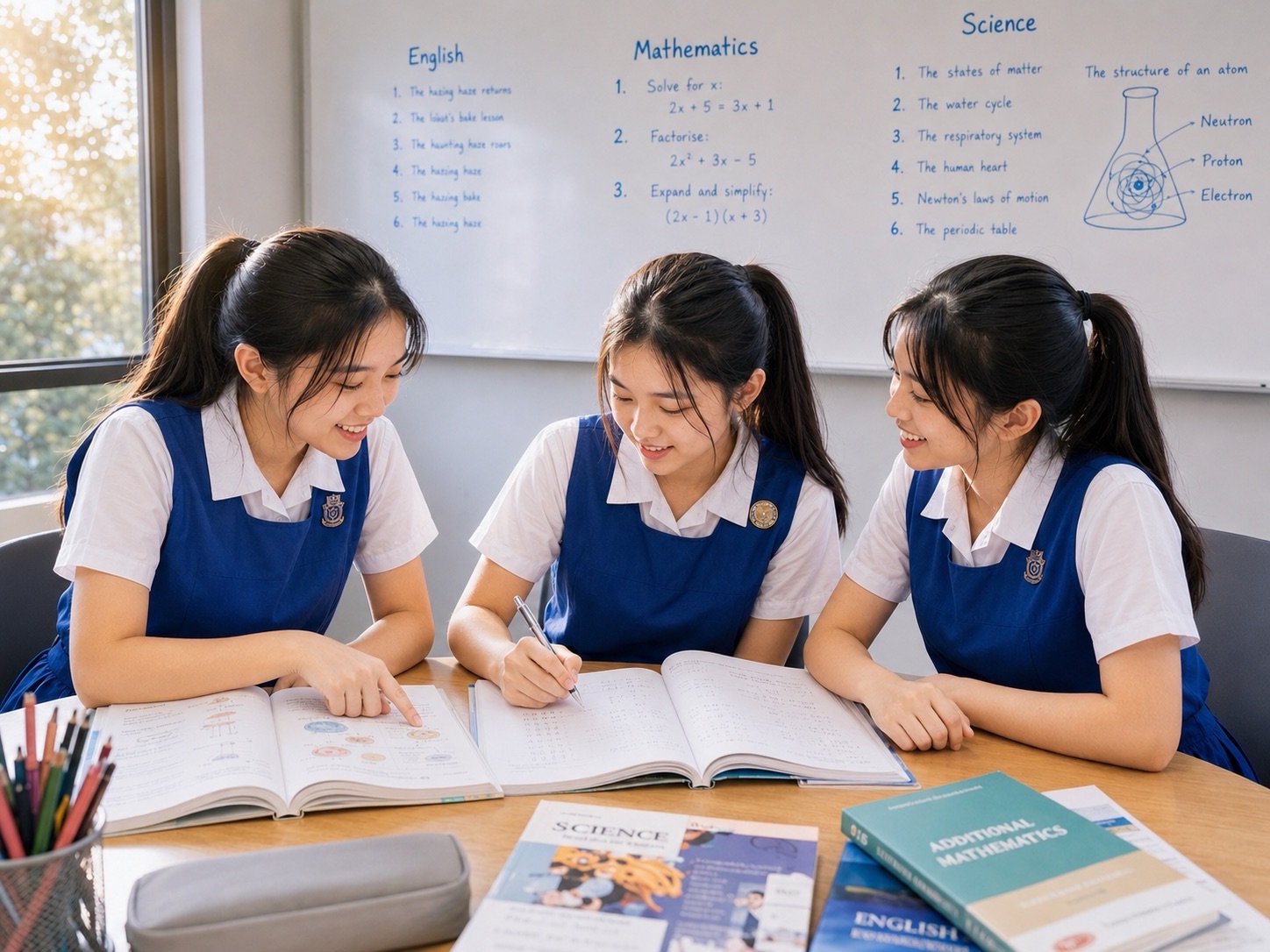
Primary 3 Science classification becomes much stronger when a child can defend the property used to make the groups. “These look the same” is not enough. “These have feathers, while those do not” is better because the grouping rule is observable, relevant and testable.
This Sengkang Primary 3 Science small-group tutorial page owns one specific job: classify by one defensible property. The broader Sengkang P3 Science estate already covers observation, comparison and first-year Science foundations. Here we go deeper into classification as a reasoning skill: choose a property, apply it consistently, test boundary cases and explain why the groups make sense.
Classification Is a Scientific Decision
MOE’s 2023 Primary Science syllabus includes diversity of living and non-living things and diversity of materials at Primary 3. These topics are not only about remembering names. They teach students to compare objects or organisms using properties and to organise information meaningfully.
The syllabus also emphasises scientific practices such as observing, comparing, classifying and communicating. Parents can review the current public syllabus at MOE.
One Property, Applied Consistently
A strong first classification rule uses one clear property at a time. If the rule changes halfway through, the groups become hard to defend.
| Weak grouping | Problem | Stronger rule |
|---|---|---|
| “Animals I like / animals I do not like” | Personal preference | Presence or absence of a scientific characteristic |
| “Small things / insects” | Two different grouping rules | Size only, or biological characteristics only |
| “Metal / shiny” | Material identity mixed with appearance | Material type or tested property |
| “Things that live outside” | Ambiguous boundary | Observable structural or life-process property |
Students should be able to say: “I grouped them this way because every member of Group A has this property, while members of Group B do not.”
Start With Observable Evidence
Classification rules should be anchored in properties that can be observed, measured or otherwise established scientifically at the learner’s level.
- number or type of body structures;
- presence of feathers, fur or other visible characteristics where relevant;
- material flexibility;
- water absorption;
- transparency or opacity where taught and tested;
- magnetic attraction;
- stage features in a life cycle.
The tutor should ask whether another student could apply the same rule and reach the same grouping.
Classification Is Not Naming
A student may know that something is a bird without being able to explain why it belongs in that group. Tutorials should separate category labels from classification evidence.
- Name the item.
- State the relevant property.
- Compare it with the grouping rule.
- Decide the group.
- Explain the decision.
This reduces dependence on memorised examples. A new organism or material can still be classified if the learner understands the property.
Boundary Cases Are Where the Learning Happens
Easy examples can create the illusion that the rule is understood. A boundary case tests whether the child can apply the property rather than rely on appearance.
| Boundary case | Tutor question |
|---|---|
| Two objects look similar but are made from different materials | Which tested property matters for the current grouping? |
| One organism has an unfamiliar shape | Which characteristics define the group? |
| One material has several properties | Which property is the classification rule using? |
| One item seems to fit two everyday categories | Can we refine the scientific rule? |
Boundary cases force the learner to state the rule precisely.
Change the Property, Change the Groups
The same set of objects can be classified in more than one scientifically defensible way depending on the question.
For example, a set of materials might be grouped by flexibility in one investigation and water absorption in another. Neither grouping is automatically “the correct one” outside the investigative purpose. The tutor asks:
- What are we trying to compare?
- Which property is relevant to that question?
- Can every item be placed consistently?
- What evidence supports each placement?
Three Students Makes Classification Rules Visible
eduKate’s three-student format is useful because different learners may choose different legitimate properties.
| Student | Chosen property | Class learning |
|---|---|---|
| A | Material flexibility | Is the rule applied consistently? |
| B | Water absorption | Different rule can produce different valid groups |
| C | Colour | Is colour scientifically relevant to the stated purpose? |
The tutor does not simply declare one student correct. The group examines whether the property is observable, relevant and consistently applied.
Peer Discussion Must End With Individual Classification
After students compare grouping rules, each learner receives a changed set and classifies independently. This prevents the strongest speaker’s categories from becoming the group’s borrowed answer.
- silent first classification;
- state the property;
- compare reasoning;
- refine the rule;
- fresh individual set;
- explain the new grouping alone.
Materials: Property Must Match Use
Classification by material properties can connect to real-world selection. A material may be flexible, absorbent, waterproof, strong or transparent. The child learns that the useful property depends on the intended function.
Instead of “plastic is good”, the tutor asks “good for what?” A raincoat, window, towel and container require different relevant properties.
Living Things: Avoid Superficial Grouping
Children may group organisms by where they have seen them or by visual resemblance. Scientific classification should use taught characteristics rather than familiarity.
- Which characteristics are shared?
- Which characteristic actually defines this group at our level?
- What observation would place an unfamiliar organism into the group?
- Which tempting feature is irrelevant?
Life Cycles: Classify Stages by Observable Change
Life-cycle work can also use classification reasoning. Students can compare stages by body form, presence of structures or developmental changes, while distinguishing what is directly shown from what is inferred.
Magnets: Test Before Classifying
When classifying objects by magnetic behaviour, appearance is a poor guide. Students should test whether the object is attracted to a magnet under the stated conditions.
This is an important scientific lesson: classification sometimes depends on an investigation, not inspection alone.
From Classification to Explanation
A useful P3 answer structure is concise:
- state the group;
- name the property;
- refer to the observed evidence;
- apply the rule consistently.
Students do not need unnecessarily sophisticated language. They need a defensible scientific basis.
Common Classification Mistakes
| Mistake | Repair |
|---|---|
| Uses two properties at once | Choose one primary grouping rule |
| Changes rule for difficult item | Test boundary case against the original property |
| Uses preference | Return to observable/testable evidence |
| Memorises category examples | Introduce unfamiliar examples |
| Cannot explain placement | Require property + evidence sentence |
What Parents Can Notice
- Can your child state the property used for grouping?
- Can they apply the same rule to every item?
- Can they classify an unfamiliar example?
- Can they explain why a boundary case belongs?
- Can they recognise when two different properties create two different valid classifications?
- Can they distinguish scientific evidence from personal preference?
For Sengkang Families
Families searching from Sengkang should confirm the actual lesson location, timing and current availability directly. eduKate’s location-targeted pages organise tuition information but do not imply a physical branch in every named neighbourhood.
The P3 Goal: A Rule Another Person Can Use
A good classification is not “because I put it there”. It is a rule another student could understand, test and apply to a new example. That habit—clear property, consistent application, evidence—becomes a foundation for later scientific inquiry.
About eduKate
eduKate uses very small groups to make scientific grouping rules visible, compare alternative reasoning and verify individual transfer. Our core values are Integrity, Empathy, Critical Thinking and Responsibility.


