
A Primary 2 child can struggle with reading for two very different reasons: the printed words are hard to access, or the language is accessible but the meaning is not being built. Those problems can look similar from the outside. The tutor’s job is to separate them before choosing the repair.
This Sengkang Primary 2 English Tutor page owns one precise job: distinguish decoding bottlenecks from language-comprehension bottlenecks. The existing P2 estate already covers broad tuition, reading for meaning, sentence expansion and Listen → Read → Retell → Write. Here the focus is diagnosis.
Two Routes to the Same Weak Reading Performance
| Observed behaviour | Possible decoding issue | Possible comprehension issue |
|---|---|---|
| Reads slowly | Word recognition or blending uncertain | Stops repeatedly to reconstruct meaning |
| Cannot retell | All attention consumed by decoding | Words read accurately but relationships not understood |
| Guesses words | Weak print-sound mapping | Uses story expectation without checking print |
| Answers oral story well but printed story poorly | Likely print-access bottleneck | Language comprehension may be relatively stronger |
| Reads text accurately but cannot explain | Decoding may be secure | Vocabulary or text-meaning bottleneck more likely |
Test the Same Meaning in Two Forms
One useful tutor comparison is to present a short idea orally and then in print. If the child understands the oral version but struggles with the printed version, print access deserves attention. If both are difficult, vocabulary, sentence structure or broader language comprehension may be the earlier bottleneck.
- Tell or read aloud a short age-appropriate passage.
- Ask for a simple retell.
- Let the child read a comparable short passage.
- Ask for another retell.
- Compare where meaning was lost.
If Decoding Is the Bottleneck
- strengthen useful grapheme–sound relationships;
- blend through unfamiliar words rather than guess from first letters;
- build automatic recognition of high-frequency words;
- use repeated meaningful reading;
- connect spelling patterns back to reading;
- keep comprehension demands light enough that decoding can stabilise.
The objective is not maximum reading speed. It is increasingly accurate, efficient access to print that leaves enough attention for meaning.
If Language Comprehension Is the Bottleneck
- build vocabulary in meaningful contexts;
- unpack sentence relationships;
- track who did what, when and why;
- retell short sections;
- connect pronouns and reference words;
- ask simple inference questions anchored to clues.
A child who can pronounce every word still needs help if the words do not combine into a usable model of the text.
Vocabulary Can Sit Between the Two
Sometimes the child can decode a word but does not know its meaning. Other times the child knows the spoken word but cannot recognise its printed form. The tutor can connect sound, print and meaning explicitly.
| Word state | Tutor move |
|---|---|
| Can say, cannot read | Connect known spoken word to print pattern |
| Can read, cannot explain | Attach meaning, example and use |
| Can recognise, cannot retrieve | Use delayed retrieval without visible list |
| Can define, cannot use | Practise natural sentence context |
Writing Gives Another Diagnostic Window
Ask the child to say a sentence and then write it. If oral language is clear but writing loses words or spelling patterns, the bridge into print needs work. If the spoken sentence itself is fragmented, the problem may lie earlier in sentence formulation.
Three Students Makes Comparison Useful
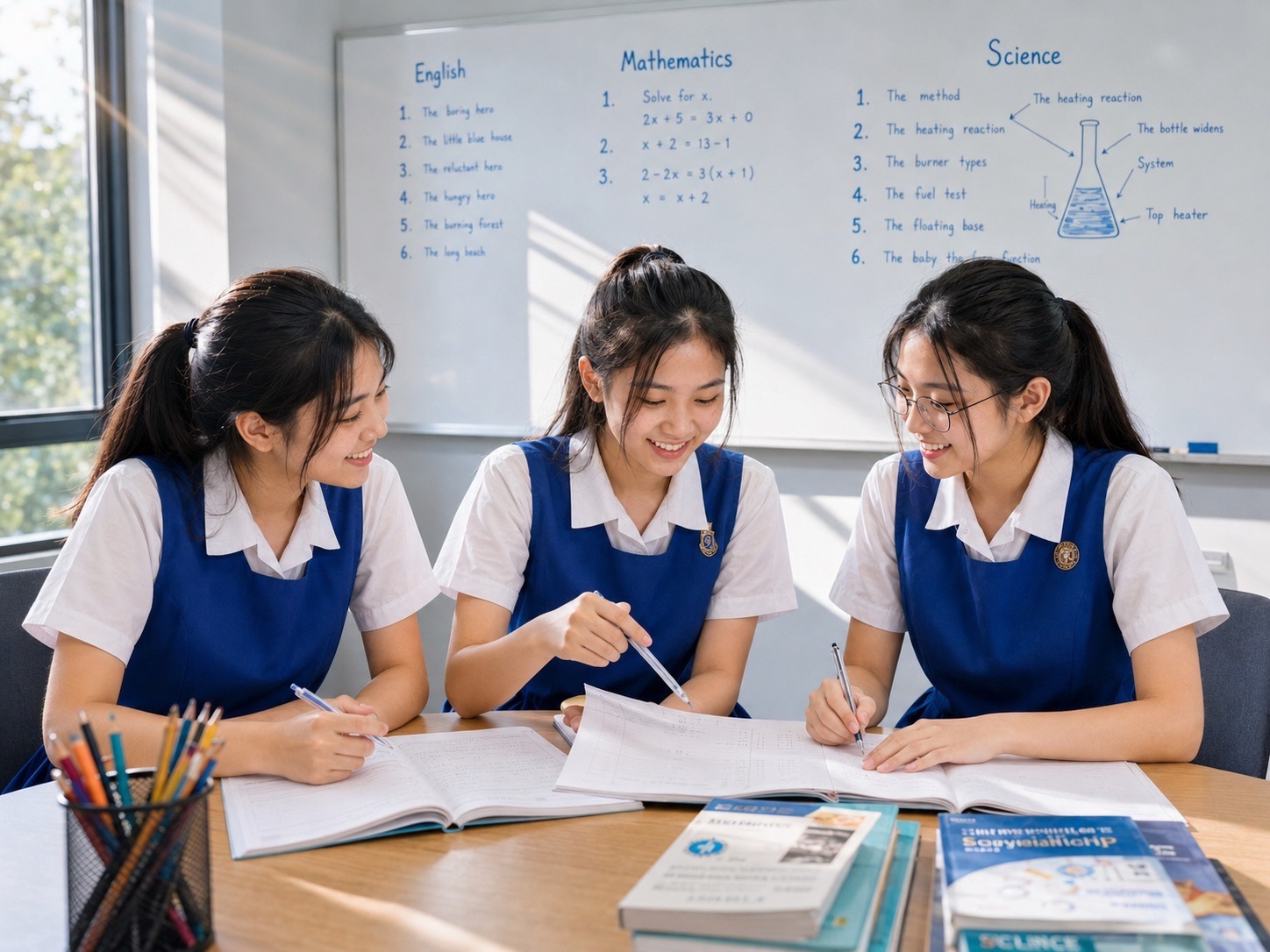
In eduKate’s three-student format, the tutor can hear enough individual reading to avoid judging the whole group from one confident reader. One child may decode accurately but weakly comprehend; another may understand rich oral language but need more print support.
- each child reads individually;
- each child retells individually;
- peer reading provides useful models without replacing assessment;
- fresh individual tasks check whether group support transferred.
Do Not Overload the Wrong System
If decoding is the bottleneck, a long comprehension worksheet may simply measure reading effort repeatedly. If comprehension is the bottleneck, more phonics practice alone will not solve the meaning problem. The tutor should target the earliest weak system while keeping the other active.
Why This Fits the Primary English Curriculum
MOE’s Primary English Language Syllabus 2020 emphasises strong foundations, extensive reading, oracy, reading and writing, vocabulary and grammar as resources, and increasingly independent language use. It supports treating early literacy as an integrated meaning system rather than a single reading score.
Parents can review the public English Language Syllabus 2020 (Primary).
What Parents Can Ask a P2 Tutor
- Is my child’s main reading bottleneck decoding or understanding?
- How do you know?
- Can my child understand a similar story when it is spoken?
- Can they retell what they read?
- Are unfamiliar words a print problem, a meaning problem or both?
- What is the next smallest skill to repair?
For Sengkang Families
Families searching from Sengkang should confirm current class location, timing and availability directly. eduKate’s location pages organise tuition information but do not imply a physical branch in every named neighbourhood.
The P2 Tutor Should Repair the Earliest Bottleneck
Reading difficulty is not one thing. The tutor’s value lies in distinguishing where access to meaning first breaks. When the diagnosis is accurate, practice becomes more efficient: strengthen print access when print is weak, strengthen language comprehension when meaning is weak, and connect both as fluency grows.
Sengkang P2 English Tutor: Almost-Code Summary
COMPARE:
    oral_comprehension
    printed_reading
    oral_retell
    printed_retell

IF oral_strong AND print_weak:
    prioritise_decoding_and_word_recognition()

ELIF oral_weak AND print_weak:
    inspect_vocabulary_sentence_meaning_and_language_comprehension()

ELIF decoding_accurate AND retell_weak:
    prioritise_meaning_relationships()

CONNECT:
    sound
    print
    meaning
    sentence
    retell
    writing

OUTPUT:
    accurate_bottleneck_diagnosis
    targeted_P2_reading_support
    stronger_reading_for_meaning
About eduKate
eduKate uses very small groups so tutors can hear individual reading, compare comprehension and repair the earliest weak link. Our core values are Integrity, Empathy, Critical Thinking and Responsibility.


