
Primary 3 Science often becomes difficult when children describe an object by impression rather than by observable property. “It looks strong”, “it is nice”, or “it is a heavy-looking material” may sound meaningful in conversation, but Science needs a clearer chain: Object → Property → Evidence.
This page focuses on one Primary 3 Science job: build scientific descriptions that another person can check. The learner identifies the object or material, names a relevant property, and supports that property with an observation or test.
A Property Is Not the Same as a Label
Knowing that something is “metal”, “plastic” or “wood” is useful, but a material name does not automatically answer a question about properties. If the task asks why a material is suitable for a raincoat, the answer needs the relevant property—such as being waterproof—not merely the material category.
| Object/material | Possible property | Evidence |
|---|---|---|
| Clear plastic sheet | Transparent | Objects can be seen clearly through it |
| Sponge | Absorbent | It takes in water |
| Rubber band | Elastic/flexible | It changes shape when stretched and returns |
| Iron nail | Magnetic material | It is attracted to a magnet |
Observation Comes Before Property Language
Students should first notice what the object actually does. “Water beads on the surface and does not soak through” can then support the property “waterproof”. This keeps vocabulary attached to experience rather than memorised in isolation.
Properties Should Be Relevant to the Question
An object has many properties, but only some matter in a particular context. A window material may need transparency and rigidity. A towel may need absorbency and flexibility. Good answers choose the property that explains the function being asked about.
Avoid Appearance-Only Classification
Two objects can look similar while having different useful properties. Two objects can look different while sharing the property the question cares about. Students should therefore state the classification rule before grouping.
- group by whether light passes through;
- group by whether water is absorbed;
- group by magnetic response;
- group by whether the material bends easily.
Turn “Because It Is Strong” Into Evidence
Words such as strong, hard, flexible, waterproof need the right meaning. The tutor can ask what test or observation would distinguish the property from another one. This is especially important because children sometimes use everyday words more loosely than Science does.
Use Comparison to Sharpen Description
Comparing two materials makes the property easier to see. If two sheets look similar but only one absorbs water, the contrast helps the learner connect the observed behaviour to the property name.
Comparison also reduces vague answers such as “this one is better”. Better for what? Which property makes it more suitable?
Scientific Description Is Different From Creative Description
English creative writing may value sensory richness. Science values descriptions that identify relevant, testable features. A Science answer should not become dull, but its purpose is different: another person should be able to understand what was observed and why the conclusion follows.
Primary 3 Is the Formal Starting Point
MOE’s current Primary Science syllabus begins at Primary 3 and develops scientific knowledge together with inquiry practices and evidence use. Early work on properties, observation and classification therefore matters because it becomes the language for later Systems, Energy, Cycles and Interactions.
Parents can review the public MOE Primary Science Syllabus.
Why Three Students Helps
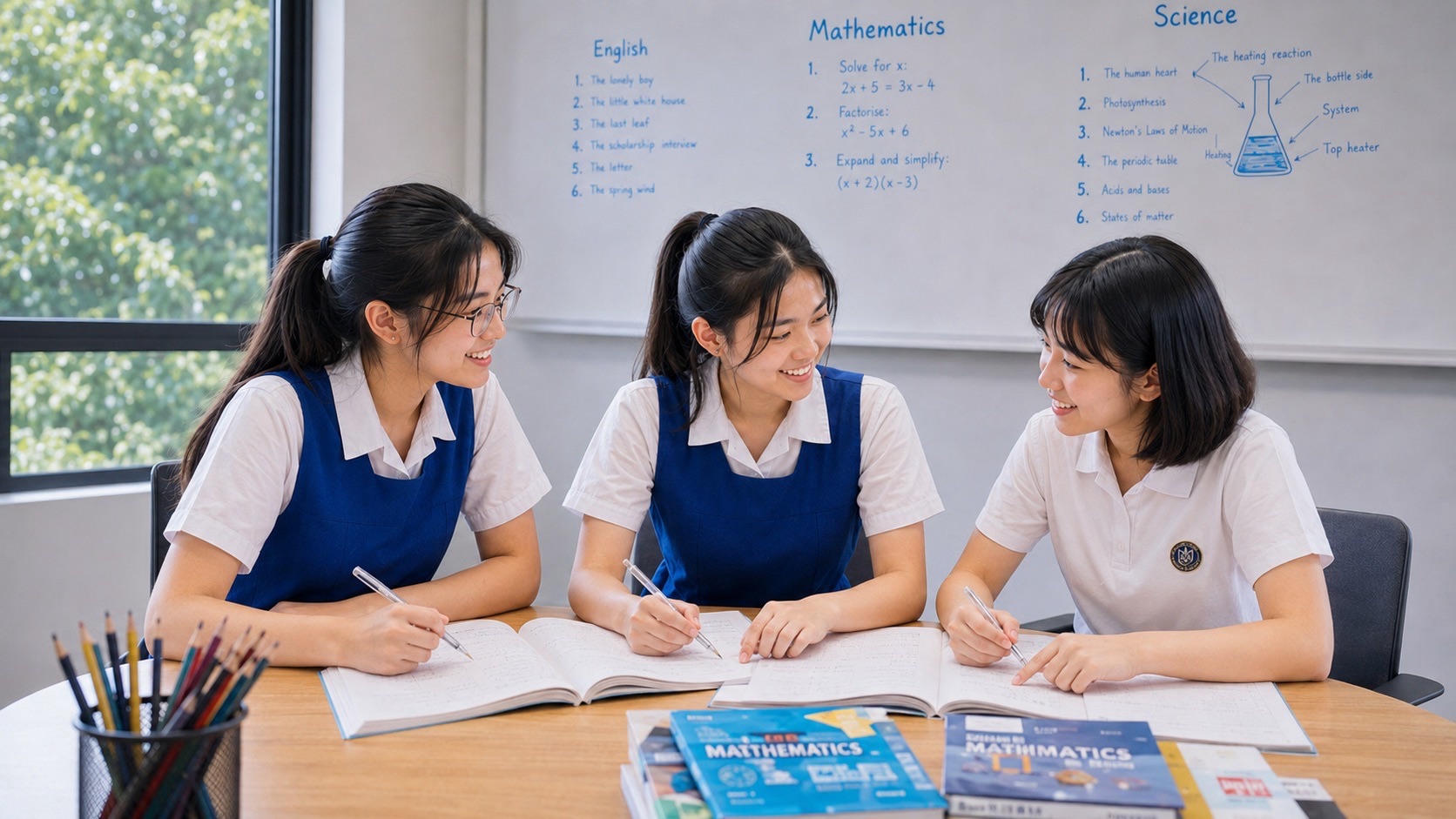
In a three-student tutorial, learners can describe the same object using different candidate properties. The tutor can ask which property is observable, which is relevant to the question and what evidence supports it. Each student then applies the rule to a new object independently.
A Simple Primary 3 Checklist
- What object or material am I describing?
- What property is relevant?
- What did I observe or test?
- Does the evidence really support that property?
- Would another person be able to check my statement?
The Goal Is Description That Can Be Checked
Primary 3 Science becomes stronger when children move from “I think it is…” to “I observed…, therefore this property is relevant.” Object, property and evidence form a small chain that later supports classification, fair tests and scientific explanation.
About eduKate
eduKate uses very small groups to make observation and evidence visible so Primary 3 students build precise scientific language from the start. Our core values are Integrity, Empathy, Critical Thinking and Responsibility.


