
Sometimes the best comprehension repair happens before the question is answered. If a student cannot explain what a paragraph is doing in ordinary language, the answer may be built on fragments rather than a coherent understanding of the text.
This page focuses on one learning job: retell the paragraph before answering the question. Retelling is used as a diagnostic bridge, not as a permanent ritual. The tutor listens for missing meaning, repairs the break, then returns the learner to independent comprehension.
Why Retelling Works
A paragraph contains more than individual sentences. It may introduce a problem, explain a cause, show a consequence, provide evidence or shift the reader’s understanding. Retelling forces the student to compress those details into a meaningful whole.
If the retell is accurate, the tutor has evidence that the student has built a useful paragraph model. If the retell is fragmented or contradictory, the comprehension problem becomes easier to locate.
Do Not Ask for a Full Summary Every Time
The useful version is short. Ask: “What was this paragraph mainly doing?” or “What changed here?” The goal is to reveal the thread without creating another long task.
| Weak retell | Stronger retell |
|---|---|
| Repeats random details | Names the paragraph’s main event or job |
| Copies a sentence | Explains the meaning in own words |
| Misses causal link | Connects what happened and why |
| Confuses characters | Keeps reference clear |
Use Retelling to Separate Reading From Answer Writing
A student may understand the paragraph but struggle to write the answer precisely. Retelling lets the tutor check understanding before diagnosing the output layer.
If the oral retell is clear but the written response is weak, the next intervention may be answer structure, grammar or evidence selection rather than reading comprehension.
Track Paragraph Relationships
After two paragraphs, ask how the second changes the first. Does it explain, contrast, add evidence, move time forward or reveal new information?
This helps the learner keep the text thread across longer passages instead of resetting at every paragraph boundary.
Retelling Should Become Internal
The tutor should eventually remove the spoken retell. The student learns to form the paragraph model silently and use it to answer the question directly. Spoken retelling is scaffolding, not the final performance.
Use Fresh Passages to Test Transfer
Once the process is clear, the student should apply it to narrative, informational and mixed passages. This prevents retelling from becoming tied to one text type.
MOE Primary English Builds Reading for Meaning
MOE’s English Language Syllabus 2020 (Primary) develops reading, viewing and communication as connected meaning-making. Retelling supports this when it helps students build coherent text understanding and then move back into independent answers.
Parents can review the public MOE English Language Syllabus 2020 (Primary).
Why Three Students Helps
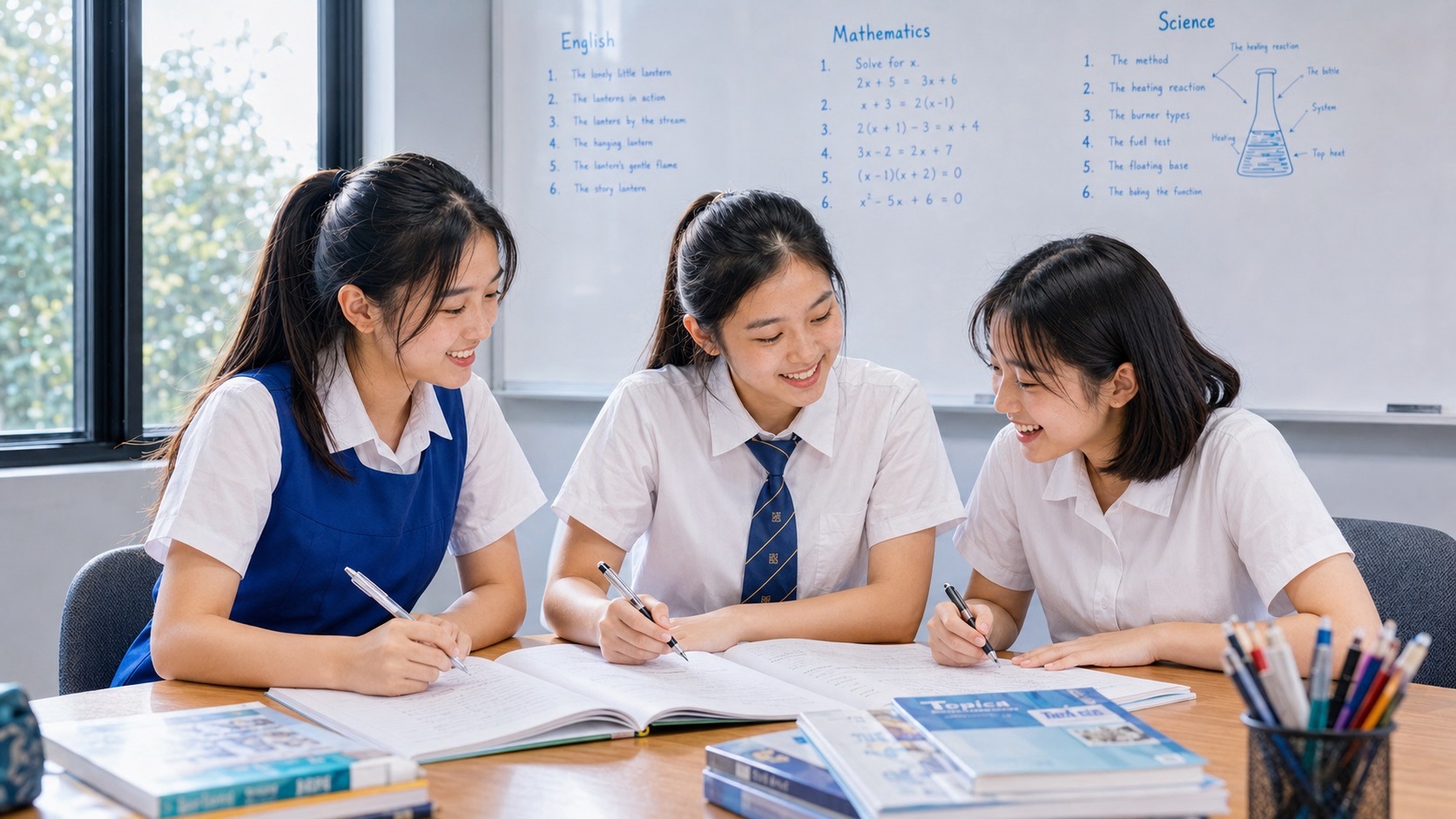
In eduKate’s three-student format, learners can give three retells of the same paragraph. The tutor can compare which version preserves the main relationship and which loses an important detail. Each student then answers a fresh question independently.
For Guangyang Primary School Families
This is a location-oriented learning guide for families connected to Guangyang Primary School. eduKate is not affiliated with or located inside the school. Families should confirm the actual teaching location, timing and current availability directly.
The Goal Is a Coherent Text Model
Before the learner writes a precise answer, they need a stable understanding of what the paragraph means and how it fits into the passage. A short retell can expose that foundation quickly, then disappear once the student can build the text model alone.
About eduKate
eduKate uses very small groups to make text understanding visible, distinguish reading from answer-writing problems and return students to independent comprehension. Our core values are Integrity, Empathy, Critical Thinking and Responsibility.


