
Vocabulary development does not stop at learning harder words. As students grow, the same vocabulary knowledge has to support more precise reading, stronger writing, argument, tone and independent interpretation.
This legacy Katong English Tuition for Pri and Sec page now owns one job: how vocabulary function changes from Primary to Secondary. It does not claim a current eduKate branch in Katong; families should verify actual teaching location, timing and availability directly.
Primary: Meaning and Availability
- understand the word in context;
- compare simple near-synonyms;
- retrieve it in speech;
- use it naturally in writing;
- recognise collocations and basic tone.
Upper Primary: Precision and Transfer
Students need to choose among plausible words, preserve register and retrieve vocabulary while simultaneously managing paragraph structure and exam tasks.
Secondary: Nuance, Register and Argument
| Vocabulary job | Secondary example |
|---|---|
| Nuance | distinguish sceptical, cynical and doubtful |
| Register | choose formal/informal wording for audience |
| Argument | use precise conceptual language |
| Analysis | describe tone, attitude and implication accurately |
Do Not Treat Vocabulary as a Growing Word Count
A student can know thousands of definitions and still retrieve vague language when writing. Depth, discrimination and availability matter as much as breadth.
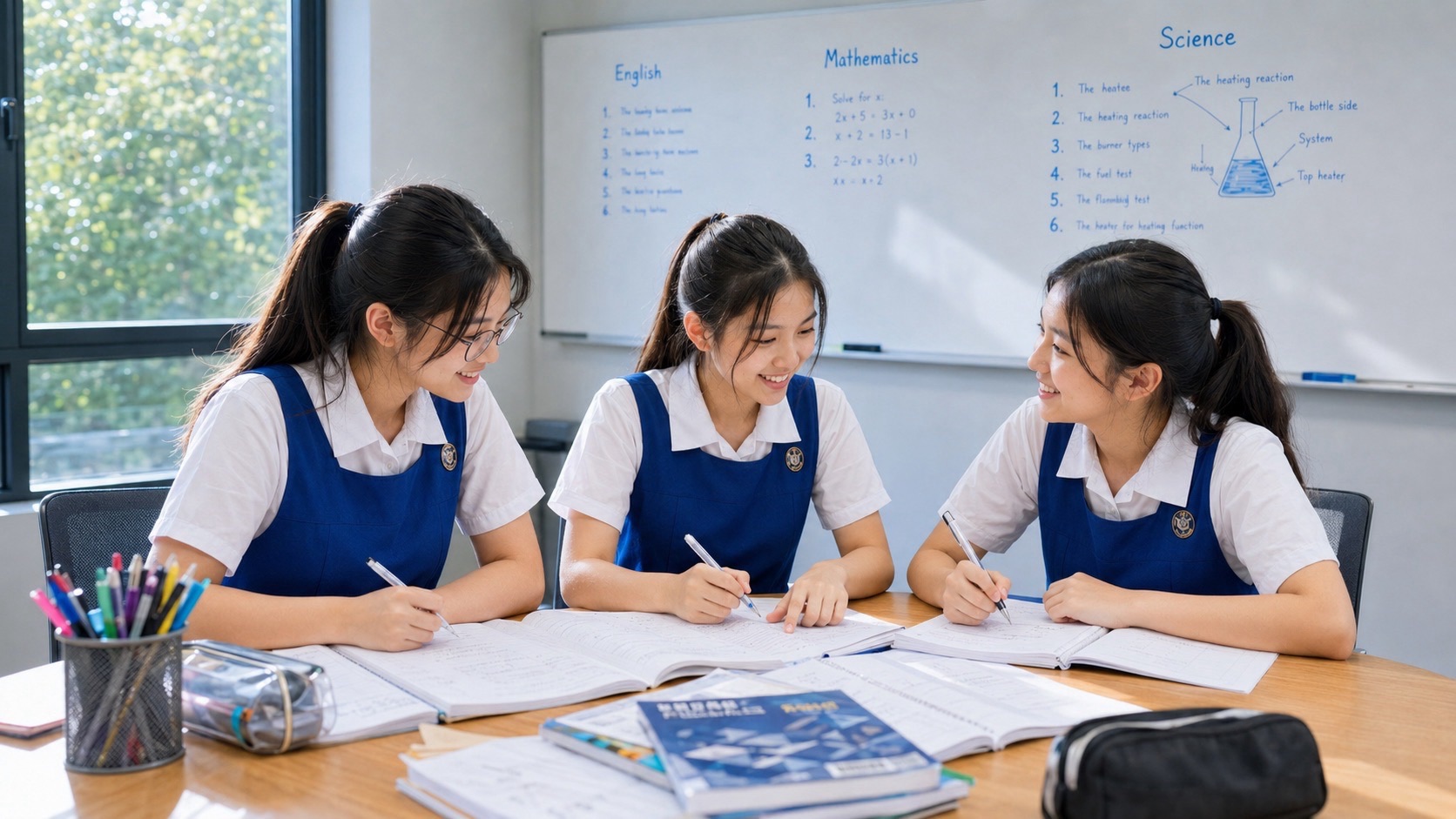
Three Students Can Compare Word Choices
Students can choose different words for one sentence and defend which best matches meaning, tone and audience. The tutor then changes the context so each learner must select independently.
For Katong Families
Confirm current eduKate class logistics directly. A strong English programme develops not merely more words, but better control over what each word is doing.


