
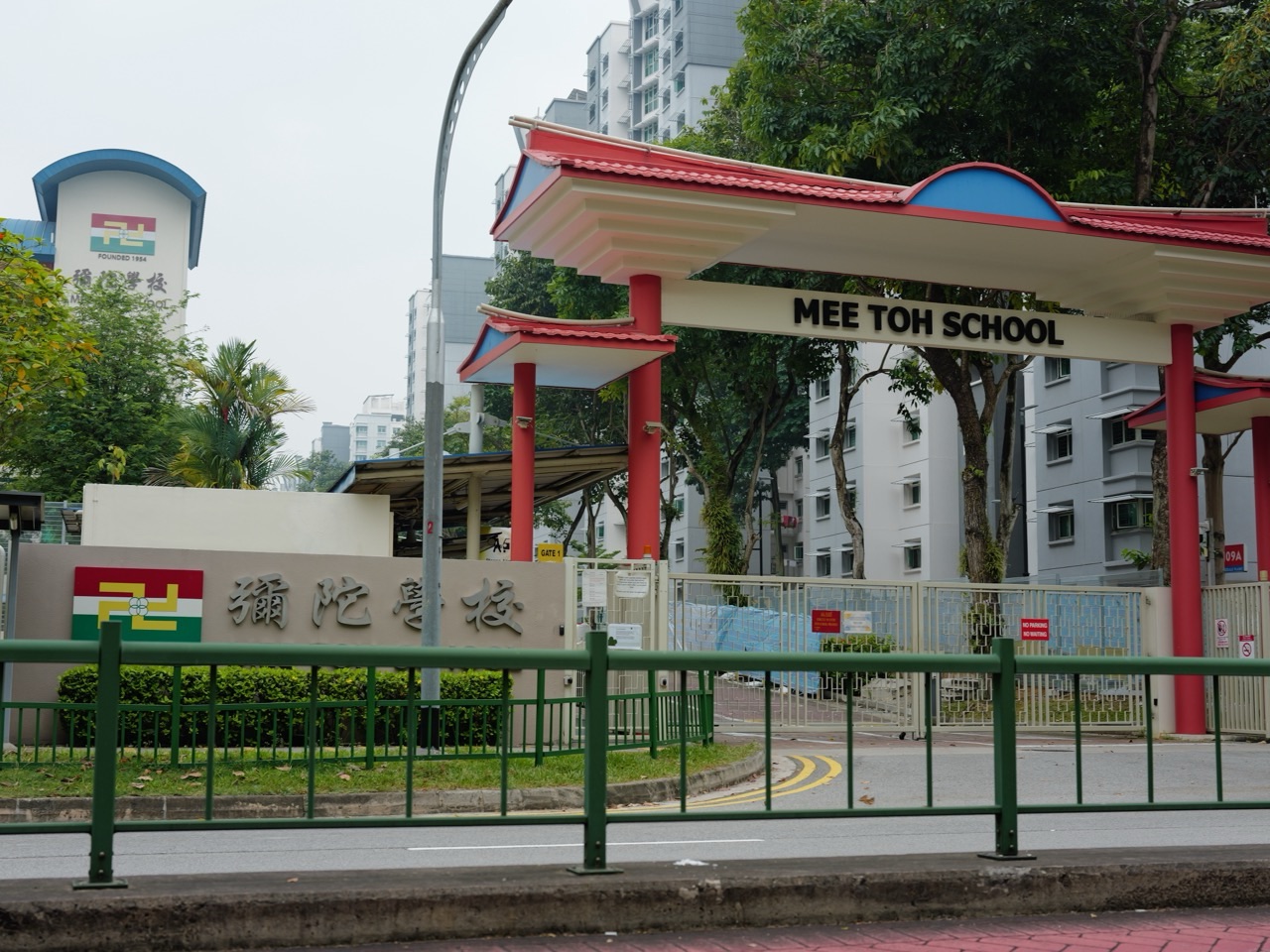
For Mee Toh School families, the biggest risk during the PSLE runway is allowing English to become narrower just when the child needs the language system to stay broad. As Primary 6 approaches, it is natural for revision to become more exam-shaped: more timed work, more comprehension, more composition planning, more correction. The danger is that reading, vocabulary, oral language, sentence development and wider knowledge get squeezed out until English becomes almost entirely paper practice.
A strong Primary English plan should do the opposite. It should increase examination reliability while preserving the long-term language foundations that make examination performance possible. The child still needs to read beyond test passages, build vocabulary in context, speak in complete ideas, write for meaning, and keep grammar connected to authentic language.
This rebuilt legacy page keeps its existing 2017 title and URL while giving it one clear job: help Mee Toh School families keep English broad while PSLE pressure rises. It is not affiliated with Mee Toh School. Families should confirm current eduKate teaching location, timetable and availability directly.
PSLE pressure changes the balance, not the purpose of English
As the examination approaches, practice should become more integrated and time-aware. That does not mean every lesson must become a full paper. The purpose of Primary English remains language control: read accurately, understand, retrieve vocabulary, express ideas, write clearly, respond orally and check independently.
PSLE preparation is strongest when those capabilities are coordinated under examination conditions rather than replaced by examination technique.
Narrow the active weaknesses. Do not narrow the child’s language world.

Broad English has seven continuing foundations
- Reading volume and stamina.
- Vocabulary depth and retrieval.
- Comprehension and evidence.
- Grammar and sentence control.
- Composition and paragraph development.
- Listening and oral communication.
- Independent checking and study habits.
PSLE work should integrate these foundations. It should not push six of them aside to make room for repetitive paper completion.
Foundation 1: keep reading alive
Exam passages are not enough to build the full vocabulary, background knowledge and syntax students need. A child who reads only comprehension worksheets receives a narrow diet of language selected for assessment rather than for sustained meaning.
Even in P6, regular reading can continue through short novels, non-fiction, quality journalism for children, biographies, essays or other age-appropriate material. The volume can be realistic. The important thing is that reading remains part of the week.
Why reading matters more when PSLE pressure rises
Under examination pressure, students need to read accurately and efficiently. Reading volume supports this indirectly by making sentence patterns, vocabulary and background knowledge more familiar. The result is less cognitive load when a passage becomes dense or unfamiliar.
Reading is therefore not a luxury that competes with exam preparation. It is part of the infrastructure that makes exam reading easier.
Reading should not become another heavy homework system
Parents do not need to turn every book into comprehension questions. That can make reading feel like another test. A light routine—read, discuss briefly, note one interesting word or idea—is often enough.
The goal is sustained language exposure, not constant assessment.
Foundation 2: keep vocabulary contextual
P6 vocabulary growth should not become a race to memorise long lists of difficult words. Students need meaning, morphology, nuance, collocation and repeated retrieval.
A smaller network of words used across reading, oral discussion and writing is more useful than a large list recognised only in flashcards.
Vocabulary should move across modes
A word encountered in reading can be explained orally, connected to a word family and later used in writing. This multi-context exposure makes retrieval more durable.
The child should increasingly choose the word because it fits the meaning, not because it appears on a “good vocabulary” list.
Vocabulary should support comprehension before decoration
Many marks are lost because students misunderstand a key word in the passage or question. Before using advanced vocabulary in composition, make sure the learner can use vocabulary to access meaning accurately.
Foundation 3: keep comprehension diagnostic
Full comprehension papers are useful, but repeated paper practice can hide the exact reason marks are lost. One learner may misread literal meaning. Another may infer correctly but fail to support the answer. Another may understand orally and write vaguely.
The programme should classify recurring errors before adding more passages.
A P6 comprehension error ledger
- Literal meaning.
- Vocabulary in context.
- Reference tracking.
- Inference.
- Evidence selection.
- Answer precision.
- Summary or synthesis.
- Timing.
- Checking.
The active list should become shorter as the exam approaches.
Comprehension should use targeted repair between full papers
If three papers reveal the same inference-evidence error, stop for a focused repair. Use several short changed passages where the child must identify the clue, state the inference and explain the link.
Then return to a full paper to see whether the skill transfers.
Foundation 4: keep grammar inside real writing
Grammar worksheets can confirm whether a rule is understood. They do not prove the rule will survive under composition load.
P6 grammar work should increasingly return to authentic sentences and paragraphs. If tense, sentence boundaries or pronoun reference repeatedly fail in writing, repair them there.
A personal grammar checklist is better than a universal one
One learner may need to check tense. Another may need sentence boundaries. Another may need agreement. A short personal list is more likely to be used under time than a generic ten-point checklist.
Grammar repair should retire itself
Once a recurring grammar error remains stable across several compositions and delayed retests, lower its priority. Do not keep the learner in permanent grammar remediation because the topic once caused trouble.
Foundation 5: keep composition broader than model phrases
PSLE composition preparation should teach prompt interpretation, planning, causality, character decision, paragraph development, sentence control and checking. Memorised phrases can be useful only when they belong naturally in the child’s language.
The strongest writing grows from an idea the student can control, not from a collection of decorative sentences pasted onto any prompt.
Composition planning should become faster but not disappear
As P6 progresses, planning time should become more efficient. The student can move from a longer scaffold toward a compact causal plan: situation, disruption, choice, consequence, resolution.
The aim is not to eliminate planning. It is to internalise it.
The turning point deserves the most development
Students often spend too much time on background and rush the moment that actually changes the story. The tutor should teach a development budget: spend words where the decision, conflict or consequence matters.
Originality should come from selection, not drama
A believable small conflict with a meaningful choice can produce stronger writing than an extreme accident added for excitement. Students should learn to transform ordinary observations into narrative pressure.
This keeps stories controllable under exam time.
Foundation 6: keep oral language alive
Oral work develops explanation, vocabulary retrieval, confidence and responsiveness. It also supports writing because students can test an idea aloud before expressing it formally.
As PSLE pressure rises, oral practice should not vanish simply because written papers feel more urgent.
Oral answers should become less scripted
Scaffolds such as point → reason → example can help initially. The tutor should gradually remove them so the child can respond flexibly to follow-up questions.
Spontaneous control is the long-term goal.
Foundation 7: keep independence visible
By P6, students should manage more of the English process themselves: bring materials, identify the task, start without waiting, use personal checks and know which error family is currently active.
A programme that keeps all planning and diagnosis outside the child may produce good supported work without building exam independence.
PSLE preparation should have two modes
There is a repair mode and an execution mode. Repair mode slows down, isolates one mechanism and allows feedback. Execution mode mixes components, adds timing and reduces prompts.
The programme should move between them deliberately rather than staying in paper mode all year.
Repair mode
- Short targeted tasks.
- Explicit explanation.
- Error-family diagnosis.
- Fresh reattempt.
- Changed context.
- Delayed retest.
Execution mode
- Integrated sections or papers.
- Realistic timing.
- Minimal tutor prompts.
- Personal checking.
- Paper-order decisions.
- Post-paper error classification.
One full paper should generate a smaller next week
A paper may contain dozens of questions, but the next repair target should usually be one or two recurring mechanisms. The goal of review is compression: many marks become a small set of actionable risks.
If every full paper creates a longer to-do list, revision can become unmanageable.
The final-year error ledger should shrink
By the later PSLE runway, the child should not carry a page of twenty weaknesses. Stable skills move to maintenance. A few recurring high-cost risks remain active.
This reduces anxiety and makes checking more realistic.
A four-paper risk map
Across several school or practice papers, classify lost marks by mechanism rather than paper section. Which errors repeat? Which appear only once? Which are already self-corrected?
The repeated high-cost errors become the final revision queue.
Do not allocate time only by paper weight
A section worth many marks may already be stable. Another smaller component may contain the learner’s highest-carry weakness. Revision time should follow evidence, not only the marks available in the syllabus structure.
Do not allocate time only by fear
Students often over-practise the component they dislike most. That may be justified, or it may simply reflect emotion.
Use actual error frequency and transfer evidence to decide.
Do not allocate time only by recent score
One weak result can reflect paper difficulty, fatigue or one unusual question. Look for repeated mechanisms across papers.
The P5-to-P6 handoff should protect breadth
A strong P5 programme builds reading, vocabulary, grammar, comprehension, writing and independence. When P6 begins, these should not be abandoned for paper volume.
Instead, the same foundations are integrated under increasing exam conditions.
The P6-to-Secondary handoff should also begin quietly
PSLE is the immediate priority, but upper Primary students can still practise habits that will matter later: reading denser text, supporting claims with evidence, planning independently and managing vocabulary systematically.
This does not require premature Secondary teaching. It requires strong transferable habits.
Broad English helps the post-PSLE transition
A child whose P6 year contained only exam drills may emerge with high familiarity but a narrow reading life. After PSLE, the transition to Secondary texts can feel abrupt.
Keeping reading, vocabulary and wider language alive during P6 makes the next stage less discontinuous.
The current Primary English curriculum remains broader than one examination
MOE’s Primary English syllabus includes listening, reading, viewing, speaking, writing and representing, supported by grammar and vocabulary. PSLE is important, but it sits inside that broader language-development purpose.
Families can refer to the official MOE English Language Syllabus 2020 Primary.
A weekly PSLE English balance
- One current high-value repair.
- One integrated exam task.
- Reading or vocabulary maintenance.
- One short personal-check routine.
- Enough unscheduled capacity for schoolwork and sleep.
The exact mix changes by learner. The structure keeps revision broad enough to remain sustainable.
A monthly P6 balance
Across a month, the child should see full-paper work, focused repair, composition practice, oral language, vocabulary retrieval and meaningful reading. Not every component needs equal weekly volume.
The point is to prevent any important language foundation from disappearing completely.
The tutor should know when to narrow aggressively
If one recurring inference, grammar or timing problem is costing marks across papers, narrow for a short repair cycle. High-resolution work is appropriate.
Then reopen the programme once the bottleneck is stable.
The tutor should know when to widen again
After a repair, the child should return to full reading, writing and integrated tasks. This proves transfer and prevents the learner from becoming over-specialised around one error family.
The tutor should protect strong students from over-tuition
A strong P6 student may need fewer worksheets and more difficult transfer, reading depth or exam calibration. Additional volume is not automatically the next step.
Strong performance should sometimes lead to lighter intervention.
The tutor should protect struggling students from panic volume
A child with several weak areas can easily receive an overwhelming programme. Find the upstream bottleneck first. Reading access, vocabulary or task initiation may be affecting several components.
Repair the high-carry problem before multiplying worksheets.
The family should protect sleep as PSLE approaches
Late-night revision can reduce the attention and memory the child needs the next day. The final year should become more efficient, not simply longer.
A broad language system also needs recovery to function.
The family should protect reading as a low-friction language activity
A child who enjoys reading can keep one part of English outside exam pressure. This supports vocabulary and identity as a reader even during the final runway.
The child should know the active PSLE risks
Older Primary students can say, “I need evidence in inference”, “I rush the ending”, or “I lose tense late in composition”.
Specific risk awareness supports better self-checking than the vague thought “I need to be careful”.
The child should also know what is already stable
Confidence grows when the learner can see that reading fluency, grammar or oral response is now reliable. Revision becomes less threatening when not everything is framed as weak.
The final-month plan should be smaller, not bigger
Near the examination, reduce novelty. Review recurring high-cost risks, maintain stable components lightly, practise realistic execution and protect recovery.
This is not the time to discover a new giant revision system.
The final-week plan should protect calm execution
Short targeted checks, familiar routines, light retrieval and sufficient rest often create more value than desperate last-minute volume.
The learner should enter the paper with a small risk map rather than a head full of every mistake ever made.
What parents should ask mid-P6
- Which English component is genuinely limiting marks?
- Which broad language foundation still needs protection?
- Which old error has been retired?
- How much full-paper work is enough right now?
- What can move into maintenance?
- Is the child becoming more independent?
What parents should ask near PSLE
- What are the two or three active risks?
- What personal checks should the child use?
- Which areas should not receive extra practice anymore?
- Is timing stable?
- Is sleep protected?
- Does the child know how to recover after a difficult question?
Frequently asked questions
Should P6 English be mostly exam papers?
No. Full papers are important for integration and timing, but targeted repair, reading, vocabulary, writing and oral language still matter.
Should wide reading stop during PSLE year?
Not necessarily. The volume can be realistic, but reading continues supporting vocabulary, comprehension and later Secondary readiness.
How much vocabulary should a P6 student memorise?
There is no useful universal number. Focus on durable retrieval, context, morphology and productive use rather than list size.
What if my child is already strong?
Use lighter maintenance, deeper transfer and exam calibration rather than automatically increasing worksheet volume.
What if several areas are weak?
Find the highest-carry bottleneck first. One reading, vocabulary or task-initiation problem can affect multiple components.
Does this page imply affiliation with Mee Toh School?
No. This is a local family guide and is not affiliated with the school.
Related eduKatePunggol reading
- PSLE English Tuition in Punggol | Allocate Revision Time by Weakness, Not Paper Weight
- PSLE English Punggol Tuition Centre | Build a Four-Paper Risk Map Before Adding Revision
- Punggol PSLE English Small-Group Tuition | One Shared Paper, Three Personal Checking Systems
- eduKate Punggol Contents & Learning Routes
The deeper rule: PSLE preparation should compress weaknesses, not compress English
As the final year becomes more examination-shaped, the active repair list should get narrower while the language system stays broad. The child still reads, speaks, writes, learns words, notices grammar and builds ideas.
The examination asks the learner to coordinate these capabilities under constraint. It does not make them unnecessary.
For Mee Toh School families, that is the useful final-year standard: narrow the risk map, keep the language system broad, and let exam practice test the whole rather than replace it.
PSLE broadness also means keeping knowledge in the language system
English comprehension and writing improve when the child knows more about the world. Background knowledge helps readers interpret references, understand unfamiliar contexts, build inferences and generate examples. Final-year revision should therefore not reduce the learner to test technique alone.
Reading about people, places, science, history, technology and everyday life continues to matter because language comprehension is partly knowledge comprehension. A child with wider knowledge can process unfamiliar passages with less friction.
Knowledge should enter naturally through reading and discussion
This does not require a second curriculum of general knowledge worksheets. A short non-fiction article, documentary excerpt, biography or family discussion can expand the child’s conceptual bank.
The aim is not trivia. It is to give words and ideas somewhere to attach.
PSLE revision should protect reading stamina
Students can become efficient at short worksheets while losing comfort with sustained reading. This matters because longer passages demand continuous attention, memory and reference tracking.
A balanced programme keeps enough longer-form reading that the child remains comfortable carrying meaning across paragraphs rather than only answering one question at a time.
PSLE revision should protect writing stamina too
Fragment drills are excellent for repair, but students still need periodic full compositions to coordinate planning, language, pacing and checking over a complete piece.
The programme should alternate narrow repair with whole-task integration rather than choose one permanently.
The child should practise recovering after a difficult question
Examinations include moments of uncertainty. A student can lose disproportionate time after one difficult item and carry that frustration into later sections.
Teach a recovery routine: mark uncertainty, make the best justified attempt, move on when appropriate, and return later with a calmer mind.
Recovery is different from giving up
Moving on strategically protects the rest of the paper. The student should know the difference between productive persistence and spending too long on one low-probability mark.
This is an execution skill that should be practised before the final examination rather than invented on the day.
The child should practise restarting attention between sections
One difficult item should not contaminate the next page. Students can use a simple reset: exhale, check the new instruction, identify the task type and begin from the first evidence available.
This creates psychological separation between errors and preserves later performance.
Broad English means protecting sentence quality under time
As speed increases, sentence control can degrade. Students may shorten too much, lose punctuation or write vague responses because they are rushing.
Timed practice should therefore record which language features break first. The repair is not simply “write faster”; it is to make the stable parts of writing survive faster execution.
Broad English means protecting vocabulary precision under time
Students often fall back on generic words when hurried. Retrieval practice should therefore include quick access to familiar precise vocabulary, not only untimed word-study sessions.
The child should be able to retrieve a good-enough precise word without spending minutes searching for a spectacular one.
Broad English means protecting comprehension accuracy late in the paper
Some learners begin strongly and become less accurate as the paper progresses. Track the location of errors, not only the total score. If mistakes cluster late, stamina or time allocation may be contributing.
The repair could be pacing, section ordering or shorter timed practice rather than more comprehension teaching.
A PSLE risk map should separate knowledge, process and execution
- Knowledge: vocabulary, grammar, text meaning, language conventions.
- Process: inference, evidence, planning, paragraph development, oral elaboration.
- Execution: timing, checking, task initiation, recovery after difficulty.
This separation prevents final-year revision from treating every lost mark as a content gap.
Knowledge gaps should be repaired directly
If the child genuinely does not know a word family, grammar rule or meaning relationship, explicit teaching is appropriate. Use examples, contrasts and retrieval.
Then return the knowledge to authentic tasks so it becomes usable rather than isolated.
Process gaps should be taught as routines
Inference, planning and paragraph development benefit from repeatable processes. The tutor can model, practise jointly, cue and then fade support.
The final goal is not a visible template. It is an internal routine the child can reconstruct when needed.
Execution gaps should be tested under realistic conditions
Timing and checking cannot be diagnosed fully in unlimited-time worksheets. Once the process is stable, introduce realistic time pressure and observe which error families return.
This shows whether the child needs more speed, better sequencing or a shorter checking routine.
P5 should build the broad base before P6 compresses it
For Mee Toh School families still in P5, this is an especially valuable year for wide reading, vocabulary networks, grammar transfer, comprehension depth and writing independence. These foundations give P6 revision something stable to integrate.
P5 should not simply mimic a final-year timetable one year early. It should repair the system so P6 can be more efficient.
The P5 year should expose hidden prompt dependence
A child can perform well in homework while relying heavily on parent or tutor prompts. P5 is a good time to ask what happens when that help is removed.
Independent starts, delayed retrieval and changed-context tasks reveal whether the skill really belongs to the learner.
P6 should integrate rather than rebuild everything
If the P5 foundations are strong, P6 can spend more time on coordination: full tasks, timing, personal checks and targeted repair of the few recurring weaknesses that remain.
This creates a calmer final year because the programme is not simultaneously teaching every foundation from scratch.
Broad English should include oral reasoning because writing often begins there
When a written answer is weak, ask the child to explain aloud. Strong oral reasoning with weak writing indicates a translation problem. Weak oral reasoning indicates the conceptual or comprehension problem is earlier.
Oral discussion is therefore diagnostic as well as examinable.
Broad English should include vocabulary for ideas, not only description
Upper Primary students increasingly need words for cause, consequence, attitude, uncertainty, judgement, responsibility and comparison. These conceptual words support comprehension and later Secondary analysis.
A broad vocabulary bank should therefore include language for thinking as well as language for describing scenes.
Broad English should include knowledge of audience
Students should know that oral response, narrative writing and formal answer writing use language differently. The same child can speak naturally, write creatively and still use precise formal phrasing in comprehension.
Register control is part of mature language use.
Broad English should include revision that changes the next draft
Correction is valuable when the learner can carry it into new work. A revised composition should be followed later by a fresh composition where the same planning or sentence skill is required.
Otherwise the tutor may improve one artefact without changing the underlying writer.
Broad English should include confidence grounded in changed work
Final-year students can become anxious when every lesson highlights risk. Keep a record of what has improved: a retired grammar error, stronger evidence use, faster planning, better oral elaboration.
Confidence based on evidence is more durable than general reassurance.
The family should know which part of English is deliberately not being intensified
“Grammar is stable, so we are maintaining it through writing checks rather than adding another worksheet pack.” “Reading is strong, so we are protecting independent reading and focusing tutor time on composition.”
Explicit trade-offs reduce the anxiety that every component must receive maximum volume simultaneously.
The tutor should explain why a full paper is being assigned
Is the purpose timing, stamina, component integration, paper order or risk mapping? Full papers are too expensive to assign without a clear reason.
The review should then answer the question the paper was meant to test.
The tutor should explain why a paper is not being assigned
If one high-carry weakness still makes full papers repetitive, focused repair can be the more rigorous choice. The family should not mistake fewer papers for lower standards.
Precision can look quieter than volume.
A P6 weekly risk meeting can take five minutes
- What went wrong this week?
- Was it new or recurring?
- Which error deserves repair?
- Which stable area can stay in maintenance?
- What will prove the repair next week?
The child can gradually participate in this review. It builds planning and metacognition without adding another long task.
The final term should include explicit support reduction
If the child still needs a full planning frame, evidence prompt or grammar reminder late in P6, the tutor should make support fading an active target.
Examination performance requires the learner to carry those prompts internally.
The final term should include changed-context proof
Use unfamiliar passages, prompts and wording. The student should recognise the same underlying processes without relying on workbook familiarity.
Changed context is one of the best indicators that the broad English system remains flexible under exam pressure.
The final term should include delayed proof
Revisit repaired skills after gaps. A correction that survives only until the next lesson is fragile. A correction that survives weeks and appears in school work is much closer to independent control.
The final term should protect family relationships from becoming constant exam management
Parents can help with schedule, materials, encouragement and sleep. They should not need to sit beside every composition or recreate the tuition lesson every evening.
One purpose of tuition is to reduce the amount of specialist correction the family has to provide at home.
The student should leave P6 with a broad English identity
The child is not only someone who completed PSLE English. Ideally, the learner remains a reader, writer, speaker and thinker who can move into Secondary school with language curiosity still intact.
This matters because English continues to support nearly every academic subject and much of future education.
The final Mee Toh family checklist
- Reading remains alive.
- Vocabulary remains contextual and retrievable.
- Comprehension errors are classified, not merely counted.
- Grammar is tested inside writing.
- Composition keeps originality and causality.
- Oral language remains active.
- Full papers have a clear purpose.
- The error ledger is shrinking.
- Prompts and scaffolds are fading.
- Sleep and recovery remain protected.
- The child can name the active risks.
- The child also knows what is already stable.
If these conditions are present, PSLE preparation is becoming narrower where it should be—around the learner’s actual risks—without making the language education itself narrow.
The final PSLE English standard
Use the final year to compress the error map, not to compress English into endless papers. Keep enough reading, vocabulary, oral language and writing depth that the learner remains linguistically strong beyond the examination.
The PSLE paper is a performance event. The language system is a long-term asset. Strong tuition prepares the first without sacrificing the second.
A broad PSLE plan still needs one weekly dominant target
Keeping English broad does not mean giving every component equal time every week. The programme should still identify one dominant target from current evidence. Reading, vocabulary, grammar, composition and oral language remain in the system, but the active bottleneck receives the deepest teaching.
This prevents the opposite mistake: trying to keep everything broad by spreading tuition so thinly that no recurring problem is ever repaired properly.
The dominant target should rotate when the evidence changes
A month may begin with inference evidence as the main repair. Once that stabilises, composition timing may become the next high-value target. Reading continues throughout, but it does not need to remain the headline if it is already strong.
This is how a broad programme stays focused: one deep target, several light maintenance streams.
The broad programme should be easier to reduce near the examination
As the risk map shrinks, some activities can disappear temporarily. There may be less formal vocabulary homework, fewer full compositions, or lighter oral practice in the final days if the child is already stable and needs rest.
The point is not to preserve every routine mechanically. It is to preserve the language system enough that the learner enters the examination rested, confident and still able to access the capabilities built across years.
The post-PSLE period should widen English again
Once the examination is over, the programme can deliberately reopen reading, creative writing, vocabulary, argument and discussion. This is a useful bridge into Secondary English because the learner is no longer constrained by immediate PSLE paper demands.
A student who kept English broad during P6 usually finds this widening easier. The reading habit, vocabulary curiosity and writing voice were never completely switched off.
A final family conversation before PSLE
Parents can ask the child what feels stable, what still feels risky and what the plan is when a difficult question appears. The conversation should be brief enough that it does not become another revision session.
The learner should know the personal checks, the move-on rule and the few error families still active. Everything else should be trusted as much as possible.
The exam is not the moment to remember every correction ever given
A child carrying dozens of reminders can become slower and more anxious. Strong preparation compresses feedback into a few reliable habits: read the full demand, support the inference, keep tense stable, leave enough time for the ending, or another personal set.
Too many checks create a new cognitive load. The final list should be small.
The learner should trust retired skills
If grammar has been stable for months, the child does not need to approach every sentence as though it may collapse. If reading is strong, the student can use that strength instead of repeatedly checking whether reading is still strong.
Confidence includes knowing which problems no longer deserve attention.
The final value of broad English appears after PSLE too
Secondary English asks students to read denser texts, use evidence more analytically, build arguments, manage abstract vocabulary and work more independently. A P6 year that preserved reading, vocabulary, writing and oral reasoning gives the learner stronger material for that transition.
This does not mean P6 tuition should teach Secondary English early. It means the final-year programme should avoid dismantling the foundations Secondary English will soon need.
The final parent decision
If PSLE preparation is making English progressively narrower, ask whether the added paper volume is still producing useful information. If the same errors keep recurring, return to repair. If the child is stable, protect maintenance and recovery.
The final months should feel more selective, not more chaotic. The child should know the few active risks, keep the broader language system alive and enter the examination with enough energy to use what has already been learned.
For Mee Toh School families, that is the quiet final-year principle: let PSLE sharpen the priorities without shrinking the language education.
After a difficult practice paper, broaden before narrowing again
A weak practice paper can tempt the family to respond with another full paper immediately. That is not always the best next move. First classify the losses. If one inference pattern, one timing habit or one grammar error explains a large share of the marks, repair that mechanism in a smaller task. Then return to integrated work.
This keeps the final year from becoming a cycle of paper → disappointment → more paper. The paper should generate information. The information should change the next teaching decision.
The final broad-English habit is the ability to reallocate
Strong P6 students should increasingly know when to spend the next hour on comprehension, composition, vocabulary, reading or rest. They do not need to guess from anxiety. They can use evidence: what is recurring, what is stable, what school work shows and what the week can realistically hold.
This is one of the most transferable outcomes of a good final-year programme. The child is learning not only English, but how to manage a large language subject intelligently under pressure.
When PSLE pressure rises, keep the repair narrow, the language broad and the learner increasingly responsible for both.
The final transition should leave something intact after the examination
A good P6 year should not leave the child unable to imagine English without a timer. After the examination, the student should still have books to return to, words worth collecting, stories worth writing, ideas worth discussing and enough confidence to begin Secondary English without feeling that every language task is another paper.
This is why breadth matters even at the most exam-focused point of Primary school. The examination is temporary; the language system continues into Secondary education, other subjects, future study and ordinary communication.
If the final-year programme keeps that distinction clear, PSLE preparation can become more precise without becoming narrower than English itself.
That is the final balance worth protecting for Mee Toh School families: examination precision without language narrowing, targeted repair without panic volume, and a child who reaches PSLE with a small risk map but a still-wide English repertoire.
The examination should therefore sharpen the learner’s priorities without becoming the whole identity of English. Keep enough breadth that the student can still read for meaning, speak with flexibility, write with ownership and carry vocabulary into the next stage after the paper is over.
Narrow the risk map. Keep the language wide.
That balance gives the child a better chance of performing well now without sacrificing the wider reading, writing and language habits that Secondary English will ask for next.
Prepare for the paper, preserve the language, and carry both forward.
Broad English should survive PSLE.


