
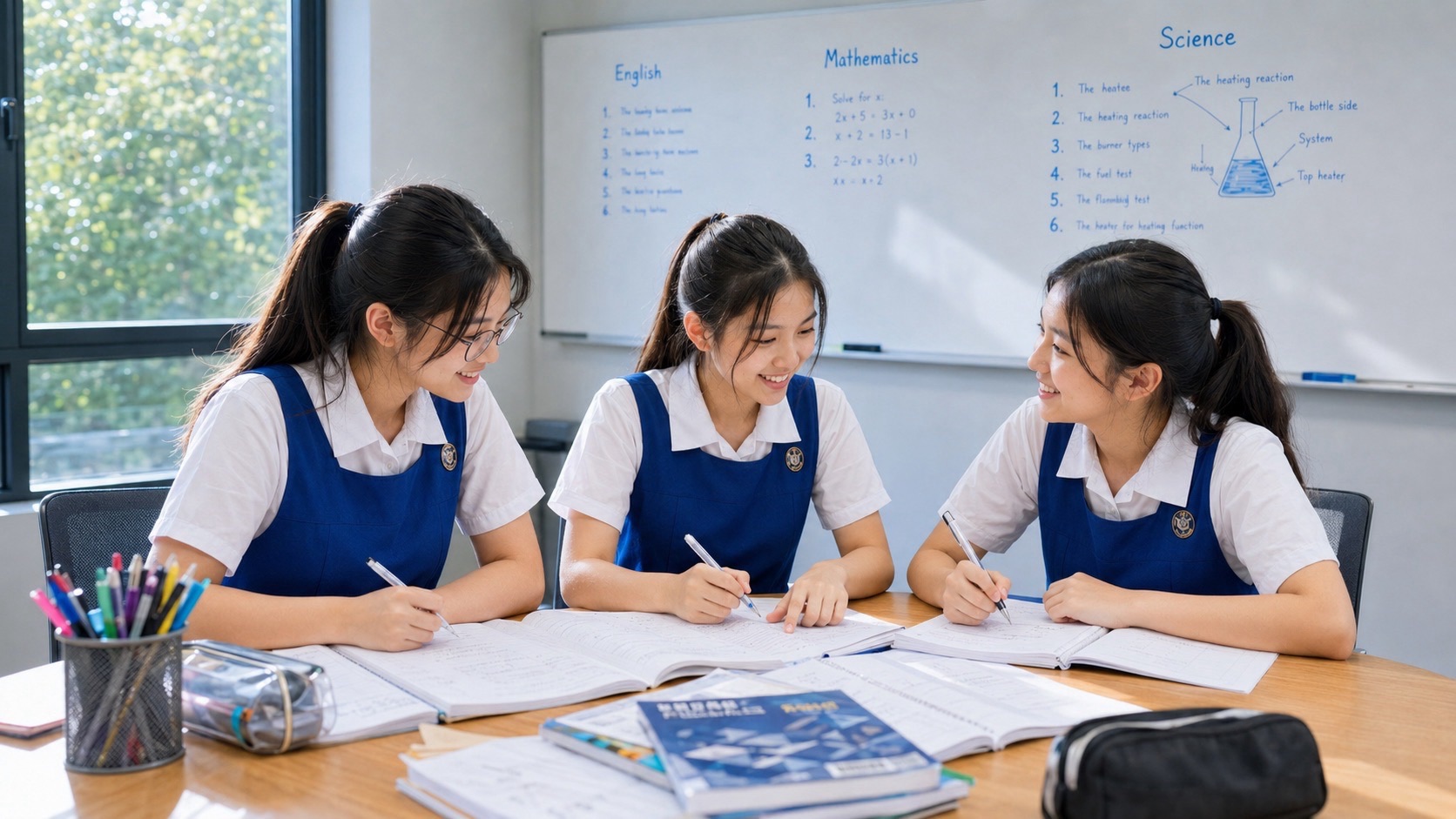
Differentiation does not require three separate lessons. Three students can work on the same passage, sentence or writing prompt while the tutor changes how much support each learner receives.
This legacy Katong English small-group page now owns one job: same task, different prompt levels. It does not claim a current eduKate branch in Katong; families should verify actual teaching location, timing and availability directly.
The Prompt Ladder
| Level | Example |
|---|---|
| Model | Tutor demonstrates the process |
| Specific cue | “Which line supports your answer?” |
| General reminder | “Check the evidence.” |
| Silent wait | Student initiates independently |
Same Comprehension Passage
- Student A may need evidence location modelled.
- Student B may need only “show me the clue”.
- Student C may answer independently and be asked to compare two interpretations.
Same Writing Prompt
One learner receives planning questions, another only a reminder to assign paragraph jobs, another plans silently and writes under a tighter time condition.
Prompts Should Move Down Over Time
The purpose of support is access and learning. If the same specific cue remains necessary indefinitely, the tutor should ask what has not yet transferred.
Do Not Publicly Label Prompt Levels
Differentiation can be quiet. Students remain one class; support is attached to the current skill state, not to an identity such as “weak student”.
For Katong Families
Confirm current eduKate class logistics directly. A useful three-student group keeps the task coherent while making support personal—and temporary.


