
Many Science answers go wrong because the student performs the wrong job. A question that asks the learner to state does not require the same response as one that asks them to explain, predict or evaluate.
This legacy Orchard Science Tuition Centre page now owns one job: read the command verb before constructing the answer. It does not claim a current eduKate branch in Orchard; families should verify actual teaching location, timing and availability directly.
State
Give the required fact, observation or value directly. Do not spend time adding an explanation unless the question requires it.
Explain
Connect the relevant scientific concept to the evidence or condition and show the causal relationship.
Predict
Use the scientific model under a changed condition and state what should happen. A good prediction has a reason, not just a guess.
Evaluate
- Does the evidence support the claim?
- Was the comparison fair?
- Is there an uncontrolled variable?
- Does the conclusion go beyond the data?
- How could the method be improved?
| Command | Main output |
|---|---|
| State | Accurate information |
| Explain | Causal/scientific relationship |
| Predict | Model applied to changed condition |
| Evaluate | Judgement bounded by evidence |
MOE’s 2023 Primary Science syllabus and the revised 2026 PSLE Science assessment both require students to communicate scientific reasoning at different depths. Command recognition helps the learner match response depth to the task.
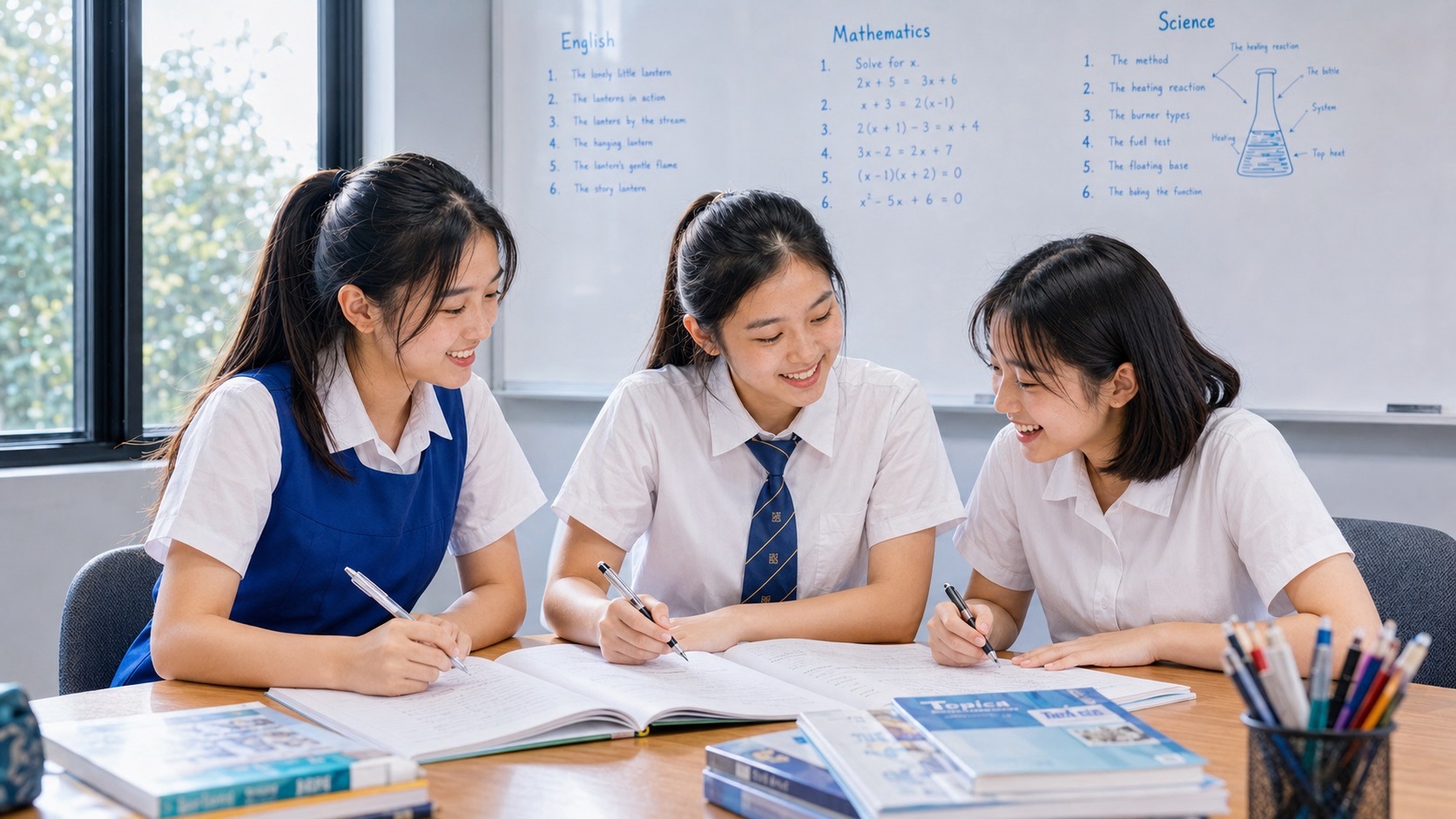
Three Students Can Compare Answer Depth
Give the same scientific scenario with four different command verbs. Students can compare how the answer changes even though the underlying concept remains the same.
For Orchard Families
Verify current eduKate class location and route directly. A useful Science programme should teach the child to recognise the job before reaching for memorised wording.


