
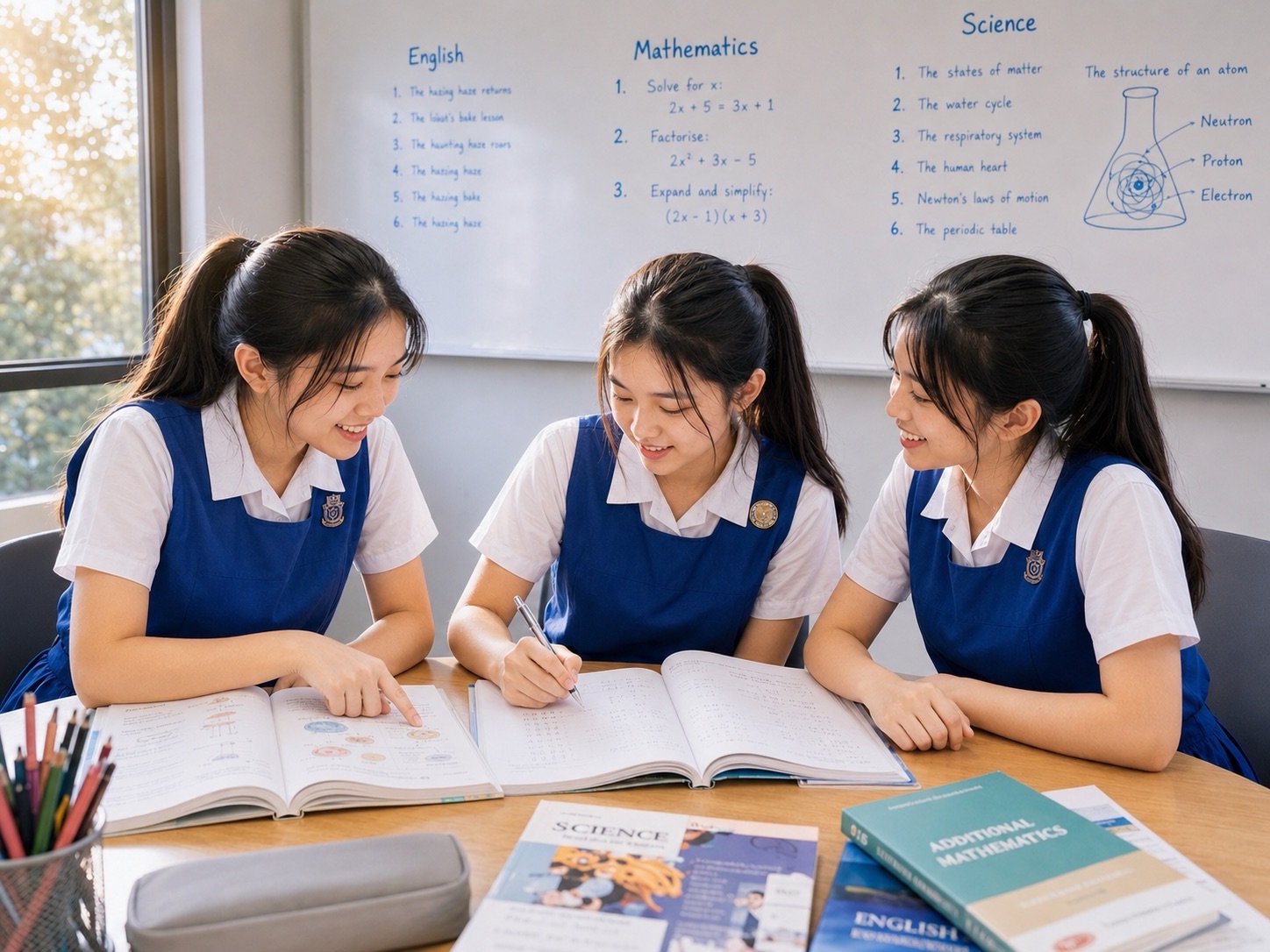
Close tutor attention is useful when it catches an error early and teaches the student how to notice it next time. It becomes less useful when the child learns to wait for the tutor before reading, deciding, checking or correcting.
This page has one job: help families around Horizon Primary judge how much tutor monitoring a Primary English student needs, when close feedback should be increased, and when it should deliberately fade to protect independence.
Independence note: eduKatePunggol is an independent tuition provider. This page is for families searching around Horizon Primary and does not imply affiliation with, endorsement by or representation of Horizon Primary School.
For broad current programme information, continue to Primary English Tuition in Punggol. Another Horizon-area legacy page now covers early language foundations; this page owns the distinct tutor-monitoring boundary.
Monitoring should answer a question
A tutor does not need to watch every pencil movement. Useful monitoring is tied to an uncertainty.
- Can the student begin the comprehension question independently?
- Does the child apply the grammar rule after the explanation ends?
- Can the student plan a composition without the tutor supplying the plot?
- Does vocabulary transfer into a different passage?
- Can the child check an answer before asking whether it is correct?
Once the question has been answered, the tutor can move away and let the student work.
Four levels of tutor support
- Direct instruction: the tutor explains or models because the idea is genuinely new or missing.
- Guided practice: the student performs the task while the tutor asks targeted questions.
- Observed independence: the tutor watches but does not intervene unless necessary.
- Unobserved independence: the student completes the task alone and the tutor reviews the product later.
A healthy learning cycle moves between these states. A student who always remains at level two may look successful but still be dependent.
When close monitoring should increase
- a new grammar structure is being introduced;
- the student has a repeated error that becomes difficult to unlearn;
- the child is misreading task conditions;
- a writing plan is likely to cause a whole composition to fail;
- the student is developing an inefficient or incorrect checking habit; or
- an unfamiliar task is being used to reveal the reasoning process.
Early intervention is useful when one incorrect decision would contaminate the rest of the work.
When monitoring should decrease
- the student has demonstrated the skill correctly several times;
- the tutor can predict the error but the child is beginning to catch it first;
- the task is intended to test retrieval;
- the student needs to practise initiation without prompts;
- timed work is being used to approximate school or PSLE conditions; or
- the child is asking for reassurance rather than information.
Stepping back is part of teaching. It creates the conditions under which independence can be observed.
Reading: monitor the reasoning, then release
For a difficult passage, the tutor may initially ask the student to paraphrase sentences, track references and identify evidence. After the pattern is clear, the child should read another section without interruptions and demonstrate that the same process survives.
Continuous interruption can make reading fragmented. The tutor needs enough evidence to diagnose, then enough silence to test sustained comprehension.
Grammar: stop correcting errors the child can now find
When a grammar weakness is new, explicit correction helps. Once the student understands it, the tutor can reduce support:
- point to the exact word;
- point to the sentence;
- say which error category exists;
- ask the student to run the personal checklist;
- say nothing until the student submits.
The support ladder gives the tutor a visible way to measure growing control.
Writing: monitor decisions before polishing language
One of the highest-value moments to monitor is before the student commits to a weak writing route. A short plan can reveal whether the task has been understood and whether the story or response has a coherent direction.
After that, the tutor should not rewrite every sentence while the student watches. Let the child draft, then return with targeted feedback.
Comprehension: avoid becoming the answer validator
Students can develop a habit of asking “Is this correct?” after every answer. The tutor can redirect the validation process:
- What does the question ask?
- Which evidence supports your answer?
- Have you answered every part?
- What makes you uncertain?
If the student can answer these, the tutor may not need to give immediate confirmation. Delayed checking forces the child to stand behind the reasoning for a while.
Oral work needs live monitoring—but not scripted control
Oral communication is inherently live. The tutor needs to hear fluency, pronunciation, organisation and responsiveness. But excessive interruption can destroy natural speech.
A better cycle is: let the response run → note the highest-value issue → discuss it → repeat or extend the task. Students should learn to sustain communication, not speak one corrected sentence at a time.
How this fits current Primary English
MOE’s Primary English Language syllabus covers listening and viewing, reading and viewing, speaking and representing, writing and representing, grammar and vocabulary. It also includes reviewing, revising, editing and proofreading. These are increasingly independent language behaviours.
For 2026 PSLE candidates, English Language 0001 assesses Writing, Language Use and Comprehension, Listening Comprehension and Oral Communication. Examination performance ultimately happens without tutor monitoring, so the preparation must include periods where support is absent.
Official references: MOE Primary English Language syllabus and SEAB 2026 PSLE formats.
Why 3-pax makes monitoring choices more visible
eduKatePunggol’s current model is up to three students, typically for 1.5 hours. The tutor can move attention deliberately rather than stay attached to one child.
- While one student receives feedback, the others continue independently.
- The tutor can return and see whether work progressed without supervision.
- Different students can receive different prompt levels on the same task.
- Peer discussion can replace some tutor explanation.
- The class naturally creates short periods of monitored and unmonitored work.
This can be educationally useful when the tutor treats those intervals as evidence rather than dead time.
Signs of too much monitoring
- The child asks for confirmation after nearly every answer.
- Homework quality collapses compared with class work.
- The student waits for the tutor to identify all errors.
- Writing plans contain more of the tutor’s ideas than the child’s.
- The student becomes uncomfortable when asked to work silently for ten minutes.
- The tutor predicts and prevents every mistake before the student experiences it.
Signs of too little monitoring
- The same misconception is rehearsed repeatedly before being noticed.
- The tutor sees only final answers and cannot identify the reasoning failure.
- Writing receives generic comments because the planning process was invisible.
- Quiet students can remain hidden for long periods.
- Errors are discovered only during tests after weeks of practice.
The objective is not minimum or maximum monitoring. It is the smallest amount that still produces accurate diagnosis and safe learning.
Parent questions
- What does the tutor monitor closely right now?
- Why does that part require close observation?
- Which tasks is my child expected to complete independently?
- How has the prompt level changed over the last term?
- Does independent school work increasingly match tuition performance?
These questions help reveal whether close attention is building independence or replacing it.
When tuition may help
- the child needs closer observation to locate a persistent language failure;
- school work does not reveal how the student reached the wrong answer;
- feedback needs to be immediate while a new habit is formed;
- the student requires a deliberate prompt-fading plan; or
- parents need evidence that the child is becoming less dependent over time.
A child who already learns independently and responds to school feedback may not need more monitoring through tuition. Additional supervision can sometimes reduce the very independence the student has built.
Progress receipts
- the tutor intervenes later because the child catches more errors first;
- independent intervals become more productive;
- homework and class performance converge;
- the child asks for information rather than reassurance;
- prompts become shorter and less specific; and
- the student can sustain reading, writing or comprehension work without continuous supervision.
Continue to current Primary English tuition
For current class and level information, continue to Primary English Tuition in Punggol. For early-foundation guidance, see English Tuition Near Horizon Primary | Build the Language Foundation Early.
About this rebuilt legacy page
The original article argued that close tutor proximity made English tuition efficient, used older syllabus language and promoted tutor pedigree. This updated 2026 version of the guide preserves the useful observation that visibility matters but adds the missing boundary: monitoring should be reduced as the student becomes capable of monitoring the work independently.


