
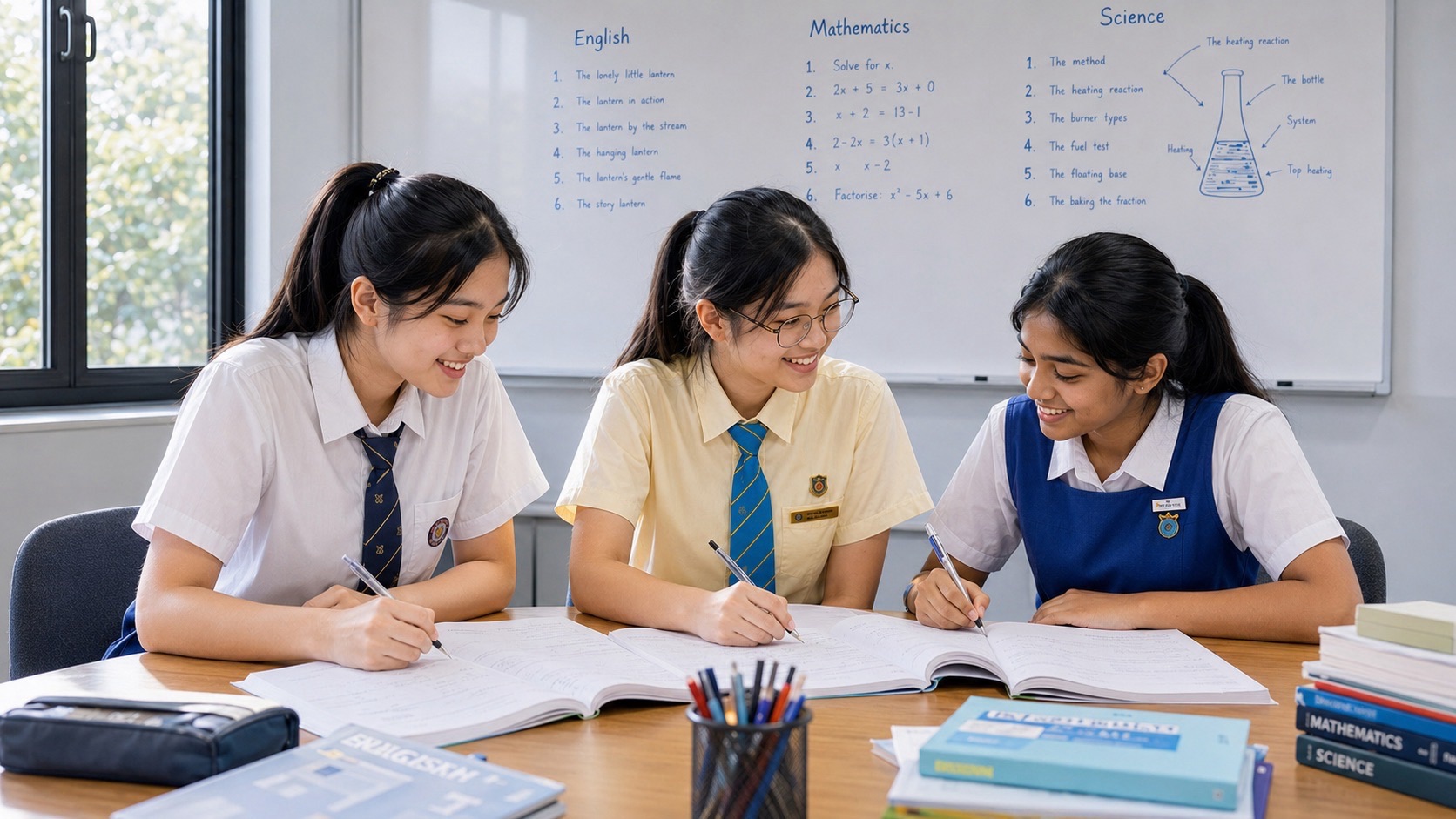
Quick Read: School holidays are not a second school term. They are valuable because they change the learning environment. Children can rest, move, explore Singapore, read more widely, spend time with family, revisit interests and encounter knowledge in real places. A good holiday balances recovery with curiosity instead of replacing school with a packed timetable.
One-sentence answer: Use the holidays to widen experience, protect recovery and create memorable encounters with nature, heritage, books, movement and family life.
What this 2014 post originally was
The original article was a November–December 2014 list of Singapore outings. It mentioned the Singapore Botanic Gardens and National Orchid Garden, Marina Bay Sands SkyPark, Chinatown Heritage Centre, Haji Lane and Dempsey Hill, and was intended as a practical holiday-activity list for families.
Those exact prices, promotions and operating details are historical. This update keeps the spirit of the post but gives the URL a more durable job: how parents can use school holidays as an educational change of environment.
Holiday learning is different from school learning
School is structured around curriculum, progression and assessment. Holidays can provide forms of learning that are harder to timetable:
- longer conversations;
- unhurried reading;
- physical exploration;
- observation in real environments;
- family stories and cultural memory;
- creative projects with no marks attached;
- time to become bored enough to invent something to do.
The point is not to make every outing into a worksheet. It is to increase the child’s contact with the world.
1. Protect recovery first
A child who has completed a demanding term may need sleep, ordinary play and lower cognitive load before being ready for another intensive programme. Recovery is not wasted time. It supports attention, mood and willingness to re-engage.
Families do not need to choose between “doing nothing” and “doing enrichment”. A good holiday can include both unscheduled days and purposeful experiences.
2. Learn through place
Place-based learning uses the physical environment as evidence. A child can understand biodiversity differently after walking through a living garden, urban history differently after standing in an old district, and scale differently after viewing a city from above.
Singapore is unusually dense with educational places. National Parks Board currently offers self-guided walks and children-and-family programmes at the Singapore Botanic Gardens. The National Heritage Board maintains heritage trails across neighbourhoods and historic districts.
3. Nature: use observation before explanation
At a garden, park or nature reserve, begin with what the child can actually see.
- Which leaves are alike?
- Where is water moving?
- Which insects visit which flowers?
- Why might shade change what grows?
- Which structures help a plant climb, store water or disperse seeds?
Only after observation should the adult add explanation. This keeps the world ahead of the answer.
Singapore Botanic Gardens as a living classroom
The Singapore Botanic Gardens currently describes itself as a learning environment for children and families, with self-guided routes, a Nature Field Journal, the Jacob Ballas Children’s Garden and themed plant collections. Its current visitor information also provides maps and activity resources.
Parents can use a visit without over-structuring it: choose one question before arrival, allow free exploration, take photographs or sketches, then talk afterwards about what surprised the child.
4. Heritage: learn to read the city
Heritage learning works when a child realises that ordinary streets contain evidence. Building shape, road names, places of worship, markets, monuments and old photographs can all become sources.
NHB’s heritage trails are useful because they connect present-day neighbourhoods with earlier communities and events. Instead of telling a child “Singapore history” as one continuous story, a walk can show that different places carry different layers of migration, work, religion, housing and urban change.
The historical 2014 Chinatown and Haji Lane suggestions
The old article recommended Chinatown Heritage Centre and Haji Lane because both made history visible in the built environment. That educational idea remains strong even though current operating details should always be checked directly before visiting.
A useful family question is: what survives from an older Singapore, and what has been repurposed for the present?
5. Perspective: see familiar Singapore differently
The original SkyPark recommendation was about perspective. Looking down from height changes how a child understands distance, density, coastlines, road networks and land use.
Parents can create the same learning effect from many viewpoints: bridges, reservoirs, elevated walks, hills or observation decks. Ask the child to identify routes, landmarks, old and new districts, green spaces and transport lines.
6. Reading holidays
School holidays can be one of the best times to let reading move away from assessment. Visit a library, let the child browse widely, accept graphic novels and nonfiction, and allow some books to be abandoned.
Reading becomes stronger when children have enough time to follow curiosity. One book about volcanoes can lead to plate tectonics, Pompeii, maps, engineering and travel.
See How to Get Your Child to Read for the parent reading-habit guide.
7. Make something that takes several days
Term time fragments attention. Holidays make longer projects possible.
- build a model;
- create a photo essay;
- write and illustrate a short book;
- grow plants;
- cook a family recipe and document it;
- design a board game;
- make a simple film;
- learn a Rubik’s Cube method;
- construct something from cardboard or recycled materials.
The educational value lies in continuity: planning, making, discovering a problem, revising and completing.
8. Movement belongs in the holiday
Children need opportunities to move for reasons larger than “burning energy”. Sport, climbing, cycling, swimming and long walks develop physical judgement, persistence and confidence in the body.
A holiday programme that is entirely seated may simply reproduce the narrowest part of school.
9. Let children participate in family life
Some of the most useful holiday learning is ordinary responsibility: buying groceries, comparing prices, planning a route, helping to cook, organising a room, caring for a younger sibling or visiting grandparents.
These activities connect Mathematics, language, judgement and responsibility to real consequences.
10. Leave blank space
A completely scheduled holiday can prevent self-directed activity. Children also need stretches of time where no adult has already decided the objective.
Boredom is not always a problem to solve immediately. Sometimes it is the gap before the child chooses a book, builds something, calls a friend, draws or invents a game.
A simple holiday balance
- Recovery: sleep, downtime and ordinary play.
- Exploration: nature, heritage, museums and neighbourhoods.
- Making: one longer project.
- Reading: wide and self-chosen.
- Movement: outdoor or physical activity.
- Family: shared meals, errands, visits and conversation.
- Maintenance: light review where genuinely needed.
Do holidays need academic revision?
Sometimes. A child with a fragile foundation may benefit from short, targeted maintenance. But the purpose should be clear. Twenty minutes of useful retrieval can be better than two hours of generic worksheets that create resentment.
If the child has a major examination ahead, holiday work can be integrated into a longer plan rather than used as punishment for resting.
A parent test for any holiday activity
- Does the child encounter something real?
- Is there room to notice or choose?
- Does the activity widen knowledge or capability?
- Can family members participate without taking over?
- Does it fit the child’s energy level?
- Is the activity memorable enough to become future knowledge?
Historical note
The 2014 list is preserved in this article as a snapshot of what eduKate recommended to families at the time. Current admission fees, opening hours, closures and programmes should always be checked on official attraction websites before travel.
Updated from eduKatePunggol’s November 2014 school-holiday list into an evergreen guide to recovery, curiosity, place-based learning and family life in Singapore.


