
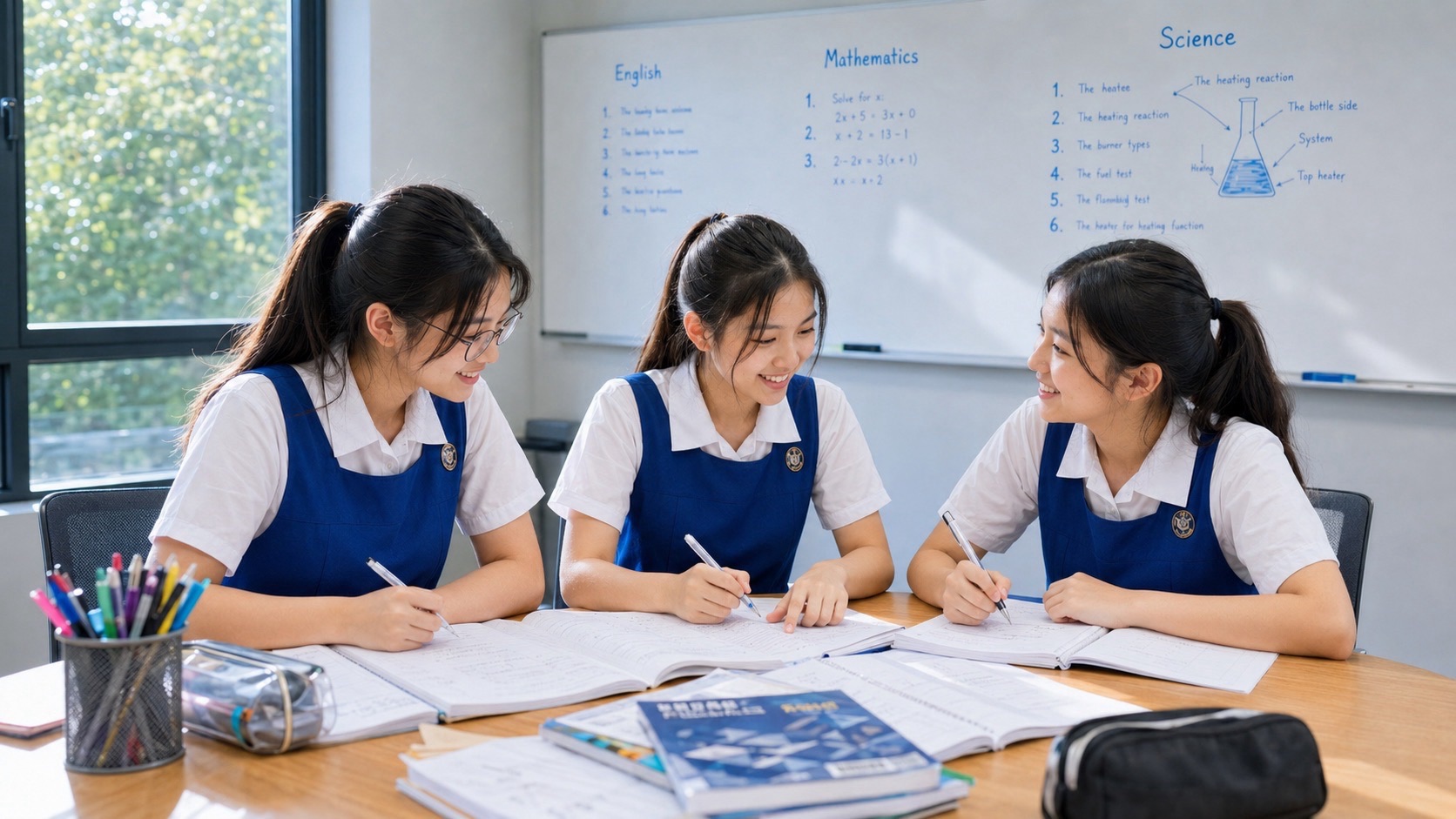
A Primary Science student can choose the correct answer and still hold the wrong scientific model underneath it. Small-group tuition becomes valuable when peer explanation exposes that hidden misconception before it survives into a harder question.
This page focuses on one small-group Science job: when peer explanation reveals a hidden misconception.
Correct Answers Can Hide Weak Reasoning
A learner may select the right option because it looks familiar, because another student spoke first, or because a memorised phrase happened to fit. The tutor needs to know what model actually produced the response.
| Student response | Possible hidden state |
|---|---|
| correct answer, weak explanation | recognition without understanding |
| correct answer after peer speaks | borrowed reasoning |
| wrong answer, coherent model | specific misconception visible |
| different answer after evidence discussion | scientific updating may be occurring |
Private First Attempt Comes Before Peer Explanation
Each learner should first commit to a prediction, evidence choice or short explanation. This preserves the student’s original model before the group influences it.
Ask Peers to Explain, Not Correct
Instead of saying “that is wrong”, students can ask questions that expose the mechanism.
- What changed in the setup?
- Which evidence supports your answer?
- What process connects the condition to the result?
- What would your explanation predict in a changed case?
Misconceptions Often Reveal Themselves at the First Divergence
Two students may agree on the final result but disagree on why. That disagreement is useful. One may think a larger object always has more mass, another may confuse heat with temperature, or another may use a material property in the wrong context.
The tutor should locate the first point where the scientific models diverge, then repair that layer.
Peer Explanation Can Make Everyday Language Visible
Children often use phrases such as “it wants to”, “the cold goes in”, or “the plant drinks food”. These can carry intuitive but scientifically inaccurate models. Hearing a peer explain creates a natural opportunity to compare everyday language with the scientific relationship.
The Tutor Must Protect Against Group Consensus
Three students agreeing does not prove the model is correct. A group can share the same misconception. Peer reasoning must still be checked against evidence and the scientific model.
Use Counterexamples
Once a student states a rule, test it with a changed case. If the rule cannot explain the counterexample, the learner must refine it.
- same result, different cause;
- same cause, changed condition;
- look-alike object with different defining property;
- one data point that breaks an overgeneralised rule.
Retest Silently After the Discussion
A peer explanation can make the correct model sound obvious. The real test comes after the group goes quiet. Give each learner a fresh question with the same underlying concept and ask for an independent explanation.
Small Groups Are Valuable When the Tutor Can Hear Everyone Think
In a three-student tutorial, each learner can explain, question and retest. The class is small enough for the tutor to notice whether a misconception belongs to one student, two students or the whole group.
Current Primary Science Direction
MOE’s current Primary Science syllabus develops scientific knowledge together with inquiry, evidence, explanation and communication. Peer explanation can support those practices when it keeps evidence and individual reasoning visible.
Families can review the MOE Primary Science Syllabus.
For Punggol Families
Families searching from Punggol should confirm the actual teaching location, level, timing and current availability directly. Location-targeted pages organise learning information but do not imply a physical branch in every named neighbourhood.
The Goal Is Better Models, Not Faster Agreement
A small Science class should not aim for three students to agree as quickly as possible. It should make three models visible, compare them against evidence, repair the weak relationship and then prove that each learner can use the improved model independently.


