
A finished composition tells us what the student produced. Watching the writing process tells us how they got there. That difference matters because two similar final pieces can come from very different learning states.
This page focuses on one composition-tuition job: what should a tutor actually observe while the student writes? The answer is not simply spelling and grammar. It includes task interpretation, idea generation, planning, sentence construction, revision decisions and recovery after getting stuck.
1. Task Entry
What does the student do in the first minute? Do they read the prompt fully? Do they identify the required theme, audience or situation? Do they begin writing from the first visible idea without checking task fit?
| Observed behaviour | Possible interpretation |
|---|---|
| starts instantly | could be efficient or could be skipping planning |
| stares for a long time | idea generation or task interpretation may be weak |
| re-reads prompt several times | may be checking conditions or may be uncertain |
| asks “what should I write?” | dependency or idea-generation bottleneck |
2. Idea Generation
Can the learner generate more than one plausible direction? Can they identify which idea best fits the prompt? Does the child keep adding events because no controlling story idea has formed?
3. Planning
A tutor should observe whether the student can turn ideas into a sequence. A plan does not need to be elaborate. It should at least make the main movement visible: situation → pressure → choice → consequence → resolution, or another structure suited to the task.
4. Sentence Construction
How often does the child pause within a sentence? Are pauses caused by vocabulary retrieval, grammar uncertainty or loss of the idea itself? Can the learner say the sentence orally but not write it?
This is where a tutor can distinguish a language-representation problem from an idea problem.
5. Paragraph Control
Does the student know why a new paragraph begins? Can they keep each paragraph focused on one dominant job? Do they drift into unrelated events because the paragraph purpose was never explicit?
6. Vocabulary Selection
Watch whether the child reaches for precise language from meaning, or hunts for “big words” because they believe composition quality comes from rarity. Strong vocabulary use is contextual and purposeful.
7. Self-Monitoring
Does the learner notice when a sentence sounds wrong? Do they reread after a difficult paragraph? Can they recognise a repeated tense problem without tutor intervention?
- instruction check;
- meaning check;
- paragraph job check;
- tense/reference check;
- ending completeness check.
8. Recovery After Getting Stuck
Getting stuck is normal. The useful observation is what happens next. Does the student abandon the story, wait for the tutor, reread the plan, talk through the next event or make a controlled change?
Recovery behaviour predicts independence better than a polished draft completed with constant prompts.
9. Response to Feedback
When the tutor asks a question rather than giving a correction, can the learner find the problem? Does feedback produce a local patch or a genuine revision of meaning and structure?
10. What Happens on the Next Draft?
The most important observation may occur later. Does the same writing behaviour improve on a fresh prompt? A tutor should track whether planning becomes faster, paragraph control becomes more independent, or self-correction appears without prompting.
Small Groups Can Make Process Comparison Useful
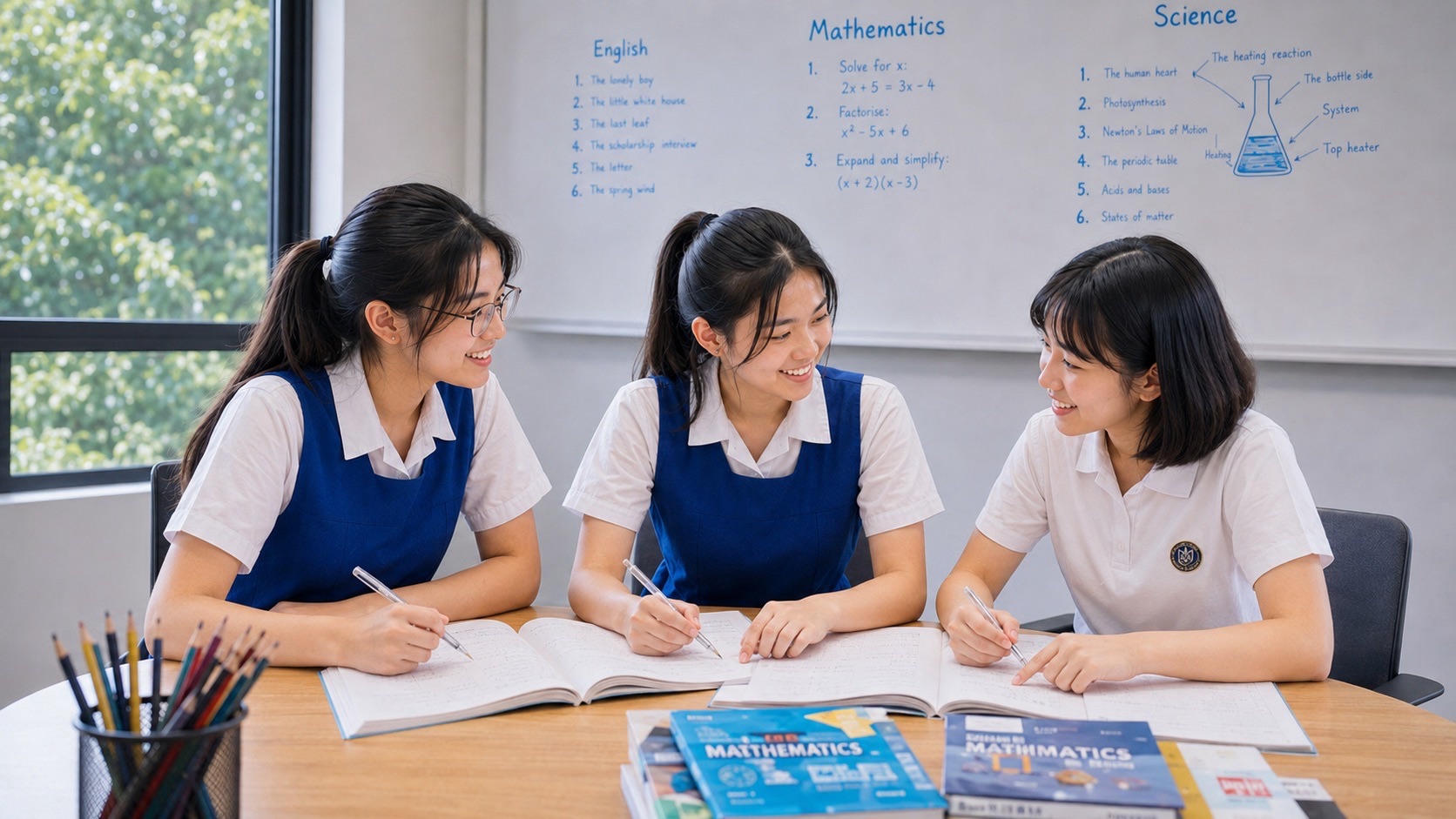
In a three-student class, learners may take different routes through the same prompt. One plans well but writes slowly. Another generates strong language but weak structure. A third finishes quickly but does little revision. These contrasts help the tutor individualise intervention while keeping a shared task.
Current Primary English Direction
MOE’s English Language Syllabus 2020 emphasises purposeful, increasingly independent communication. Observing the writing process supports that direction because it reveals whether the student can make and monitor language decisions rather than merely reproduce a finished model.
Families can review the MOE English Language Syllabus 2020.
The Goal Is Better Diagnosis
A composition tutor should observe the invisible work behind the page: how the student enters the task, forms ideas, plans, writes, checks and recovers. That is where the next useful teaching decision lives.


